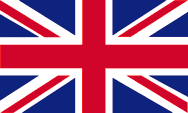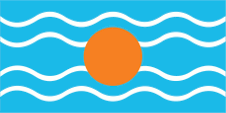
1958–1962,
Flagge der Westindischen Föderation,
Seitenverhältnis = 1:2,
Quelle, nach: Flags of the World

1967–1990,
Nationalflagge,
Quelle, nach:
Flags of the World,
Corel Draw 4
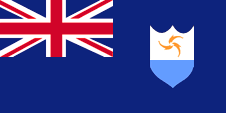
1967–1990,
Flagge der Regierung (Staatsflagge),
Seitenverhältnis = 1:2,
Quelle, nach: Flags of the World,
Corel Draw 4
Die Flagge von Anguilla ist ein sogenannter "Blue Ensign", ein dunkelblaues Flaggentuch mit einer Flaggendarstellung – dem britischen Union Jack – in der Oberecke. Der Union Jack weist auf die Verbindungen zu Großbritannien hin. Zunächst war diese Flagge nur die Flagge der Regierung (Staatsflagge), wurde aber am 30.05.1990 auch als Nationalflagge ("Civil Ensign") zugelassen. In den Jahren zuvor war an Land und zu diesem Zweck ausschließlich der britische Union Jack zu verwenden. Großbritannien hatte in Jahr 1864 ein Flaggensystem eingeführt, in dem:
• Kriegsschiffe einen sogenannten "White Ensign" (Marineflagge), eine weiße Flagge oft mit durchgehendem roten Georgskreuz und mit dem Union Jack in der Oberecke
• Handelsschiffe einen "Red Ensign" (auch "Civil Ensign" → Bürgerflagge genannt, die eigentl. Handelsflagge), eine rote Flagge mit dem Union Jack in der Oberecke, und
• Dienstschiffe einen "Blue Ensign" (Regierungsflagge → die eigentl. Staatsflagge), eine blaue Flagge mit dem Union Jack in der Oberecke führten.
Seit 1865 durften Schiffe von Kolonialregierungen einen Blue Ensign mit einem Badge (Abzeichen) im fliegenden Ende führen. Die jeweiligen Regierungen sollten entsprechene Bagdes zur Verfügung stellen. Handelsschiffe und seefahrende Privatpersonen aus Kolonien dürfen nur dann einen Red Ensign mit Badge führen, wenn von der britischen Admiralität eine entsprechende Erlaubnis für die Kolonie erteilt wurde.
Ein solches Badge war oft eine auf einer Scheibe platzierte regionale landschaftliche Darstellung, zeigte oft Schiffe, historische Begebenheiten oder konnte auch nur eine Art Logo sein. Sehr oft zeigte ein Badge zusätzlich den Namen des Landes oder auch einen Wahlspruch. Einige Besitzungen hatten aber auch schon von Anfang an ein Wappen, bzw. erhielten über die Jahre eine eigenes Wappen und das Badge wurde abgeschafft. Um ein weitgehend einheitliches Erscheinungsbild im fliegenden Ende der Flaggen zu gewährleisten, wurden Wappen und auch andere Symbole auf einer weißen Scheibe in der Größe der früheren Badges dargestellt. Es gab hier aber auch Ausnahmen, denn einige Kolonien verwendeten diese weiße Scheibe nicht, und platzierten ihr Wappen oder auch nur das Wappenschild - manchmal auch vergrößert - direkt auf das Flaggentuch. Schon in den 40-er Jahre wurde dazu übergegangen die weiße Scheibe zu entfernen und das Wappen direkt zu platzieren oder vergrößert dazustellen. Dieser Umstellungsprozess erfolgte allmählich, nirgendwo gleichzeitig und vollständig. In einigen britischen Besitzungen sind bis heute Flaggen mit der weißen Scheibe in Gebrauch, in anderen nicht mehr und in einigen Gebieten gibt es beide Varianten nebeneinander. So sind auf Anguilla noch viele Flaggen im alten Design im Einsatz, vor allem an Land.
Quelle: Flags of the World,
Die Welt der Flaggen,
Flaggen Enzyklopädie
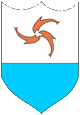
Wappen von Anguilla,
Quelle, nach:
Corel Draw 4
Das Wappen von Anguilla wurde 1980 eingeführt und zeigt drei Delphine über der Wasseroberfläche. Die Delfine symbolisieren Einheit und Stärke. Die blaue Spitze steht für die Karibische See.
Quelle: Wikipedia (D),
Flaggen Enzyklopädie
Lage:
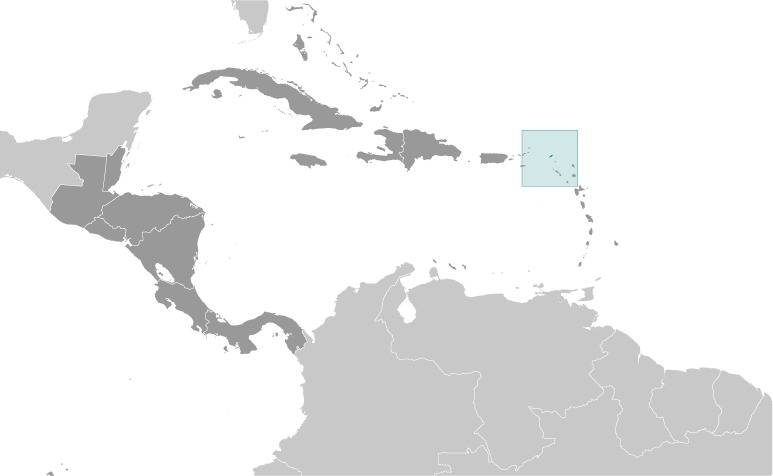
Quelle: CIA World Factbook
Landkarte des Landes:
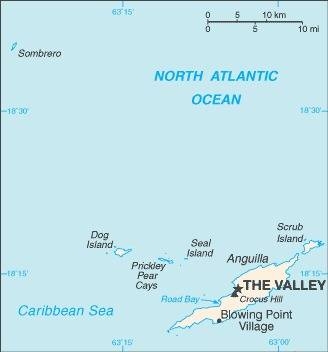
Quelle: CIA World Factbook
Fläche: 96 km²
Einwohner: 13.600 (2011), davon 85.3% Afroamerikaner, 4.9% Hispanics, 3.8% Mulatten, 3.2% Europäer
Religionen: 73% Protestanten, 7% Römisch-Katholisch, 11% andere Christen, 4% Nicht-Religiöse
Bevölkerungsdichte: 142 Ew./km²
Hauptstadt: The Valley, 1.300 Ew. (2011)
Amtssprache: Englisch
Währung: Ostkaribischer Dollar (XCD, EC-$) = 100 Cents
Zeitzone: MEZ – 5 h
Quelle: Wikipedia (D),
CIA World Factbook
1493 · der spanische Seefahrer Christoph Kolumbus entdeckt die Insel und nennt sie Isla de Anguila, die Insel wurde Spanischer Besitz, jedoch nicht kolonisiert
1650 · Inbesitznahme von Anguilla durch Großbritannien
1696–1816 · Teil der Britischen Kolonie Leeward-Inseln
1745 · Abwehr einer französischen Invasion
1796 · Abwehr einer französischen Invasion
1816 · die Kolonie Leeward-Inseln wird aufgelöst, Anguilla wird mit St. Kitts, Nevis und den Jungferninseln zusammengefasst
1833 · Neugründung der Kolonie Leeward-Inseln, bis 1960 Teil der Britischen Kolonie der Leeward-Inseln
1882 · die britischen Besitzungen St. Kitts, Nevis und Anguilla werden innerhalb der Kolonie Leeward-Inseln verwaltungstechnisch vereinigt (Kolonie St. Kitts, Nevis und Anguilla)
1958–1962 · Teil der Britischen Kolonie "Westindische Föderation"
27.02.1967 · Großbritannien gewährt St. Kitts, Nevis und Anguilla innere Selbstverwaltung (Autonomie als mit Großbritannien assoziierter Staat)
1967–1969 · Forderungen nach Unabhängigkeit auf Anguilla
1971 · Anguilla wird wieder der britischen Verwaltung unterstellt
19.12.1980 · Anguilla wird von St. Kitts/Nevis getrennt und eine eigenständige Kolonie
Quelle: Atlas zur Geschichte,
Wikipedia (D),
World Statesmen
Als Kolumbus im Jahre 1493 die Insel entdeckte, nannte er sie "Isla de Anguila" (Aal-Insel). Möglicherweise hatte Kolumbus hier Aale gesehen, die ihre Laichplätze aufsuchten.
Quelle: Handbuch der geographischen Namen