mobile Ansicht, to the English Version tap the flag

- Antigua und Barbuda
- parlamentarische Monarchie mit dem britischen Monarchen als Staatsoberhaupt
- Eigenbezeichnung: State of Antigua and Barbuda
• Flagge
• historische Flaggen
• Bedeutung/Ursprung der Flagge
• Landkarte
• Zahlen und Fakten
• Geschichte
• Ursprung des Landesnamens
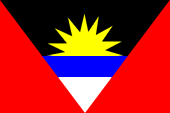
Nationalflagge,
Seitenverhältnis = 2:3,
Quelle, nach: Corel Draw 4


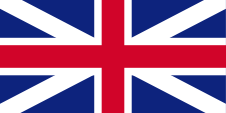
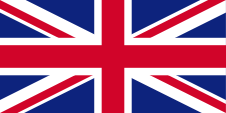
1671–1801,
Flagge Großbritanniens,
Seitenverhältnis = 1:2,
Quelle, nach: World Statesmen
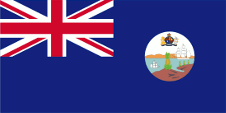
1801–1871,
Flagge Großbritanniens,
Seitenverhältnis = 1:2,
Quelle, nach: World Statesmen
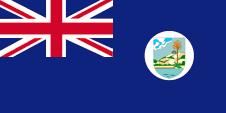
1871–1957,
Leeward-Inseln,
Flagge der Regierung (Staatsflagge),
Seitenverhältnis = 1:2,
Quelle, nach: World Statesmen

1957–1967,
Flagge der Regierung (Staatsflagge),
Seitenverhältnis = 1:2,
Quelle, nach: Flags of the World
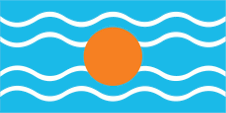
1958–1962,
Flagge der Westindischen Föderation,
Seitenverhältnis = 1:2,
Quelle, nach: Flags of the World
Die heutige Flagge Antiguas wurde am 27.02.1967 eingeführt. Sie siegte in einem ldeenwettbewerb, und stammt von Reginald Samuel. Die Flagge zeigt in einer roten Grundfläche ein auf der Spitze stehendes gleichschenkliges Dreieck. über der weißen Dreiecksspitze befindet sich ein blauer Balken, darüber eine goldene aufgehende Sonne auf schwarzem Grund. Das Dreieck soll das V-Zeichen Victory (=Sieg) symbolisieren, und die aufgehende Sonne den Anfang eines neuen Zeitalters. Rot steht für die Dynamik der Bevölkerung, Blau für die Hoffnung und das Meer, Schwarz für die Erde und das afrikanische Erbe des Volkes, Weiß für den Sand. Der Farbendreiklang Gelb, Blau und Weiß soll auch für den Fremdenverkehr werben: Sonne-Meer-Sand.
Ursprünglich gehörte Antigua zur britischen Kolonie der Leeward-Inseln und wurde im Jahre 1960 eine eigenständige Kolonie. Die Nationalflagge war in dieser Zeit ein sogenannter "Blue Ensign", ein dunkelblaues Flaggentuch mit einer Flaggendarstellung – dem britischen Union Jack – in der Oberecke. Der Union Jack wies auf die Verbindungen zu Großbritannien hin. Großbritannien hatte in Jahr 1864 ein Flaggensystem eingeführt, in dem:
• Kriegsschiffe einen sogenannten "White Ensign" (Marineflagge), eine weiße Flagge oft mit durchgehendem roten Georgskreuz und mit dem Union Jack in der Oberecke,
• Handelsschiffe einen "Red Ensign" (auch "Civil Ensign" → Bürgerflagge genannt, die eigentl. Handelsflagge), eine rote Flagge mit dem Union Jack in der Oberecke, und
• Dienstschiffe einen "Blue Ensign" (Regierungsflagge → die eigentl. Staatsflagge), eine blaue Flagge mit dem Union Jack in der Oberecke führten.
Seit 1865 durften Schiffe von Kolonialregierungen einen Blue Ensign mit einem Badge (Abzeichen) im fliegenden Ende führen. Die jeweiligen Regierungen sollten entsprechene Bagdes zur Verfügung stellen. Handelsschiffe und seefahrende Privatpersonen aus Kolonien dürfen nur dann einen Red Ensign mit Badge führen, wenn von der britischen Admiralität eine entsprechende Erlaubnis für die Kolonie erteilt wurde.
Ein solches Badge war oft eine auf einer Scheibe platzierte regionale landschaftliche Darstellung, zeigte oft Schiffe, historische Begebenheiten oder konnte auch nur eine Art Logo sein. Sehr oft zeigte ein Badge zusätzlich den Namen des Landes oder auch einen Wahlspruch. Einige Besitzungen hatten aber auch schon von Anfang an ein Wappen, bzw. erhielten über die Jahre eine eigenes Wappen und das Badge wurde abgeschafft. Um ein weitgehend einheitliches Erscheinungsbild im fliegenden Ende der Flaggen zu gewährleisten, wurden Wappen und auch andere Symbole auf einer weißen Scheibe in der Größe der früheren Badges dargestellt. Es gab hier aber auch Ausnahmen, denn einige Kolonien verwendeten diese weiße Scheibe nicht, und platzierten ihr Wappen oder auch nur das Wappenschild - manchmal auch vergrößert - direkt auf das Flaggentuch. Schon in den 40-er Jahre wurde dazu übergegangen die weiße Scheibe zu entfernen und das Wappen direkt zu platzieren oder vergrößert dazustellen. Dieser Umstellungsprozess erfolgte allmählich, nirgendwo gleichzeitig und vollständig. In einigen britischen Besitzungen sind bis heute Flaggen mit der weißen Scheibe in Gebrauch, in anderen nicht mehr und in einigen Gebieten gibt es beide Varianten nebeneinander.
Die Leeward-Inseln erhielten im Jahre 1871 ein eigenes Badge. Es zeigte eine Ananas an einer Küste mit zwei Schiffen. Antigua erhielt 1957 ein eigenes Badge, das auf einem "Blue Ensign" verwendet wurde. Es zeigte eine Küstenlandschaft mit einer braunen Palme im Vordergrund und im Hintergrund ein Gebäude auf einem Hügel.
Am 27.02.1967 wurde durch Großbritannien innere Selbstverwaltung gewährt, und Antigua wurde ein autonomer, mit Großbritannien assoziierter Staat. In diesem Zusammenhang wurde die heutige Flagge eingeführt, welche die Tradition der "Blue Ensigns" beendete.
Das Wappen des autonomen Antiguas schuf Gordon Christopher, und die britische Königin Elisabeth II. hat es den Inseln am 16.02.1967 verliehen. Der Schild des Wappens wird durch silberne und blaue Wellenlinien geteilt, vor denen eine stilisierte Mühle an die Verarbeitung des Zuckerrohrs erinnert. Der schwarze Kopf des Schildes zeigt die goldene aufgehende Sonne. Auf dem Schild ruht ein Helm mit einem Wulst und Helmdecken, oberhalb der Wulst eine goldene Ananas, die von vier roten Eibischblüten umgeben ist. Die Schildhalter sind zwei auf der Insel Barbuda lebende Hirsche. Sie stehen auf einer grünen Grasfläche, die mit blauen und silbernen wellenfürmigen Streifen umschlossen ist. Der rechte Hirsch trägt den Schaft des Zuckerrohrs, der linke jenen der barbudischen Baumwolle. Auf dem silbernen, rot unternähten Band liest man den Wahlspruch: "Each endeavouring, all achieving" → "Wenn sich jeder bemühen wird, werden alle Erfolg haben".
Quelle: Flags of the World,
Die Welt der Flaggen,
Flaggen Enzyklopädie,
World Statesmen
Lage:
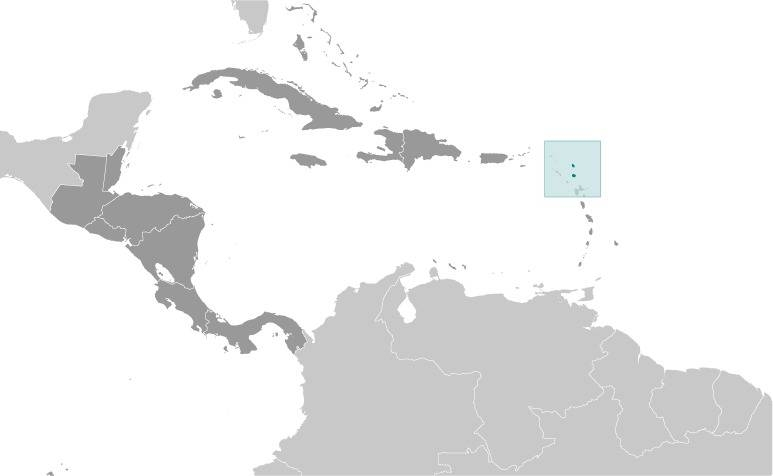
Quelle: CIA World Factbook
Landkarte des Landes:
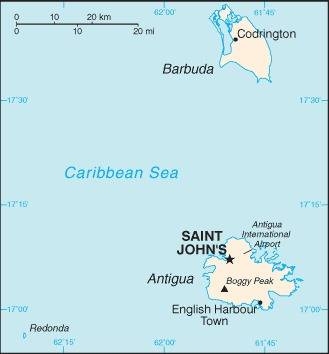
Quelle: CIA World Factbook
Interaktive Landkarte der Leeward-Inseln:
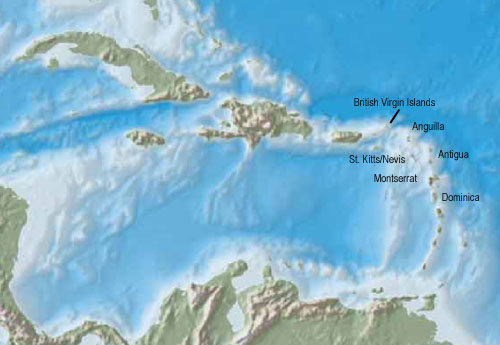
Quelle/Source: Map is Freeware, University of Texas Libraries, modyfied by: Volker Preuss
Fläche: 443 km², davon Antigua 280 km², Barbuda 160 km², Redonda 2,5 km²
Einwohner: 94.700 (2017), davon 87.3% Afroamerikaner, 4.7% Mulatten, 2.7% Hispanics, 1.6% Europäer, 2.7% andere
Religionen: 68.3% Protestanten, 8.2% Römisch-Katholisch, 5.9% Nichtreligiöse
Bevölkerungsdichte: 151 Ew./km²
Hauptstadt: Saint John's, 22.000 Ew. (2013)
Amtssprache: Englisch
Währung: Ostkaribischer Dollar (XCD, EC-$) = 100 Cents
Zeitzone: MEZ – 5 h
Quelle: Wikipedia (D),
CIA World Factbook
1493 · Entdeckung durch Kolumbus
1632 · Beginn der engl. Kolonisierung
1671–1960 · Teil der Britischen Kolonie der Leeward-Inseln (außer 1816–1833)
1958–1962 · Teil der Britischen Kolonie "Westindische Föderation"
1967 · Autonomiestatus
01.11.1981 · Unabhängigkeit
Quelle: World Statesmen,
Wikipedia (D)
Der Name "Antigua" wurde der Insel im Jahre 1493 von Kolumbus gegeben. Er heißt übersetzt: "Die Alte". Der Name "Barbuda" wurde der Insel ebenfalls im Jahre 1493 von Kolumbus gegeben. Er heißt übersetzt: "Die Bärtige".
Quelle:
Handbuch der geographischen Namen,
Wapedia (D)