mobile Ansicht, to the English Version tap the flag

- Republik Bulgarien
- Republik mit Mehrparteiensystem
- Eigenbezeichnung: Republika Bâlgaria
• Flaggen
• historische Flaggen
• Bedeutung/Ursprung der Flagge
• Wappen
• Bedeutung/Ursprung des Wappens
• Flugzeugkokarde
• Landkarte
• Zahlen und Fakten
• Geschichte
• Ursprung des Landesnamens
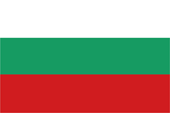
seit 1990,
National- und Handelsflagge,
Seitenverhältnis = 2:3,
Quelle, nach:
Flags of all Nations


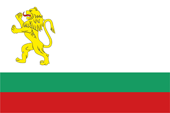
1991 (?),
Marineflagge (?)
Seitenverhältnis = 2:3,
Quelle, nach:
Flags of all Nations

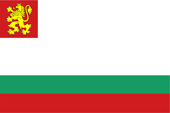
seit 1991,
Marineflagge,
Seitenverhältnis = 2:3,
Quelle, nach:
Flags of the World,
Wikipedia (BG)
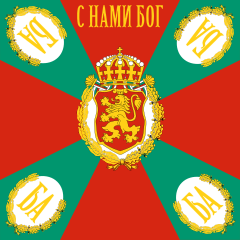
seit 1998,
Kriegsflagge,
(in Wirklichkeit Truppenfahne ?),
Seitenverhältnis = 1:1,
Quelle, nach: Scroch, CC BY-SA 4.0, via Wikimedia Commons
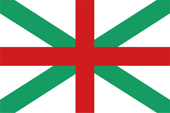
seit 1991,
Gösch,
Seitenverhältnis = 2:3,
Quelle, nach:
Flags of the World,
Wikipedia (BG)
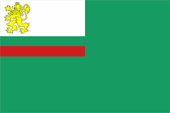
seit 1990,
Flagge der Küstenwache und Flagge der Hilfsschiffe,
Seitenverhältnis = 2:3,
Quelle, nach: Flags of the World
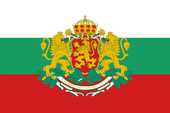
seit 1997,
Flagge des Präsidenten,
Seitenverhältnis = 1:2,
Quelle, nach: Flags of the World

1.) 1878–1908 – Fürstentum Bulgarien
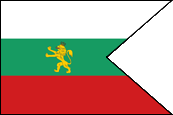
1877–1879,
National-, Staats- und Handelsflagge,
Quelle, nach: World Statesmen
1879–1908,
National-, Staats- und Handelsflagge,
Seitenverhältnis = 2:3,
Quelle, nach:
Flags of the World
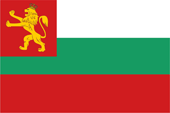
1879–1908,
Kriegsflagge (Marineflagge),
Seitenverhältnis = 2:3,
Quelle, nach:
Flaggen Europas,
Wikipedia (BG)
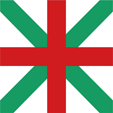
1878–1908,
Gösch,
Seitenverhältnis = 1:1,
Quelle, nach: Flags of the World
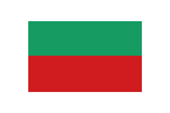
Lotsen(ruf)flagge,
Seitenverhältnis = 2:3,
Quelle, nach: Flags of the World
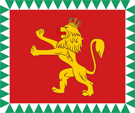
1878–1908,
Standarte des Fürsten,
Seitenverhältnis = 5:6,
Quelle, nach: Flaggen Europas
2.) 1878–1908 – Wilajet Ostrumelien
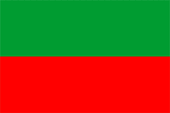
1878–1885 (?),
Flagge,
Seitenverhältnis = 2:3,
Quelle, nach: World Statesmen
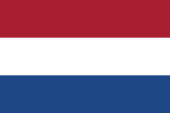
1885–1908 (?),
Flagge,
Seitenverhältnis = 2:3,
Quelle, nach: World Statesmen
3.) 1908–1946 – Königreich Bulgarien
1908–1947,
National- und Handelsflagge,
Seitenverhältnis = 2:3,
Quelle, nach: Flaggen Europas
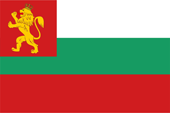
1908–1946,
Staats- Marine und Kriegsflagge,
Seitenverhältnis = 2:3,
Quelle, nach:
Flaggen Europas,
Wikipedia (BG)
1908–1949,
Gösch,
Seitenverhältnis = 1:1,
Quelle, nach: Flaggen Europas,
Wikipedia (BG)
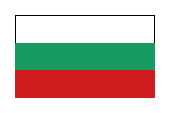
1908–1946,
Lotsen(ruf)flagge,
Seitenverhältnis = 2:3,
Quelle, nach: Flaggen Europas,
FOTW,
Diese Art Flaggen wurde im 20. Jahrhundert abgeschafft, heute gilt:
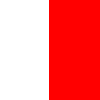 Lotse an Bord
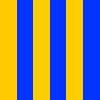 Erbitte Lotse
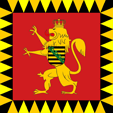
1908–1918,
Standarte des Königs,
Seitenverhältnis = 1:1,
Quelle, nach: Flaggen Enzyklopädie

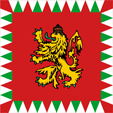
1918–1946,
Standarte des Königs,
Seitenverhältnis = 1:1,
Quelle, nach: Flaggen Enzyklopädie
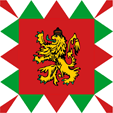
1918–1946,
Standarte des Königs zur See,
Seitenverhältnis = 1:1,
Quelle, nach: Flaggen Enzyklopädie
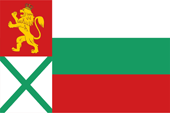
1908–1946,
Flagge des Kriegsministers,
Seitenverhältnis = 2:3,
Quelle, nach: Flaggen Europas
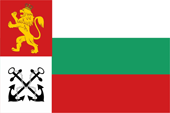
1908–1946,
Flagge des Chefs der Flotte,
Seitenverhältnis = 2:3,
Quelle, nach: Flaggen Europas
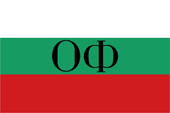
1944–1947,
zeit- und teilweise verwendete Flagge nach der Kapitulation gegenüber der Sowjetunion,
Seitenverhältnis = 2:3,
Quelle, nach: World Statesmen
4.) 1947–1990 – Volksrepublik Bulgarien
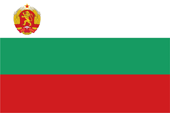
1947–1948,
Nationalflagge,
Seitenverhältnis = 2:3,
Quelle, nach:
Flaggen Enzyklopädie,
Wikipedia (BG)
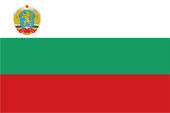
1948–1990,
Nationalflagge,
(mit kleinen Änderungen im Wappen),
Seitenverhältnis = 2:3,
Quelle, nach:
Flaggen und Wappen,
Wikipedia (BG)
1947–1990,
Handelsflagge,
Seitenverhältnis = 2:3,
Quelle, nach: Flaggen und Wappen
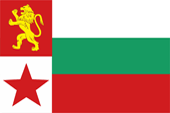
1949–1955,
Marineflagge,
Seitenverhältnis = 2:3,
Quelle, nach:
Die Welt im bunten Flaggenbild,
Wikipedia (BG)
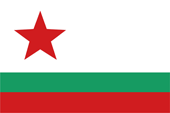
1955–1991,
Marineflagge,
Seitenverhältnis = 2:3,
Quelle, nach:
Flaggen und Wappen,
Wikipedia (BG)
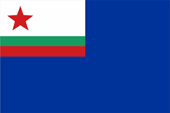
1955–1990,
Flagge der Hilfsschiffe,
Seitenverhältnis = 2:3,
Quelle, nach: Flaggen und Wappen
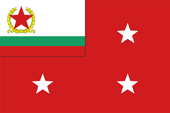
1955–1990,
Flagge des Chefs der Flotte,
Seitenverhältnis = 2:3,
Quelle, nach: Flags of the World
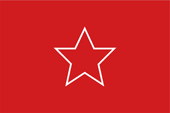
1955–1990,
Gösch,
Seitenverhältnis = 2:3, 1:2
Quelle, nach:
Flags of the World,
Wikipedia (BG)
Die weiß-grün-rote Flagge Bulgariens wurde mit der ersten Verfassung von 1879 eingeführt. Die Nationalflagge trug nur in der Zeit der kommunistischen Herrschaft (1848–1990) ein Wappen, und zwar am Mast im weißen Streifen. Weiß steht für Freiheit und Frieden, Grün für die Wälder und die Landwirtschaft, Rot für das Blut, das zur Erlangung der Freiheit vergossen wurde. Als Bulgarien in Folge des russisch-türkischen Krieges (1877–1878) als Fürstentum von der Türkei losgelöst wurde, und nach dem Friedensvertrag von San Stefano (03.03.1878) als Großbulgarien auferstand, wurde es nach dem Berliner Vertrag (13.07.1878) als türkischer Vasallenstaat in eine Teilunabhängigkeit entlassen, allerdings mit einem um ca. 60% der Landfläche reduzierten Territorium. Viele slawische Völker wählten sich nach 1848 Flaggen in den Farben Weiß, Blau und Rot, da sie Russland als Vorbild ansahen, denn die Russen waren die einzige freie slawische Nation. Alle anderen slawischen Völker lebten unter österreichischer, türkischer oder auch deutscher Herrschaft. Jene Politische Strömung, die versucht alle Slawen in einer Nation unter den Farben Weiß, Blau und Rot zu einen, wird Panslawismus genannt, und die Farben Weiß, Blau und Rot werden daher panslawische Farben genannt. Die Bulgaren verdankten den Russen ihre Freiheit, und führten eine Flagge ein, die der russischen ähnelte, jedoch wurde der blaue Streifen durch einen grünen ersetzt. Die Farben Weiß, Grün und Rot wurden allerdings inoffiziell schon seit 1862, also vor 1877/78 genutzt. Als Farben für die Flaggen werden heute angegeben: Grün = pt 347, Rot = pt 032 und Weiß.
Quelle:
Die Welt der Flaggen,
Flaggen und Wappen der Welt
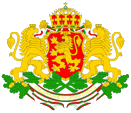
seit 1997,
Wappen von Bulgarien,
Quelle:
Wikipedia (BG),
Пакко, Public domain, via Wikimedia Commons
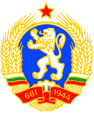
1971–1990,
Wappen von Bulgarien,
Quelle:
Flaggen und Wappen,
Wikipedia (BG),
Original: Unknown authorVectorization: Scroch, Public domain, via Wikimedia Commons
Das Wappen der Volksrepublik wurde 1946 angenommen und 1948, 1967 und 1971 in Details abgeändert. Der grundsätzliche Aufbau der Flagge war davon nicht betroffen. Im Jahr 1997 wurde ein neues, bürgerliches Wappen angenommen. Der Wappenschild ist rot, mit dem goldenen bulgarischen Löwen. Das Schild trägt eine Krone und wird von zwei Löwen gehalten, die auf Eichenzweigen stehen. Unterhalb ein Schriftband in den Landesfarben mit der Inschrift: "Saedinenieto pravi Silata" => "In der Einheit liegt die Stärke". Der goldene bulgarische Löwe auf rotem Grund ist das traditionelle Symbol Bulgariens. Er geht auf das 14. Jahrhundert zurück. Er erschien von Anfang an auf Staats- oder Militärflaggen. Zwischen 1948 und 1990 erschien er auch im Wappen auf der Nationalflagge und auf Marineflaggen wurde er in dieser Zeit vom roten Stern des Kommunismus verdrängt.
Quelle:
Die Welt der Flaggen,
Flaggen und Wappen der Welt
Lesen Sie hier:
Hintergründe, Geschichte und Fakten zum Thema "Der Löwe in der Heraldik". Ausführungen, Varianten, Entwicklung, sowie Panther und Leoparden.


1915–1918,
Flugzeugkokarde,
Quelle, nach: Wikipedia (EN)
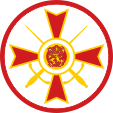
1937–1941,
Flugzeugkokarde,
Quelle, nach: Wikipedia (EN)

1941–1944,
Flugzeugkokarde,
Quelle, nach: Wikipedia (EN)
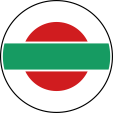
1944–1946,
Flugzeugkokarde,
Quelle, nach: Wikipedia (EN)
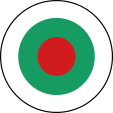
1946–1948,
Flugzeugkokarde,
Quelle, nach: Wikipedia (BG)
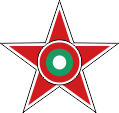
1948–1992,
Flugzeugkokarde,
Quelle, nach: Wikipedia (EN)

seit 1992,
Flugzeugkokarde,
Quelle, nach: Wikipedia (EN)
Lage:
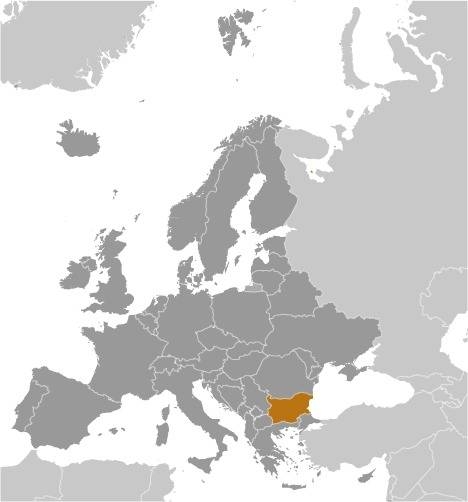
Quelle: CIA World Factbook
Landkarte des Landes:
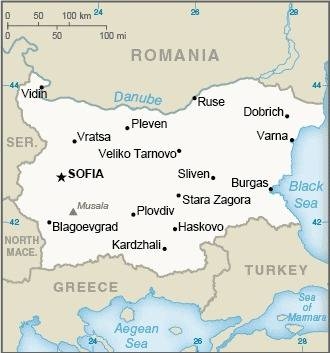
Quelle: CIA World Factbook
Fläche: 110.994 km²
Einwohner: 6.951.500 (2019), davon 85% Bulgaren, 9% Türken, 5% Zigeuner
Religionen: 76% Orthodoxe Christen, 10% Moslems, 1% Katholiken, 1% Protestanten
Bevölkerungsdichte: 63 Ew./km²
Hauptstadt: Sofia, 1.241.675 Ew. (2018)
Amtssprache: Bulgarisch
sonstige Sprachen: Türkisch, Romani
Währung: 1 Lew (BGN, Lw) = 100 Stotinki
Zeitzone: MEZ + 1 h
Quelle: Wikipedia (D)
29–46 n.Chr. · die Region kommt an das Römische Reich
681–1018 · Erstes Bulgarisches Reich
1018–1185 · die Region gehört zum Byzantinischen Reich
1185–1396 · Zweites Bulgarisches Reich
1396–1878 · die Region gehört zum Osmanischen Reich
03.03.1878 · Drittes Bulgarisches Reich
13.07.1878 · errichtung des Fürstentums Bulgarien als türkischer Vasallenstaat, und des Wilajets Ostrumelien (Hauptstadt Plowdiw/Filibe) als autonome türkische Provinz unter einem christlichen Gouverneur
1908 · volle Unabhängigkeit, Gründung des Königreiches Bulgarien
1915–1918 · Teilnahme am Ersten Weltkrieg auf Seiten der Mittelmächte
1941–1944 · Teilnahme am Zweiten Weltkrieg auf Seiten der Achsenmächte
1944 · sowjetischer Einmarsch, kommunistischer Putsch
1946 · Sturz der Monarchie, Ausrufung der Republik
1947 · Ausrufung der Volksrepublik
1990 · Ausrufung der Republik
01.01.2007 · Bulgarien wird Mitglied der Europäischen Union
Quelle: Flags of the World,
Atlas zur Geschichte,
Wikipedia (D),
World Statesmen
Der Name "Bulgarien" geht auf das Volk der Bulgaren zurück, einem Turkvolk aus dem Steppen Asiens. "Bulgare" bedeutet "Mischling", so dass Bulgarien das "Land der Mischlinge" ist. In der Tat sind die Bulgaren noch heute ein Mischvolk aus Thrakern, Slawen und Turk-Bulgaren. Mit der Bezeichnung Turk-Bulgaren sind nicht die in Bulgarien lebenden Türken gemeint, sondern die Ur-Bulgaren des frühen Mittelalters.
Quelle:
Handbuch der geographischen Namen,
Discovery '97

Mit freundlicher Untersützung von: Jürgen Zens und Mario Schweigler