mobile Ansicht, to the English Version tap the flag


- Republik der Union von Myanmar
- autoritäre präsidiale Republik mit Mehrparteiensystem
- Eigenbezeichnung: Pyijchaunsu Myanma Nainngamto
- Landesname in Englisch: Burma, Landesname in Deutsch: Birma
• Flaggen
• historische Flaggen
• Bedeutung/Ursprung der Flagge
• Wappen
• Bedeutung/Ursprung des Wappens
• Sezessionen
- Karenstaat Kawthoolei
- Arakan
- Mon-Staat
- Shanland
- Tschinstaat – Mizoram
• Flugzeugkokarde
• Landkarte
• Zahlen und Fakten
• Geschichte
• Ursprung des Landesnamens
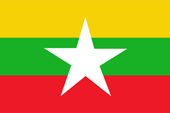
seit 2010,
National-, Staats- und Handelsflagge,
Seitenverhältnis = 2:3,
Quelle, nach:
Wikipedia (D),
Flags of the World



seit 2010 (?),
Flagge der Streitkräfte,
Quelle, nach: Flags of the World

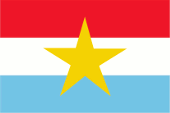
seit 2010 (?),
Flagge der Streitkräfte,
Quelle, nach: Wikipedia (EN)

seit 2010,
Seekriegsflagge,
Seitenverhältnis = 5:9,
Quelle, nach: Wikipedia (D)

seit 2010,
Flagge der Luftwaffe,
Seitenverhältnis = 5:9,
Quelle, nach: Wikipedia (EN)
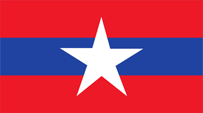
seit 2010,
Flagge des Heeres,
Seitenverhältnis = 5:9,
Quelle, nach: Wikipedia (EN)
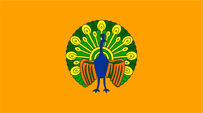
Präsidentenflagge,
Seitenverhältnis = 5:9,
Quelle, nach: Die Welt der Flaggen,
Flags of the World

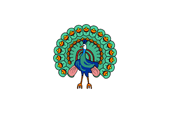
ca.1700–1886,
Nationalflagge,
Quelle, nach: Flags of the World,
Wikipedia (EN)

1886–1939,
Flagge Großbritanniens,
Seitenverhältnis = 1:2,
Quelle, nach: World Statesmen
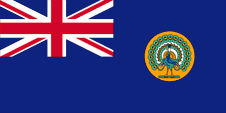
1939–1941,
Flagge der Regierung (Staatsflagge),
Seitenverhältnis = 1:2,
Quelle, nach:
Flaggen Enzyklopädie,
Wikipedia (EN)
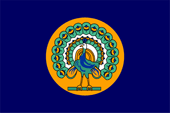
1941–1942,
Flagge von Britisch-Burma (provisorisch),
Quelle, nach: World Statesmen,
Wikipedia (EN)

1940–1945,
Burma ist von Japan besetzt,
Quelle, nach: Flags of the World
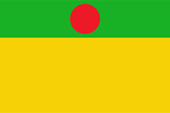
1942–1945,
Flagge von Japanisch-Burma / inoffiziell / Synyethe-Wunthann Partei,
Quelle, nach: Flags of the World
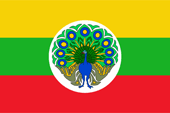
1943–1945,
Flagge von Japanisch-Burma / offiziell,
Quelle, nach: Flags of the World,
Wikipedia (EN)
1945–1948,
Flagge der Regierung (Staatsflagge),
Seitenverhältnis = 1:2,
Quelle, nach:
Flaggen Enzyklopädie,
Wikipedia (EN)
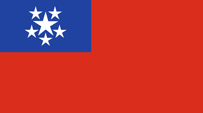
1948–1974,
Nationalflagge,
Seitenverhältnis = 5:9,
Quelle, nach: Die Welt der Flaggen

1974–2010,
Nationalflagge,
Seitenverhältnis = 5:9,
Quelle, nach: Flags of all Nations
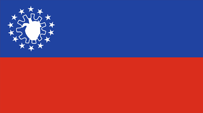
1974–2010,
Handelsflagge,
Seitenverhältnis = 5:9,
Quelle, nach: Flags of all Nations

1974–2010,
Marineflagge,
Seitenverhältnis = 5:9,
Quelle, nach: Flags of all Nations
Die heutige Flagge von Burma wurde am 21.10.2010 angenommen. Sie zeigt drei horizontale Streifen in Gelb, Grün und Rot und in der Mitte einen großen fünfzackigen, weißen Stern. Damit kehrt man zum Design der Jahre des Zweiten Weltkriegs unter der Besatzung der Japaner zurück, jedoch ist der weiße Stern der "Freiheitsliga" zu sehen. Die "Freiheitsliga" war der bewaffnete anti-japanische Widerstand. Die Flagge des von China abhängigen Königreiches Burma war ursprünglich einfarbig weiß, mit der Abbildung eines Pfaus in der Mitte. Sie wurde bis zur britischen Annexion im Jahre 1886 verwendet. Im Jahre 1939 wurde für das 1937 von Britisch-Indien getrennte Burma ein britischer Blue Ensign, eingeführt. Großbritannien hatte in Jahr 1864 ein Flaggensystem eingeführt, in dem:
• Kriegsschiffe einen sogenannten "White Ensign" (Marineflagge), eine weiße Flagge oft mit durchgehendem roten Georgskreuz und mit dem Union Jack in der Oberecke,
• Handelsschiffe einen "Red Ensign" (auch "Civil Ensign" => Bürgerflagge genannt, die eigentl. Handelsflagge), eine rote Flagge mit dem Union Jack in der Oberecke, und
• Dienstschiffe einen "Blue Ensign" (Regierungsflagge => die eigentl. Staatsflagge), eine blaue Flagge mit dem Union Jack in der Oberecke führten.
Seit 1865 durften Schiffe von Kolonialregierungen einen Blue Ensign mit einem Badge (Abzeichen) im fliegenden Ende führen. Die jeweiligen Regierungen sollten entsprechene Bagdes zur Verfügung stellen. Handelsschiffe und seefahrende Privatpersonen aus Kolonien dürfen nur dann einen Red Ensign mit Badge führen, wenn von der britischen Admiralität eine entsprechende Erlaubnis für die Kolonie erteilt wurde.
Burma, seit 1937 mit eigener Verwaltung, hat sich als Badge wieder den Pfau gewählt. 1942 wurde Burma von japanischen Truppen besetzt. Die Macht lag daraufhin innenpolitisch bei der 1942 Synyethe-Wunthann Partei und es wurde deren Flagge verwendet, faktisch bis 1945. 1943 wurde Burma als japanischer Satellitenstaat in die Unabhängigkeit entlassen. Die Flagge dieses Staates zeigte drei horizontale Streifen in Gelb, Grün und Rot, mit dem Pfau auf einer weißen Scheibe in der Mitte. 1945 wurde Burma von britischen Truppen besetzt, wieder dem britischen Kolonialreich eingegliedert, und es wurde wieder der Blue Ensign eingeführt. Am 04.01.1948 wurde Burma erneut in die Unabhänigkeit entlassen. Die in diesem Zusammenhang eingeführte Flagge war rot mit einer blauen Oberecke, darin ein weißer fünfzackiger Stern, umgeben von fünf kleineren Sternen. Ihren Ursprung hat diese Flagge in der Flagge der antijapanischen "Freiheitsliga", einer roten Flagge mit einem weißen Stern in der Oberecke. Die fünf kleineren Sterne in der neuen Flagge standen für die fünf größten Volksgruppen im Lande. Im Zusammenhang mit der Einführung einer neuen Verfassung wurde am 03.01.1974 auch eine neue Flagge eingeführt. Sie entspricht dem vorherigen Muster, jedoch zeigt sie anstelle der Sterne ein Zahnrad mit einer Reispflanze, von vierzehn Sternen kreisförmig umgeben. Das Zahnrad steht für die Industrie, die Reispflanze für die Landwirtschaft, und die vierzehn Sterne stellen die sieben Staaten und sieben Provinzen des Landes dar. Der Pfau wird nur noch in der Flagge des Präsidenten verwendet. Alle anderen Flaggen Burmas orientierten sich in ihrer Gestaltung bis zur Einführung der Flagge von 2010 noch immer am britischen Ensign-System. Als Farben für die Flaggen werden heute angegeben: Gelb = pt 166, Grün = pt 361, Rot = pt 1788 und Weiß.
Quelle:
Die Welt der Flaggen,
Flags of the World,
Volker Preuß
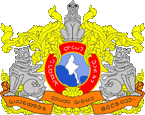
1948-1974,
Wappen von Burma,
Quelle:
Corel Draw 4,
Wikipedia (EN),
Wappen und Flaggen aller Nationen
1974-2010,
Wappen von Burma,
Quelle:
Corel Draw 4,
Wikipedia (EN),
Wappen und Flaggen aller Nationen
seit 2010,
Wappen von Burma (Myanmar),
Quelle:
Corel Draw 4,
Wikipedia (EN),
Wappen und Flaggen aller Nationen
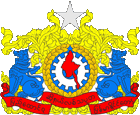
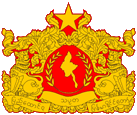
Das im Jahre 1948 eingeführte Wappen von Burma zeigte in der Mitte ein Siegel, mit einer Landkarte des Landes. Um die Landkarte lief ein golden gesäumter roter Ring mit dem Spruch: "Die Einheit führt zu Glück und Wohlstand". Unterhalb befand sich ein rosa Spruchband mit dem Landesnamen. Das Siegel wurde von drei blauen Löwen bewacht. Sie stehen für Mut, Kraft und Sauberkeit, die Zahl Drei ist eine Glückszahl. Die Elemente des Wappens wurden von üppigen goldenen Bändern, Decken und Verzierungen zusammengehalten. Im Jahre 1974 wurde die Verfassung geändert. Das Land hieß jetzt "Sozialistische Republik der Union von Burma". Auch das Wappen wurde abgeändert. Einer der Löwen wurde entfernt und durch den weißen Stern der Freiheitsliga ersetzt. Das zentrale Siegel wurde jetzt von einem goldenen Kranz gesäumt. In der Mitte erschien ein silbernes Zahnrad auf blauem Grund, eine rote Silhouette des Landes wurde darübergelegt. Im Jahre 2010 wurde die Verfassung erneut geändert. Das Land heißt jetzt "Republik der Union von Myanmar". Auch das Wappen wurde wieder abgeändert. Es erscheint jetzt vollständig in Gold auf rotem Hintergrund. Das zentrale Siegel ist ganz verschwunden, die Landkarte/Silhouette des Landes erscheint an zentraler Stelle, umbeben von einem Kranz von zwei stilisierten Zweigen.
Quelle: Flaggen und Wappen der Welt,
Wikipedia (D)

Flugzeugkokarde (-Markierung),
Quelle, nach: Wikipedia (EN)

Markierung am Seitenleitwerk,
Quelle, nach: Wikipedia (EN)
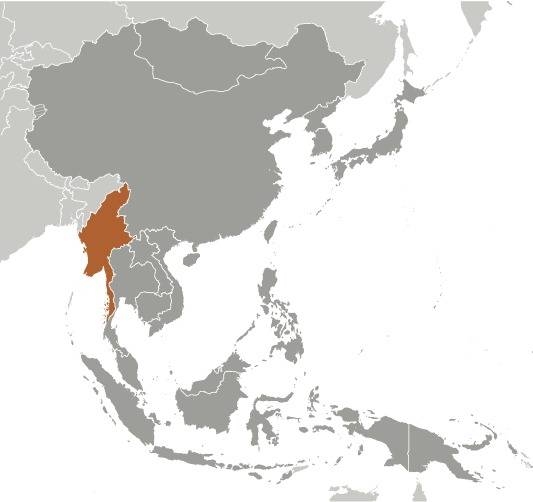
Lage:
Quelle: CIA World Factbook
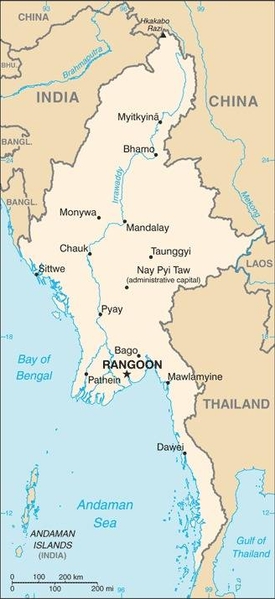
Landkarte des Landes:
Quelle: CIA World Factbook
Fläche: 676.578 km²
Einwohner: 53.370.600 (2017), davon 70% Burmesen, 8% Shan, 6% Karen (meist Christen), 2% Mon, 2% Chin
Religionen: 88% Buddhisten, 5% Protestanten, 4% Moslems, 1% Katholiken
Bevölkerungsdichte: 79 Ew./km²
Hauptstadt: Nay Pyi Taw (Naypyidaw), 1.160.242 Ew. (2014)
alte Hauptstadt und größte Stadt: Rangun (Yangon), 5.210.000 Ew.
Amtssprache: Burmesisch
sonstige Sprachen: Shan, Karen, Chin, ...
Währung: 1 Kyat (MMK, K) = 100 Pyas
Zeitzone: MEZ + 5,5 h
Quelle: Wikipedia (D)
840–1287 · Staat Pagan
1287 · mongolische Eroberung
1364 · Gründung des Königreiches Awa, Erstes Reich
1559 · Awa zerfällt in mehrere Kleinstaaten
1752 · Neu-Gründung des Königreiches Awa, Zweites Reich
1769 · Awa wird China tributpflichtig
1784 · Arakan wird von Awa annektiert
1824–1826 · Krieg gegen Großbritanien, Rangun, Arakan, Tenasserim, Manipur, Assam und die Küste werden von Britisch-Indien annektiert
1852–1853 · Krieg gegen Großbritanien, Pegu wird von Britisch-Indien annektiert
1862 · Arakan, Tenasserim und Pegu werden innerhalb von Britisch-Indien als Unterburma administrativ zusammengefasst
1885–1886 · Krieg gegen Großbritanien, das Königreich Awa wird als Oberburma von Britisch-Indien annektiert und einen Monat später mit Unterburma zu "Burma" vereinigt
01.04.1937 · Burma wird von Britisch-Indien abgetrennt, innere Selbstverwaltung
1942–1945 · Besetzung durch Japan im Zweiten Weltkrieg
1943–1945 · Shanland ist von Thailand annektiert
1943–1945 · Republik Burma unter Japanischer Oberhoheit
04.01.1948 · Großbritannien gewährt Unabhängigkeit
02.03.1962 · Ne Win Putsch
04.01.1974 · neue Verfassung, Umbenennung in Sozialistische Republik der Union von Burma
1988 · Militärputsch, Umbenennung in Union von Burma
1989 · Umbenennung in Union von Myanmar
1990 · Unruhen
2005–2007 · Umzug der Hauptstadt nach Naypyidaw
2007 · Unruhen
2007 · Regierungsprogramm "zur Zerstörung der christlichen Religion in Myanmar"
21.10.2010 · neue Verfassung, Umbenennung in Republik der Union von Myanmar
Quelle:
Atlas zur Geschichte,
Wikipedia (D),
World Statesmen
Der Name "Burma" geht auf das Volk der Burmesen zurück, die sich selbst als "Bamar" bezeichnen. Das gleiche Volk nennt sich aber auch "Myanma", was "die Starken" bedeutet. Die Burmesen stellen 70% der Bevölkerung. In der BRD wird häufig der Name "Birma" benutzt, was eine Eindeutschung der englischen Aussprache des Wortes "Burma" ist. In der Schweiz, in Österreich und auch in der ehemaligen DDR wird jedoch "Burma" verwendet. Die Umbenennung des Landes in "Myanmar" erfolgte im Jahre 1989 einseitig seitens des Militärregierung. Die UNO hat die Änderung übernommen, während die USA und auch Australien sie offiziell ignorieren. Die burmesische Opposition plädiert ebenfalls für die Beibehaltung von "Burma".
Quelle: Wikipedia (D)