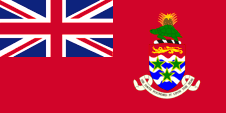
seit 1999,
Handelsflagge,
Seitenverhältnis = 1:2,
Quelle, nach:
Flags of all Nations,
Flags of the World,
Wikipedia (D),
Public domain, via Wikimedia Commons

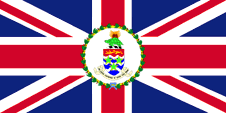
Flagge des Gouverneurs,
Seitenverhältnis = 1:2,
Quelle, nach: Wikipedia (D)

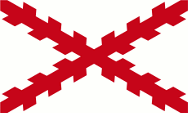
16./17. Jhd.,
Die Inseln gehören zum spanischen Machtbereich,
Quelle, nach: Wikipedia (EN)

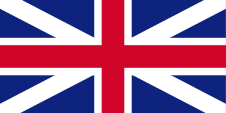
1760–1801,
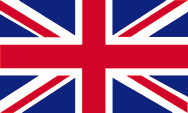
Flagge von Großbritannien (bis 1707 England),
Seitenverhältnis = 1:2,
Quelle, nach:
Die Welt der Flaggen
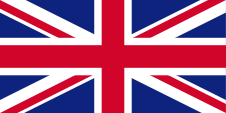
1801–1875,
Flagge Großbritanniens,
Seitenverhältnis = 1:2,
Quelle, nach: World Statesmen
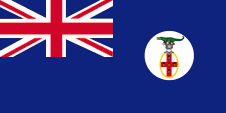
1875–1906 (Jamaika),
Flagge der Regierung (Staatsflagge),
Seitenverhältnis = 1:2,
Quelle, nach: Wikipedia (D)
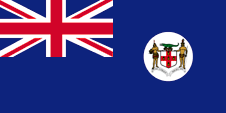
1906–1959 (Jamaika),
Flagge der Regierung (Staatsflagge),
Seitenverhältnis = 1:2,
Quelle, nach: Wikipedia (D)
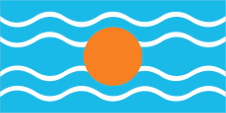
1959–1962,
Flagge der Westindischen Föderation,
Seitenverhältnis = 1:2,
Quelle, nach: Flags of the World
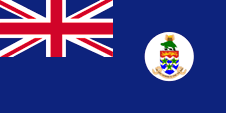
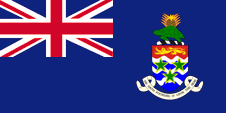
1959–1999,
Flagge der Regierung (Staatsflagge),
Seitenverhältnis = 1:2,
Quelle, nach: World Statesmen
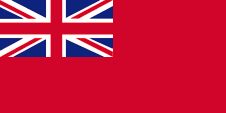
seit 1894,
Handelsflagge Großbritanniens,
noch immer in Verwendung
Seitenverhältnis = 1:2,
Quelle, nach: Flags of the World
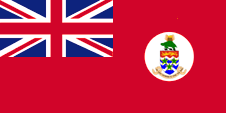
bis 1999,
Handelsflagge,
noch immer in Verwendung,
Seitenverhältnis = 1:2,
Quelle, nach:
Flags of the World,
Wikipedia (D)
Der Union Jack weist auf die Verbindungen zu Großbritannien hin. Großbritannien hatte in Jahr 1864 ein Flaggensystem eingeführt, in dem:
• Kriegsschiffe einen sogenannten "White Ensign" (Marineflagge), eine weiße Flagge oft mit durchgehendem roten Georgskreuz und mit dem Union Jack in der Oberecke,
• Handelsschiffe einen "Red Ensign" (auch "Civil Ensign" => Bürgerflagge genannt, die eigentl. Handelsflagge), eine rote Flagge mit dem Union Jack in der Oberecke, und
• Dienstschiffe einen "Blue Ensign" (Regierungsflagge => die eigentl. Staatsflagge), eine blaue Flagge mit dem Union Jack in der Oberecke führten.
Seit 1865 durften Schiffe von Kolonialregierungen einen Blue Ensign mit einem Badge (Abzeichen) im fliegenden Ende führen. Die jeweiligen Regierungen sollten entsprechene Bagdes zur Verfügung stellen. Handelsschiffe und seefahrende Privatpersonen aus Kolonien dürfen nur dann einen Red Ensign mit Badge führen, wenn von der britischen Admiralität eine entsprechende Erlaubnis für die Kolonie erteilt wurde.
Die Inseln gehörten von 1863 bis 1959 zu Jamaika, so dass die dort gültigen Flaggen verwendet wurden. Ein eigenes Badge hatten die Caymaninseln nie, denn in Zusammenhang mit der Trennung von Jamaika wurde 1958 ein Wappen eingeführt, das ab 1959 auf einen blauen britischen Dienstflagge verwendet wurde. Wann die Caymaninseln die Erlaubnis erhalten haben, die rote Handelsflagge mit dem Wappen zu verwenden, ist nicht genau zu ermitteln. Offenbar waren unzählige Schiffe auf den Caymans registriert, so dass es nicht so einfach war eine einheitliche Regelung zu finden, zumal London und George Town offenbar sich widersprechende Weisungen herausgegeben haben.
Ein solches Badge war oft eine auf einer Scheibe platzierte regionale landschaftliche Darstellung, zeigte oft Schiffe, historische Begebenheiten oder konnte auch nur eine Art Logo sein. Sehr oft zeigte ein Badge zusätzlich den Namen des Landes oder auch einen Wahlspruch. Einige Besitzungen hatten aber auch schon von Anfang an ein Wappen, bzw. erhielten über die Jahre eine eigenes Wappen und das Badge wurde abgeschafft. Um ein weitgehend einheitliches Erscheinungsbild im fliegenden Ende der Flaggen zu gewährleisten, wurden Wappen und auch andere Symbole auf einer weißen Scheibe in der Größe der früheren Badges dargestellt. Es gab hier aber auch Ausnahmen, denn einige Kolonien verwendeten diese weiße Scheibe nicht, und platzierten ihr Wappen oder auch nur das Wappenschild - manchmal auch vergrößert - direkt auf das Flaggentuch. Schon in den 40-er Jahre wurde dazu übergegangen die weiße Scheibe zu entfernen und das Wappen direkt zu platzieren oder vergrößert dazustellen. Dieser Umstellungsprozess erfolgte allmählich, nirgendwo gleichzeitig und vollständig. In einigen britischen Besitzungen sind bis heute Flaggen mit der weißen Scheibe in Gebrauch, in anderen nicht mehr und in einigen Gebieten gibt es beide Varianten nebeneinander. So sind auf den Caymaninseln noch viele Flaggen im alten Design im Einsatz, vor allem an Land.
Die Flagge des Gouverneurs für die Caymaninseln ist ein Standard-Design, älterer Machart, für alle Gouverneure, Leutnant-Gouverneure, Kommissare, Hohen Kommissare und anderer Beamter, die ein entsprechendes Verwaltungsamt ausüben, vorausgesetzt, dass kein neuerer Entwurf verwendet wird. Innerhalb des Kranzes befindet sich immer das Entsprechende Badge oder Wappen.
Quelle:
Flags of the World,
Die Welt der Flaggen
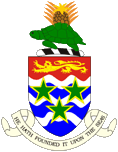
seit 1958,
Wappen der Caymaninseln,
Quelle, nach: Corel Draw 4
Das Wappen der Caymaninseln – 1958 verliehen, zeigt regionale Motive, z.B. Ananasfrucht, Schildkröte und stilisierte Meereswellen, aber auch einen britischen Löwen und drei Sterne. Diese stehen für die drei Inseln aus denen die Kolonie besteht: Grand Cayman, Little Cayman und Cayman Brac. Der Wappenspruch lautet "Er hat auf den Meeren gegründet".
Quelle: Flaggen Enzyklopädie
Lage:
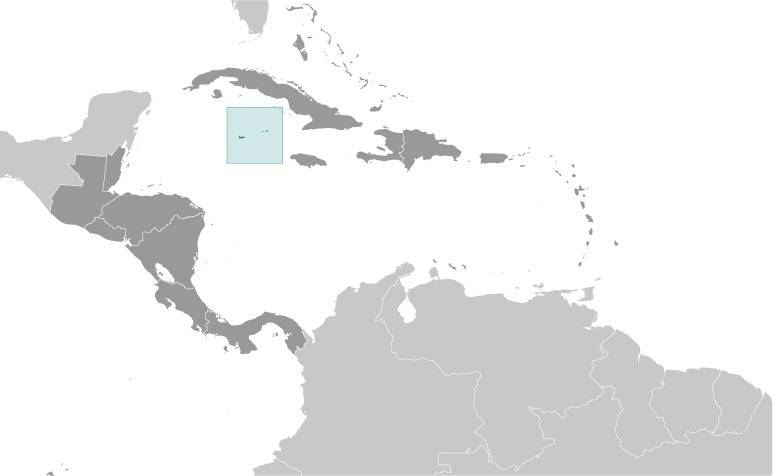
Quelle: CIA World Factbook
Landkarte des Landes:
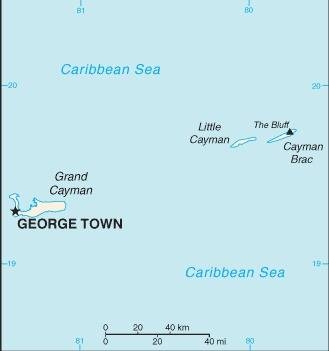
Quelle: CIA World Factbook
Fläche: 264 km²
Einwohner: 61.559 (2017), davon 60% Mulatten, 20% Afroamerikaner, 20% Europäer
Bevölkerungsdichte: 233 Ew./km²
Hauptstadt: George Town, 28.089 Ew. (2010)
Amtssprache: Englisch
Währung: Kaiman-Dollar (KYD, CI$) = 100 Cents
Zeitzone: MEZ – 6 h
Quelle: Wikipedia (D)
10.05.1503 · von Kolumbus entdeckt
seit 1666 · Besiedlungsversuche
1734 · erste permanente Besiedlung, britische Kolonisierung
18.07.1670 · offiziell von Spanien an England (das spätere Großbritannien) abgetreten
1832 · erstes eigenes Parlament
1863–1959 · zu Jamaika
1959–1962 · Teil der Britischen Kolonie "Westindische Föderation"
seit 1962 · Kronkolonie
Quelle:
Wikipedia (D),
World Statesmen
Der Ursprung des Namens "Caymaninseln" ist nicht ganz geklärt. Als Kolumbus die unbewohnten Inseln 10.05.1503 entdeckte, nannte er sie wegen der zahlreichen Schildkröten "Islas de las Tortugas" (Schildkröteninseln). Um 1520 tauchten sie in Seekarten als "Islas de las Lagartos" (Echseninseln) auf. Das bezog sich auf die auf den Inseln vorkommenden Leguane. Wahrscheinlich wurden diese Echsen um 1530 irrtümlicherweise mit dem karibischen Wort für Krokodil "Caiman" benannt, und die Inseln wurden zu den "Islas de las Caymanas". Als der englische Seefahrer Francis Drake die Inseln 1586 besuchte, waren schon Tatsachen geschaffen worden, und auch er nannte die Leguane "Caymanas". Als die Inseln 1670 endgültig englisch wurden, sind sie als "Cayman Islands" der Verwaltung des Gouverneurs von Jamaika unterstellt worden.
Quelle:
Markus Kappeler (CH),
Wikipedia (D)