mobile Ansicht, to the English Version tap the flag

- Territorium der Kokos-Inseln
- auch Keeling-Inseln genannt
- Außenbesitzung Australiens
• Flaggen
• historische Flaggen
• Bedeutung/Ursprung der Flagge
• Wappen
• Bedeutung/Ursprung des Wappens
• Landkarte
• Zahlen und Fakten
• Geschichte
• Ursprung des Landesnamens
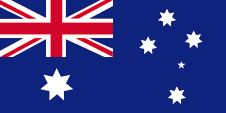
seit 1955,
Flagge Australiens,
Seitenverhältnis = 1:2,
Quelle, nach: Corel Draw 4


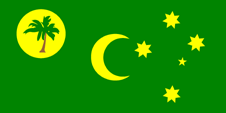
seit 2003,
Nationalflagge (inoffiziell),
Seitenverhältnis = 1:2,
Quelle, nach: Wikipedia (DE)


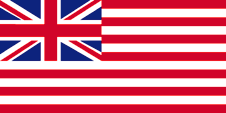
1857–1878,
Flagge der Britischen Ostindienkompanie,
Quelle, nach:
commons.wikimedia.org
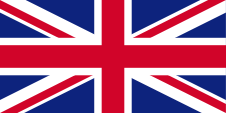
1878–1955,
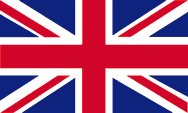
Union Flag → quasi Nationalflagge,
Flagge von Großbritannien,
Seitenverhältnis = 1:2,
Quelle: Wikipedia (EN)
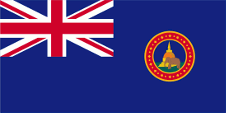
1878–1886, Britisch-Ceylon,
Flagge der Regierung (Staatsflagge),
Seitenverhältnis = 1:2,
Quelle, nach: Flags of the World
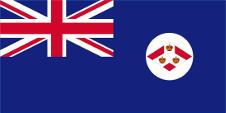
1886–1904, Straits Settlements,
Flagge der Regierung (Staatsflagge),
Seitenverhältnis = 1:2,
Quelle, nach: World Statesmen
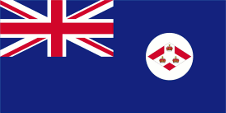
1904–1925, Straits Settlements,
Flagge der Regierung (Staatsflagge),
Seitenverhältnis = 1:2,
Quelle, nach: World Statesmen
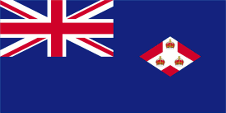
1925–1942, Straits Settlements,
Flagge der Regierung (Staatsflagge),
Seitenverhältnis = 1:2,
Quelle, nach: World Statesmen
1942–1946, Britisch-Ceylon,
Flagge der Regierung (Staatsflagge),
Seitenverhältnis = 1:2,
Quelle, nach: Flags of the World
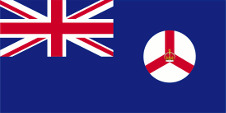
1946–1951, Britisch-Singapur,
Flagge der Regierung (Staatsflagge),
Seitenverhältnis = 1:2,
Quelle, nach: Flags of the World
Die heutige Flagge der Kokosinseln wurde 2003 eingeführt, jedoch hat sie nur inoffiziellen Charakter. Die Flagge ist einfarbig grün und zeigt in der Oberecke am Mast eine gelbe Scheibe mit einer Palme darin. In der Mitte der Flagge ein gelber Halbmond und im fliegenden Ende das Kreuz des Südens, gebildet aus gelben Sternen. Die Farben Gelb und Grün sind die Nationalfarben von Australien. Ebenso verweist das Kreuz des Südens auf die Verbindungen zu diesem Land. Die Kokosinseln gehörten ab 1886 zur britischen Kronkolonie der Straits Settlements. Im Jahre 1867 wurden die Straits Settlements eine britische Kronkolonie. Für diese wurde eine Flagge eingeführt, wie sie damals in britischen Kolonien üblich war. Großbritannien hatte in Jahr 1864 ein Flaggensystem eingeführt, in dem:
• Kriegsschiffe einen sogenannten "White Ensign" (Marineflagge), eine weiße Flagge oft mit durchgehendem roten Georgskreuz und mit dem Union Jack in der Oberecke,
• Handelsschiffe einen "Red Ensign" (auch "Civil Ensign" → Bürgerflagge genannt, die eigentl. Handelsflagge), eine rote Flagge mit dem Union Jack in der Oberecke, und
• Dienstschiffe einen "Blue Ensign" (Regierungsflagge → die eigentliche Staatsflagge), eine blaue Flagge mit dem Union Jack in der Oberecke führten.
Seit 1865 durften Schiffe von Kolonialregierungen einen Blue Ensign mit einem Badge (Abzeichen) im fliegenden Ende führen. Das Badge der Straits Settlements war ein roter Rhombus mit einer weißen Deichsel, auf die drei Kronen aufgelegt waren. Diese standen für die drei Besitzungen Pinang, Malakka und Singapur. 1942 wurden die Inseln der Verwaltung von Britisch-Ceylon unterstellt und ab 1946 der von Britisch-Singapur. Die Verwaltung durch Britisch-Singapur endete 1951. An Land repräsentierten der einzelne Bürger und auch die Behörden ihren Status als Bürger oder Organe der britischen Nation, verkörpert im United Kingdom, durch die Verwendung des Union Jack, dann „Union Flag“ genannt. Zur See war somit für den britischen Bürger die britische Handelsflagge, der Red Ensign (Rote Flagge) vorgesehen. In einigen wenigen Fällen wurde den Bürgern einer Kolonie durch die Admiralität erlaubt, auf See einen Red Ensign mit dem Badge der Kolonie zu verwenden. Die Verwaltung der Kokosinseln ging am 23.11.1955 auf Australien über, und auf der Insel wird offiziell nur die Flagge Australiens verwendet.
Quelle: Die Welt der Flaggen,
Flags of the World,
Volker Preuss
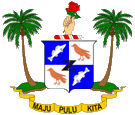
Wappen der Kokosinseln,
Quelle, nach: Wikipedia (ES)
Das Wappen zeigt einen Schild zwischwen zwei Palmen. Das Schild was gevierteilt, Feld eins und vier zeigen einen silbernen Fisch auf blauem Untergrund, Feld zwei und drei einen Vogel auf silbernem Hintergrund. In der Mitte ein schwarzes "Z". Oberhalb des Schildes eine rot-weiße Wulst, daraus eine Hand mit einer roten Nelke darin. Unterhalb des Schildes erscheint ein goldenes Schriftband mit dem Motto "Pulu Kita Maju". Solange die Insel im Besitz der Familie Clunies-Ross gewesen war, stand dort das lateinische Motto "Pro Patria". Das Wappen ist vermutlich das Familienwappen der Clunies-Ross. Das Wappen könnte in der Tat das Familienwappen der Clunies-Ross sein. Dafür spricht das schwarze "Z" in der Mitte des Wappens. Es wird zwar als "Zobel" und "Säbel" bezeichnet, dürfte aber in Wirklichkeit eine abgewandelte Form einer Wolfsangel sein, die europäischer Heraldik entstammt.
Quelle: Wikipedia (ES),
Volker Preuss
Lage:
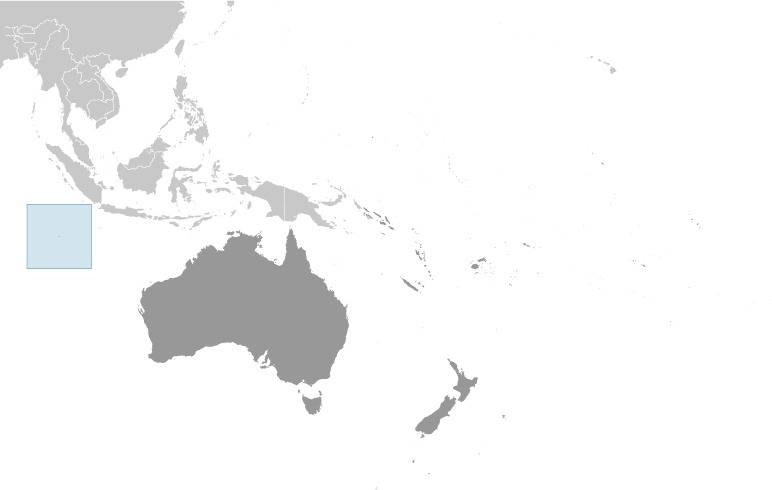
Quelle: CIA World Factbook
Landkarte des Landes:
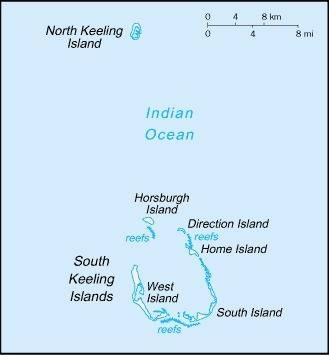
Quelle: CIA World Factbook
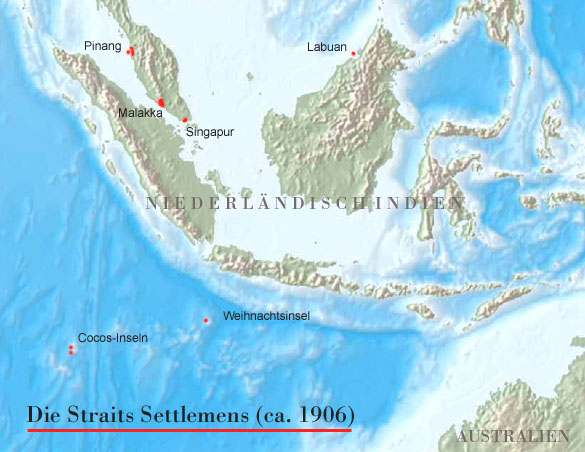
Quelle/Source: Freeware, University of Texas Libraries, modyfied by: Volker Preuss
Fläche: 14 km²
Einwohner: 244 (2016)
Bevölkerungsdichte: 42 Ew./km²
Hauptstadt: West Island, 134 Ew. (2011)
Amtssprache: Englisch
Währung: 1 Australischer Dollar (A$) = 100 Cents
Zeitzone: MEZ + 5,5 h
Quelle: Wikipedia (DE)
1609 · der englische Seefahrer William Keeling entdeckt die Kokosinseln
1826 · Besiedlung der Inseln durch Briten
1831 · der Schotte John Clunies-Ross ergreift Besitz von den Inseln
1857 · die Kokosinseln werden formell von der Britischen Ostindienkompanie in Besitz genommen
1878 · die Verwaltung der Kokosinseln geht auf den Britischen Gouverneur von Ceylon (Sri Lanka) über
1886 · die Kokosinseln werden den Straits Settlements angegliedert
1901 · Bau einer Kabelstation auf Direction Island
1910 · Bau einer Funkstation auf Direction Island
09.11.1914 · Erster Weltkrieg (1914–1918), deutsche Truppen landen auf Direction Island, verlassen aber wenig später die Kokosinseln
1942 · die Verwaltung der Kokosinseln geht wieder auf den Britischen Gouverneur von Ceylon (Sri Lanka) über
1942–1944 · japanische Luftangriffe im Zweiten Weltkrieg (1939–1945)
01.04.1946 · das Ende der Straits Settlements: Pinang und Malakka werden der Malaiischen Union (Malaya) angeschlossen, Singapur wird eine eigene britische Kronkolonie, die Kokosinseln und die Weihnachtsinsel werden Singapur angeschlossen, Labuan kommt an Britisch-Nordborneo
1951 · die Inseln werden von Singapur getrennt, verbleiben als britischer Besitz
23.11.1955 · die Verwaltung der Kokosinseln geht von Großbritannien auf Australien über
1978 · Australien kauft der Familie Clunies-Ross die Inseln fast vollständig ab
25.07.1979 · Australien gewährt Selbstverwaltung
1984 · Volksabstimmung, Mehrheit für Verbleib bei Australien
Quelle: Wikipedia (DE),
World Statesmen
Der Name "Kokosinseln" (auch "Cocos-Inseln") bezieht sich wahrscheinlich auf die Kokospalmen der Inseln. Sie bildeten von 1826 bis 1987 die Haupterwerbsquelle der Inselbewohner (Herstellung von Palmöl und Kopra). Die Inseln werden auch "Keeling-Inseln" genannt, zu Ehren ihres Entdeckers, des englischen Seefahrers Kapitän William Keeling.
Quelle: Wikipedia (DE),
Volker Preuss