mobile Ansicht, to the English Version tap the flag

- Königreich Dänemark
- parlamentarische Monarchie
- Eigenbezeichnung: Kongerget Danmark
• Flaggen
• historische Flaggen
• Bedeutung/Ursprung der Flagge
• regionale Flaggen:
– Insel Æro
– Insel Bornholm
• Wappen
• Bedeutung/Ursprung des Wappens
• Außenbesitzungen:
– Grönland
– Färöer
• Flugzeugkokarde
• Landkarte
• Zahlen und Fakten
• Geschichte
• Ursprung des Landesnamens
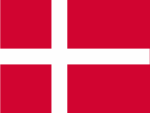
National- und Handelsflagge,
Seitenverhältnis = 28:37,
Quelle, nach: Corel Draw 4


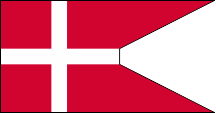
Staatsflagge an Land,
Seitenverhältnis = 28:53,5,
Quelle, nach: Flags of the World

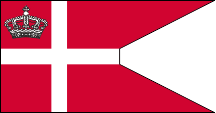
Staatsflagge zur See,
Seitenverhältnis = 28:53,5,
Quelle, nach: Flags of the World
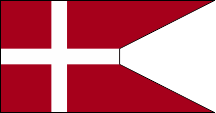
Marineflagge und Gösch,
Seitenverhältnis = 28:53,5,
Quelle, nach: Flags of the World
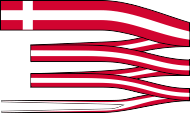
Kommandowimpel,
Quelle, nach: Flags of the World
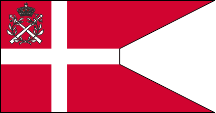
Zollflagge,
Seitenverhältnis = 28:53,5,
Quelle, nach: Flags of the World
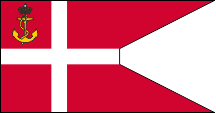
1. Dienstflagge der Marine,
Quelle, nach: Die Welt im bunten Flaggenbild
2. Flagge der Hilfsschiffe,
Quelle, nach: Flags of the World
Seitenverhältnis = 28:53,5
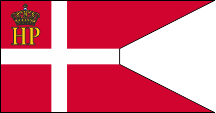
Dienstflagge der Hafenpolizei,
Seitenverhältnis = 28:53,5,
Quelle, nach: Die Welt im bunten Flaggenbild
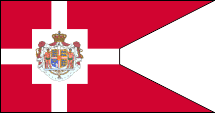
Königliche Flagge,
Seitenverhältnis = 28:53,5,
Quelle, nach: Flaggen und Wappen
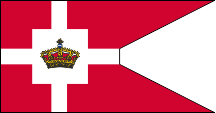
Flagge für Mitglieder des Königlichen Hauses,
Seitenverhältnis = 28:53,5,
Quelle, nach: Die Welt im bunten Flaggenbild
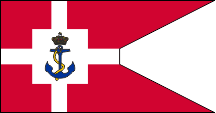
Flagge des Verteidigungsministers,
Seitenverhältnis = 28:53,5,
Quelle, nach: Die Welt im bunten Flaggenbild
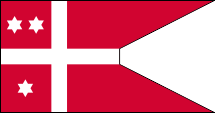
Flagge für Admirale,
Seitenverhältnis = 28:53,5,
Quelle, nach: Die Welt im bunten Flaggenbild
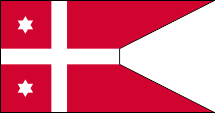
Flagge für Vizeadmirale,
Seitenverhältnis = 28:53,5,
Quelle, nach: Die Welt im bunten Flaggenbild
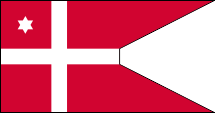
Flagge für Konteradmirale,
Seitenverhältnis = 28:53,5,
Quelle, nach: Die Welt im bunten Flaggenbild
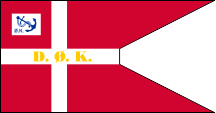
seit 1897,
Flagge der Dänischen Ostasiatischen Kompanie,
Seitenverhältnis = 28:53,5,
Quelle, nach: Die Welt im bunten Flaggenbild
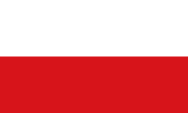
Flagge für Lotsen,
Seitenverhältnis = 2:3,
Quelle, nach: Die Welt im bunten Flaggenbild,
FOTW,
Foto
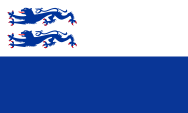
Flagge Bund Deutscher Nordschleswiger,
Seitenverhältnis = 2:3,
Quelle, nach: Wikipedia (DE)


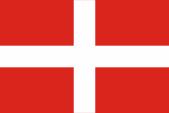
13.–19. Jahrhundert,
Urform mit symmetrischem Kreuz,
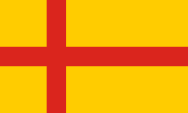
1396–1523,
Flagge der Kalmarer Union (Dänemark, Norwegen, Schweden),
Quelle, nach: Alex Heick
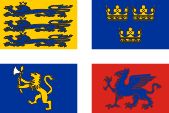
1396–1523,
Schiffsflagge der Kalmarer Union (Dänemark, Norwegen, Schweden),
Quelle, nach: Knut Andersen (NO)
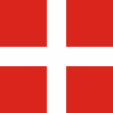
16.–19. Jahrhundert,
quadratische Variane,
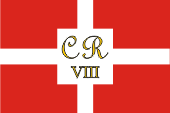
1839–1848,
Handelsflagge für das Mittelmeer,
Quelle, nach: Flaggen aller Seefahrenden Nationen
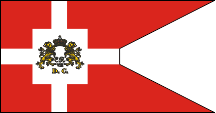
1616–1840(?),
Flagge der Dänischen Ostindienkompanie(?),
Quelle, nach: Flaggen aller Seefahrenden Nationen
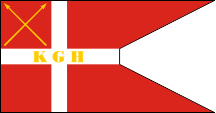
1795–1846,
Dienstflagge der dänischen Verwaltung in Grönland,
Quelle, nach: Flags of the World
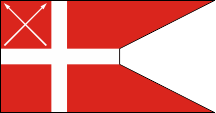
1846–1979,
Dienstflagge der dänischen Verwaltung in Grönland,
Seitenverhältnis – ratio = 28:53,5
Quelle, nach: Die Welt im bunten Flaggenbild, Flags of the World
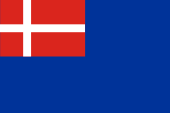
1798–1842,
Flagge für dänische Schiffe auf dem Weg nach Dänisch-Westindien,
Quelle, nach: World Statesmen,
mgg.dk,
FOTW
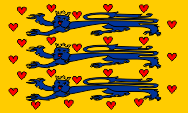
14. Jahrhundert,
Banner des Königs,
Quelle, nach: Wikipedia (DE)
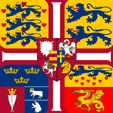
1863–1906,
Flagge des Königs (Christian IX.),
Seitenverhältnis = 1:1,
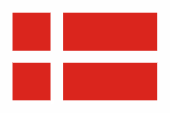
Lotsen(ruf)flagge,
Seitenverhältnis = 2:3,
Quelle, nach:
Die Welt im bunten Flaggenbild,
FOTW
Diese Art Flaggen wurde im 20. Jahrhundert abgeschafft, heute gilt:
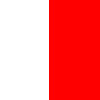 Lotse an Bord
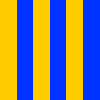 Erbitte Lotse
Die dänische Flagge, "Danebrog" genannt, gehört zu den ältesten durchgehend benutzten Flaggen der Welt. Sie zeigt auf rotem Grund ein weißes Kreuz, das zur Stangenseite hin verschoben ist, das sogenannte skandinavische Kreuz, das heutzutage auf die Zugehörigkeit zur nordischen Völkerfamilie verweisen soll. Zu ihrem Ursprung gibt es viele Theorien, von denen keine als richtig bestätigt werden kann: Fakt ist, dass die Flagge zu Beginn des 13. Jahrhunderts erstmals auftauchte, entweder 1219 anlässlich der Schlacht von Lyndanitz, die der dänische König Waldemar II. gegen die Esten führte, bzw. 1241 anlässlich seiner Beerdigung, als sein Sarg mit der Flagge bedeckt war. Eine Theorie besagt, dass die dänische Flagge auf die Kreuzflagge des Heiligen Römischen Reiches Deutscher Nation zurückgeht, sie zeigte auch ein weißes Kreuz auf rotem Grund, wobei unklar ist, wie und warum die Flagge von Deutschland auf Dänemark übertragen worden sein soll. Möglicherweise haben die Dänen diese Flagge von einem Kreuzzug mit starken deutschen Kontingenten mitgebracht, wo sie unter dieser Flagge kämpften. Eine weitere Theorie besagt, dass der Johanniter-Orden in jener Zeit in Dänemark sehr aktiv war, dessen Flagge ebenfalls ein weißes Kreuz auf rotem Grund zeigte. Der Orden predigte den Gedanken des Kreuzzuges gegen die Heiden im Baltikum, und die Dänen zogen unter der Flagge des Ordens in den Kampf. So könnte die Flagge im Jahre 1219 in der Schlacht von Lyndanitz (Reval, Tallin) gegen die Esten aufgetaucht sein. Eine andere Legende besagt, dass das Bild der Flagge dem Dänenkönig Waldemar II. am 15.06.1219 während der Schlacht bei Lyndanitz am roten Himmel erschienen sei und den Dänen zum Sieg verholfen habe. Eine weitere Legende besagt, die Flagge an einem kritischen Punkt der Schlacht bei Lyndanitz vom Himmel in die Hand des betenden dänischen Erzbischofs gefallen sei, und so den Dänen zum Sieg verholfen habe. Weiterhin ist es möglich, dass die dänische Flagge, wie jede andere Kreuzflagge dieser Zeit, als das Kennzeichen der Kreuzritter vom Papst verliehen wurde.
Die Flagge Dänemarks zeigte schon wenige Jahre nach dem ersten Auftauchen die typisch skandinavische Form mit einem verlängerten Arm des Kreuzes, was eine Modeerscheinung gewesen sein könnte, denn auch der Deutsche Orden verwendete eine Flagge mit einem skandinavischen Kreuz. Aber noch im 18. Jahrhundert wurden dänische Flaggen mit einem zentralen Kreuz verwendet, oft sogar als quadratische Variante. Zwischen 1397 und 1523 war das Land Teil der Kalmarer Union, eine von Dänemark dominierte Vereinigung der Königreiche Dänemark, Norwegen und Schweden, die von 1397 bis 1523 bestand. Die Union war formal nie vollständig vollzogen worden, jedoch zeitweise faktisch wirksam, und zwar immer dann, wenn ein dänischer König tatsächlich König aller drei Länder war. Es handelte sich um eine von Dänemark ausgehende politische Idee, die außerhalb Dänemarks lediglich in Teilen des Adels und der Kirche mitgetragen wurde. Die Flagge der Kalmarer Union war eine vom dänischen Danebrog inspirierte Kreuzflagge mit einem roten Kreuz auf gelbem Grund. Zu allen Zeiten scheint der Danebrog in unterschiedlichsten Varianten benutzt worden zu sein, mal mit skandinavischem Kreuz, mal das Kreuz mittig, mal eine rechteckige Flagge mal quadratisch. Amtlich festgelegt worden ist der Danebrog erstmals im Jahre 1625 für die dänische Marine, und zwar als Schalbenschwanzflagge, als wahrscheinlich rechteckige Flagge im Jahre 1748 für Handelsschiffe, und als Staatsflagge mit skandinavischem Kreuz im Jahre 1854.
In den Zeiten, in denen der Johanniter-Orden (Malteser-Orden) noch als See- und Handelsmacht im Mittelmeer present war (bis 1798), und noch bis in die Mitte des 19. Jahrhunderts hinein, mussten dänische Handelsschiffe im Mittelmeer ihre Flagge in der Mitte um ein weißes Feld ergänzen, welches in der Mitte die Initalen des dänischen Königs trug, um Verwechlungen mit der Flagge des Ordens zu vermeiden.
Die zahlreichen dänischen Handelskompanien hatten das Recht den Danebrog zu führen, ergänzt um ihre Symbolik und Initialen. Die Dänische Ostindien-Kompanie firmierte zwischen 1616 und 1650, sowie zwischen 1670 und 1729 unter dem Namen Ostindiskt Kompagni, und zwischen 1770 und 1840 unter dem Namen Asiatisk Kompagni. Ferner gab es eine Dänische Westindien-Kompanie, zwischen 1671 und 1680 unter dem Namen Vestindisk Kompagni, und zwischen 1680 und 1776 unter dem Namen Det Vestindisk-Guineiske Kompagni. Die 1897 gegründete Ostasiatische Kompanie (Østasiatiske Kompagni) gibt es noch heute. Aus der Flagge der im Jahre 1897 gegründeten Firma Königlich Grönländischer Handel (Kongelig Grønlandske Handel) ging die spätere Flagge der Dänischen Verwaltung für Grönland hervor. Sie zeigte zwei gekreuzte Harpunen in der Oberecke und wurde bis 1979 verwendet.
Quelle: Flags of the World,
Wikipedia (D),
Flaggen und Wappen der Welt,
Wikipedia (D),
Wikipedia (D)
Æro
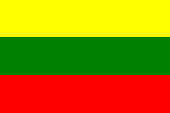
Insel Æro (auch: Ærø, Aerø, Aerö),
Dank an: Gunter Eisermann
Die Insel Æro (88 km², 8.600 Ew., Hauptort: Marstal mit 4300 Ew.) hat seit Jahrhunderten das Recht eine eigene Flagge zu führen, die Flagge Dänemarks wird hier nicht verwendet.
Bornholm
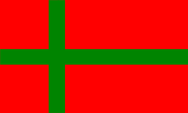
Insel Bornholm, Variante 1:
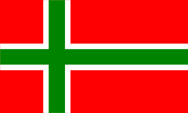
Insel Bornholm, Variante 2:
Die Insel Bornholm (588 km², 42 800 Ew., Hauptort: Rønne 16 000 Ew.) hat offiziell keine eigene Flagge. Die oben gezeigten Varianten sind inoffiziell bzw. Fantasieflaggen.
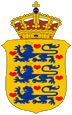
Wappen von Dänemark,
Quelle: Corel Draw 4,
Flaggen und Wappen
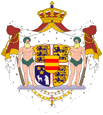
Wappen der Königin von Dänemark,
Quelle: Corel Draw 4,
Flaggen und Wappen
Das dänische Staatswappen zeigt drei blaue Löwen und neun rote Herzen auf einem goldenen Schild. In dieser Form ist es seit König Waldemar I. (1157–1182) bekannt. Nach der Trennung von Norwegen (1815) wurde dieses Wappen im Jahre 1819 offiziell als Staatswappen wieder eingeführt. Das Wappen des Königs zeigt einen durch ein weißes, rotumrandetes Kreuz gevierteilten Schild, der im ersten und vierten Quadranten den dänischen Schild mit den drei blauen Löwen und den roten Herzen zeigt. Im zweiten Quadranten das Wappen Schleswigs, zwei blaue Löwen auf Gold, und im dritten Quadranten zeigt es auf Blau die drei Kronen der Kalmarer Union (Dänemark, Schweden, Norwegen), ein Schaf (Färöer-Inseln) und einen Eisbären (Grönland). In der Mitte des Schildes ein Herzschild mit dem Wappen des Hauses Schleswig-Holstein-Sonderburg-Glücksburg. Schildhalter sind zwei "wilde Männer" mit Keulen. Das Wappen ist mit einem purpur-weißen Mantel hinterlegt, und darüber eine goldene Krone.
Quelle: Flaggen und Wappen der Welt

Flugzeugkokarde,
Quelle, nach: Wikipedia (EN)
Lage:
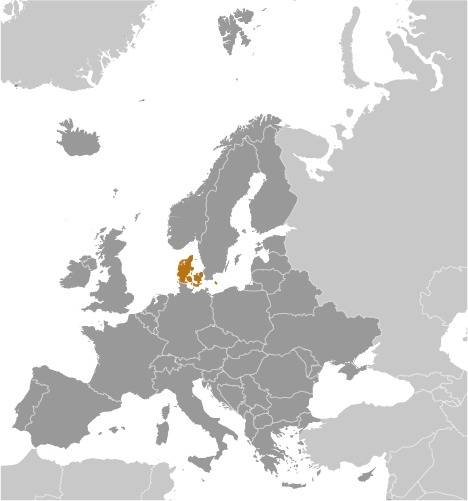
Quelle: CIA World Factbook
Landkarte des Landes:
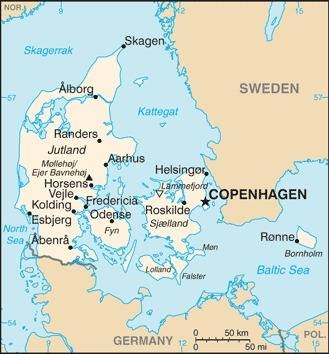
Quelle: CIA World Factbook
Fläche: 42.921 km² (ohne Färöer-Inseln und Grönland)
Einwohner: 5.822.800 (2020), davon 86.3% Dänen, 0,3% Deutsche (als nationale Minderheit)
Religionen: 74,4% Protestanten, 0,6% Katholiken, 5,3% Moslems
Bevölkerungsdichte: 136 Ew./km²
Hauptstadt: København (Kopenhagen), 632.340 Ew. (2020)
Amtssprache: Dänisch
andere Sprachen: Grönländisch, Färöisch, Deutsch
Währung: 1 Dänische Krone (dkr, DKK) = 100 Öre
Zeitzone: MEZ
Quelle:
Wikipedia (D),
Wikipedia (NO)
6. Jahrhundert · Einwanderung der Dänen, von Schonen kommend
899 · Gründung des Dänischen Königreiches
960 · der deutsche Kaiser Otto I. gibt König Harald Blauzahn sein Land zum Lehen, Gründung der Dänischen Mark => Dänemark, beginnende Christianisierung
990–1035 · Expansion Dänemarks unter König Svend Gabelbart, Eroberung Norwegens, Schleswigs und Englands
1016–1042 · Personalunion der Königreiche Dänemark und England
1035 · Abspaltung Norwegens unter einer eigenen dänischen Dynastie (Ulfinger)
1155 · erneute Expansion Dänemarks unter König Waldemar I., Eroberung von Estland und Teilen Pommerns
1227 · Schlacht von Bornhöved (in Holstein), Dänemark verliert fast alle Besitzungen an der Deutschen Ostseeküste, später auch Rügen und Nordvorpommern (1325)
1346 · Dänemark verkauft Estland an den Deutschen Orden
1361 · Dänemark erobert Gotland und plündert die Hansestadt Visby, es folgen Rachefeldzüge der Hanse gegen Kopenhagen
1370 · Frieden zu Stralsund, Dänemark erkennt die Vorherrschaft der Hanse in der Ostsee an
1387 · Wahl von Margarete (Tochter des letzten dänischen Königs und Witwe des Königs von Norwegen) zur Königin von Dänemark und Norwegen
1388 · Wahl von Margarete zur Königin von Schweden
1397 · Bildung der Kalmarer Union, Vereinigung von Dänemark, Schweden und Norwegen unter einer einzigen Krone
1523 · Trennung Schwedens von der Kalmarer Union, in den Folgejahren ständige Auseinandersetzungen mit Schweden
1536 · Einführung der Reformation
1620 · Dänemark erwirbt die Stadt Trankebar an der Indischen Ostküste
1643 · Schweden erklärt Dänemark den Krieg
1657–1679 · Dänemark betreibt verschiedene Handelsstützpunkte an der Goldküste in Afrika, heutiges Ghana (1657-1659 Fort Witzen, 1658-1685 Fort Royal, 1659-1661 Fort Cape Coast, 1659-1674 Fort William, 1659-1679 Fort Christiansborg)
1658 · Frieden von Rosklide, Dänemark muss die Länder Schonen, Halland, Blekinge und Bohus an Schweden abtreten, und damit die Urheimat der Dänen
1672 · St. Thomas (Karibik) wird dänische Kolonie
1620 · Dänemark erwirbt die Stadt Serampore in Bengalen (Indien)
1684 · St. John (Karibik) wird nach Kämpfen mit England eine dänische Kolonie
1733 · die Dänisch-Westindische Kompanie kauft St. Croix (Karibik) von Frankreich
1784–1850 · Dänemark betreibt verschiedene Handelsstützpunkte an der Goldküste in Afrika, heutiges Ghana (1784-1850 Fort Friedensborg, Fort Konigstein und Fort Prinzenstein, 1787-1850 Fort Augustenborg)
1814 · Ende der Personalunion mit Norwegen, Norwegen wird an Schweden abgetreten
1845 · Dänemark verkauft Trankebar und Serampore an Großbritannien
1846–1869 · die Nikobaren-Inseln (Golf von Bengalen) sind Dänischer Besitz
1849 · Einführung der konstitutionellen Monarchie
1864 · Deutsch-Dänischer Krieg, Dänemark muss Schleswig und Holstein abtreten
1914–1918 · Erster Weltkrieg, Dänemark ist neutral
12.12.1916 · Dänemark verkauft die Jungferninseln (St. Thomas, St. John und St. Croix) an die USA
1918–1944 · Dänisch-Island ist als ein eigenes Königreich in Personalunion mit Dänemark verbunden
1920 · nach Volksabstimmung muss Deutschland Nordschleswig an Dänemark abtreten
1939–1945 · Zweiter Weltkrieg, Dänemark ist neutral, wird jedoch am 09.04.1940 von deutschen Truppen besetzt, 8000 Dänen kämpfen nun freiwillig an der Seite des Deutschen Reiches, jedoch auch Entstehen einer Widerstandsbewegung
23.12.1943 · Island kündigt die Personalunion mit Dänemark
17.06.1944 · nach erfolgreicher Volksabstimmung Umwandlung Islands in eine Republik
05.05.1945 · die deutschen Besatzungstruppen übergeben Dänemark an eine alliierte Verwaltung
1945 · Gründungsmitglied der UNO
1946 · die alliierten Truppen verlassen Dänemark
1949 · Gründungsmitglied der NATO
1953 · Grönland wird gleichberechtigter Bestandteil des Königreichs Dänemark
1973 · Eintritt in die EG (die spätere EU)
1979 · Gewährung innerer Selbstverwaltung für Grönland
2000 · Ablehnung eines Beitritts zur Euro-Zone
Quelle:
Wikipedia (D),
Atlas zur Geschichte,
World Statesmen,
RetroBib Retrobibliothek
Als 960 der deutsche Kaiser Otto I. dem dänischen König Harald Blauzahn sein Land zum Lehen gibt, entstand so die "Dänische Mark". Eine Mark ist eine Grenzprovinz. Das Wort "marca" ist althochdeutsch und heißt "Rand".
Quelle:
Handbuch der geographischen Namen,
Atlas der wahren Namen