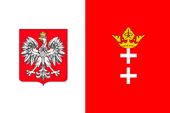
Danzig

`
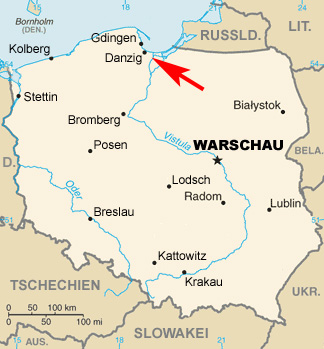
  • ehemalige Freie Stadt Danzig
  • seit 1920 durch den Versailler Vertrag
    politisch selbstständig
  • 1939 dem Deutschen Reich eingegliedert
  • fromer Freetown of Danzig
  • independent since 1920
    by the Versailles Trust
  • 1939 incorporated into the German Empire
`
Übersicht – Contents:


Flaggen – Flags:

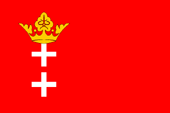
Staats- und Handelsflagge von Danzig

Staats- und Handelsflagge
– state and merchant flag

Seitenverhältnis – ratio = 2:3


Dienstflagge von Danzig

Dienstflagge
– official flag

Seitenverhältnis – ratio = 2:3

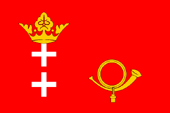
Postflagge von Danzig

Postflagge
– postal service flag

Seitenverhältnis – ratio = 2:3


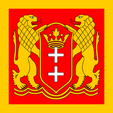
Flagge des Senats von Danzig

Flagge des Senats
– flag of the senate

Seitenverhältnis – ratio = 1:1


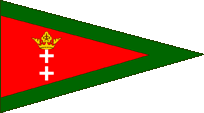
Polizeistander von Danzig

Polizeistander
– police pennant

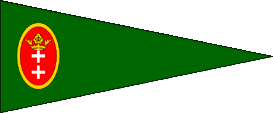
Zollstander von Danzig

Zollstander
– customs pennant

Flagge des Ausschusses für den Hafen und die Wasserwege

Flagge des Ausschusses für den Hafen und die Wasserwege
– flag of the commission for the port and the seaways

Seitenverhältnis – ratio = 2:3


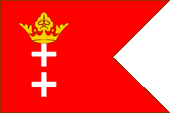
Lotsenflagge von Danzig

Lotsen(ruf)flagge
– pilot jack

Seitenverhältnis – ratio = 13:18


hoch/up


historische Flagge – historical Flag:

Schiffsflagge der Stadt Danzig

Mitte des 14.Jhd. bis 1457
middle of 14th cent. to 1457

Flagge der Stadt Danzig
– flag of Danzig Town


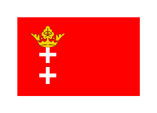
Staats- und Handelsflagge von Danzig

1457–1920, seit/since 1939

Flagge der Stadt Danzig
– flag of Danzig Town

Seitenverhältnis – ratio = 2:3


hoch/up


Bedeutung/Ursprung der Flagge: Meaning/Origin of the Flag:
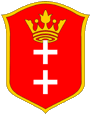
Die Flagge Danzigs leitet sich aus dem Stadtwappen ab. Sie ist als Stadtflagge noch heute in Gebrauch. Wann das Flaggen- und Wappenbild von Danzig mit seinen zwei Kreuzen entstanden ist, ist nicht bekannt. Es geht aber auf den Deutschen Orden zurück und zeigt zwei untereinander angeordnete weiße Ordenskreuze auf rotem Grund. Das Motiv ist entweder 1309 aufgekommen, als der Deutsche Orden die Wallburg an der Mottlau bezog, oder im Jahr 1340, als der Deutsche Orden seinen Hauptsitz in die Marienburg verlegte. Die Farben Rot und Weiß haben ihre Wurzeln in den Farben des Hanse Städtebundes, dessen Mitglied Danzig im Jahre 1361 wurde. Am 15.05.1457 wurde Danzig vom Polnischen König Kasimir mit umfangreichen Sonderrechten ausgestattet (Privilegia Casimirana). Ab diesem Datum wurde das Flaggenmotiv (auch im Wappen) um die polnische Königskrone ergänzt. The flag of Danzig infers the coat of arms of the city. It is in use as flag of the town until today's. When the motive of the flag or the coat of arms of Danzig with its two crosses arised first is not known. It has its roots in the Order of the Teutonic Knights and shows two one below the other arranged white order's crosses on red ground. The motive arised either 1309, as the Order of the Teutonic Knights moved into the Wallburg at Mottlau River, or in the year 1340, as the Order of the Teutonic Knights moved its seat to Marienburg. The colours red and white have their roots in the colours of the Hanse Town's Conederation and Danzig became a member in the year 1361. On 15th of May in 1457 Danzig became awarded extensive privileges by the Polish King Casimir (Privilegia Casimirana). Since that point in time the motive of the flag (and also of the coat of arms) was added by the Polish royal crown.
hoch/up


Zahlen und Fakten – Numbers and Facts:
`
  • Fläche:
    1 966 km²
  • Area:
    759 square miles
  • Verwaltung:
    5 Kreise
    (Danzig, Zoppot, Danziger Höhe, Danziger Niederung, Großer Werder)
  • Administration:
    5 administrative districts
    (Danzig, Zoppot, Danzig Peak, Lower Danzig, Large Werder)
  • Einwohner:
    407 500 (1934)
    davon
    6 800 Polen
  • Inhabitants:
    407 500 (1934)
    thereof
    6 800 Poles
  • Bevölkerungsdichte:
    207 Ew./km²
  • Density of Population:
    537 inh./sq.mi.
  • Hauptstadt:
    Danzig
    256 000 Ew. (1934)
  • Capital:
    Danzig
    256 000 inh. (1934)
  • Amtssprachen:
    Deutsch, teilweise Polnisch
  • official Languages:
    German, partial Polish
  • sonstige Sprachen:
    Kaschubisch
  • other Languages:
    Kashubian
  • Währung 1920–1923:
    1 Mark (M) = 100 Pfennig
  • Currency 1920–1923:
    1 Mark (M) = 100 Pfennig
  • Währung 1923–1939:
    1 Danziger Gulden (Gld) = 100 Pfennig
  • Currency 1923–1939:
    1 Danzig Florin (Gld) = 100 Pfennig
  • Zeitzone:
    MEZ
  • Time Zone:
    MEZ
  • Geschichte:
    997 · erste Erwähnung Danzigs
    1263 · lübisches Stadtrecht
    1309–1454 · zum Deutschen Orden
    1361 · Mitglied der Hanse
    seit 1454 · unter polnischem Schutz
    1457 · Privilegia Casimirana
    1793 · preußische Inbesitznahme

    1807 · Freie Stadt Danzig
    1814 · preußische Inbesitznahme
    10.01.1920 · vom Deutschen Reich abgetrennt und als Freistaat dem Völkerbund unterstellt
    01.09.1939 · Wiedereingliederung in das Deutsche Reich
    1945 · polnischer Verwaltung unterstellt, Vertreibung der verbliebenen deutschen Bevölkerung
  • History:
    997 · first mentions about Danzig
    1263 · town law of Luebeck
    1309–1454 · to the Teutonic Order
    1361 · member of the Hanse
    since 1454 · under Polish protection
    1457 · Privilegia Casimirana
    1793 · Prussian appropriation
    1807 · Freetown of Danzig
    1814 · Prussian appropriation
    10th of January 1920 · separated from the German Empire and the League of Nations subordinated as a free state
    1st of September 1939 · re-incorporation into the German Empire
    1945 · Polish administration subordinated, expulsion of the remained German population
hoch/up


Mit freundlicher
Untersützung von:
Kindly supported by:

Christian Kucharski (D)


Zur Startseite hier klicken