mobile Ansicht, to the English Version tap the flag

- Republik Gambia
- autoritäre präsidiale islamische Republik
- Eigenbezeichnung: Republic of The Gambia
• heutige Flaggen
• historische Flaggen
• Bedeutung/Ursprung der Flagge
• Wappen
• Bedeutung/Ursprung des Wappens
• Landkarten
• Zahlen und Fakten
• Geschichte
• Ursprung des Landesnamens
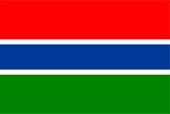
Nationalflagge,
Seitenverhältnis = 2:3,
Quelle, nach:
Corel Draw 4


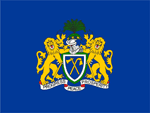
seit 1970,
Flagge des Präsidenten,
Seitenverhältnis = 3:4,
Quelle, nach:
Wikipedia (DE),
telegraph.co.uk

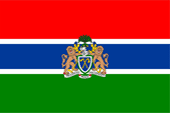
Flagge für Botschafter,
Seitenverhältnis = 2:3,
Quelle, nach:
Wikipedia (DE)

Britisch Westafrika, West Africa Settlements:
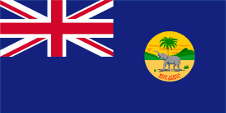
1869–1888,
Flagge der Regierung (Staatsflagge),
Seitenverhältnis = 1:2,
Quelle, nach:
Wikipedia (DE)
Kolonie Gambia, The Colony of the Gambia:
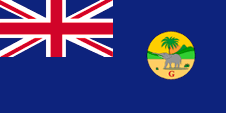
1888–1965,
Flagge der Regierung (Staatsflagge),
Seitenverhältnis = 1:2,
Quelle, nach:
Wikipedia (DE)
Als Gambia am 18.02.1965 unabhängig geworden ist, wurde die heutige Flagge Gambias erstmalig gehisst. Sie zeigt drei waagerechte Streifen in Rot, Blau und Grün. Diese werden durch schmale weiße Streifen voneinander getrennt. Das Verhältnis der Streifenbreite ist 6:1:4:1:6. Die Farbe Rot verkörpert die Sonne, Blau repräsentiert den Fluss Gambia, Grün symbolisiert die Landwirtschaft und den Reichtum des Landes, und das Weiß steht für den Frieden. Vor der Unabhängigkeit wurde in Gambia die blaue, britische Dienstflagge (Blue Ensign) mit einem Emblem im wehenden Teil benutzt.
Großbritannien hatte in Jahr 1864 ein Flaggensystem eingeführt, in dem:
• Kriegsschiffe einen sogenannten "White Ensign" (Marineflagge), eine weiße Flagge oft mit durchgehendem roten Georgskreuz und mit dem Union Jack in der Oberecke,
• Handelsschiffe einen "Red Ensign" (auch "Civil Ensign" → Bürgerflagge genannt, die eigentl. Handelsflagge), eine rote Flagge mit dem Union Jack in der Oberecke, und
• Dienstschiffe einen "Blue Ensign" (Regierungsflagge → die eigentl. Staatsflagge), eine blaue Flagge mit dem Union Jack in der Oberecke führten.
Seit 1865 durften Schiffe von Kolonialregierungen einen Blue Ensign mit einem Badge (Abzeichen) im fliegenden Ende führen. Die jeweiligen Regierungen sollten entsprechene Bagdes zur Verfügung stellen. Das 1869 eingeführte Emblem (Badge) zeigte einen Elefanten mit drohender Gebärde vor einer Palme inmitten einer afrikanischen Landschaft. Unten auf dem Badge war die Inschrift "WEST AFRICA SETTLEMENTS." in Rot zu sehen. Im Jahre 1888 wurde Gambia eine eigenständige britische Kronkolonie und es wurde ein neues Badge eingeführt. Dazu wurde legilich die Inschrift auf dem alten Badge abgeändert. Anstelle "WEST AFRICA SETTLEMENTS." erschien nun ein "G". Dieses Badge wurde bis zur Unabhängigkeit im Jahre 1965 verwendet.
Quelle:
Wikipedia (DE),
Flags of the World,
Die Welt der Flaggen,
Volker Preuß
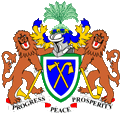
Wappen von Gambia,
Quelle, nach:
Corel Draw 4
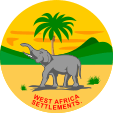
1869–1888,
Badge der West Africa Settlements,
Quelle, nach:
Wikipedia (DE)
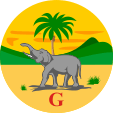
1888–1965,
Badge der Colony of the Gambia,
Quelle, nach:
Wikipedia (DE),
Flags of the World
Das heutige Staatswappen wurde Gambia am 18.11.1964 von Königin Elisabeth II. verliehen. Damit trat anlässlich der Unabhängigkeit des Landes das im Jahre 1889 verliehene Badge außer Kaft. Das Wappen zeigt eine Axt und eine Hacke auf einem blauen, weiß und grün umrandeten Schild. Oberhalb des Schildes ein Helm mit blau-gelben Decken und einer Palmenpflanze. Als Schildhalter dienen zwei Löwen, jeweils mit Axt und Hacke. Sie stehen für Stolz und Würde. Unterhalb des Schildes ein Spruchband mit dem Staatsmotto: "Progress, Peace, Prosperity" → "Fortschritt, Frieden, Wohlstand". Axt, Hacke und Palme deuten auf die landwirtschaftlichen Strukturen in Gambia hin. Die beiden Löwen gehen auf die Kolonialmacht Großbritannien zurück. Seit 1865 durften Kolonialregierungen ein Badge (Abzeichen) verwenden. Die jeweiligen Regierungen sollten entsprechene Bagdes zur Verfügung stellen. Das 1869 eingeführte Emblem (Badge) zeigte einen Elefanten mit drohender Gebärde vor einer Palme inmitten einer afrikanischen Landschaft. Unten auf dem Badge war die Inschrift "WEST AFRICA SETTLEMENTS." in Rot zu sehen. Im Jahre 1888 wurde Gambia eine eigenständige britische Kronkolonie und es wurde ein neues Badge eingeführt. Dazu wurde legilich die Inschrift auf dem alten Badge abgeändert. Anstelle "WEST AFRICA SETTLEMENTS." erschien nun ein "G". Dieses Badge wurde bis zur Unabhängigkeit im Jahre 1965 verwendet.
Quelle:
Flaggen Wappen Hymnen,
Wikipedia (DE),
Flags of the World,
Die Welt der Flaggen
Lage:
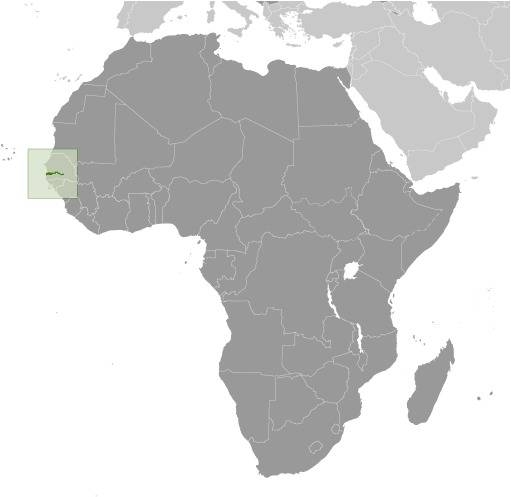
Quelle/Source: CIA World Factbook
Landkarte des Landes:
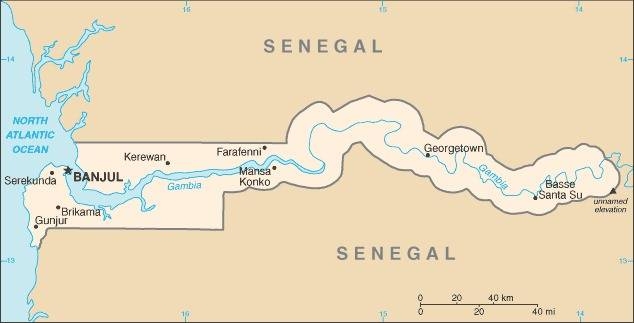
Quelle/Source: CIA World Factbook
interaktive Landkarte der Region:
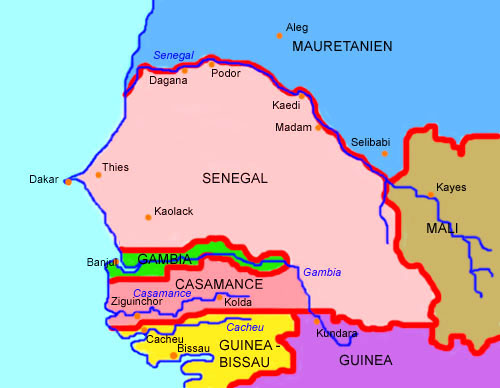
Quelle/Source: Volker Preuß
Fläche: 10.689 km²
Einwohner: 2.174.000 (2020), davon 40% Mandingo (Malinke), 19% Fulbe, 15% Wolof, 10% Jola (Diola), 9% Serahuli (Sarahole), 0,5% Europäer
Religionen: 96% Moslems, 4% Christen
Bevölkerungsdichte: 203 Ew./km²
Hauptstadt: Banjul (bis 1973 Bathurst), 73.000 Ew. (2013)
Amtssprache: Englisch
sonstige Sprachen: Mandingo, Fulbe, Wolof, ..., Französisch
Währung: 1 Dalasi (D, GMD) = 100 Butut
Zeitzone: MEZ – 1 h
Quelle:
Wikipedia (EN)
ca. 470 v.Chr. · der Seefahrer Hanno aus Karthago besucht die Region
1455 · Portugiesen entdecken die Mündung des Flusses Gambia, die Region selbst gehört zum Mali-Reich
1588 · Beginn der englischen Kolonisierung, in der Folge Konflikte mit Frankreich, welches das Gebiet beansprucht
1661 · England kauft James Island und errichtet den Handelsposten Fort James
1681 · Frankreich gründet den Handelsposten Albreda
1651–1658 · das Herzogtum Kurland betreibt auf der Jakobsinsel (James Island) einen Handelsposten
1783 · Pariser Frieden, Senegambien wird zwischen Frankreich und Großbritannien aufgeteilt, Frankreich erhält Senegal, Großbritannien erhält Gambia, das später Britisch-Westafrika angegliedert wird
1816 · Großbritannien kauft die Insel St. Mary’s Island gründet dort die Siedlung Bathurst (ab 1973 Banjul)
1857 · Frankreich tritt Albreda an Großbritannien ab
1888 · Gambia wird eine eigenständige britische Kronkolonie
1963 · Gewährung innerer Autonomie
18.02.1965 · Unabhängigkeit
24.04.1970 · Proklamation der Republik, Gambia bleibt jedoch im Commonwealth of Nations
1981 · Niederschlagung eines linken Armeeputsches, auch mit Hilfe senegalesischer Truppen
1982–1989 · Senegal und Gambia sind in der Konföderation Senegambia verbunden (gemeinsame Militär- Wirtschafts- und Finanzpolitik)
1994 · Putsch
2013 · Gambia erklärt den Austritt aus dem Commonwealth
2015 · Gambia wird zur "Islamischen Republik" deklariert
2018 · Gambia wird nach einem Beitrittsgesuch wieder in den Commonwealth aufgenommen
Quelle:
Wikipedia (DE),
Wikipedia (EN),
Atlas zur Geschichte
Der Name des Landes wird mit dem Gambia-Fluss in Verbindung gebracht, jedoch ist die Herkunft dieses Namens umstritten.
1. These: Der Name geht auf die Sprache der Mandingo zurück und bedeutet: "Das Land ist der Fluss".
Quelle/Source: Handbuch der geographischen Namen
2. These: Der Name geht auf die Sprache der Mandingo zurück und bedeutet: "Fluss Kaabu" oder "Land Kaabu". Kaabu war das Mandingo-Reich, das vom 16. bis zum 19. Jahrhundert existierte.
Quelle/Source: Wikipedia (DE)
3. These: Der Name geht auf einen Übersetzungsfehler zurück, der im 16. Jahrhundert auf James Island gemacht wurde. Der Dolmetscher sagte auf eine Frage von Portugiesischen Seefahrern nicht den Namen des Landes, sondern seinen eigenen Namen: "Kambi". Und so wurde aus James Island "Kambi-yaa", was "Kambis Stelle" heißt, und sich auf den Fluss und das Land übertragen hat.
Quelle/Source: Wikipedia (DE)
4. These: Der Name geht auf das portugiesische Wort "câmbio" zurück, was "Austausch" oder auch "Handel" heißt.
Quelle/Source: Wikipedia (DE)