mobile Ansicht, to the English Version tap the flag
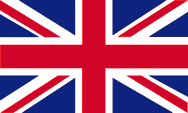

- Teil des Vereinigten Königreiches von Großbritannien und Nordirland
- andere Bezeichnung: Albion
• Flaggen
• historische Flaggen
• Wappen
• Bedeutung/Ursprung der Flagge und des Wappens
• Landkarte
• Zahlen und Fakten
• Geschichte
• Ursprung des Landesnamens
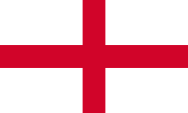
Flagge von England,
Seitenverhältnis = 3:5,
Quelle, nach: Die Welt der Flaggen


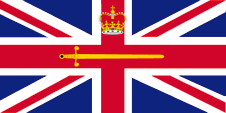
Flagge des Lord High Commissioner von England,
Seitenverhältnis = 1:2,
Quelle, nach: Flags of all Nations

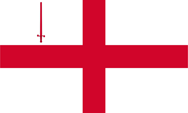
Flagge der City of London,
des historischen Kerns der Hauptstadt,
Seitenverhältnis = 3:5,
Quelle, nach:
Flags of all Nations

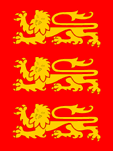
11. bis 15. Jahrhundert,
Banner des Königs von England,
Quelle, nach: Wikipedia (EN)
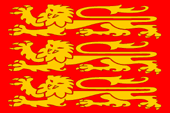
Flagge des englischen Königtums,
Quelle, nach: Wikipedia (EN)
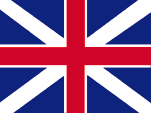
1606–1649, Staatsflagge,
1634–1649, Marineflagge
Quelle, nach: Die Welt der Flaggen,
Wikipedia (EN)

1634–1707,
Handelsflagge für Schiffe aus England,
Quelle, nach: Die Welt der Flaggen,
Wikipedia (EN)
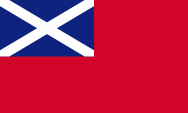
1634–1707,
Handelsflagge für Schiffe aus Schottland,
Quelle, nach: Die Welt der Flaggen,
Wikipedia (EN)
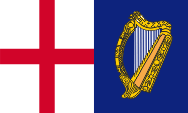
1649–1651,
Flagge des Commonwealth von England,
Quelle, nach: Die Welt der Flaggen,
Wikipedia (EN)
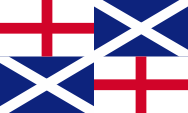
1651–1658,
Flagge des Commonwealth von England,
Quelle, nach: Die Welt der Flaggen,
Wikipedia (EN)
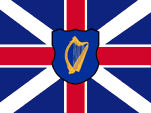
1658–1660,
Staats- und Marineflagge,
Quelle, nach: Die Welt der Flaggen,
Wikipedia (EN)
1660–1707,
Staats- und Marineflagge,
Quelle, nach: Die Welt der Flaggen,
Wikipedia (EN)
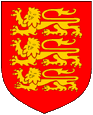
Wappen von England,
Quelle, nach: Wikipedia (DE)
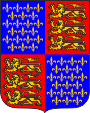
1340–1395,
Wappen des englischen Königtums,
Eduard III. – Edward III.
Quelle, nach: Wikipedia (DE)
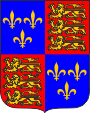
1399–1603,
Wappen des englischen Königtums,
z.B. Heinrich IV. – e.g. Henry IV.
Quelle, nach: Wikipedia (DE)
Die Flagge Englands zeigt das rote Georgskreuz auf weißem Grund. St. Georg ist Schutzpatron und Nationalheiliger von England. Die Flagge kam im 15. Jahrhundert auf, und ergänzte bzw. verdrängte das bisherige Löwenbanner des Königs als Nationalsymbol. Die drei goldenen, schreitenden und hersehenden Löwen (besser Leoparden) auf rotem Grund gehen auf den König von England, Richard I. "Löwenherz" zurück, der anstelle von einem oder zwei Leoparden ab 1195 drei Leoparden in seinem Wappen zeigte. Die Leoparden sind wahrscheinlich durch die Normannen im Jahre 1066 auf die Britischen Inseln gebracht worden. Das Wappen des Herzogs der Normandie zeigte immerhin zwei dieser Leoparden auf rotem Grund. Der englische König Eduard III. erhob als Enkel des 1314 verstorbenen französischen Königs Philipp IV. Ansprüche auf den französischen Thron und nannte sich ab 1340 'König von Frankreich'. Dazu ergänzte er sein Löwenwappen um die goldenen Lilien auf blauem Grund. Der Anspruch auf den französischen Thron wurde von allen Nachfolgern von Eduard III. bis zu Georg III. aus dem Haus Hannover aufrecht erhalten, und die Lilien blieben bis zum Jahr 1801 Bestandteil der Wappen der englischen und britischen Könige.
Quelle: Wikipedia (DE)
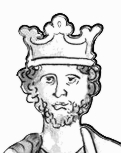 Lesen Sie hier:
Eine Flaggen-Affäre!
"Vom königlichen Bannerwurf zur Geiselhaft". Die
Probleme von Richard I. (Löwenherz), König von England, mit einer
ungeliebten Flagge!
 Lesen Sie hier:
Hintergründe, Geschichte
und Fakten zum Thema "Der Löwe in der Heraldik".
Ausführungen, Varianten, Entwicklung, sowie Panther und Leoparden.
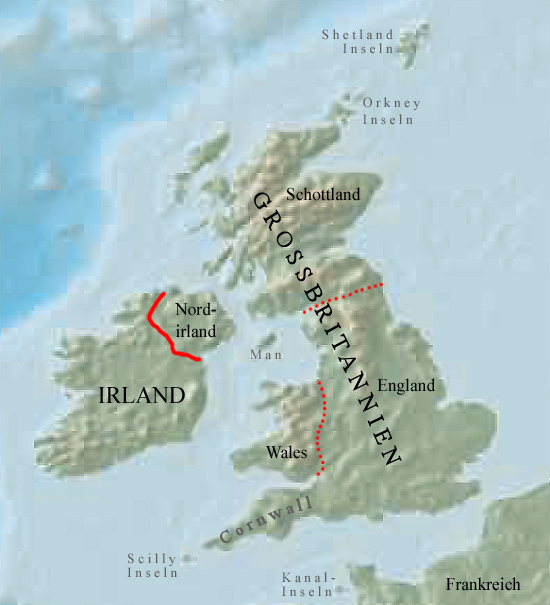
Quelle/Source: Freeware, University of Texas Libraries, modyfied by: Volker Preuß
Fläche: 130.395 km²
Einwohner: 55.977.178 (2018)
Bevölkerungsdichte: 429 Ew./km²
Hauptstadt: London, 8.961.989 Ew. (2019)
Amtssprache: Englisch
Zeitzone: MEZ – 1 h
Quelle: Wikipedia (DE)
ca. 600 v.Chr. · Einwanderung keltischer Stämme auf die Britischen Inseln
55/54 v.Chr. · erste römische Angriffe
43 · das Römische Reich erobert das Gebiet des heutigen England
85 · Britannien wird römische Provinz
120–128 · Bau des Hadrianswalls gegen Schottland
195 · der Hadrianswall wird überrannt
200–400 · häufige Aufstände der keltischen Briten gegen die Römer
ab ca. 400 · Abzug der römischen Legionen, in den Folgejahren Einwanderung der germanischen Stämme der Angeln, Sachsen und Jüten, die später unter dem Begriff Angelsachsen zusammengefasst wurden
450–500 · Kämpfe der keltischen Briten und Sachsen gegen die Pikten und Scoten, Verdrängung der keltischen Briten durch die Sachsen, Bildung der angelsächsischen Königreiche Sussex, Wessex, Essex, Kent, Ostanglien, Mercien und Nordumbrien
825 · Vereinigung von Wessex, Sussex, Kent und Mercia unter König Egbert von Wessex
865 · Däneninvasion: Essex, Ostanglien und Teile von Mercia werden bis 954 dänischer Besitz → Danelaw
1016 · der Däne Knut der Große erzwingt seine Wahl zum König von England
1019 · Knut der Große wird nach dem Tod seines Bruders auch König von Dänemark
1050 · Endgültiges Ende der Dänenherrschaft
1066 · der Sachse Harald II. wird König von England
1066 · die einfallenden Normannen besiegen die Angelsachsen in der Schlacht von Hastings und Errichten ihre Herrschaft in England
1169 · beginnende Eroberung von Irland durch das Königreich England
1265 · erstes englisches Parlament
1284 · Eroberung von Wales
1297 · Einrichtung eines ersten irischen Parlaments, die Eroberung von Irland durch das Königreich England ist im Prinzip abgeschlossen
1338–1453 · Hundertjähriger Krieg in Frankreich um Ansprüche des englischen Königs auf den französischen Thron
1455–1485 · Rosenkriege zwischen dem Haus Lancaster (Wappen: rote Rose) und dem Haus York (Wappen: weiße Rose)
1603 · mit Elisabeth I. stirbt das Haus Tudor aus
1603 · Personalunion zwischen Schottland und England unter Jakob I. aus dem Hause Stuart
1649 · Hinrichtung des Königs Karl I.
1649–1654 · England ist Republik unter Oliver Cromwell
1654 · Wiedereinführung der Monarchie
1707 · staatsrechtliche Vereinigung von England und Schottland zu Großbritannien
Quelle:
Atlas zur Geschichte,
Discovery '97,
Wikipedia (DE)
Der Name von England kommt vom vom altenglischen Wort "Engaland" (erstmals erwähnt im Jahre 1014), was "Land der Angeln" bedeutet. Die Angeln waren ein germanischer Stamm, der, zusammen mit den Sachsen und Jüten, das Land ab dem 5. Jahrhundert eroberte und besiedelte. Ein weiterer und älterer Name ist "Albion", der sich aber auf die ganze Insel bezog. Er wird in der modernen Zeit vor allem dichterisch für England benutzt. Er geht auf eine Erwähung im "Corpus Aristotelicum" im 4. Jahrhundert v. Chr. zurück und ist möglicherweise auf das lateinische Wort "albus" (weiß) zurückzuführen, ein Verweis auf die weißen Klippen von Dover.
Quelle: Wikipedia (DE)