

Die Görzer
- Haus Görz
- auch: Meinhardiner
- süddeutsches Herrschergeschlecht des 12. bis 14. Jahrhunderts
Wappen
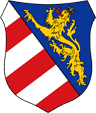
Bedeutung/Ursprung des Wappens
Die Herkunft des Wappens des Hauses Görz ist weitgehend unbekannt aber in dieser Form schon seit dem Jahr 1304 überliefert. Einzig die Anzahl der in Silber und Rot gegengeschrägten Balken variiert während der Jahrhunderte zwischen vier und acht (zuletzt fünf). Auf jeden Fall ist der goldene Löwe auf blauem Grund das eigentliche Wappen der im Jahr 1500 ausgestorbenen Grafen aus dem Geschlecht der Görzer Meinhardiner, die auch zeitweise Grafen von Tirol waren und als die eigentlichen Gründerväter dieses Landes gelten. Noch heute führen zahlreiche Tiroler Gemeinden (Nord und Süd) diesen Löwen im Wappen unter direkter Bezugnahme auf die Grafen von Görz. Insofern könnten natürlich die rot-silbernen Balken auch auf die Tiroler Landesfarben hinweisen.
Geschichte des Hauses
Das Land Tirol bildete schon im frühen und hohen Mittelalter ein wichtiges Passland mit den niedrigsten Alpenübergängen überhaupt. Die Herrschaftszentren wurden zunächst von zwei Bischofssitzen gebildet, die heute außerhalb Österreichs liegen: Brixen und Trient. Den Bischöfen von Trient und Brixen unterstanden als halbfreie Dienstmannen (Ministerialen) zahlreiche niedere Adelige, die mit ihren zahlreichen Burgen noch heute das Landschaftsbild vor allem in Südtirol prägen. Eines dieser Adelsgeschlechter waren die Grafen von Tirol, benannt nach Schloss Tirol am Rande der Stadt Meran. Sie stiegen als Vögte, die für die Bischöfe von Trient die Blutgerichtsbarkeit ausübten, rasch auf und übernahmen im 12. Jahrhundert schließlich weitgehend die weltliche Macht. Dieser Umstand lässt sich auch daran ablesen, dass der Name ihres Stammsitzes schließlich auf das ganze Land übertragen wurde.Zwischen 1253 und 1258 übernahmen die Grafen von Görz die Macht in Tirol, nachdem die Grafen von Tirol im Mannesstamm ausgestorben waren. Graf Meinhard III. von Görz war mit Adelheid von Tirol verheiratet und konnte so seine Erbansprüche geltend machen. Sein Sohn und Nachfolger, Graf Meinhard II. von Tirol (als Graf von Görz Meinhard IV., ab 1286 als Herzog von Kärnten Meinhard I.) baute die Herrschaft nicht nur aus, sondern konnte auch den Aufbau zu einem einigermaßen homogenen Land vorantreiben, nicht zuletzt durch den Aufbau einer für damalige Verhältnisse mustergültigen Verwaltung. Dennoch waren die drei Herrschaftskomplexe (Görz, Kärnten und Tirol) für einen einzigen Herrscher zu groß und vor allem zu weit auseinanderliegend, so dass es 1267/71 zur Teilung kam. Die so genannten Görzer Meinhardiner behielten bis zu ihrem Aussterben im Jahr 1500 den Stammsitz Görz, während die Tiroler Meinhardiner bis zu ihrem Aussterben im Mannesstamm über Tirol und Kärnten regierten.
Im Jahre 1335 konnten die Habsburger die Grafen von Görz in Kärnten und Krain beerben und 1363 trat Gräfin Margarete Maultasch (aus dem Hause Görz, sie war zeitweise mit einem Wittelsbacher verheiratet, den sie jedoch später vertrieb) Tirol an Herzog Rudolf IV. ab, nachdem im gleichen Jahr ihr einziger Sohn Meinhard gestorben war.
Die Grafen von Görz waren außerdem noch Vögte von Aquileia. Sie spielen auch in der Numismatik eine Rolle und zwar als Herausgeber der ersten deutschen Goldmünze, des "Zwainzigers". Der berühmte Diplomat und Minnesänger Oswald von Wolkenstein stand ebenfalls in Diensten der Görzer Grafen.
Quelle: Ronald Preuß