mobile Ansicht, to the English Version tap the flag

- parlamentarische Monarchie mit dem britischen Monarchen als Staatsoberhaupt
- US-amerikanische Einflusssphäre
• Flaggen
• historische Flaggen
• Bedeutung/Ursprung der Flagge
• Wappen
• Bedeutung/Ursprung des Wappens
• Landkarte
• Zahlen und Fakten
• Geschichte
• Ursprung des Landesnamens
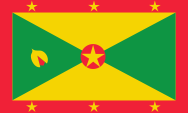
Nationalflagge,
Seitenverhältnis = 3:5,
Quelle, nach:
Corel Draw 4


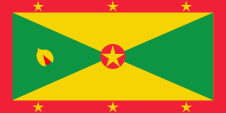
Handels- und Seedienstflagge,
Seitenverhältnis = 1:2,
Quelle, nach: Wikipedia (D)

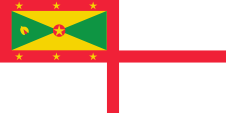
Marineflagge,
Seitenverhältnis = 1:2,
Quelle, nach: Wikipedia (D)

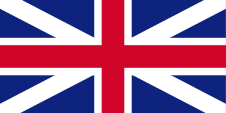
1762–1801,
Flagge Großbritanniens,
Seitenverhältnis = 1:2,
Quelle, nach:
Die Welt der Flaggen
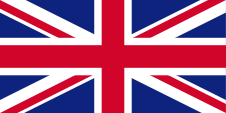
Flagge Großbritanniens,
Seitenverhältnis = 1:2,
Quelle, nach:
Die Welt der Flaggen
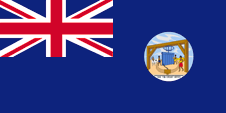
1875–1903,
Flagge der Regierung (Staatsflagge),
Seitenverhältnis = 1:2,
Quelle, nach: Flags of the World
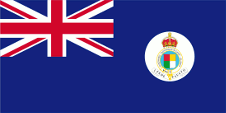
1903–1958, Windward-Inseln
Flagge der Regierung (Staatsflagge),
Seitenverhältnis = 1:2,
Quelle, nach: Flags of the World
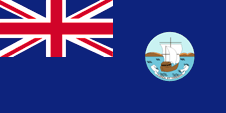
1903–1967,
Flagge der Regierung (Staatsflagge),
Seitenverhältnis = 1:2,
Quelle, nach: Flags of the World
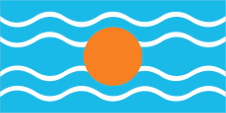
1958–1962,
Flagge der Westindischen Föderation,
Seitenverhältnis = 1:2,
Quelle, nach: Flags of the World
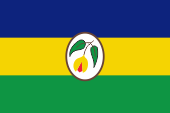
1967–1974,
Nationalflagge,
Quelle, nach: Flags of the World
Die heutige Flagge Grenadas wurde am 07.02.1974 eingeführt. Sie zeigt vier Dreiecke in Grün und Gelb, von einem roten Rand umgeben. In der Mitte ein gelber Stern auf einer roten Scheibe, und sechs weitere in dem roten Rand. Die sieben Sterne symbolisieren die sieben Verwaltungsbezirke der Insel. Im grünen Dreieck auf der Lieckseite befindet sich eine Muskatnuss, der wichtigste Exportartikel der Insel. Die Farbkombination von Grün, Gelb und Rot in der heutigen Flagge sind die Panafrikanischen Farben: Etwa 1900 setzte die Panafrika-Bewegung ein, die Gemeinsamkeiten aller Menschen mit schwarzer Hautfarbe hervorheben wollte. Für die politische Einheit Afrikas steht der Farbendreiklang Grün-Gelb-Rot, den viele afrikanische Staaten nach Erlangung ihrer Unabhängigkeit in ihre Flaggen übernahmen. Das erste Land war Ghana im Jahr 1957. Als Ursprung gelten die Landesfarben von Athiopien (Abessinien, dem ältesten unabhängigen Staat Afrikas. Bis 1960 gehörte Grenada zur britischen Kolonie der Windward-Inseln und wurde dann eine eigenständige Kolonie. Die Nationalflagge war in dieser Zeit ein sogenannter "Blue Ensign", ein dunkelblaues Flaggentuch mit einer Flaggendarstellung – dem britischen Union Jack – in der Oberecke. Der Union Jack wies auf die Verbindungen zu Großbritannien hin. Großbritannien hatte in Jahr 1864 ein Flaggensystem eingeführt, in dem:
• Kriegsschiffe einen sogenannten "White Ensign" (Marineflagge), eine weiße Flagge oft mit durchgehendem roten Georgskreuz und mit dem Union Jack in der Oberecke,
• Handelsschiffe einen "Red Ensign" (auch "Civil Ensign" → Bürgerflagge genannt, die eigentl. Handelsflagge), eine rote Flagge mit dem Union Jack in der Oberecke, und
• Dienstschiffe einen "Blue Ensign" (Regierungsflagge → die eigentl. Staatsflagge), eine blaue Flagge mit dem Union Jack in der Oberecke führten.
Seit 1865 durften Schiffe von Kolonialregierungen einen Blue Ensign mit einem Badge (Abzeichen) im fliegenden Ende führen. Die jeweiligen Regierungen sollten entsprechene Bagdes zur Verfügung stellen. Handelsschiffe und seefahrende Privatpersonen aus Kolonien dürfen nur dann einen Red Ensign mit Badge führen, wenn von der britischen Admiralität eine entsprechende Erlaubnis für die Kolonie erteilt wurde. Ein solches Badge war oft eine auf einer Scheibe platzierte regionale landschaftliche Darstellung, zeigte oft Schiffe, historische Begebenheiten oder konnte auch nur eine Art Logo sein. Sehr oft zeigte ein Badge zusätzlich den Namen des Landes oder auch einen Wahlspruch. Einige Besitzungen hatten aber auch schon von Anfang an ein Wappen, bzw. erhielten über die Jahre eine eigenes Wappen und das Badge wurde abgeschafft. Um ein weitgehend einheitliches Erscheinungsbild im fliegenden Ende der Flaggen zu gewährleisten, wurden Wappen und auch andere Symbole auf einer weißen Scheibe in der Größe der früheren Badges dargestellt. Es gab hier aber auch Ausnahmen, denn einige Kolonien verwendeten diese weiße Scheibe nicht, und platzierten ihr Wappen oder auch nur das Wappenschild - manchmal auch vergrößert - direkt auf das Flaggentuch. Schon in den 40-er Jahre wurde dazu übergegangen die weiße Scheibe zu entfernen und das Wappen direkt zu platzieren oder vergrößert dazustellen. Dieser Umstellungsprozess erfolgte allmählich, nirgendwo gleichzeitig und vollständig. In einigen britischen Besitzungen sind bis heute Flaggen mit der weißen Scheibe in Gebrauch, in anderen nicht mehr und in einigen Gebieten gibt es beide Varianten nebeneinander. Die Flagge der Windward-Inseln trug ein anderes Badge. Es zeigte einen vierfach geteilten Schild mit den Farben Rot, Gelb, Grün und Weiß, umgeben von einem weißen Gurt mit der Inschrift "Governor in Chief, Windward Islands", oberhalb die britische Krone. Unterhalb ein weißes Spruchband mit dem Motto der Inseln: "i pede fausto" → "Gehe mit gesegnetem Fuß". Die einzelnen Kolonien der Windward-Inseln führten jedoch meist ihre eigenen "Blue Ensigns" mit einem eigenen Badge. Die Flagge der Windward-Inseln wurde ebenfalls nur von der Regierung der Kolonie verwendet. 1875 bis 1903 verwendete Grenada, als britische Kolonie, die blaue britische Dienstflagge (Blue Ensign) mit einem Badge im wehenden Teil der Flagge. Das Badge zeigte auf einer Scheibe eine von einem Ochsen-Göpel angetriebene Zuckermühle und einige Landarbeiter. Unterhalb das damalige Motto der Insel: "Hae tibi erunt artes" → "Diese Künste werden dir gehören". Zwischen 1903 und 1967 zeigte das Badge ein in Richtung Küste fahrendes Schiff. Unten, auf einen Spruchband, das damalige Motto der Insel: "Clarior e tanebris". Am 27.02.1967 wurde durch Großbritannien innere Selbstverwaltung gewährt, und Grenada wurde ein autonomer, mit Großbritannien assoziierter Staat. In diesem Zusammenhang wurde eine Flagge eingeführt, welche die Tradition der "Blue Ensigns" beendete. Sie war waagerecht blau-gelb-grün gestreift mit einer Muskatnuss auf einem großen Oval in der Mitte. Diese Flagge wurde am 19.01.1967 angenommen. Diese drei Farben wurden auch von anderen Mitgliedern der Westindische Föderation benutzt, wenn auch in anderen Zusammenstellungen. Angeblich gibt es auch eine Marineflagge. deren tatsächliche Existenz gilt als nicht sicher. Die Flagge orientiert sich auch am britischen Ensign-System und zeigt ein durchgehendes weißes Georgskreuz auf weißem Tuch und die Nationflagge in der Oberecke. Die Farben sind wie folgt definiert: Rot = Pantone 032, Gelb = Pantone 109, Grün = Pantone 355.
Quelle:
Die Welt der Flaggen,
Wikipedia (D), Flags of the World
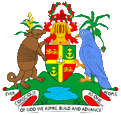
Wappen von Grenada,
Quelle, nach:
Corel Draw 4
Das Staatswappen wurde – wie die Flagge – am 07.02.1974 eingeführt. Das Wappenschild wird durch ein gelbes Kreuz geviert. Davon sind zwei Gevierte rot mit einem goldenen Leoparden (→ England), und die anderen beiden sind grün mit einer weißen Marienlilie auf einem goldenem Halbmond. Auf dem Schild ein goldener Helm, ein rot-weißer Wulst sowie rote Rosen. Schildhalter sind rechts ein Gürteltier und links eine blaue Taube. Das Podest des Wappens ist grün mit einem Teich, einer Bananenpalme, einer Maispflanze und gelbe Blüten.
Quelle: Flaggen Wappen Hymnen,
Wikipedia (D)
Lage:
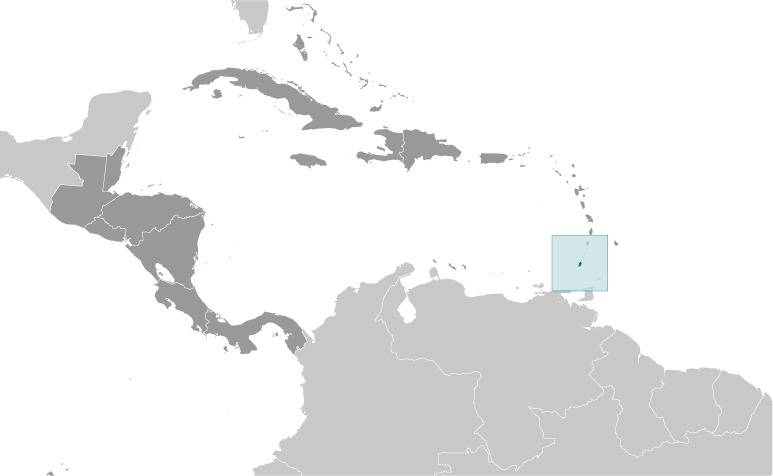
Quelle/Source: CIA World Factbook
Landkarte des Landes:
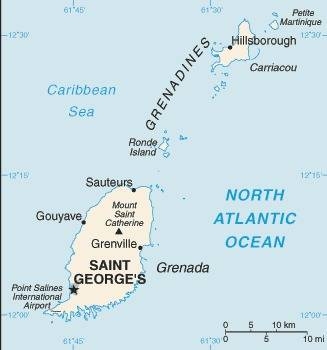
Quelle/Source: CIA World Factbook
Fläche: 344 km²
Einwohner: 112.000 (2019), davon 82% Afroamerikaner, 13% Mulatten, 2% Inder, 1% Europäer
Religionen: 49% Protestanten, 36% Katholiken, 5% Nicht-Religiöse
Bevölkerungsdichte: 326 Ew./km²
Hauptstadt: St. George's, 7.000 Ew.
Amtssprache: Englisch
sonstige Sprachen: Kreolisches Englisch, kreolisches Französisch
Währung: Ostkaribischer Dollar (EC$, XCD) = 100 Cents
Zeitzone: MEZ – 5 h
Quelle:
Wikipedia (D),
CIA World Factbook
1498 · entdeckt
1650 · Frankreich erwibt Grenada aus Privatbesitz
1762 · britische Eroberung
1779–1783 · französische Besetzung
1833 · Ende der Sklaverei
1834–1960 · Teil der Britischen Kolonie der Windward-Inseln
1958–1962 · Teil der Britischen Kolonie "Westindische Föderation"
1967 · Gewährung innerer Selbstverwaltung
1974 · Großbritannien gewährt Unabhängigkeit
1979 · Maurice Bishop wird Premierminister und baut die Beziehungen zu Kuba aus
1983 · Staatsstreich, Ermordung von Maurice Bishop, militärische Intervention der USA mit Hilfe Karibischer Hilfstruppen, dauerhafte Besetzung der Insel
1984 · Wahlen
Quelle:
Atlas zur Geschichte,
Wikipedia (D),
Discovery '97
Als Kolumbus die Insel in Jahre 1498 entdeckte, nannte er die Insel "Concepción", was "Empfängnis" heißt. Irgendwann kam der Name "Grenada" in Gebrauch, wobei der Ursprung des Namens unbekannt ist. Es wird vermutet dass die Insel von spanischen Seefahrern des 16. Jahrhunderts ihren Namen bekam, um an die Stadt Granada zu erinnern.
Quelle:
Wikipedia (D)