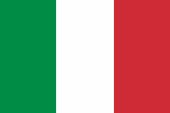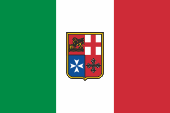
Handelsflagge,
Seitenverhältnis = 2:3,
Quelle, nach: Flaggen und Wappen,
Corel Draw 4


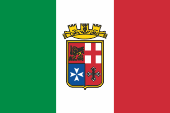
Marineflagge,
Seitenverhältnis = 2:3,
Quelle, nach: Flaggen und Wappen,
Corel Draw 4
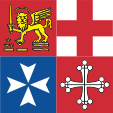
Gösch,
Seitenverhältnis = 1:1,
Quelle, nach: Flaggen Enzyklopädie,
Corel Draw 4

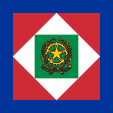
seit 2000,
Standarte des Präsidenten,
Quelle, nach: Flags of the World

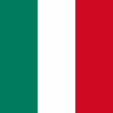
1797–1802,
Nationalflagge der Zisalpinischen Republik,
Quelle, nach: Flags of the World
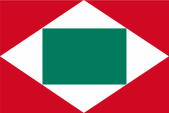
1802–1805,
Nationalflagge der Italienischen Republik,
Quelle, nach: Flags of the World
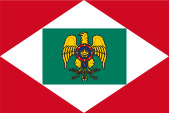
1805–1814,
Nationalflagge des Königreichs Italien,
Quelle, nach: Von Sodacan Diese Vektorgrafik wurde mit Inkscape erstellt. - Eigenes Werk, CC BY-SA 3.0, Link
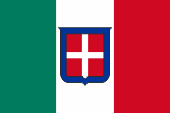
1851–1946,
National- und Handelsflagge,
Seitenverhältnis = 2:3,
Quelle, nach: Das Flaggenbuch

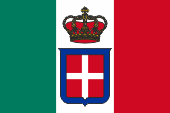
1851–1946,
Marine- und Kriegsflagge,
Seitenverhältnis = 2:3,
Quelle, nach: Das Flaggenbuch
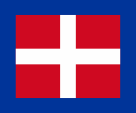
1851–1946,
Gösch,
Seitenverhältnis = 6:5,
Quelle, nach: Das Flaggenbuch
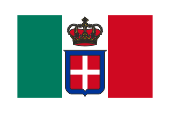
1851–1946,
Lotsen(ruf)flagge für Kriegsschiffe,
Seitenverhältnis = 2:3,
Quelle, nach: Das Flaggenbuch
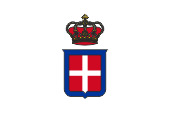
1851–1946,
Flagge der Gouverneure der Kolonien,
Seitenverhältnis = 2:3,
Quelle, nach: Das Flaggenbuch
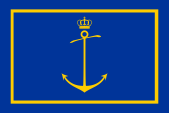
1851–1946,
Flagge des Marineministers,
Seitenverhältnis = 2:3,
Quelle, nach: Das Flaggenbuch

1851–1946,
Flagge des Großadmirals,
Seitenverhältnis = 2:3,
Quelle, nach: Das Flaggenbuch
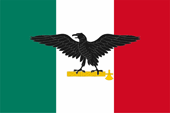
Repubblica Sociale Italiana
1943–1945,
Marine- und Kriegsflagge, ohne Adler: Nationalflagge
Seitenverhältnis = 2:3,
Quelle, nach: Wikipedia (D)
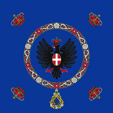
1880-1946,
Standarte des Königs,
Seitenverhältnis = 1:1,
Quelle, nach: Das Flaggenbuch
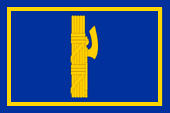
1926–1945,
Flagge des Duce Benito Mussolini,
Seitenverhältnis = 2:3,
Quelle, nach: Das Flaggenbuch
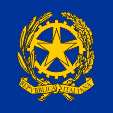
1965–1990, 1992–2000,
Standarte des Präsidenten,
Seitenverhältnis = 1:1,
Quelle, nach: Flags of the World
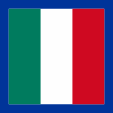
1990–1992,
Standarte des Präsidenten,
Seitenverhältnis = 1:1,
Quelle, nach: Flags of the World
Die Flagge Italiens zeigt drei senkrechte Streifen in Grün, Weiß und Rot. Es sind ursprünglich die Kokardenfarben der Mailänder Miliz, die am 09.10.1796, nach dem Einmarsch der Franzosen in die Lombardei, als Nationalgarde übernommen wurde (Lombardische Legion). Napoléon selbst hat für diese Einheit die Standarte entworfen, indem er die Farben der Truppe wie die französische Trikolore anordnete, nur eben Grün anstelle von Blau. Schon im November 1794 hatten aufrührerische Studenten in Bologna und Mailand - infolge der französischen Revolution und ermutigt durch dem Vormarsch der von Bonaparte befehligten französischen Revolutionstruppen - als Erkennungszeichen grün-rot-weiße Kokarden angelegt. Letztlich wurden die Stadtfarben Weiß und Rot (Bologna, Mailand und noch andere norditalienische Städte) um Grün, als die Farbe der Vernunft, erweitert. Grün war aber nicht nur die Farbe der Vernunft, sondern auch Napoléons Lieblingsfarbe. Schon in Italien hatte er seine Leibwache zu Pferd (die Guiden des Konsuls) in grün eingekleidet und als die Guiden dann bald zu den Jägern zu Pferd der Kaisergarde wurden, trugen sie grüne Husaren-Dolmans. Selbst die von Bonaparte bevorzugt getragene Unform war grün, die kleine Uniform eines Obersten der Gardejäger zu Pferd.
Dieselbe grün-weiß-rote Flagge – allerdings in der Mitte um eine allegorische Darstellung ergänzt – wurde am 07.01.1797 für die Cispadanische Republik (ein französischer Satellitenstaat) angenommen. Die Cispadanische Republik wurde am 06.06.1797 mit der Transpadanischen Republik zur Cisalpinischen Republik vereinigt. Diese führte ab dem 11.05.1798 die grün-weiß-rote Trikolore, jedoch ohne jegliche Ergänzung durch ein Wappen. Nachdem Napoleon die Zisalpinische Republik zur Italienischen Republik umbenannt hatte, hat er am 20.08.1802 das Aussehen der Flagge verändert, indem er ein weißes und ein grünes Rechteck übereinander und versetzt auf einer roten Flagge kombinierte. Am 02.12.1804 krönte sich Napoléon zum französischen Kaiser, und ein Jahr später zum König von Italien. Für das Königreich Italien wurde nun wieder die grün-weiß-rote Trikolore angenommen, jedoch in der Mitte um das königliche Wappen ergänzt. Nach der Absetzung Napoléons am 02.04.1814, und dem Ende des napoléonischen Königreichs Italien wurde die grün-weiß-rote Trikolore wieder abgeschafft, und die einzelnen italienischen Staaten verwendeten wieder ihre eigenen Flaggen.
Im Volk blieb die Flagge dennoch verwurzelt, so dass sie immer wieder bei nationalen Erhebungen und revolutionären Bewegungen auftauchte. Im Krieg Sardinien-Piemonts gegen Österreich nahm Sardinien-Piemont auf Betreiben des Königs am 23.03.1848 die um das Landeswappen ergänzte italienische Flagge an. Die grün-weiß-rote Trikolore wurde nun zum nationalen Symbol. Nachdem der König von Sardinien-Piemont (aus dem Hause Savoyen) Italien unter seiner Führung geeinigt hatte, wurde am 18.03.1861 das Königreich Italien ausgerufen, und die grün-weiß-rote Trikolore wurde – ergänzt um das Wappen Svoyens in der Mitte – als Nationalflagge angenommen.
Am 25.07.1943 wurde der italienische Regierungschef Mussolini gestürzt, und Italien kapitulierte am 08.09.1943 vor den Alliierten. Mussolini zog sich in den von deutschen Truppen besetzten Norden des Landes zurück und proklamierte in der Stadt Salò die "Italienische Soziale Republik". Dieser Staat verwendete ebenfalls die italienische Trikolore, jedoch ergänzt um die Darstellung eines schwarzen Adlers, der ein goldenes Liktorenbündel in den Fängen hielt. Mit der Ermordung Mussolinis durch kommunistische Partisanen (28.04.1945) endete dieser Staat.
Am 12.06.1946 wurde per Volksabstimmung für die Abschaffung der Monarchie entschieden, so dass das savoyische Wappen am 19.06.1946 von der Flagge der nun Italienischen Republik entfernt wurde. Um Verwechslungen mit der Flagge Mexikos vorzubeugen wurde für die Handelsflagge und auch die Marineflagge am 09.11.1947 ein spezieller Wappenschild angenommen. Er zeigt im Geviert heraldische Elemente der Städte Venedig, Genua, Amalfi und Pisa, der wichtigsten seefahrenden Staaten im historischen Italien. Die heutige Gösch Italiens ist eine Wappenflagge, die auf diesen Wappenschild zurückgeht.
Die Farben der Flagge Italiens, außer Weiß, Grün und Rot, sind seit 2006 definiert als Pantone Grün 17-6153 TCX (Farngrün) und Pantone Rot 18-1662 TCX (Flammen- Scharlachrot), was annähernd Pantone 347 und Pantone 711 entspricht. Man war in Italien seit 2003 bemüht die Farben etwas wärmer und freundlicher ausfallen zu lassen und hat die Farbtöne 2003 und 2006 angepasst.
Quelle: Flags of the World,
Die Welt der Flaggen,
Flaggen Wappen Hymnen,
Flaggen und Wappen der Welt,
Jürgen Kaltschmitt,
Wikipedia (DE)
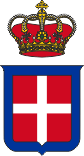
1861–1946,
Wappen des Königreichs Italien,
Quelle, nach: Das Flaggenbuch
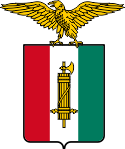
Repubblica Sociale Italiana,
1943–1945,
Wappen der Sozialen Republik Italien,
Quelle, nach: Wikipedia (D),
Jürgen Kaltschmitt
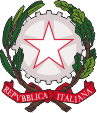
seit 1946,
Wappen von Italien,
Quelle, nach:
Corel Draw 4
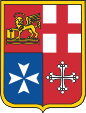
seit 1947,
Wappenschild in der Handelsflagge,
Quelle, nach:
Flaggen und Wappen
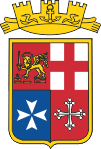
seit 1947,
Wappenschild in der Marineflagge,
Quelle, nach:
Flaggen und Wappen
Das heutige Staatswappen wurde nach langen Diskussionen am 05.05.1948 angenommen. Es zeigt einen rot umrandeten weißen Stern (Staat, Volk) auf einem Zahnrad (Arbeit), eingefasst von einem Ölbaum- und einem Eichenzweig (Kraft und Friedenswille). Das rote Spruchband unterhalb zeigt die offizielle Staatsbezeichnung "Repubblica Italiana". Manchmal werden der Ölbaum- und der Eichenzweig mit Süd- bzw. Norditalien in Verbindung gebracht. Das Staatswappen des Königreiches Italien zeigte den Wappenschild des Hauses Savoyen, einen blau umrundeten Schild mit einem weißen Kreuz in der Mitte. Darüber die italienische Königskrone.
Quelle/Source: Flags of the World,
Die Welt der Flaggen,
Flaggen Wappen Hymnen,
Flaggen und Wappen der Welt,
quirinale.it
Die von September 1943 bis Mai 1945 unter Mussolini bestehende Soziale Republik Italien hatte ein eigenes Wappen. Es zeigte einen Schild in den Nationalfarben Rot, Weiß und Grün und in der Mitte ein Rutenbündel, auch Liktorenbündel genannt und über dem Schild einen goldenen Adler. Das "fascis" (=Beil) im Rutenbündel, war im antiken Rom das Symbol staatlicher Macht, es wurde den höchsten Amtsträgern, den "Liktoren", vorangetragen. Das Rutenbündel symbolisierte die "Einigkeit der vielen (römischen) Bürger, die zusammen einen einzigen starken (Baum)Stamm ergeben". Das Beil steht für die Gewalt der Justiz, die auch Todesurteile fällen kann, allerdings nicht gegen römische Bürger. Deshalb wurden innerhalb des Gebietes der Stadt Rom den Amtsträgern nur die Rutenbündel vorangetragen, ohne die Beile, im Landkreis um Rom herum natürlich mit Beilen, da hier das latinische Recht galt. Mussolini wählte das Rutenbündel mit Beil aus, das im republikanischen Rom gegolten hatte, wobei Axt-Blatt bzw Axt-Stiel aus dem Bündel oben, bzw unten herausragten. Erst im kaiserlichen Rom wurden die "fasces" geführt, die das seitlich herausragende Axtblatt zeigten, wie die königlich italienische Luftwaffe bis Juli 1943, dann wieder ab September 1943 die nationale republikanische Luftwaffe. Mussolini wollte damit betonen, dass der Faschismus der neuen Republik zu seinen republikanischen, sozial(istisch)en und anti-klerikalen Ursprungsidealen zurückgekehrt ist.
Quelle: Jürgen Kaltschmitt


seit 1945,
Flugzeugkokarde,
Quelle, nach: Wikipedia (EN)
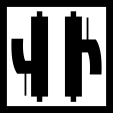
1943–1945,
Flugzeugkokarde,
Quelle, nach: Wikipedia (EN)
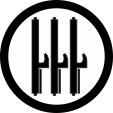
1926–1943,
Flugzeugkokarde,
Quelle, nach: Wikipedia (EN)

Schon im November 1794 hatten aufrührerische Studenten in Bologna und Mailand - infolge der französischen Revolution und ermutigt durch dem Vormarsch der von Bonaparte befehligten französischen Revolutionstruppen - als Erkennungszeichen grün-rot-weiße Kokarden angelegt. Letztlich wurden die Stadtfarben Weiß und Rot (Bologna, Mailand und noch andere norditalienische Städte) um Grün, als die Farbe der Vernunft, erweitert. Grün war aber nicht nur die Farbe der Vernunft, sondern auch Napoléons Lieblingsfarbe. Schon in Italien hatte er seine Leibwache zu Pferd (die Guiden des Konsuls) in grün eingekleidet und als die Guiden dann bald zu den Jägern zu Pferd der Kaisergarde wurden, trugen sie grüne Husaren-Dolmans. Selbst die von Bonaparte bevorzugt getragene Unform war grün, die kleine Uniform eines Obersten der Gardejäger zu Pferd.




In den Jahren 1804/1805 wurde die Kokarde offiziell in grün-weiß-rot abgeändert, was sich (wie schon in Frankreich) nicht vollständig durchsetzen konnte, denn die alten und erfahrenen Soldaten behielten lieber die alte Kokarde, um sich von den unerfahrenen Neulingen mit der neuen Kokarde zu unterscheiden.

Nach der Ära Napoléon wurde der italienische Nationalstaat 1814/1815 – zum Wiener Kongress – wieder abgeschafft und die Verhältnisse aus der vor-napoléonischen Zeit wiederhergestellt. Bei der nationalen Revolution von 1848/1849, besann man sich wieder der Farbenkombination von Grün, Weiß und Rot. Der Staat Italien entstand aber erst wieder in den Jahren 1860/1861, und die bis heute gültigen grün-weiß-roten Flaggen und Kokarden wurden eingeführt.
Mehr Informationen zum Thema Kokarden finden Sie hier. Alles um und über die Kokarde ← hier klicken.
Quelle: Jürgen Kaltschmitt, Volker Preuß
Lage:
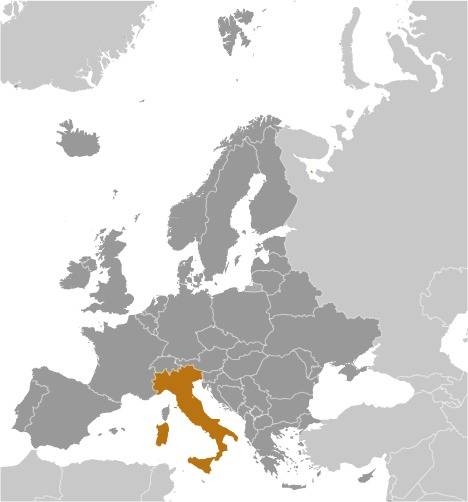
Quelle: CIA World Factbook
Landkarte des Landes:
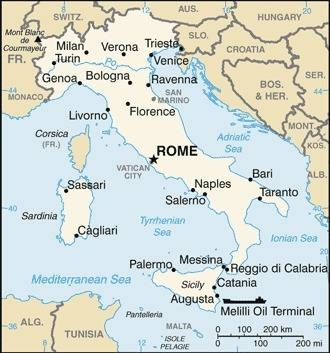
Quelle: CIA World Factbook
Historische Staaten in Italien, ca. 1850–1858:
alle Staatsbezeichnungen in Englisch
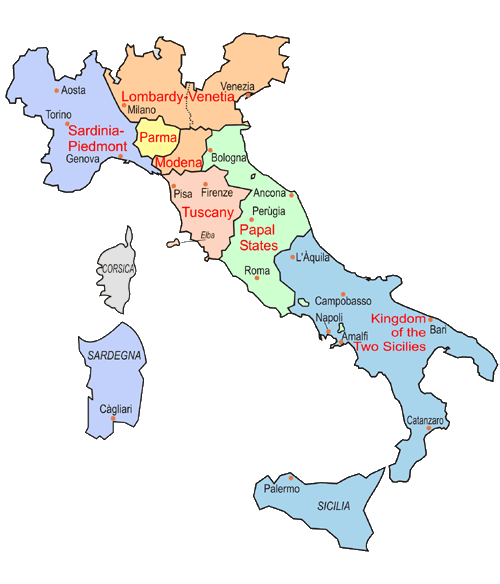
Quelle: Volker Preuß
heutige Regionen Italiens:
alle Bezeichnungen in Italienisch
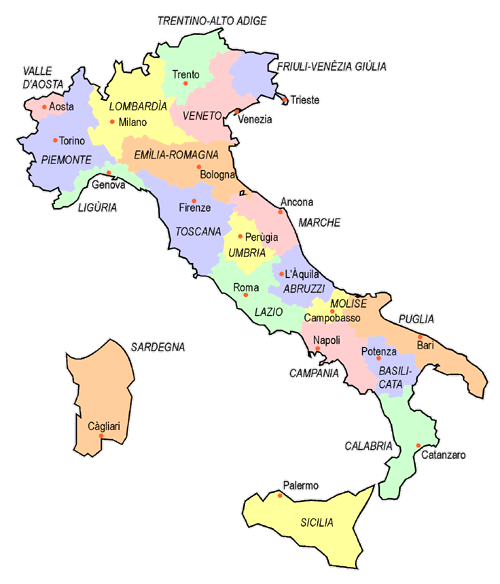
Quelle: Volker Preuß
Fläche: 301.338 km²
Einwohner: 60.502.000 (2017), davon 95% Italiener, 2,6% Sardinier (Sarden), 1,2% Rätoromanen, 0,5% Deutsche
Bevölkerungsdichte: 201 Ew./km² (2017)
Religionen: 85% Katholiken, 2% Orthodoxe Christen, 2% Moslems, 1% Protestanten, 7% Nicht-Religiöse
Hauptstadt: Rom (Roma), 2 875 000 Ew. (2016)
Amtssprache: Italienisch
regionale Amtssprachen: Deutsch, Ladinisch, Französisch, Slowenisch
sonstige Sprachen: Albanisch, Frankoprovenzalisch, Furlanisch, Griechisch, Katalanisch, Molisekroatisch, Okzitanisch, Sardisch
Währung: 1 Euro (€) = 100 Cent
Zeitzone: MEZ
Regionen: Abruzzen, Aostatal, Apulien, Basilicata, Emilia-Romagna, Friaul-Julisch Venetien, Kalabrien, Kampanien, Latium, Ligurien, Lombardei, Marken, Molise, Piemont, Sardinien, Sizilien, Toskana, Trient-Südtirol, Umbrien, Venetien
Quelle: Wikipedia (D),
bpb.de
Antike · Besiedelung des heutigen Italiens durch verschiedene Völker, die bis 200 v.Chr. im aufstrebenden Römischen Reich geeint werden
400–410 · Invasionen der West Goten
440–460 · Vandaleneinfälle
452 · Hunneneinfälle
476 · Absetzung des letzten römischen Kaisers Romulus Augustulus, Ende des (West)Römischen Reiches, Italien bildet bis 493 des Reich des Odoaker
434-540 · Eroberung durch Byzanz (Ostrom)
568/569 · Eroberung durch die Langobarden
774 · Eroberung durch die Franken, Eingliederung von Norditalien in das Frankenreich der Karolinger, Süditalien kommt unter fränkische Oberhoheit
843 · bei der Teilung des Frankenreiches entsteht das Königreich Italien
888 · Aussterben der Karolinger, Italien zerfällt meist in Kleinstaaten
961 · Otto I. bringt fast ganz Italien an das Deutsche Königreich
1130 · Vereinigung Siziliens mit Unteritalien zum Königreich Sizilien, der Norden verbleibt beim Römisch-Deutschen Reich
12.–18. Jhd. · die Geschichte Italiens ist durch viele Einzelstaaten (hier klicken) und Machtkämpfe zwischen ihnen geprägt, ausländische Mächte mischen sich häufig ein (Spanien, Frankreich, Deutschland, Österreich)
1796 · Italienfeldzug Napoléons, in Italien entstehen zunächst kurzlebige Republiken (hier klicken), die in Folge oft als Monarchien von Napoléons Verwandten regiert werden
1815 · Wiener Kongress, meist Wiederherstellung der alten Verhältnisse aus der vor-napoléonischen Zeit
1830 · die nationale italienische Revolution scheitert
1848–1849 · in fast ganz Italien Aufstand der Volksbewegung "Giòvane Itàlia" unter Mazzini und Garibaldi, Karl Albert von Sardinien-Piemont stellt sich an die Spitze der Erhebung und führt in seinem Land eine liberale Verfassung ein, die Erhebung endet in Uneinigkeit, Karl Albert dankt zugunsten seines Sohnes Viktor Emanuel II. ab
1859–1860 · Feldzüge des Königreichs Sardinien-Piemont gegen ausländische Mächte und weiter, hin zur Einigung Italiens
1860–1861 · Garibaldis Feldzüge gegen verschiedene Einzelstaaten in Italien zur Einigung Italiens
17.03.1861 · Krönung von Viktor Emanuel II. von Sardinien-Piemont zum König des Königreichs Italien
1889 · Italien erwirbt die Kolonie Somaliland
1890 · Italien erwirbt die Kolonie Eritrea
1912 · Italien erwirbt die Kolonie Dodekanes (Rhodos)
1915 · Italien erwirbt die Kolonie Libyen
1915–1918 · Beteiligung Italiens am Ersten Weltkrieg, Gebietsgewinne an österreichischem Territorium
1922 · Benito Mussolini wird Regierungschef ("Duce") und installiert das Faschistische Regierungssystem
1935 · Italien erwirbt die Kolonie Äthiopien
1940–1945 · Beteiligung Italiens am Zweiten Weltkrieg, Gebietsverluste an Jugoslawien und Griechenland, Verlust aller Kolonien, außer Somaliland
02.06.1946 · Volksabstimmung zugunsten der Abschaffung der Monarchie, Proklamation der Italienischen Republik
1951 · Belgien, Deutschland, Frankreich, Italien, Luxemburg und die Niederlande, gründen die EWG (die spätere EU)
Quelle: Atlas zur Geschichte,
Wikipedia (DE),
Discovery '97,
Weltgeschichte,
Länder der Erde
Zur Herkunft des Namens von Italien gibt es mehrere Theorien: 1). Der Name Italien geht auf einen antiken Helden zurück, der "Italus" hieß. 2). Die Wurzeln des Namens sind im antiken Volk der Vitaler zu suchen sind, das in Ligurien lebte. 3). Der Name leitet sich von "viteliu" ab. Damit bezeichneten die Osker, die vor den Römern im Süden der italienischen Halbinsel lebten, einen jungen Bullen. Als "vitello", fein geschnittenes Kalbfleisch, ist er noch heute auf italienischen Speisekarten zu finden.
Quellen, 1) u. 2): Handbuch der geographischen Namen,
3): PM-Magazin - Wie die Länder zu ihrem Namen kamen

Mit freundlicher Untersützung von:
und Jürgen Zens (D), Jürgen Kaltschmitt (D)