mobile Ansicht, to the English Version tap the flag

- Union der Komoren
- präsidiale Republik
- Eigenbezeichnung in Französisch: Union des Comores
• Flagge
• historische Flaggen
• regionale Flaggen
– Anjouan
– Mohéli
• Bedeutung/Ursprung der Flagge
• Wappen
• Bedeutung/Ursprung des Wappens
• Landkarte
• Zahlen und Fakten
• Geschichte
• Ursprung des Landesnamens
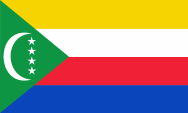
ab 2002,
Nationalflagge,
Seitenverhältnis = 3:5,
Quelle, nach: Wikipedia (DE)


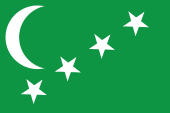
13.07.1963–12.11.1975,
Nationalflagge,
Seitenverhältnis = 2:3,
Quelle, nach:
Wikipedia (D), World Statesmen

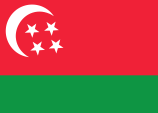
12.11.1975–23.05.1978,
Nationalflagge,
Seitenverhältnis = 5:7,
Quelle, nach: Wikipedia (D), Flags of the World, World Statesmen
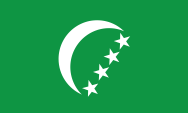
24.05.1978–07.06.1992,
Nationalflagge,
Seitenverhältnis = 3:5,
Quelle, nach: Wikipedia (D), Flags of the World, World Statesmen
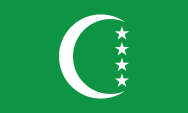
ca. 1982,
Nationalflagge,
zweifelhaft,
Quelle, nach: Flaggen und Wappen, Länder der Erde
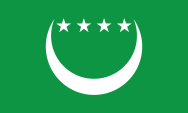
07.06.1992–03.10.1996,
Nationalflagge
Seitenverhältnis = 3:5,
Quelle, nach: Wikipedia (D), Flags of the World, World Statesmen
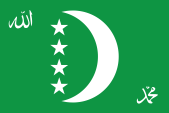
03.10.1996–21.01.2002,
Nationalflagge,
Seitenverhältnis = 2:3,
Quelle, nach: Wikipedia (D), Flags of the World, World Statesmen

1997–2012,
Flagge von Anjouan (Ndzuwani),
Quelle, nach: Wikipedia (D)
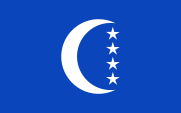
Flagge von Grande Comore (Njazidja),
Quelle, nach:
Wikipedia (D)
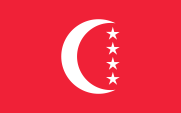
Flagge von Anjouan (Ndzuwani),
Quelle, nach: Wikipedia (D)
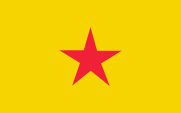
Flagge von Mohéli (Mwali),
Quelle, nach: Wikipedia (EN)
Die heutige Flagge der Komoren wurde am 21.01.2002 eingeführt. Sie zeigt vier gleich breite waagerechte Streifen in Gelb, Weiß, Rot und Blau. Am Liek befindet sich ein grünes Dreieck mit einem Halbmond und vier Sternen. Eine Definition der Farben der Flagge liegt nicht vor, lediglich die Farbwerte, die anlässlich der Olympiade 2012 vom Int. Olympischen Kommitee hinterlegt wurden: Grün = Pantone 355, Gelb = Pantone 109, Rot = Pantone 32, Blau = Pantone 293. Das grüne Dreieck sowie Halbmond und Sterne erinnern an die bisherigen Flaggen der Komoren. Die Flagge der Komoren bestand nämlich ursprünglich aus einem grünen Tuch, darauf ein weißer Halbmond und vier Sterne. Die grüne Grundfarbe und der Halbmond symbolisieren den Islam, die Sterne die vier Hauptinseln des Archipels. Die Farben Gelb, Weiß, Rot und Blau in den vier Streifen im wehenden Teil der Flagge stehen ebenfalls für die vier Hauptinseln der Komoren. Die erste Flagge für die französische Kolonie der Komoren wurde im Jahre 1963 eingeführt. Anlässlich der VN-Mitgliedschaft wurde 1975 eine Flagge mit einem schmalen roten Streifen am unteren Ende eingeführt. Nach zahlreichen Machtwechseln wurden immer wieder andere Flaggen eigeführt, der Mond und die Sterne drehten sich in unterschiedlichste Richtungen, wurden in unterschiedlichster Weise gruppiert und angeordnet. Zuletzt wurden sogar noch arabische Schriftzeichen ergänzt. Sie bedeuteten "Allah", und "Mohammed".
Quelle:
Die Welt der Flaggen,
Flags of the World,
Wikipedia (DE)

bis 1978,
Wappen der Komoren,
Quelle: Thommy [CC0], via Wikimedia Commons
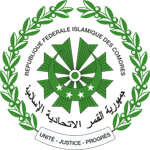
1978–2001,
Wappen der Komoren,
Quelle: Tonyjeff, based on national symbol,
with the help of users AnonMoos, Kafka1, Omar86 and زهير حرب.
[Public domain], via Wikimedia Commons

ab 2016,
Wappen der Komoren,
Quelle: Tonyjeff, based on national symbol,
with the help of users AnonMoos, Kafka1, Omar86, زهير حرب and Thommy.
[Public domain], via Wikimedia Commons
Das erste und von 1975 bis 1978 gültige Staatswappen der Komoren zeigte neben dem Namen des Staates einen fünfstrahligem Stern auf einem liegenden Halbmond, umgeben von einem Kranz aus vielen Sternen. Das von 1978 bis 2001 gültige Staatswappen der Komoren zeigte den liegenden Halbmond belegt mit vier Sternen auf einem achtstrahligen Stern, umgeben vom Landesnamen (Islamische Bundesrepublik Komoren) in Französich und Komorisch (arabisch geschrieben), einem Kranz aus Olivenzweigen und ein Spruchband mit dem Motto des Landes in französich: "Unité, Justice, Progress" → "Einigkeit, Gerechtigkeit, Fortschritt". Im Jahre 2016 wurde der Staatsname geändert (Union der Komoren) und auch das Motto. Es lautet jetzt: "Unité, Solidarité, Développement" → "Einigkeit, Solidarität, Entwicklung".
Quelle:
Flaggen Wappen Hymnen, Wikipedia (DE)
Lage:
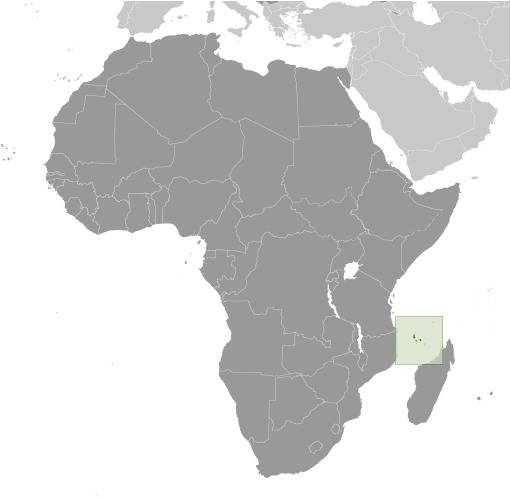
Quelle: CIA World Factbook
Landkarte des Landes:
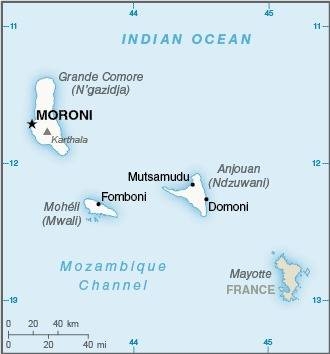
Quelle: CIA World Factbook
Fläche: 2.236 km², davon
Grande Comore (Ngazidja), 1.013 km², 345.000 Ew.
Mohéli (Mwali) ← hier klicken, 290 km², 38.000 Ew.
Anjouan (Ndzuwani), ← hier klicken, 425 km², 240.000 Ew.
Die Insel Mayotte ← hier klicken, 374 km², 94.500 Ew. ist eine französische Besitzung.
Einwohner: 851.000 (2019), davon 97% Komorer, 3% Inder, Perser, Europäer
Religionen: 99% Moslems, 1% Christen
Bevölkerungsdichte: 381 Ew./km²
Hauptstadt: Moroni, 111.329 Ew. (2013)
Amtssprachen: Komorisch, Arabisch, Französisch
Währung: 1 Komoren-Franc (KMF, FC) = 100 Centimes
Zeitzone: MEZ + 2 h
Quelle: Wikipedia (D)
ca 600 · beginnende Besiedelung durch Melanesier, Polynesier, Afrikaner und Perser
1416 · die Araber erobern die Inseln, in der Folgezeit Islamisierung
1500–1505 · die Portugiesen beherrschen die Komoren
1506 · Einigung der Inseln unter einem arabischen Sultan, später zerfällt der Staat, und jede einzelne Insel wird von einem Sultan regiert
ca. 1700 · Madagaskar versucht die Inseln zu erobern, die Inseln werden ein Zentrum der Piraterie
1803 · Ansiedlung von aus Frankreich vertriebenen Jakobinern
1841 · die Insel Mayotte wird auf Betreiben des Sultans von Mayotte ein französisches Protektorat und von Réunion aus verwaltet
1849–1873 · französische Kolonisierung auf allen Inseln der Komoren
1886 · das französische Protektorat wird auf alle Komoren-Inseln ausgedehnt
1909 · die Komoren werden französische Kolonie und von Französisch-Madagaskar aus verwaltet
1946 · die Komoren werden französisches Überseeterritorium mit eigener Verwaltung
1958 · eine Volksabstimmung für Unabhängigkeit von Frankreich scheitert
1961 · die Komoren erhalten innere Selbstverwaltung
1975 · Unabhängigkeitserklärung der Regierung der Komoren – gegen den Widerstand der Komorer, die zumeist bei Frankreich verbleiben wollen
1976 · eine Volksabstimmung auf Mayotte erreicht den Verbleib der Insel bei Frankreich
1977 · die Komoren erhalten eine sozialistische Verfassung
1978 · Sturz der Regierung durch französische und belgische Söldner, neue Verfassung, neue Staatsbezeichnung: Islamische Bundesrepublik Komoren
1979 · Einparteiensystem
1990 · freie und demokratische Wahlen im Mehrparteiensystem
1990–1996 · wechselnde Staatschefs und Putsche
1996 · neue Verfassung
1997 · die Inseln Anjouan und Mohéli erklären sich für unabhängig
1999 · die Insel Anjouan lehnt ein Autonomieangebot ab, Militärputsch auf den (Rest-)Komoren
2000 · eine Volksabstimmung auf Anjouan, stimmt gegen einen Friedensplan der OAU und für staatliche Unabhängigkeit
2001 · neue Verfassung, die Inseln Anjouan und Mohéli kehren in den Staatsverband zurück, neue Staatsbezeichnung: Islamische Union der Komoren
2016 · neue Staatsbezeichnung: Union der Komoren
Quelle:
Atlas zur Geschichte,
Wikipedia (D),
World Statesmen
Der Name des Landes kommt aus der Arabischen Sprache. Die Araber nannten die Inseln "dschuzur al-qamar", was übersetzt "Mondinseln" heißt.
Quelle:
Atlas der wahren Namen