mobile Ansicht, to the English Version tap the flag

- Republik Kostarika
- demokratische präsidiale Republik
- Eigenbezeichnung: Républica de Costa Rica
• Flaggen
• historische Flaggen
• Bedeutung/Ursprung der Flagge
• Wappen
• Bedeutung/Ursprung des Wappens
• Flugzeugkokarde
• Landkarte
• Zahlen und Fakten
• Geschichte
• Ursprung des Landesnamens
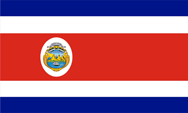
National-, Staats- und Marineflagge,
Seitenverhältnis = 3:5,
Quelle, nach: Wikipedia (D)


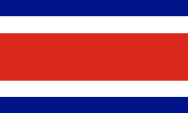
Handelsflagge,
Seitenverhältnis = 2:3,
Quelle, nach: Wikipedia (D)

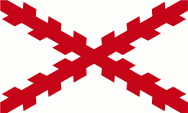
1538–1717,
Flagge Königreich Neu-Spanien,
Quelle, nach: Wikipedia (ES)

1717–1785,
Flagge Vize-Königreich Neu-Granada,
Quelle, nach: Wikipedia (EN)

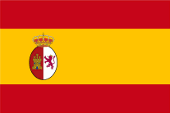
1785–1821,
Flagge Vize-Königreich Neu-Spanien,
Quelle, nach: World Statesmen
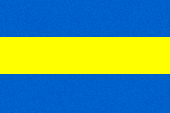
1821–1822,
Nationalflagge,
Quelle, nach: World Statesmen
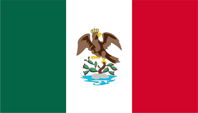
1822–1823,
Flagge Kaiserreich Mexiko,
Quelle, nach: Wikipedia (EN)

05.10.1823–04.03.1824,
Nationalflagge,
Quelle, nach: Wikipedia (DE)
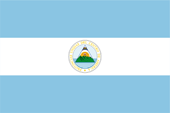
04.03.1824–02.11.1824,
Nationalflagge der Vereinigten Provinzen von Mittelamerika,
Quelle, nach: Wikipedia (DE)
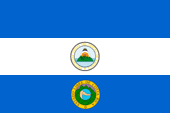
02.11.1824–22.11.1824,
Flagge der der Zentralamerikanischen Konföderation ergänzt um das Emblem Kostarikas,
Quelle, nach: Wikipedia (DE)
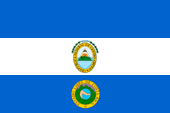
22.11.1824–15.11.1840,
Flagge der der Zentralamerikanischen Konföderation ergänzt um das Emblem Kostarikas,
Quelle, nach: Wikipedia (DE)
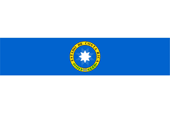
21.04.1840–20.04.1842,
Nationalflagge,
Quelle, nach: Wikipedia (DE)
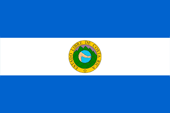
Sept. 1842–12.11.1848,
Nationalflagge,
Quelle, nach: Wikipedia (DE)
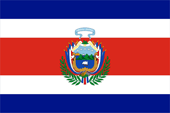
29.09.1848–27.11.1906,
Nationalflagge,
Quelle, nach: Wikipedia (D),
HansenBCN [Public domain], via Wikimedia Commons
Die Flagge Kostarikas zeigt seit 1848 fünf waagerechte Streifen in den Farben Blau, Weiß, Rot, Weiß und Blau im Verhältnis 1:1:2:1:1. Die heutige Flagge Kostarikas wurde im Jahre 1906 aus Anlass der Annahme eines neuen Wappens eingeführt. Das neue Wappen wurde wesentlich verkleinert und in einem weißen Oval innerhalb des roten Mittelstreifens nahe des Flaggenmastes positioniert. Am 21.10.1964 wurde das Wappen geringfügig verändert, indem die Anzahl der Sterne im Wappen von fünf auf sieben erhöht wurde. Die Farben Blau und Rot sind unter anderem in Pantone PMS definiert, als Blau = Pantone Reflex Blue und Rot = Pantone 485. In Kostarika ist es Privatpersonen per Gesetz verboten die Nationalflagge zu verwenden. Es sind nur Wimpel und Bänder in den Landesfarben gestattet. Dennoch wird doch häufig die Handelsflagge gehisst. Sie trägt kein Staatswappen. Im Jahre 1821 wurde Kostarika von Spanien unabhängig. Die erste eigene Flagge war eine horizontal dreigestreifte Flagge in den Farben Blau, Gelb und Blau. Wahrscheinlich sollte damit die Lage der "reichen Küste" (= Costa Rica) zwischen den Ozeanen dargestellt werden. Bereits 1823 wurde eine neue Flagge angenommen, obwohl Kostarika zum Kaiserreich Mexiko gehörte. Sie zeigte ein weißes Flaggentuch mit einem sechszackigen roten Stern in der Mitte. Kostarika war ab 1824 Mitglied der Zentralamerikanischen Föderation und führte ab März deren Flagge, wobei als Besonderheit ab November ein eigenes Landeswappen unterhalb des Wappens der Föderation geführt wurde. Als Kostarika im Jahre 1838 die Föderation verließ, wurde die Föderationsflagge dennoch bis 1848 beibehalten, außer zwischen 1840 und 1842 als eine Flagge in farblicher Umkehrung verwendet wurde (→ Zentralamerikanische Föderation). Als im Jahre 1848 der König von Frankreich Louis-Philippe von Orléans gestürzt wurde und ganz Europa in einen revolutiuonären Taumel geriet, empfahl auch die Frau des damaligen Präsidenten von Kostarika die Landesflagge um einen zentralen, breiten, roten Mittelstreifen zu ergänzen, damit die Flagge in den Farben Frankreichs erscheine. Am 29.09.1848 wurde diese neue Flagge angenommen, ergänzt um das neugestaltete Wappen.
Die heutigen Flaggen der Staaten Mittelamerikas gehen alle auf die Flagge der Zentralamerikanischen Föderation zurück. Auf dieses Merkmal wird bei jeder einzelnen Flagge jedes einzelnen mittelamerikanischen Staates besonders hingewiesen und in Nikaragua sagt man sogar, dass man die Flagge der Föderation im Prinzip bis heute fortsetze. Nur wie kommt es von Staat zu Staat zu so unterschiedlichen blauen Farbtönen, mal heller, mal dunkler? Das Problem dabei ist, dass Flaggen als historische Fundstücke mit dem modernen Auge betrachtet werden, und schnell eine bestimmte Farbbezeichnung verpasst bekommen. Stichwort "Hellblau"; dabei völlig ignorierend, dass das Hellblau mit sehr hoher Wahrscheinlichkeit auf Auswaschen und Verbleichen zurückzuführen ist, eine bei Indigo (Waid) bis heute bekannte, gewollte und entsprechend ausgenutzte Eigenschaft. Noch schlimmer wird es, wenn das Hellblau angeblich ein ganz bestimmtes gewesen sein soll. Beim Färben von Textilien kamen verschiedene Färbepflanzen zum Einsatz. Allerdings hatte das Blau, je nachdem welche Färbepflanze man verwendet hat, eine andere Färbung. Das konnten sein: Waid (für ein mittleres Blau) später auch Indigo, Holunderbeeren (für Rot-violett), Ritterspornblüten und Rotkraut (für Türkis), Alkanna und Blauholz (für Violett). Dass es so zu sehr unterschiedlichen Farbtönen kommt, ist gerade bei Blau absolut offensichtlich. Es wird klar, dass vor dem Zeitalter der Industrialisierung, mit seinen chemischen Möglichkeiten, kaum Standards erreicht werden konnten, und es ist leicht nachvollziehbar, warum bei Blau so viele Farbschattierungen auftauchten. Erschwerend kommt noch hinzu, dass es kaum Möglichkeiten gab, die Farben langanhaltend zu fixieren, so dass schon nach kurzer Zeit ein Auswaschen und Verbleichen zu sehen war. Das Hellblau der historischen Flaggen muss von daher zuerst als in Kauf zu nehmender und in Kauf genommener Nebeneffekt gesehen werden und nicht als Absicht. Die Heraldik kannte kein Hellblau oder Dunkelblau. Blau war Blau, egal wie es aussah. Mögen die Farbtöne für heutige Flaggen auch präzise festgelegt sein, für historische Flaggen kann das nicht zutreffen. Von daher wurde hier für die Darstellung des Blautons bei historischen Flagge ein einheitliches "Mittelblau" verwendet.
Quelle:
Die Welt der Flaggen,
Flaggen Wappen Hymnen,
Flaggen und Wappen der Welt,
Wikipedia (D),
Wikipedia (EN),
Volker Preuß
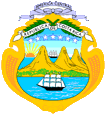
Wappen von Kostarika,
Quelle: Corel Draw 4
Das heutige Staatswappen von Kostarika wurde 1848 eingeführt und mehrfach geändert, so 1906 und zuletzt 1964. Es zeigt drei Vulkane auf einem schmalen Festlandsstreifen zwischen zwei Meeren, auf denen je ein Segelschiff fährt. Am Himmel sieben Sterne in einer Reihe. Die Vulkane symbolisieren die Landbrücke zwischen Nord- und Südamerika, die Wasserflächen stehen für Atlantik und Pazifik. Die sieben Sterne stehen für die sieben Provinzen von Kostarika. Bis 1964 waren es nur fünf Sterne, die jedoch die Mitgliedstaaten der Zentralamerikanischen Konföderation symbolisierten. Das Wappen von Kostarika erinnert entfernt an das Wappen der Zentralamerikanischen Konföderation.
Quelle:
Flaggen Wappen Hymnen
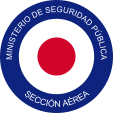
1964–1994,
Flugzeugkokarde,
Quelle, nach: Wikipedia (EN)
Lage:
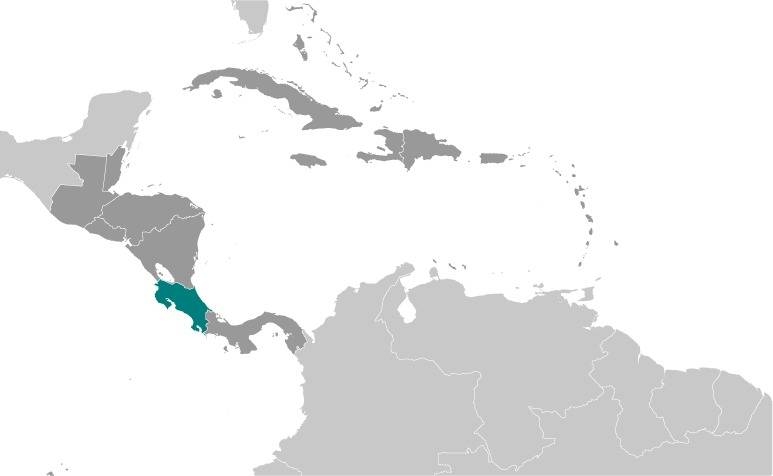
Quelle: CIA World Factbook
Landkarte des Landes:
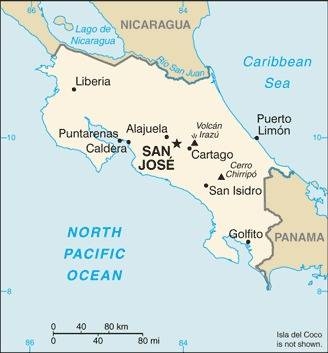
Quelle: CIA World Factbook
Fläche: 51.100 km²
Einwohner: 5.100.000 (2020), davon 94% Europäer und Mestizen, 3% Afroamerikaner und Mulatten, 1% Chinesen, 1% Indianer
Religionen: 52% Katholiken, 22% Protestanten, 17% Nicht-Religiöse
Bevölkerungsdichte: 100 Ew./km²
Hauptstadt: San José, 339.588 Ew. (2006)
Amtssprache: Spanisch
sonstige Sprachen: kreolisches Englisch
Währung: 1 Kostarika-Colón (CRC) = 100 Céntimos
Zeitzone: MEZ – 7 h
Quelle:
Wikipedia (D)
1502 · Entdeckung der Ostküste des heutigen Kostarikas durch Christoph Kolumbus
1522 · Entdeckung der Westküste des heutigen Kostarikas durch den Spanischen Seefahrer de Avila
1524 · Erkundung des Landes durch den Spanier Juan Vázquez de Coronado, Gründung der ersten spanischen Siedlung, in der Folgezeit Kolonisierung durch Spanien
1535 · Errichtung des Vizekönigreiches Neuspanien, dem Mittelamerika (und damit als Teilprovinz auch das heutige Kostarika) als "Generalkapitanat Guatemala" angeschlossen wird
1560 · die Erkundung und Kolonisierung des Landes durch Spanien ist abgeschlossen
1731 · Gründung von San José
29.10.1821 · Proklamation der Unabhängigkeit
Januar 1822 · Kostarika schließt sich dem Kaiserreich Mexiko an
1823 · nach dem Sturz des mexikanischen Kaisers wird die Verbindung zu Mexiko gelöst, und die Staaten des ehemaligen Generalkapitanats Guatemala verbinden sich zu den "Vereinigten Provinzen von Mittelamerika" (Zentralamerikanische Konföderation)
1838 · Kostarika verläst die Zentralamerikanische Konföderation
1843–1847 · instabile Regierungen, häufige Wechsel
1848 · neue Verfassung
1917 · Militärputsch des Verteidigungsministers Tinoco
1919 · US-amerikanische Militärintervention, Gegenputsch
1944 · Beilegung der Grenzprobleme mit den Nachbarstaaten
1948 · umstrittener Wahlausgang, Bürgerkrieg, Regierung unter José Ferrer, neue Verfassung
1949 · Abschaffung der Armee durch José Ferrer, Umwandlung in eine 7.500 Mann starke Bürgerwehr, um Polizeikräfte ergänzt
1983 · Kostarika proklamiert einen strikten Neutralitätsstatus
Juli 1998 · Auseinandersetzungen mit Nikaragua am Grenzfluß San Juan
Quelle:
Atlas zur Geschichte,
Wikipedia (D),
Discovery '97,
Weltgeschichte
Der Name Kostarika hat seinen Ursprung in der spanischen Wortgruppe "Costa Rica", was "reiche Küste" bedeutet. Der Name wurde der Ostküste dieses Landes durch Christoph Kolumbus verliehen, da er hier im Jahre 1502 Eingeborene mit üppigem Goldschmuck antraf. Dieser Name wurde im Lauf der Zeit für das ganze dahinter liegende Land übernommen.
Quelle: Handbuch der geographischen Namen