mobile Ansicht, to the English Version tap the flag

- Republik Krim
- seit 1783 Teil von Russland
- 1921–1945 als Autonome Sozialistische Sowjetrepublik Krim Teil von Sowjetrussland
- 1945–1954 als Oblast Krim Teil von Sowjetrussland
- 1954-1991 Teil der Sowjetukraine
- 1991-2014 als Autonome Republik Krim Teil der Ukraine
- seit 2014 als Republik Krim Teil von Russland
• Flagge
• historische Flaggen
• Krimtataren
• Bedeutung/Ursprung der Flagge
• Wappen
• Landkarte
• Zahlen und Fakten
• Geschichte
• Ursprung des Landesnamens
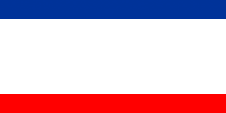
Nationalflagge,
Seitenverhältnis = 1:2,
Quelle, nach: Flaggen Enzyklopädie


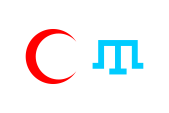
bis 1783,
Flagge Krim-Khanat,
Quelle, nach:
World Statesmen
1917–1919,
Regierung der Krim-Tataren,
Quelle, nach:
World Statesmen

1918–1921,
Regierung der Bolschewisten,
Quelle, nach:
World Statesmen
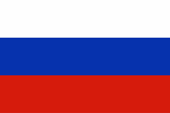
1919–1920,
Flagge der bürgerlichen Regierung,
Seitenverhältnis = 2:3,
Quelle, nach:
World Statesmen


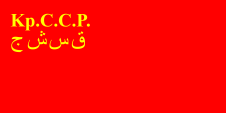
1921–1928,
Flagge der Autonomen Sowjetrepublik,
Seitenverhältnis = 1:2,
Quelle, nach:
World Statesmen
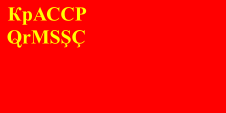
1929–1937,
Flagge der Autonomen Sowjetrepublik,
Seitenverhältnis = 1:2,
Quelle, nach:
World Statesmen
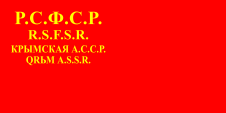
1937–1938,
Flagge der Autonomen Sowjetrepublik,
Seitenverhältnis = 1:2,
Quelle, nach:
World Statesmen
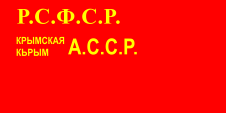
1938–1942, 1944–1945,
Flagge der Autonomen Sowjetrepublik,
Seitenverhältnis = 1:2,
Quelle, nach:
World Statesmen
siehe auch:
Flaggengeschichte der Sowjetrepubliken der UdSSR
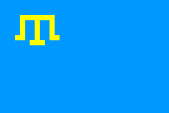
Flagge der Krimtataren,
Quelle, nach:
Wikipedia (EN)
In der am 24.09.1992 angenommenen blau-weiß-roten Flagge der Krim erkennt man die Farben Russlands wieder, zu welchem die Halbinsel Krim bis 1954 politisch gehörte und seit 2014 wieder gehört. Die Flaggen, die zu Sowjet-Zeiten verwendet wurden, entsprachen alle dem immer gleichen Schema, wie es für Sowjetische Autonome Republiken vorgesehen war: Zwischen 1923 und 1937 oft nur ein einfabiges rotes Flaggentuch mit einer goldenen Inschrift, die den Landesnamen zeigte. Manchmal nur als Abkürzung, manchmal mit vollem Namen, manchmal nur in Russisch oder auch mehrsprachig. Ab etwa 1937 wurden manchmal noch Hammer, Sichel und Stern ergänzt. Der Status der Krim als Autonome Republik wurde 1945 als Folge umfangreichen Kollaboration der nicht-russischen Bevölkerung mit dem Deutschen Reich während des Zweiten Weltkriegs aberkannt. Die bis dato gültige Flagge wurde abgeschafft. Die Flagge der Krim-Tatarsen zeigt ein hellblaues Flaggentuch. Im Obereck ein Zeichen, das der Symbolik der Goldenen Horde entspringt, eines riesigen Tatarenreiches, aus welchem auch die Krimtataren hervorgingen. Blau ist die Nationalfarbe der Türken und Mongolen bzw. auch der Tataren. Die im Zweiten Weltkrieg auf der Seite der Deutschen Wehrmacht kämpfenden krimtatarischen Truppen verwendeten eine ähnliche Flagge, jedoch war das Symbol im Obereck rot. Die Bezeichnung "Tataren" trug ursprünglich nur ein kleiner mongolischer Stamm. Während des Mongolensturms im 12. und 13. Jahrhundert wurde dieser Name auf alle Mongolen übertragen. Im 14. Jahrhundert wurde er auf jene Völker weiter verwendet, die aus der Vermischung von Mongolen, Türken, Wolgafinnen und Slawen hervorgingen und sich zum Islam bekannten.
Quelle:
Flaggen Enzyklopädie, Die Völker der Erde, Volker Preuß
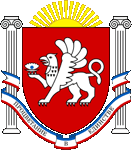
Wappen der Republik Krim,
Quelle: Верховна Рада Республіки Крим,
Public domain, via Wikimedia Commons
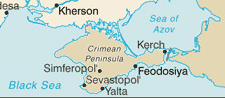
Quelle: CIA World Factbook,
modyfied by: Volker Preuß
Fläche: 26.080 km²
Einwohner: 1.967.200 (2014), davon 60% Russen, 25% Ukrainer, 14% Krimtataren
Bevölkerungsdichte: 75 Ew./km²
Hauptstadt: Simferopol (tatarisch: Akmetschet), 338.038 Ew. (2014)
Amtssprachen: Russisch, Ukrainisch, Krimtatarisch
Währung: russische Währung
Zeitzone: MEZ + 2 h
Quelle: Wikipedia (DE)
Antike · von Skythen bewohnt
seit 600 v.Chr. · Kolonisierung durch Griechen
5.–2. Jhd. v.Chr. · zum Bosporanischen Reich
110 v.Chr. · von Griechenland erobert
63 v.Chr. · vom Römischen Reich abhängig
395 · bei der Teilung des Römischen Reiches kommt die Chersónesos (Krim) an das Oströmische Reich (Byzanz)
ca. 250 · Besiedelung durch Goten
ca. 375 · Besiedelung durch Hunnen
ca. 650 · Besiedlung durch Chasaren, bis 890 zum Chasaren-Reich
890–990 · zum Reich der Petschenegen
988–989 · russische Eroberung unter Wladimir, Errichtung des russischen Fürstentums Tmutarakan
1061–1240 · zum Reich der Kumanen (Kumanisches Reich)
1223 · Einfall der Mongolen, die Krim wird Teil des Reiches der Goldenen Horde
ca. 1260 · Byzanz verliert die letzten Besitzungen auf der Krim
ca. 1420 · Zerfall des Reiches der Goldenen Horde
1438 · Entstehung des Khanats Krim als Relikt des Reiches der Goldenen Horde
1475 · das Khanat Krim muss die türkische Oberhoheit anerkennen
1783 · russische Eroberung
1853–1856 · Krimkrieg (Russland gegen Osmanisches Reich, England, Frankreich und Sardinien)
1914–1918 · Erster Weltkrieg, die Krim wird von den Mittelmächten besetzt, Abzug der Truppen nach dem Frieden von Brest-Litowsk, Ausrufung der Republik Kurultai
14.01.1918 · Machtergreifung durch die Bolschewisten
1918–1920 · Bürgerkrieg, zunächst Vertreibung der Bolschewisten durch General Denikin, erneuter Vormarsch der Bolschewisten, Verteidigung durch General Wrangel
1921 · Errichtung der Sowjetdiktatur, Bildung der Autonomen Sozialistischen Sowjetrepublik Krim innerhalb der Russischen Föderativen Sozialistischen Sowjetrepublik (Sowjetrussland)
1939–1945 · Zweiter Weltkrieg, die Krim ist von 1941 bis 1944 von deutschen Truppen besetzt, die Krim-Tataren kämpfen in einem eigenen Kampfverband auf der Seite der Deutschen Wehrmacht
1944 · Eroberung durch sowjetische Truppen, alle Krim-Tataren werden nach Zentralasien deportiert
1945 · Auflösung der Autonomen Sozialistischen Sowjetrepublik Krim und Eingliederung als Oblast (Bezirk) in die RSFSR
1954 · Anschluss der Oblast Krim an die Ukrainische Sozialistische Sowjetrepublik
1967 · die Deportation der Krim-Tataren wird durch das Parlament der Sowjetunion als Unrecht anerkannt, jedoch kein Rückkehrrecht
1988 · die Krim-Tataren dürfen offiziell auf die Krim zurückkehren
1991 · Wiedererrichtung der Autonomen Republik Krim (innerhalb der Ukraine)
1991 · Bildung des Krim-Tatarischen Parlaments "Milli Mejlis", Verkündung der nationalen Unabhängigkeit (nicht anerkannt)
Januar 2014 · Putsch in Kiew, (nicht verfassungskonformer Machtwechsel), Unruhen
16.03.2014 · Volksabstimmung in der Republik Krim, eine überwältigende Mehrheit stimmt für einen Anschluss an Russland, am 18.03. beschließt das Parlament der Krim den Anschluss an Russland, am 20.03. beschließt das russische Parlament den Anschluss der Republik Krim an die Russische Föderation
Quelle:
Atlas zur Geschichte,
Die Völker der Erde,
Wikipedia (DE),
Avantgarde für Europa,
Volker Preuß
Die Bezeichnung "Krim" stammt aus der Zeit der Mongolenherrschaft. Das mongolische Wort "Krym" bedeutet "Festung". Im Altertum hieß die Halbinsel "Taurische Halbinisel" oder "Skythische Halbinsel", nach der Kolonisierung durch die Griechen "Chersónesos", was einfach nur "Halbinsel" heißt.
Quelle:
Atlas der wahren Namen,
Wikipedia (DE),
Volker Preuß
Surftipp: