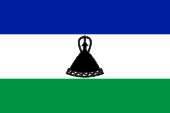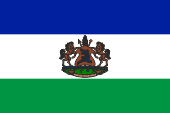
Flagge des Königs,
Seitenverhältnis = 2:3,
Quelle, nach:
Wikipedia.de


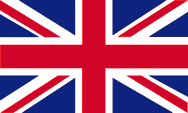
1868–1966,
Nationalflagge – der britische Union Jack,
Seitenverhältnis = 3:5,
Quelle, nach:
Flags of the World


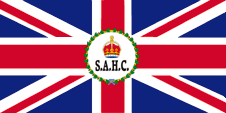
1907–1931,
Flagge des Hohen Kommissars,
Seitenverhältnis = 1:2,
Quelle, nach: Flags of the World
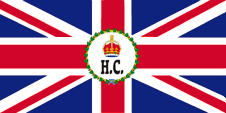
1931–1968,
Flagge des Hohen Kommissars,
Seitenverhältnis = 1:2,
Quelle, nach: Flags of the World
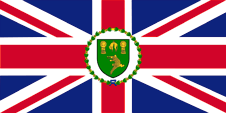
1951–1966,
Flagge des Resident Commissioner,
Seitenverhältnis = 1:2
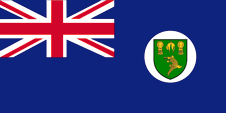
1951–1966,
inoffizielle Nationalflagge,
Seitenverhältnis = 1:2,
Quelle, nach: World Statesmen
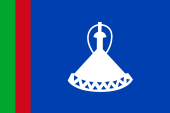
1966–1987,
Nationalflagge,
Seitenverhältnis = 2:3,
Quelle, nach:
Wikipedia.de
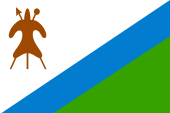
1987–2006,
Nationalflagge,
Seitenverhältnis = 2:3,
Quelle, nach:
Wikipedia.de
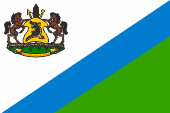
1987–2006,
Flagge des Königs,
Seitenverhältnis = 2:3,
Quelle, nach:
Wikipedia.de
Die heutige Flagge von Lesotho wurde – nach Informationen von Wikipedia.de – anlässlich des 40. Jahrestages der Unabhängigkeit am 04.10.2006 angenommen. Die Flagge zeigt drei waagerechte Streifen im Verhältnis 3:4:3 in Blau, Weiß und Grün, wobei der weiße Mittelstreifen ein wenig verbreitert ist. In seiner Mitte ist ein schwarzer Basuto-Hut platziert. Die drei Farben der Flagge beziehen sich (wie in der 1987–2006 verwendeten Flagge) auf den nationalen Wahlspruch ("Frieden, Regen, Wohlstand"), Weiß steht für Frieden, Blau für den Regen und Grün für die Fruchtbarkeit des Landes und den Wohlstand. Die Farben der Flagge von Lesotho werden heute neben Schwarz und Weiß folgendermaßen angegeben: Blau = hexadezimal #00209F, was Pantone Reflex Blue entsprechen würde, Grün = hexadezimal #009543, was Pantone 355 entsprechen würde.
Als britisches Protektorat hatte Basutoland, wie Lesotho damals hieß, eigentlich keine eigene Flagge. Es musste der britische Union Jack verwendet werden. Angeblich wurde aber ab 1951 inoffiziell ein Blue Ensign als Nationalflagge verwendet. Er soll das Badge des Landes – einen grünen Schild mit einem goldenen Wollfließ, zwei goldenen Getreidegarben und einem Krokodil darauf – in der Mitte einer weißen Scheibe im fliegenden Ende der Flagge gezeigt haben.
Der britische Hohe Kommissar hatte seit 1907 seine eigene Flagge. Es handelte sich um die für Hohe Kommissare übliche Flagge, den Britischen Union Jack mit dem Abzeichen des Hohen Kommissars in der Mitte, eine von einem Kranz umgebene Abkürzung mit der britischen Krone darüber. Bis 1931 war der Britische Hohe Kommissar für Südafrika (Abkürzung: S.A.H.C.) für Basutoland zuständig. Nach dem Westminsterstatut wurde Südafrika 1931 unabhängig, und der Hohe Kommissar war nur noch für Betschuanaland, Basutoland und Swasiland zuständig (Abkürzung: H.C.). Im Jahre 1953 änderte sich nur die Form der Krone.
Die im Zusammenhang mit der Unabhängigkeit am 04.10.1966 angenommene und bis 1987 gültige Flagge zeigte die vier Farben der damals herrschenden Nationalpartei (BNP): Blau, Rot und Grün, mit einem weißen Basuto-Hut im blauen Feld.
Die zwischen dem 19.01.1987 und dem 04.10.2006 verwendete Flagge war diagonal gestreift. Sie zeigte ein weißes Feld oben links, und ein grünes Feld unten rechts, getrennt von einem blauen Streifen entlang der Diagonalen. Im weißen Feld befand sich ein brauner Schild mit Waffen, das Landeswappen in stilisierter Form. Die drei Farben der Flagge bezogen sich (wie in der heutigen Flagge) auf den nationalen Wahlspruch ("Frieden, Regen, Wohlstand"), Weiß steht für Frieden, Blau für den Regen und Grün für die Fruchtbarkeit des Landes und den Wohlstand. Der Schild im Obereck der Flagge symbolisierte, wie im Wappen, die Verteidigungsbereitschaft des Landes. Diese Flagge wurde am 19.01.1987 erstmals gehisst.
Quelle:
Wikipedia.de,
Wikipedia.en,
World Statesmen,
Die Welt der Flaggen
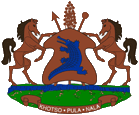
seit 2006,
Wappen von Lesotho,
Quelle, nach: Corel Draw 4
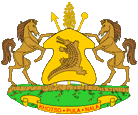
1966–2006,
Wappen von Lesotho,
Quelle, nach: Corel Draw 4
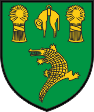
1951–1966,
Wappen von Lesotho,
Quelle, nach: Flags of the World
Das Staatswappen wurde anlässlich der Unabhängigkeit am 04.10.1966 eingeführt, und – wahrscheinlich im Jahre 2006 – farblich ein wenig abgeändert. Es zeigt auf einem Basuto-Schild ein Krokodil, das Symbol der Dynastie und des wichtigsten Stammes von Lesotho. Hinter dem Schild zwei gekreuzte Waffen des 19. Jahrhunderts. Die Schildhalter sind zwei Basuto-Pferde. Das Postament des Wappens ist der Berggipfel des "Nationalberges" Thababosiu. Im Vordergrund, auf einem Band der Wahlspruch der Monarchie in der Sprache Sesotho und in roten Buchstaben: "Khotso, Pula, Nala" → "Frieden, Regen, Wohlstand".
Quelle/Source:
Flaggen Wappen Hymnen

Flugzeugkokarde,
Quelle/Source: nach/by Wikipedia (EN)

Quelle/Source: CIA World Factbook

Quelle/Source: CIA World Factbook
Fläche: 30.355 km²
Einwohner: 2.100.000 (2019), davon 99% Basutho (Basotho), 1% Zulu, Xhosa, Europäer, Asiaten
Religionen: 45% Katholiken, 40% Protestanten
Bevölkerungsdichte: 69 Ew./km²
Hauptstadt: Maseru 330.760 Ew. (2016)
Amtssprache: Englisch, Sesotho
sonstige Sprachen: Zulu, Afrikaans
1. Währung: 1 Loti (LSL, M) = 100 Lisente, Plural: 2 Maloti = 200 Lisente
2. Währung: 1 Südafrikanischer Rand (ZAR, R) = 100 Cents
Zeitzone: MEZ + 1 h
Quelle/Source:
Wikipedia (D)
1820 · der Zulu-König Tschaka erobert Südafrika, Flucht der Bantuvölker, Entstehung des Basuto-Königreichs in den Bergen von Südafrika
1868 · das Basuto-Königreich bittet Großbritannien um Schutz vor den sich ausbreitenden Buren (die weißen Buren siedelten seit 1652 in Südafrika, und waren seit 1806 in langen Zügen auf der Flucht vor dem sich ununterbrochen ausbreitenden Britischen Kolonialsystem → Burenrepubliken), Großbritannien errichet das Protektorat Basutoland
1871 · Basutoland wird der Britischen Kapkolonie angeschlossen
1884 · nach Aufständen wird Basutoland wieder aus der Britischen Kapkolonie ausgegliedert, und direkt der Verwaltung des Britischen Kolonialamts unterstellt
1958 · Verfassung
1960 · erste Parlamentswahlen
1964 · Südafrika erhebt Anspruch auf Basutoland für die Zeit nach dessen bevorstehender Unabhängigkeit
15.05.1964 · neue Verfassung, innere Selbstverwaltung
1965 · Parlamentswahlen
04.10.1966 · Unabhängigkeit als Königreich Lesotho
1967 · Verfassungsreform, die Rechte des Königs werden eingeschränkt
1970 · Verfassung außer Kraft, Parteienverbot, Errichtung einer Präsidialdiktatur
1974 · Aufstand
1980 · militärische Aktionen Südafrikas in Lesotho gegen den ANC
1986 · Militärputsch
1991 · Parteienverbot aufgehoben
1993 · Ende der Militärdiktatur, Parlamentswahlen, neue Verfassung
1998 · Parlamentswahlen, Massendemonstrationen, Putschversuch des Militärs, Einmarsch von Truppen aus
Botswana und Südafrika
2001 · die Truppen aus Botswana und Südafrika ziehen wieder ab
2014 · Putschversuch des Militärs
Quelle/Source:
Atlas zur Geschichte,
Wikipedia (D),
Discovery '97