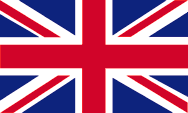
Quelle: Wikipedia (DE)


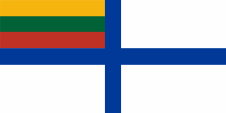
seit 1992,
Marineflagge,
Seitenverhältnis = 1:2,
Quelle: Flags of the World

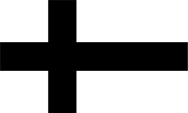
1384–1411,
Flagge des Deutschen Ordens,
Quelle, nach: Flags of the World

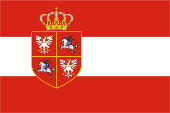
1411–1795,
Flagge des Königreichs Polen-Litauen,
Quelle, nach: Flags of the World
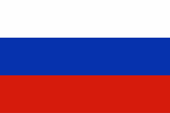
1795–1858,
Nationalflagge von Russland,
Seitenverhältnis = 2:3,
Quelle, nach: Flags of the World


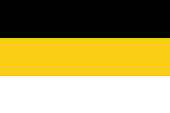
1858–1915,
Nationalflagge von Russland,
Seitenverhältnis = 2:3,
Quelle, nach: Flags of the World
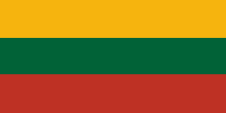
1918–1940,
Nationalflagge,
Seitenverhältnis = 2:3,
Quelle, nach: Wikipedia (DE)
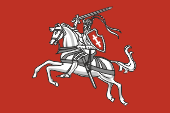
1918–1940,
Staatsflagge (Vorderseite),
Seitenverhältnis = 2:3,
Quelle, nach: Flaggenbuch 1939

1918–1940,
Staatsflagge (Rückseite),
Seitenverhältnis = 2:3,
Quelle, nach: Flaggenbuch 1939
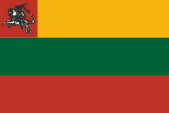
ca. 1915, 1918, 1925,
unbekannte Variante der Staatsflagge,
Seitenverhältnis = 2:3,
Quelle, nach:
1.) WEYER's Taschenbuch der Kriegsflotten, 1928,
2.) Wikipedia (DE)
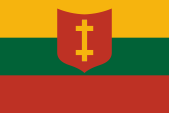
1918–1927, Staats- und Marineflagge,
1927–1940, Staatsflagge,
Seitenverhältnis = 2:3,
Quelle, nach: Flags of the World
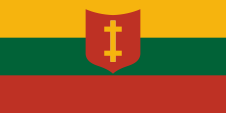
1927–1940,
Marineflagge,
Seitenverhältnis = 1:2,
Quelle, nach: Flags of the World
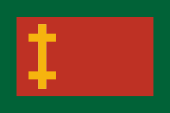
1927–1940,
Gösch,
Seitenverhältnis = 2:3,
Quelle, nach: Flags of the World
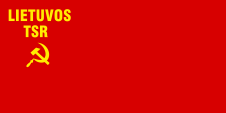
1940–1953,
Flagge der Litauischen Sozialistischen Sowjetrepublik,
Seitenverhältnis = 1:2,
Quelle, nach: World Statesmen
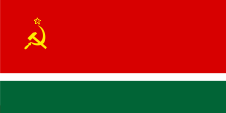
1953–1990,
Flagge der Litauischen Sozialistischen Sowjetrepublik,
Seitenverhältnis = 1:2,
Quelle, nach: World Statesmen
1989–2004,
Nationalflagge,
Seitenverhältnis = 1:2,
Quelle: Wikipedia (DE)
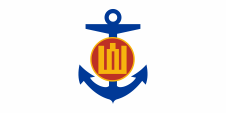
1992–2004(?),
Gösch,
Seitenverhältnis = 1:2,
Quelle, nach: Flags of the World
Die Flagge Litauens wurde erstmals am 19.04.1918 offiziell gehisst, und am 20.03.1989 wieder eingeführt. Sie zeigt drei waagerechte Streifen in Gelb, Grün und Rot. Über den Ursprung und die Bedeutung der Farben gibt es drei Theorien, die sich sicherlich teilweise überschneiden:
• Gelb, Grün und Rot waren die bevorzugten Farben litauischer Vereine im 19. und 20. Jahrhundert.
• Gelb steht für Sonne, Licht, Reichtum und Ehre, Grün für die Pflanzenwelt und Fruchtbarkeit, aber auch für Glaube, Freiheit und Glück. Rot symbolisiert das Blut, das im Kampf zur Erlangung der Selbständigkeit vergossen wurde.
• Gelb steht für die Weizenfelder und die Freiheit, Grün für die Wälder und den Glauben, Rot erinnert an blühende Blumen und steht ferner für Patriotismus und Mut.
Im Jahr 1940 und zwischen den Jahren 1944 und 1990 führte Litauen, als Teil der Sowjetunion, ein sowjetisches Modell. Bis 1953 eine einfache rote Flagge mit Hammer und Sichel in Gold, und unterhalb davon der Name der Sowjetrepublik "Lietuvos TSR", in goldenen lateinischen Lettern. Im Jahre 1953 wurde dann eine Sowjetflagge eingeführt, die drei waagerechte Streifen in Rot, Weiß und Grün im Verhältnis 8:1:3 zeigte. In der Mitte des roten Feldes erschien, in Richtung Flaggenmast verschoben, Hammer, Sichel und Sowjetstern in Gold. Die Farben der Flagge von Litauen werden heute folgendermaßen angegeben: Gelb = Pantone 1235, Grün = Pantone 349 und Rot = Pantone 180.
Quelle/Source:
Flaggen und Wappen der Welt,
Die Welt der Flaggen,
Flaggen Wappen Hymnen,
Wikipedia (DE)
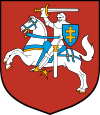
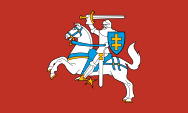
seit 1991,
Wappen von Litauen,
Quelle:
Wikipedia (DE),
Government of Lithuania, Public domain, via Wikimedia Commons
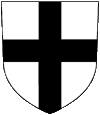
1237–1561,
Wappenschild des Deutschen Ordens,
Quelle/Source: Wikipedia (DE)
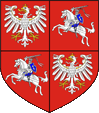
1386–1569,
Wappen von Polen-Litauen,
Quelle/Source: Wikipedia (DE)
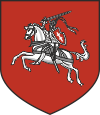
ca.1925–1940, 1990–1991,
Wappen von Litauen,
Quelle/Source: Wikipedia (DE)
Das Staatswappen von Litauen wurde in der heutigen Form im Jahre 1925 von Juzas Zikiris geschaffen. Es zeigt auf einem roten Schild einen silbernen Ritter mit erhobenem Schwert auf einem silbernen Pferd. Es soll an den legendären Ritter Vytis erinnern. Der Betrachter sieht den Ritter nach nach Links, in Richtung Westen ausgerichtet, um auf die Richtung hinzuweisen aus der in der Vergangenheit Gefahr für Litauen drohte. Das waren zum ersten der Deutsche Ritterorden, und zum zweiten der polnische Staat. Dieses Wappenbild war bereits seit dem 14. Jahrhundert in Verwendung. Für die litauische Heraldik waren und sind seit dem 14. Jahrhundert die sogenannten Säulen des Gediminas von Bedeutung. Sie waren das Wappenbild der Dynastie der Gediminiden und das Symbol des Großfürstentums Litauen, eine weiße, stilisierte Burg auf rotem Grund. In der Zeit, in der Litauen zur Sowjetunion gehörte, war ein sowjetisches Modell in Verwendung, welches dem Wappen der Sowjetunion ähnelte. Am 11.03.1990 wurde wieder das Wappen von 1925 gültig, jedoch wurde 1991 eine kleine Änderung vorgenommen. Der ehemals rote Schild des Reiters ist nun blau, und das Doppelkreuz darin ist nicht mehr weiß sondern golden. Während des Zweiten Weltkriegs, in der Zeit der deutschen Besetzung zwischen 1941 und 1944 hatte Litauen offiziell keine eigenen Hoheitszeichen. Es gehörte zum Reichskommissariat Ostland, in dem die Staaten den Baltikums und Teile des heutigen Nordwestens von Weißrussland zusammengefasst waren. Die Litauische Legion, die im Zweiten Weltkrieg in Regimentsstärke freiwillig in den Reihen der Deutschen Wehrmacht gegen die Sowjetunion kämpfte trug als Ärmelabzeichen einen dreifach diagonalgestreiften Schild in den Landesfarben Gelb, Grün und Rot.
Quelle/Source:
Flaggen und Wappen der Welt,
Die Welt der Flaggen,
Flaggen Wappen Hymnen,
Wikipedia (DE),
Avantgarde für Europa
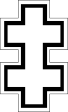
Flugzeugkokarde,
Quelle/Source: nach/by Wikipedia (EN)
Lage:
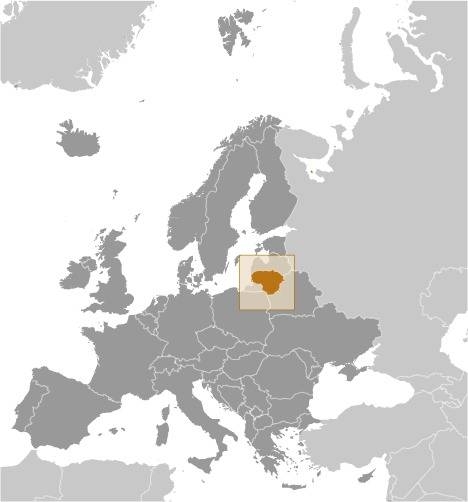
Quelle/Source: CIA World Factbook
Landkarte des Landes:
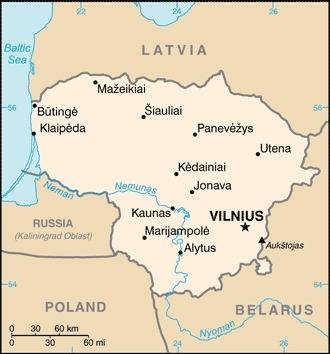
Quelle/Source: CIA World Factbook
Landkarte des Baltikums:
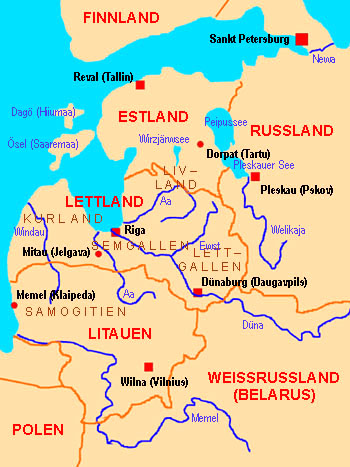
Quelle/Source: Volker Preuß
Fläche: 65.300 km²
Einwohner: 2.790.407 (2022), davon 85% Litauer, 6% Polen, 5% Russen, 1% Weißrussen, 1% Ukrainer, Letten, Tataren und auch 2.000 Deutsche
Religionen: 77% Katholiken, 5% Russisch-Othodox, 2% Protestanten
Bevölkerungsdichte: 43 Ew./km²
Hauptstadt: Vilnius (Deutsch: Wilna), 569.902 Ew. (2021)
Amtssprache: Litauisch
sonstige Sprachen: Polnisch, Russisch
Währung, ab dem 01.01.2015: 1 Euro (EUR, €) = 100 Cent,
bis zum 31.12.2014: 1 Litas (LTL) = 100 Centas
Zeitzone: MEZ + 1 h
Quelle:
Wikipedia (DE)
11.–12. Jhd. · Besiedelung des heutigen Litauens durch die Litauer
Mitte des 14. Jhd. · Einigung des litauischen Staates unter den Großfürsten Witens, Gedymin, Olgerd und Kejstut, es gelingt die Gebiete des heutigen Weißrusslands und Podoliens (in der heutigen Ukraine) zu erobern und so ein Gebiet von der Ostsee bis zum Schwarzen Meer unter einer Krone zu vereinigen
1384 · der Deutsche Orden erobert Samogitien
1386 · Jagiello, der Sohn des Fürsten Olgerd, seit 1377 Großfürst von Litauen, heiratet die polnische Königin Hedwig (Jadwiga) und wird als Wladyslaw II. zum König von Polen gekrönt, seither: Königreich Polen-Litauen
1410 · Wladyslaw II., König von Polen und Litauen, und Vytautas (Witold) Großfürst von Litauen schlagen den Deutschen Orden bei Tannenberg
1411 · 1. Frieden von Thorn, der Deutsche Orden muss Samogitien an Litauen abtreten
1569 · Polnisch-Litauischer Ausgleich (Union von Lublin), die beiden Landesteile bewahren sich jedoch innere Autonomie, Litauen tritt seine Territorien in der heutigen Ukraine an Polen ab
1772, 1793 und 1795 · Polnische Teilungen, Preußen, Russland und Habsburg teilen Polen-Litauen in drei Etappen vollständig unter sich auf, Litauen wird russisch, Aufteilung in die Gouvernements Wilna (russisch: Wiljnus, litauisch: Vilnius), Sudauen (russisch: Suwalki) and Kauen (russisch: Kowno, litauisch: Kaunas)
ab Mitte des 19. Jhd. · Erstarken des litauischen Nationalismus
1905 · Konstituierung eines litauischen Landtags im Gouvernement Kowno (Kauen)
1914–1918 · Erster Weltkrieg: 1915 das Deutsche Reich erobert Litauen
07.11.1917 · bolschewistische Revolution in Russland, Machtergreifung durch die Sowjets
03.03.1918 · Russland kapituliert gegenüber dem Deutschen Reich, Friedensvertrag von Brest-Litovsk, Herausbildung eines litauischen Staates (einschließlich Kauen und Teilen der Gouvernemente Wilna und Sudauen)
19.04.1918 · Litauen erklärt seine Unabhängigkeit von Russland, Proklamation der Republik Litauen
18.03.1921 · Friede von Riga, Sowjetrussland und Polen erkennen die Unabhängigkeit Litauens an, jedoch muss Litauen das Gebiet Vilnius (Wilna) an Polen abtreten, Litauen erhebt Anspruch auf das deutsche Memelgebiet
10.01.1923 · das Ergebnis einer Volksabstimmung ignorierend besetzt Litauen das deutsche Memelgebiet
1926 · Errichtung der Präsidialdiktatur durch die Nationalpartei
22.03.1939 · Litauen tritt das Memelgebiet wieder an das Deutsche Reich ab
23.08.1939 · deutsch-sowjetischer Nichtangriffspakt, Litauen wird sowjetische Interessensphäre und von der Sowjetunion besetzt
21.07.1940 · Proklamation der Litauischen Sozialistischen Sowjetrepublik (LSSR)
05.08.1940 · Aufnahme der LSSR in die Sowjetunion, Deportation von Tausenden von Einwohnern nach Sibirien
1939–1945 · Zweiter Weltkrieg: Juni/Juli 1941 Eroberung Litauens durch deutsche Truppen, Litauen kommt zum Reichskommissariat Ostland, etwa 3.000 Litauer kämpfen freiwillig in der Deutschen Wehrmacht gegen die Sowjetunion, Dezember 1944 Eroberung Litauens durch sowjetische Truppen, Litauen wird wieder LSSR und wird der Sowjetunion wieder angegeliedert, erhält jedoch das ehemals polnische Wilna-Gebiet zurück, erneut Deportation von Tausenden von Litauern nach Sibirien, teilweise Russifizierung
1988 · Erstarken der litauischen Demokratie- und Nationalbewegung "Sajudis"
18.05.1989 · Unabhängigkeitserklärung
11.03.1990 · Proklamation der Republik Litauen
06.09.1991 · die Sowjetunion erkennt die Unabhängigkeit Litauens an
1993 · Abzug der russischen Truppen
2004 · Litauen wird Mitglied der Europäischen Union und der NATO
Quelle:
Atlas zur Geschichte,
Wikipedia (D),
Discovery '97,
Volker Preuß
Der Name "Litauen" bzw. "Litauer" geht vermutlich auf das lateinische Wort "litus" zurück, was "Küste" heißt.
Quelle: Handbuch der geographischen Namen
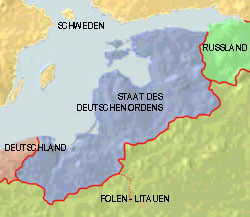 1410–1561
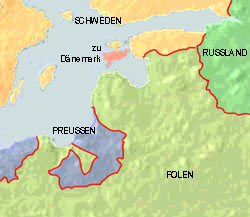 1561–1621
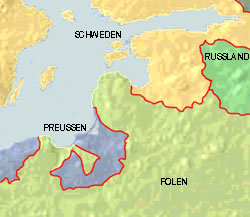 1621–1721
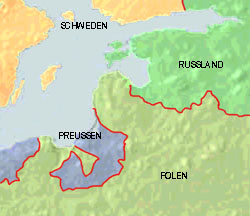 1721–1772
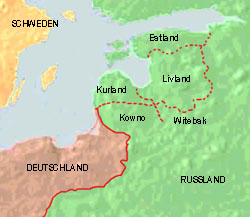 1815–1918
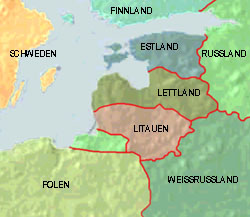 seit 1991
Landkarten: Volker Preuß