• Flaggen
• historische Flaggen
• Bedeutung/Ursprung der Flagge
• Wappen
• Bedeutung/Ursprung des Wappens
• Flugzeugkokarde
• Landkarte
• Zahlen und Fakten
• Geschichte
• Ursprung des Landesnamens
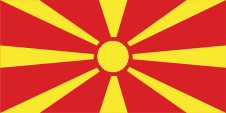
National-, Staats und Handelsflagge,
Seitenverhältnis = 1:2,
Quelle, nach: Flags of the World


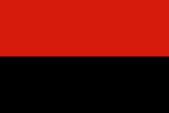
1944,
Unabhängiger Staat Makedonien,
Seitenverhältnis = 2:3,
Quelle, nach: Flags of the World

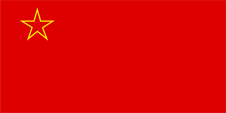
1946–1992,
Flagge Makedoniens in der SBR Jugoslawien,
Seitenverhältnis = 1:2,
Quelle, nach: World Statesmen

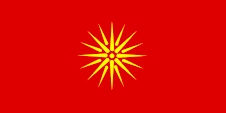
1992–1995,
National-, Staats und Handelsflagge
Seitenverhältnis = 2:3
Quelle, nach: Flags of the World
Die heutige Flagge wurde am 06.10.1995 offiziell eingeführt. Sie zeigt eine stilisierte gelbe Sonne auf rotem Grund, deren Strahlen bis zum Flaggenrand reichen. Die Flagge erinnert an die vorhergehende Flagge (1992–1995) mit dem "Stern von Vergina". Vergina war die Hauptstadt des antiken Makedonien, das mit Griechenland verfeindet war. Die Farben der Flagge scheinen heute folgendermaßen definiert zu sein, und zwar hexadezimal: Rot = #D82126, was Pantone 1795 entsprechen würde und Gold = #F8E92E, was Pantone 107 entsprechen würde. Wegen dieser Flagge kam es mit Griechenland zu Auseinandersetzungen, da Griechenland den Stern von Vergina, ebenso wie Makedonien, für sich beansprucht. Durch die Annahme der heutigen Flagge wurde dieser Streit beigelegt. Makedonien hatte in seiner vor-jugoslawischen Geschichte offiziell keine eigene Flagge, wenn man vom kurzlebigen Unabhängigen Staat Makedonien absieht, jedoch sollen Makedonen in der Vergangenheit unter roten Fahnen gegen die Türken gekämpft haben.
Quelle:
Flags of the World,
Flaggen und Wappen der Welt,
Wikipedia (D)
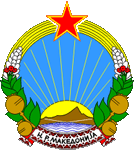
1944–1946,
Wappen von Makedonien,
Quelle:
MacedonianBoy [GFDL or CC BY-SA 4.0], from Wikimedia Commons
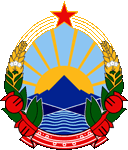
1946–1991,
Wappen von Makedonien,
Quelle:
Đorđe Andrejević-Kun & Antun August Augustinčić (supposed to be the original design authors), Cameltrader (original sVG file), CC BY-SA 2.5, via Wikimedia Commons
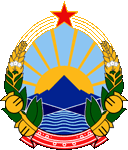
1991–2009,
Wappen von Makedonien,
Quelle:
Đorđe Andrejević-Kun & Antun August Augustinčić (supposed to be the original design authors), Cameltrader (original sVG file), CC BY-SA 2.5, via Wikimedia Commons
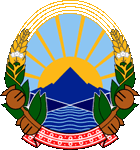
seit 2009,
Wappen von Makedonien,
Quelle:
MacedonianBoy [GFDL or CC BY-SA 4.0], via Wikimedia Commons
Das historische Wappen von Makedonien stammt aus dem Mittelalter und zeigt ein rotes Schild mit einem goldenen Löwen. Das heutige Wappen wurde am 27.07.1946 für das Sozialistische Makedonien als Teilrepublik Jugoslawiens eingeführt. Es zeigt ein Gebirge, hinter dem die Sonne aufgeht und im Vordergrund einen Fluss. Das Ganze ist umgeben von einem Kranz aus Getreideähren, Mohnstängeln und Tabakblättern. Am unteren Rand ein rotes Band mit einem volkloristischem Motiv. Weil das Wappen im Volk angeblich so beliebt ist, wurde es nach der Unabhängigkeit von Jugoslawien beibehalten. Aber wahrscheinlich wurde deswegen nicht zum historischen Wappen zurückgekehrt, weil es dem Wappen von Montenegro so sehr ähnelt. Am 16.11.2009 wurde rote Stern des Kommunismus vom Staatswappen entfernt.
Quelle:
Flaggen und Wappen der Welt,
Wikipedia (D)
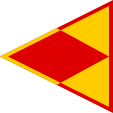
Flugzeugkokarde,
Quelle/Source, nach/by: Wikipedia (EN)
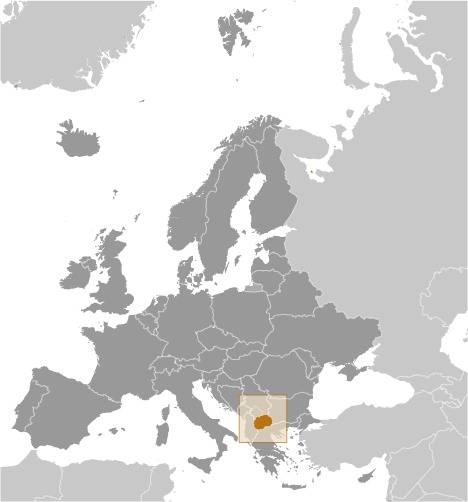
Lage:
Quelle/Source: CIA World Factbook
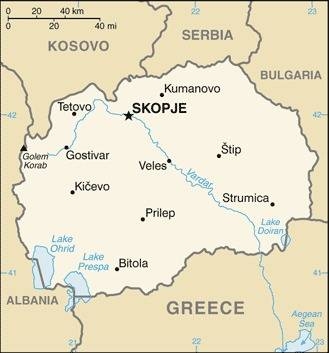
Landkarte des Landes:
Quelle/Source: CIA World Factbook
Die Lage Nordmakedoniens auf dem Balkan:
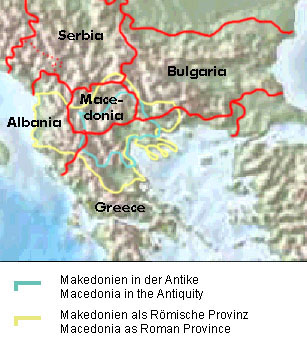
Quelle/Source: Freeware, University of Texas Libraries,
modyfied by: Volker Preuß
Die Staaten des früheren Jugoslawien:
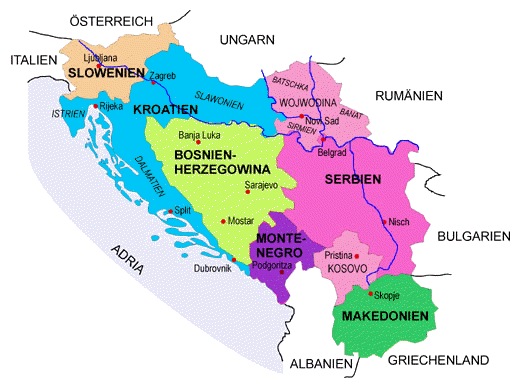
Landkarte/Map: Volker Preuß
Fläche: 25.713 km²
Einwohner: 1.800.000 (2021), davon 58% Makedonier, 24% Albaner, 4% Türken, 2,5% Zigeuner, 1,3% Serben
Religionen: 64% orthodoxe Christen, 33% Moslems
Bevölkerungsdichte: 70 Ew./km²
Hauptstadt: Skopje, (serbokroatisch: Skoplje, türkisch: Üsküb), 544.086 Ew. (2015)
Amtssprachen: Makedonisch, Albanisch
sonstige Sprachen: Türkisch, Serbisch
Währung: 1 Makedonischer Denar (MKD, Den.) = 100 Deni
Zeitzone: MEZ
Quelle:
Wikipedia (DE)
1200 v.Chr. · der griechische Stamm der Makedonen wandert in das von Illyrern, Thrakern und Phrygen besiedelte Land ein
700 v.Chr. · die makedonische Dynastie der Argeaden herrscht über das Land
359–336 v.Chr. · Herrschaft von Philipp II.
336–323 v.Chr. · Herrschaft von Alexander III. (Alexander der Große), Sohn Philipps II., Makedonien wird ein Weltreich
13.06.323 v.Chr. · Tod von Alexander dem Großen in Babylon, Makedonien zerfällt
221–179 v.Chr. · Herrschaft von Philipp V.
215–205 v.Chr. · Erster Römisch-Makedonischer Krieg
200–197 v.Chr. · Zweiter Römisch-Makedonischer Krieg
171–168 v.Chr. · Dritter Römisch-Makedonischer Krieg, Makedonien verliert seine Unabhängigkeit und wird in vier Staaten aufgeteilt
148 v.Chr. · Makedonien wird römische Provinz
395 n.Chr. · bei der Teilung des Römischen Reiches kommt Makedonien an das Oströmische Reich (Byzanz)
6. Jhd. · slawische Einwanderung und Landnahme
969–1018 · Makedonien gehört zum Westbulgarischen Reich
1018 · Makedonien kommt wieder zum Oströmischen Reich (Byzanz)
1203 · Makedonien kommt zum Bulgarischen Reich
1389 · die Türken erobern Makedonien und gliedern es ihrem Osmanischen Reich ein
1913 · Erster Balkankrieg, Makedonien wird zwischen Griechenland, Serbien und Bulgarien aufgeteilt
1914 · Zweiter Balkankrieg, Bulgarien muss Teile seiner Makedonischen Gebiete an Serbien und Griechenland abtreten
1914–1918 · Erster Weltkrieg: Bulgarien gleicht 1915 durch eine Invasion in Serbien und Griechenland seine Gebietsverluste von 1914 aus, Stellungskrieg, eine im Oktober 1918 eingeleitete Invasion der Truppen der Entente drängt die bulgarischen Truppen zurück und stößt innerhalb von einem Monat durch ganz Serbien bis nach Belgrad vor, Serbien forciert die Einigung der südslawischen Völker unter seiner Krone im Staat "Königreich der Serben, Kroaten und Slowenen", das 1929 in Jugoslawien umbenannt wurde, Makedonien wird Bestandteil der Banschaft (Provinz) Vardar
1941 · Jugoslawien wird im Verlauf des Zweiten Weltkriegs aufgelöst, große Teile von Vardar werden von bulgarischen Truppen besetzt
1941–1946 · Jugoslawien ist während des Zweiten Weltkriegs Schauplatz eines erbarmungslosen Partisanen- und Bürgerkriegs zwischen Kommunisten (unter J.P.Tito), Republikanern, Monarchisten und Nationalisten, die Kommunisten setzen sich durch
02.08.1944 · Proklamation der Sozialistischen Republik Makedonien (innerhalb des kommunistischen Jugoslawiens)
1945 · Feststellung und Annahme einer standardisierten mazedonischen Sprache als Landessprache
29.11.1945 · Ausrufung der "Föderativen Volksrepublik Jugoslawien" (unter Einschluss Makedoniens) durch Tito
31.01.1946 · Proklamation der Volksrepublik Makedonien (innerhalb des kommunistischen Jugoslawiens)
12.04.1963 · Proklamation der Sozialistischen Republik Makedonien (within Yugoslavia)
25.01.1991 · Makedonien erklärt sich für souverän
07.06.1991 · Proklamation der Republik Makedonien
1991–1992 · Jugoslawien löst sich in seine Einzelstaaten auf (am 09.09.1991 Referendum in Makedonien für Souveränität, im November 1991 erhält das heutige Makedonien eine neue Verfassung und ist damit von Jugoslawien unabhängig)
1992 · Griechenland erkennt die Republik Makedonien wegen ihres Namens nicht an und verhängt ein Handelsembargo
1993 · Aufnahme Makedoniens als "Ehemalige Jugoslawische Republik Makedonien" in die UNO
1995 · Griechenland erkennt die Souveränität Makedoniens an, jedoch muss Makedonien seine Flagge ändern
1996 · Jugoslawien erkennt die Unabhängigkeit Makedoniens an
2001 · albanische Separatisten versuchen durch terroristische Aktionen und offenen bewaffneten Kampf Makedonien zu destabilisieren
12.06.2018 · Parlamentsbeschluss zur zukünftigen Umbenennung des Landes in Republik Nordmakedonien
12.02.2019 · Umbenennung in Republik Nordmakedonien
Quelle:
Atlas zur Geschichte,
Wikipedia (D),
Discovery '97
Der Name Makedonien geht auf den um 1200 v.Chr. in das Land einwandernden, aus dem nördlichen Thessalien kommenden, griechischen Stamm der Makedonen zurück.
Quelle: Volker Preuß