mobile Ansicht, to the English Version tap the flag

- ehemalige Außenbesitzung der Niederlande
- 2010 administrativ aufgelöst
- Eigenbezeichnung: Nederlandse Antillen
• Flaggen
• Bedeutung/Ursprung der Flagge
• Wappen
• Bedeutung/Ursprung des Wappens
• Landkarte
• Zahlen und Fakten
• Geschichte
• Ursprung des Landesnamens
• Flaggen der Inseln
– Curaçao
– Bonaire
– Sint Maarten
– Sint Eustatius
– Saba
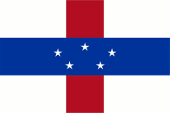
1986–2010,
Nationalflagge,
Seitenverhältnis = 2:3,
Quelle, nach: Wikipedia (DE)


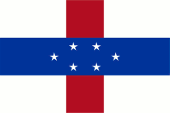
1959–1986,
Nationalflagge,
Seitenverhältnis = 2:3,
Quelle, nach: Wikipedia (DE)

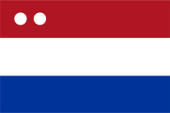
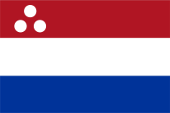
bis 1930,
Flagge des Gouverneurs der Niederländischen Antillen,
Seitenverhältnis = 2:3,
Quelle, nach: Flags of the World
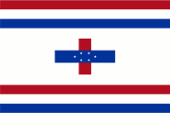
1930–1966,
Flagge des Gouverneurs der Niederländischen Antillen,
Seitenverhältnis = 2:3,
Quelle, nach: Flags of the World
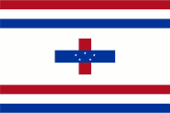
1966–1987,
Flagge des Gouverneurs der Niederländischen Antillen,
Seitenverhältnis = 2:3,
Quelle, nach: Flags of the World
1987–2010,
Flagge des Gouverneurs der Niederländischen Antillen,
Seitenverhältnis = 2:3,
Quelle, nach: Flags of the World

Die Flagge der Niederländischen Antillen wurde 1959 erstmals gehisst. Sie zeigte – wie die Flagge der Niederlande selbst – zwei Streifen in Rot und Blau auf Weiß, jedoch über Kreuz angeordnet. Blau stand hier für die Karibische See. Die fünf weißen fünfzackigen Sterne standen für die fünf Inseln, welche zu den Niederländischen Antillen gehören. Im Zusammenhang mit der Trennung der Insel Aruba von den Niederländischen Antillen musste bereits am 01.01.1986 ein sechster Stern erntfernt werden. Die Farben der Flagge schienen folgendermaßen definiert zu sein, und zwar: Blau = HEX #002588, was Reflex Blue oder besser Pantone 622 entsprechen würde, Rot = HEX #DD1017, was Pantone 2035 oder besser Pantone 1788 entsprechen würde. Damit würden sich die Farbtöne von Rot und Blau von denen der niederländischen Flagge ein wenig unterschieden haben. Diese sind seit 1958 definiert, und zwar: Blau = HEX #1E4785, was Pantone 541 entsprechen würde, Rot = HEX #A91F32, was Pantone 187 entsprechen würde.
Quelle: 1) Wikipedia (EN), 2) Wikipedia (EN), Volker Preuß
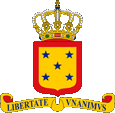
1986—2010,
Wappen der Niederländischen Antillen,
Quelle, nach: Flags of the World
Das Wappen der Niederländischen Antillen zeigte einen rot umrandeten goldenen Schild mit fünf blauen fünfzackigen Sternen, darüber die niederländische Krone. Das goldene Schriftband unter dem Schild zeigte das Motto "LIBERTATE UNANIMUS" → "EIMÜTIG IN DER FREIHEIT". Die Farben Gelb (Gold) und Rot gehen wahrscheinlich auf die früheren spanischen Herren der Inseln zurück. Die fünf Sterne stehen für die fünf Inseln, die zu den Niederländischen Antillen gehören. Zusammenhang mit der Trennung der Insel Aruba von den Niederländischen Antillen musste bereits am 01.01.1986 ein sechster Stern erntfernt werden.
Quelle: Wikipedia (DE)
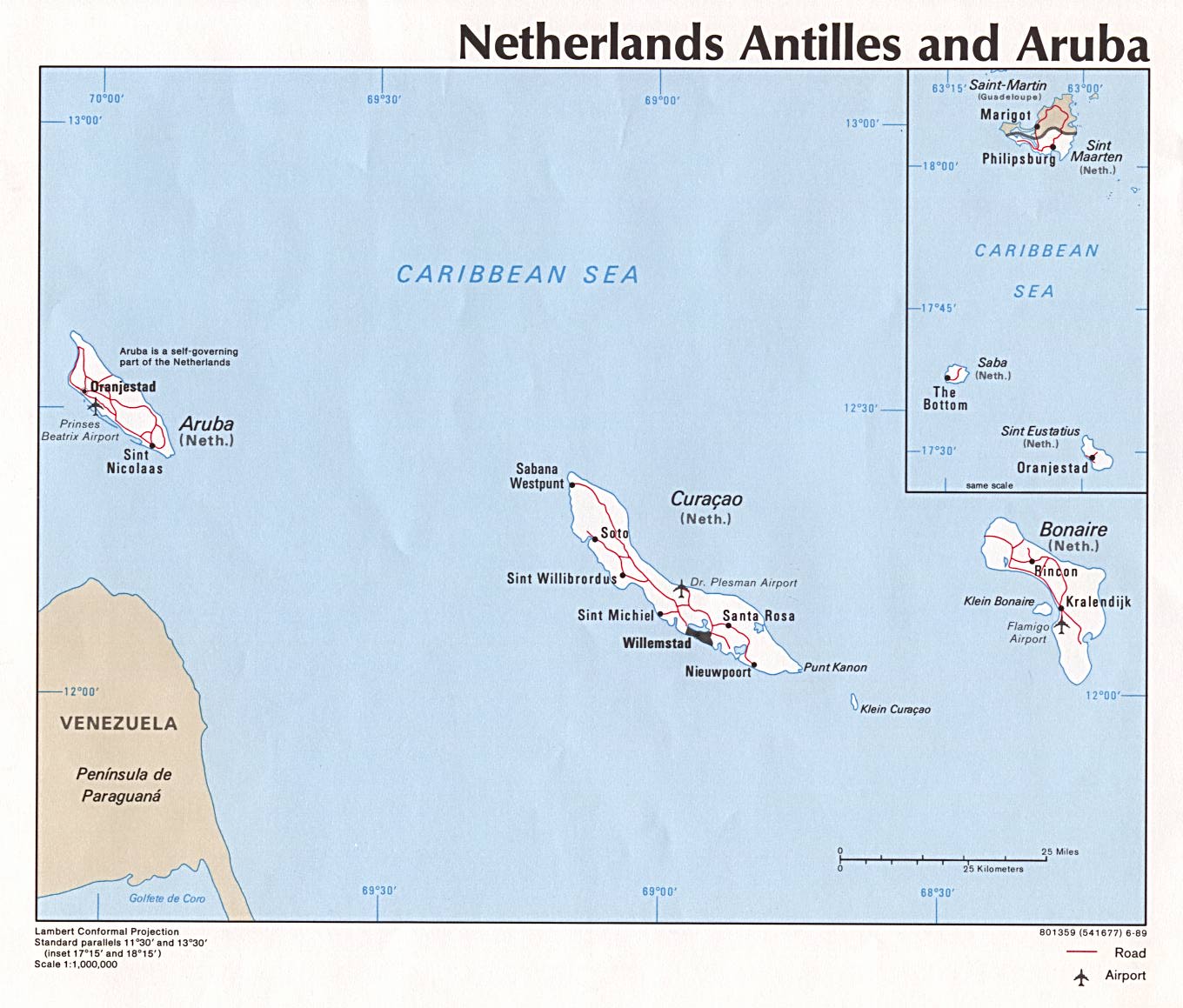
vergrößern: hier klicken, Quelle: Free Maps www.mapcruzin.com
Fläche: 800 km², davon Curaçao 444 km², Bonaire 288 km², Sint Maarten 34 km², Sint Eustatius 21 km², Saba 13 km²
Einwohner: 199.929 (2009), davon 85% Antillianer, 10% Kariben und Arawaks, 5% Europäer, Asiaten
Religionen: 72% Katholiken, 15% andere Christen, 3% Protestanten, 1% Juden
Bevölkerungsdichte: 250 Ew./km²
Hauptstadt: Willemstad, 140.000 Ew. (2008)
Amtssprache: Niederländisch
sonstige Sprachen: Papiamento, Spanisch, Englisch
Währung: 1 Antillen-Gulden (ANG, NAFl.) = 100 Cent
Zeitzone: MEZ – 5 h
Quelle:
Wikipedia (EN),
Wikipedia (DE),
Länder der Erde
1499 · Entdeckung der Insel Curaçao
1527 · Spanien nimmt die Inseln in Besitz
1634 · Beginn der niederländischen Kolonisierung, jedoch häufige Wechel zwischen niederländischem und britischem Besitz
1816 · der niederländische Besitz der Inseln wird vertraglich bestätigt
1951 · die Niederländischen Antillen erhalten innere Autonomie
1981 · die Insel Aruba fordert erstmals mehr Autonomie innerhalb der Niederländischen Antillen
1986 · die Insel Aruba verlässt den Verbund der Niederländischen Antillen weitestgehend
10.10.2010 · die Niederländischen Antillen werden administrativ aufgelöst – Curaçao und Sint Maarten werden autonome Länder innerhalb der Niederlande (wie schon Aruba 1986), Bonaire, Sint Eustatius und Saba werden Besondere Gemeinden der Niederlande, die jedoch zu keiner Provinz gehören
Quelle:
Atlas zur Geschichte,
Wikipedia (DE),
Länder der Erde
Als die Spanier die vielen Inseln der Kleinen Antillen entdeckten, gaben sie ihnen den Namen "Islas Inútiles", was "Nutzlose Inseln" bedeutet. Aus den "Inútiles" wurden mit der Zeit die "Antilles".
Quelle:
Wikipedia (DE)