mobile Ansicht, to the English Version tap the flag

- Bundesrepublik Nigeria
- präsidiale Republik unter Militärherrschaft
- Eigenbezeichnung: Federal Republic of Nigeria
- Teile des Landes waren früher bekannt als oder bekannt für: Kolonie Lagos, Protektorat Nigerküste, Protektorat Ölflüsse, Nordnigeria, Südnigeria, Royal Niger Company
• Flaggen
• historische Flaggen
• Bedeutung/Ursprung der Flagge
• Wappen
• Bedeutung/Ursprung des Wappens
• Flugzeugkokarde
• regionale Flaggen:
Sezessionsstaat Biafra
• Landkarte
• Zahlen und Fakten
• Geschichte
• Ursprung des Landesnamens
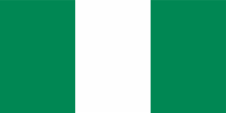
Nationalflagge und Gösch,
Seitenverhältnis = 1:2,
Quelle, nach: Flags of the World


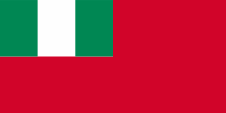
Handelsflagge,
Seitenverhältnis = 1:2,
Quelle, nach: Flags of the World

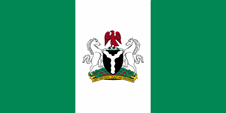
Staatsflagge,
Seitenverhältnis = 1:2,
Quelle, nach: Flags of the World

Staatsflagge zur See,
Seitenverhältnis = 1:2,
Quelle, nach: Flags of the World
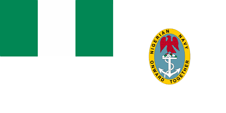
seit 1998,
Marineflagge,
Seitenverhältnis = 1:2,
Quelle, nach: commons.wikimedia.org,
Flags of the World
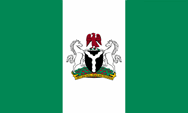
Flagge des Präsidenten,
Seitenverhältnis = 3:5,
Quelle, nach: Flags of the World

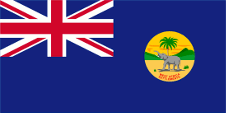
1870–1888,
Britisch Westafrika,
Flagge der Regierung (Staatsflagge),
Seitenverhältnis = 1:2,
Quelle, nach: Wikipedia (EN)
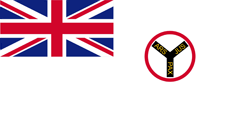
1879–1900,
Königl. Niger Compagnie / Royal Niger Company,
Flagge der R.N.C.,
Seitenverhältnis = 1:2,
Quelle, nach: Flags of the World
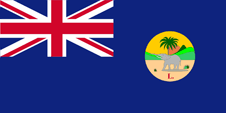
1888–1906,
Kolonie Lagos,
Flagge der Regierung (Staatsflagge),
Seitenverhältnis = 1:2,
Quelle, nach: Flags of the World
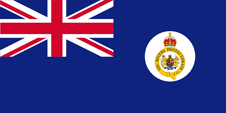
1885–1893,
Protektorat Ölflüsse,
Flagge der Regierung (Staatsflagge),
Seitenverhältnis = 1:2,
Quelle, nach: Flags of the World
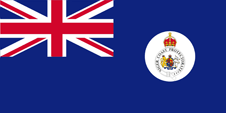
1893–1900,
Protektorat Nigerküste,
Flagge der Regierung (Staatsflagge),
Seitenverhältnis = 1:2,
Quelle, nach: Flags of the World
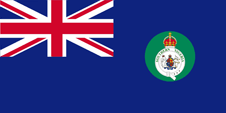
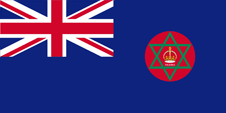
1900–1914,
Südnigeria,
Flagge der Regierung (Staatsflagge),
Seitenverhältnis = 1:2,
Quelle, nach: Flags of the World
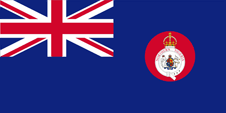
1900–1914,
Nordnigeria,
Flagge der Regierung (Staatsflagge),
Seitenverhältnis = 1:2,
Quelle, nach: Flags of the World
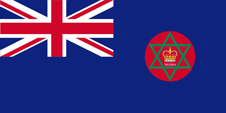
1914–1952,
Nigeria,
Flagge der Regierung (Staatsflagge),
Seitenverhältnis = 1:2,
Quelle, nach: Flags of the World
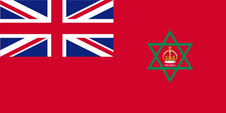
1914–1952,
Nigeria,
Handelsflagge,
Seitenverhältnis = 1:2,
Quelle, nach: Flags of the World
1952–1960,
Nigeria,
Flagge der Regierung (Staatsflagge),
Seitenverhältnis = 1:2,
Quelle, nach: Flags of the World
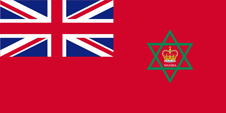
1952–1960,
Nigeria,
Handelsflagge,
Seitenverhältnis = 1:2,
Quelle, nach: Flags of the World
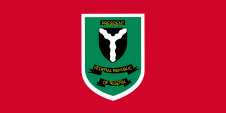
um 1963,
Flagge des Präsidenten,
Seitenverhältnis = 1:2,
Quelle, nach: Flags of the World
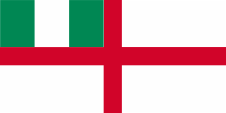
1960–1998,
Marineflagge,
Seitenverhältnis = 1:2,
Quelle, nach: Flags of the World
Die heutige Flagge Nigerias wurde am 01.10.1960 offiziell gehisst, nach einer anderen Quelle bereits am 16.10.1959. Sie ist das Ergebnis eines 1959 durchgeführten Preisausschreibens. Der Entwurf stammt von einem Ingenieurstudenten. Dieser sah das grüne Land vor Augen, das vom glänzenden Fluss Niger geteilt wird, ein Gedanke, der auch im Wappen wiederkehrt. Die Flagge zeigt daher drei senkrechte Streifen in den Farben Grün, Weiß und Grün. Grün steht für die Wälder und die Landwirtschaft, die trotz des Erdölreichtums und beginnender Industrialisierung das Rückgrat der Volkswirtschaft geblieben ist, während Weiß die Einheit und Friedensliebe des Volkes von Nigeria symbolisieren soll. Die meisten anderen Flaggen des Landes, die keine Nationalflagge sind, weißen in ihrer Gestaltung auf die früheren Verbindungen zu Großbritannien hin, denn das Land orientiert sich auch auch heute am britischen Ensign-System. Die Farbe Grün in der Flagge scheint heute folgendermaßen definiert zu sein, und zwar HEX #008751, was Pantone 348 entsprechen würde.
In der Mitte des 19. Jahrhunderts begann Großbritannien an der Küste des Golfes von Guinea Kolonien zu erwerben und Protektorate zu errichten. Australien, Indien, Kanada und Südafrika waren schon britische Kolonien, und weltweit wurde weitere Kolonien erworben. Auf der ganzen Welt wehte der britische Union Jack. Es wurde bald der Gedanke geboren eine Systematisierung der Verwendung von Flaggen zu schaffen, die anhand des Aussehens der Flagge auf deren Besitzer, den Zweck oder gar auf die Region des britischen Weltreichs Rückschlüsse zulassen würde. Großbritannien hatte in Jahr 1864 ein Flaggensystem eingeführt, in dem:
• Kriegsschiffe einen sogenannten "White Ensign" (Marineflagge), eine weiße Flagge oft mit durchgehendem roten Georgskreuz und mit dem Union Jack in der Oberecke,
• Handelsschiffe einen "Red Ensign" (auch "Civil Ensign" → Bürgerflagge genannt, die eigentl. Handelsflagge), eine rote Flagge mit dem Union Jack in der Oberecke, und
• Dienstschiffe einen "Blue Ensign" (Regierungsflagge → die eigentl. Staatsflagge), eine blaue Flagge mit dem Union Jack in der Oberecke führten.
Seit 1865 durften Schiffe von Kolonialregierungen einen Blue Ensign mit einem Badge (Abzeichen) im fliegenden Ende führen. Die jeweiligen Regierungen sollten entsprechene Bagdes zur Verfügung stellen. Handelsschiffe und seefahrende Privatpersonen aus Kolonien dürfen nur dann einen Red Ensign mit Badge führen, wenn von der britischen Admiralität eine entsprechende Erlaubnis für die Kolonie erteilt wurde. An Land wurde weiter der britische Union Jack verwendet, von Privatpersonen und auch von Ämtern und Behörden. So war es zumindest vorgeschrieben. In vielen britischen Kolonien kam es aber dazu, trotz Verbot aus London, dass Ämter und Behörden den Blue Ensign der Dienstschiffe auch an Land verwendeten, oder Bürger den Red Ensign nicht nur als Handelsflagge verwendeten, sondern auch an Land. Häufig wurden dafür auch Red Ensigns geschaffen, ohne das dafür eine Genehmigung aus London vorlag, und natürlich auch mit dem Bagde im wehenden Ende. Ein solches Badge war oft eine auf einer Scheibe platzierte regionale landschaftliche Darstellung, zeigte oft Schiffe, historische Begebenheiten oder konnte auch nur eine Art Logo sein. Sehr oft zeigte ein Badge zusätzlich den Namen des Landes oder auch einen Wahlspruch. Einige Besitzungen hatten aber auch schon von Anfang an ein Wappen, bzw. erhielten über die Jahre eine eigenes Wappen und das Badge wurde abgeschafft. Um ein weitgehend einheitliches Erscheinungsbild im fliegenden Ende der Flaggen zu gewährleisten, wurden Wappen und auch andere Symbole auf einer oft weißen Scheibe in der Größe der früheren Badges dargestellt. Es gab hier aber auch Ausnahmen, denn einige Kolonien verwendeten diese Scheibe nicht, und platzierten ihr Wappen oder auch nur das Wappenschild - manchmal auch vergrößert - direkt auf das Flaggentuch. Schon in den 40-er Jahre wurde dazu übergegangen die Scheibe zu entfernen und das Wappen direkt zu platzieren oder vergrößert dazustellen. Dieser Umstellungsprozess erfolgte allmählich, nirgendwo gleichzeitig und vollständig. In einigen britischen Besitzungen sind bis heute Flaggen mit der Scheibe in Gebrauch, in anderen nicht mehr und in einigen Gebieten gibt es beide Varianten nebeneinander.
Als Lagos im Jahre 1888 wieder eine eigenständige Kolonie wurde, hisste man hier als Nationalflagge die britische Dienstflagge (Blue Ensign) mit einem Emblem im fliegenden Ende. Dieses zeigte genau wie bei den anderen britischen westafrikanischen Kolonien (Gambia, Ghana, Sierra Leone) eine Scheibe mit einer landschaftlichen Darstellung und einem Elefanten neben einer Palme im Vordergrund. Unterschieden wurden diese Badges nur durch rote Buchstaben unterhalb des Elefanten. Die Kolonie Lagos verwendete ein "L.". Die anderen britischen Besitzungen und Protektorate im Osten von Lagos wurden im Jahre 1885 im Protektorat der Ölflüsse (Oil Rivers Protectorate) zusammengefasst. Auch hier hisste man als Nationalflagge die britische Dienstflagge (Blue Ensign) mit einem Emblem im fliegenden Ende. Dieses war eine weiße Scheibe mit einem von einem goldenen Gürtel umgebenen britischen Wappen in der Mitte. Oberhalb des Gürtels die britische Krone und auf dem Gürtel der Name des Protektorats. Im Jahre 1893 wurde das Protektorat der Ölflüsse in das Protektorat Nigerküste (Niger Coast Protectorate) umgewandelt. Entsprechend wurde auch das Badge in der Flagge geändert. Der Gürtel wurde silbern und der Name des Protektorats aktualisiert. Im Jahre 1900 wurde das Protektorat Nigerküste in das Protektorat Südnigeria umgewandelt, und die Besitzungen der Royal Niger Co. um Lokoja wurden im neu geschaffenen Protektorat Nordnigeria zusammengefasst. In beiden Protektoraten hisste man als Nationalflagge wieder die britische Dienstflagge (Blue Ensign) mit einem Emblem auf einer Scheibe im fliegenden Ende. Diese Scheibe war in Nordnigeria rot und in Südnigeria grün. Darauf das britische Wappen, umgebenen von einem silbernen Gürtel mit dem jeweiligen Namen des Protektorats. Oberhalb des Gürtels die britische Krone. Nord- und Südnigeria wurden im Jahre 1914 vereinigt. Kolonie und Protektorat Nigeria – wie das Territorium nun genannt wurde – verwendete als Nationalflagge wieder die britische Dienstflagge (Blue Ensign) mit einem Emblem auf einer roten Scheibe im fliegenden Ende. Darauf ein sechszackiges grünes Siegel Salomos. In seiner Mitte die britische Krone und darunter der Schriftzug "NIGERIA".
Quelle:
Flaggen Wappen Hymnen,
Die Welt der Flaggen,
Flags of the World,
Wikipedia (DE),
Wikipedia (EN),
Volker Preuß
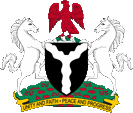
Wappen von Nigeria,
Quelle: Corel Draw 4
Das Staatswappen Nigerias wurde am 28.04.1960 von Königin Elisabeth II. verliehen. Es zeigt einen schwarzen Schild (Symbol der fruchtbaren Erde des Landes, bzw. Anspielung auf das Wort "Nigeria"), darauf eine silberne Wellendeichsel. Sie versinnbildlicht die Vereinigung der Flüsse Niger und Benue. Der rote Adler auf dem weiß-grünen Wulst ist Sinnbild der Stärke, die Pferde sind Zeichen der Würde.
Quelle:
Flaggen Wappen Hymnen

Flugzeugkokarde,
Quelle, nach: Wikipedia (EN)
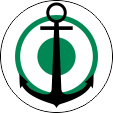
Flugzeugkokarde für Marineflieger,
Quelle, nach: Wikipedia (EN)
Lage:
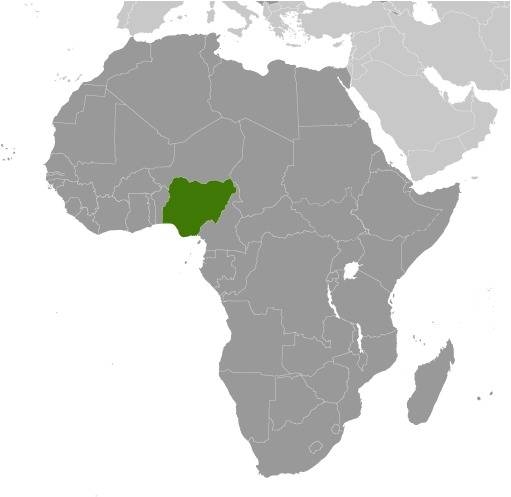
Quelle/Source: CIA World Factbook
Landkarte des Landes:
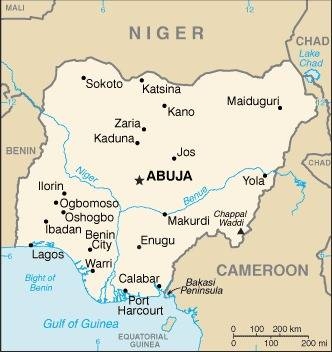
Quelle/Source: CIA World Factbook
Fläche: 923.768 km²
Einwohner: 219.500.000 (2021), davon 29% Hausa und Fulbe, 21% Yoruba, 18% Igbo, 10% Ijaw, 4% Kanuri, 4% Ibibio, 2% Tiv
Religionen: 51% Moslems, 47% Christen
Bevölkerungsdichte: 238 Ew./km²
Hauptstadt: Abuja, 2.750.000 Ew. (2017), Hauptstadt bis 1992: Lagos, 14.370.000 Ew. (2020)
Amtssprache: Englisch
Nationalsprachen: Hausa, Igbo, Yoruba
sonstige Sprachen: 525 weitere Sudanesische und Bantusprachen
Währung: 1 Naira (NGN, N) = 100 Kobo
Zeitzone: MEZ
Quelle: Wikipedia (D)
Antike · Staaten der Nok
10./11. Jahrhundert · Teile des Territoriums im Nordosten des heutigen Nigeria kommen unter den Einfluss des Staates Bornu-Kanem, Yoruba-Staaten im Westen, Stadt-Staaten der Hausa (z.B. Katsina) im Norden des heutigen Nigeria
12./13. Jahrhundert · Reich von Nupe in der Mitte, Reich Benin im Süden und weitere Stadt-Staaten der Hausa im Norden des heutigen Nigeria, der Islam erreicht den Norden des heutigen Nigeria
1472 · Entdeckung und Erforschung der Küste Nigerias durch portugiesische Seefahrer
16. Jahrhundert · Beginn der Christianisierung im Süden Landes
17. Jahrhundert · Verkauf großer Teile der Bevölkerung des heutigen Nigeria an Sklavenhändler, Verschiffung nach Amerika
19. Jahrhundert · Herausbildunug und Bestand von verschiedenen staatlichen und lokalen Zentren innerhalb der Grenzen des heutigen Nigeria: Im Nordosten: Reich von Bornu-Kanem, im Norden und in der Mitte das Sokoto-Reich der Fulbe, im Nordwesten die Hausa-Staaten und die Staaten von Kebbi und Gobir (Reich Gando), an der Küste und im Westen die Yoruba-Staaten, in der Mitte nördlich des Niger das Reich Benin, und im Südosten die Delta-Staaten Bonny, Opobo, Neu Kalabar, Brass, Alt Kalabar und Warri
1805–1855 · zahlreiche britische und deutsche koloniale Forschungsreisen im Gebiet des heutigen Nigeria
1849 · die Bucht von Biafra (Bucht von Bonny) wird Britisches Protektorat
1851 · Beschuss und Besetzung von Lagos durch britische Truppen, Einsetzung eines neuen Regenten
1852 · die Benin-Bucht wird Britisches Protektorat
1861 · Lagos wird britische Kronkolonie, die Protektorate der Buchten von Benin und Biafra werden verwaltungsmäßig zusammengefasst
1866 · Neugründung der Kolonie Britisch-Westafrika, Zusammenfassung der Kolonien Gambia, Sierra Leone, Goldküste und der Besitzungen im heutigen Nigeria am Golf von Guinea (Kolonie Lagos, die Protektorate der Buchten von Benin und Biafra)
1866–1874 · Lagos ist der Verwaltung britischen Kolonie Sierra Leone unterstellt
1874–1886 · Lagos ist der Verwaltung britischen Kolonie Goldküste (Ghana) unterstellt
1879 · Bildung der United African Co. durch Vereinigung von vier bisher bestehenden britischen Handelsgesellschaften
1884 · Errichtung des britischen Protektorats über alle Delta-Staaten, die United African Co. erwirbt Ländereien bei Lokoja am Fluss Niger (Niger Districts Protectorate/Niger River Delta Protectorate)
1885 · die Protektorate der Buchten von Benin und Biafra werden zum Protektorat Ölflüsse vereinigt
1888 · Auflösung der Kolonie Britisch-Westafrika, Lagos wird wieder eine eigenständige britische Kronkolonie, die United African Co. erhält einen königlichen Schutzbrief und wird in Royal Niger Co. umbenannt
1893 · im Zusammenhang mit territorialer Ausdehnung wird das Protektorat der Ölflüsse in das Protektorat Nigerküste (Niger Coast Protectorate) umgewandelt, britische Eroberung der Yoruba-Staaten und Angliederung als Protektorat an die Lagos-Kolonie, Eroberung von Bornu durch den Araber Rabeh, Grenzvertrag mit dem Deutschen Reich über die Grenze zu Kamerun im Südosten
1897 · britische Eroberung des Reiches von Benin und des Nupe-Gebietes
1899 · die Royal Niger Co. tritt ihre Ländereien und Besitzrechte an die britische Regierung ab
1900 · das Protektorat Nigerküste wird in das Protektorat Südnigeria umgewandelt, das Niger River Delta Protectorate wird in das Protektorat Nordnigeria umgewandelt
1902 · britische Eroberung der Hausa-Staaten im Nordwesten (Angliederung an das Protektorat Nordnigeria), britische Eroberung des Igbo-Gebietes im Südosten (Angliederung an das Protektorat Südnigeria), Grenzvertrag mit dem Deutschen Reich über die Grenze zu Kamerun im Nordosten
1903 · britische Eroberung des Sokoto-Reiches im Norden und in der Mitte des heutigen Nigeria (Angliederung an das Protektorat Nordnigeria)
1906 · die Kronkolonie Lagos wird dem Protektorat Südnigeria angeschlossen, Grenzvertrag mit Frankreich über die Grenze zur Französischen Niger-Kolonie im Norden und zu Dahome im Westen
1914 · die Protektorate Südnigeria und Nordnigeria werden zur Kolonie und Protektorat Nigeria zusammengeschlossen
1920 · Versailler Diktat, das Deutsche Reich verliert alle seine Kolonien, Kamerun wird als Mandatsgebiet des Völkerbundes zwischen Frankreich (Südkamerun) und Großbritannien (Nordkamerun) aufgeteilt
1922 · Nordkamerun wird administrativ an Nigeria angeschlossen
1946 · die ehemaligen Mandatsgebiete des Völkerbundes in Kamerun werden als Treuhandgebiete der UNO erneut Großbritannien und Frankreich unterstellt
1947 · Nigeria wird in drei Regionen aufgeteilt (Ostregion: Gebiet der christlichen Igbo, Westregion: Gebiet der christlichen Yoruba und Benin, Nordregion: Gebiete der islamischen Hausa, Fulbe und Nupe)
1954 · Bildung der Föderation von Nigeria
1957 · Autonomie für die Ost- und Westregion
01.10.1960 · Unabhängigkeit für Nigeria im Rahmen des Commonwealth of Nations
01.06.1961 · nach Volksabstimmung Anschluss des nördlichen Teils von Nordkamerun an Nigeria (Provinz Sardauna), der südliche Teil wird Kamerun angeschlossen
01.10.1963 · Proklamation der Republik Nigeria, jedoch Verleib im Commonwealth of Nations
15.01.1966 · Militärputsch, der Igbo Generalmayor J. Aguiyi-Ironsi kommt in Nigeria an die Macht
28.07.1966 · Militärputsch durch Nordnigerianer, Verbot aller Parteien
29.07.1966 · Ermordung von Johnson Aguiyi-Ironsi
1966/1967 · Ermordung von 30.000 Igbo in ganz Nigeria, Flucht der Igbo in ihre Ostregion
28.05.1967 · Bildung von 12 nigerianischen Bundesstaaten anstelle der Regionen
30.05.1967 · Erklärung der Unabhängigkeit der Ostregion als Republik Biafra unter Oberstleutnant Chukwuemeka O. Ojukwu
07.07.1967 · Beginn des Krieges zwischen Nigeria und Biafra
1968 · politische Anerkennung von Biafra durch Tansania, Sambia, Elfenbeinküste, Gabun und Haiti
01.09.1967 · Proklamation der Bundesrepublik Nigeria
15.01.1970 · Kapitulation Biafras
1975 · Militärputsch des Generals Muhammad
1980 · bewaffnete Zusammenstöße mit Islamisten
1983 · Militärputsch des Generals Buhari
1985 · Militärputsch des Generals Babangida
1991 · bewaffnete Zusamenstöße zwischen Tiv und Jukun
1993 · Militärputsch des Generals Abacha
11.11.1995 · Nigeria wird aus dem Commonwealth of Nations ausgeschlossen
1996 · Wiederzulassung von Parteien
1997 · Einmarsch nigerianischer Truppen in Sierra Leone
08.06.1998 · Tod von General Abacha
10.06.1998 · das Militär setzt General Abdusalam Abubakar als Präsident ein
27.02.1999 · Wahl des Ex-Generals Olusegun Obasanjo zum Präsidenten (Amtsantritt am 29.05.1999), Beginn der Demokratisierung
29.05.1999 · Nigeria wird wieder Mitglied des Commonwealth of Nations
Juli 1999 · bewaffnete Zusamenstöße zwischen islamischen Hausa und christlichen Yoruba
November 1999 · ethnische Unruhen in Lagos
2000 · bewaffnete ethnisch-religiöse Unruhen im Norden
2014–2016 · Aktionen der Terrorgruppe Boko Haram im Norden
Quelle:
Atlas zur Geschichte,
World Statesmen,
Wikipedia (D)
Der Name "Nigeria" hat seine Wurzeln im Namen des größten und bedeutendsten Flusses des Landes, dem "Niger". Die Bezeichnung "Niger" geht aus der Europäisierung des Tuareg-Begriffes für den Fluss Niger "Egereou n-igereouen" hervor. Die sprachliche Nähe zum lateinischen Wort "niger" (→ schwarz) war zwar Zufall, aber durchaus Willkommen.
Quelle:
Handbuch der geographischen Namen,
Volker Preuß