mobile Ansicht, to the English Version tap the flag

- Galizien
- ehemaliges österreichisches Kronland: Königreich Galizien und Lodomerien mit dem Großherzogtum Krakau und den Herzogtümern Auschwitz und Zator
- nördlich der Karpaten, heute zwischen Polen und der Ukraine geteilt
- polnisch: 1.) Galicja 2.) Królestwa Galicji i Lodomerii
• Flagge
• Bedeutung/Ursprung der Flagge
• Wappen
• Bedeutung/Ursprung des Wappens
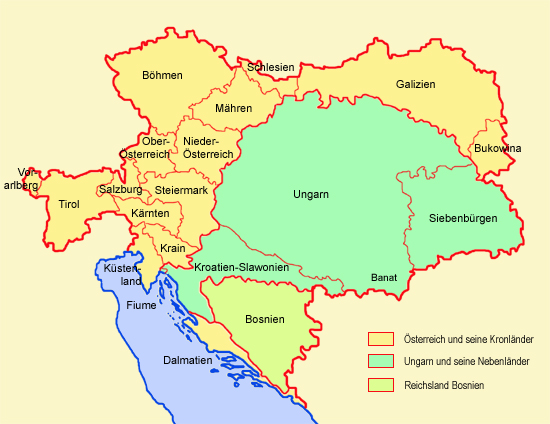
• Landkarte der früheren Kronländer Österreich-Ungarns (bis 1918)
• Landkarten zu Galizien
• Zahlen und Fakten
• Geschichte
• Ursprung des Landesnamens
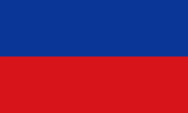
1772–1861(?),
A) Landesflagge (Landesfarben),
B) Flagge des heutigen Westgalizien,
Seitenverhältnis = 2:3,
Quelle, nach:
Flags of the World


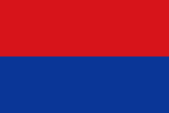
1861(?)–1918,
Landesflagge (Landesfarben),
Seitenverhältnis = 2:3,
Quelle, nach:
Flags of the World

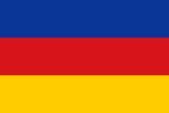
Variante,
A) Landesflagge (Landesfarben),
B) Flagge des heutigen Ostgalizien
Seitenverhältnis = 2:3,
Quelle, nach:
Flags of the World,
Österreichisch-Ungarische Wappenrolle
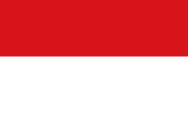
Flagge der Polen in Galizien
Seitenverhältnis = 2:3,
Quelle, nach:
Österreichisch-Ungarische Wappenrolle

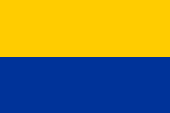
Flagge der Ruthenen (Ukrainer) in Galizien
Seitenverhältnis = 2:3,
Quelle, nach:
Österreichisch-Ungarische Wappenrolle


Das Land hatte, wie alle Kronländer der österreichischen Krone, seine eigenen, sogenannten Landesfarben, die unter anderem auf horizontal getreiften zwei- oder dreistreifigen Flaggen gezeigt wurden. Die Landesfarben waren sehr oft dem jeweiligen Wappen des Kronlandes entnommen oder wurden duch eine weitere, nicht im Wappen enthaltene Farbe ergänzt, oder sie gingen auf ältere Modelle des Landeswappens zurück (z.B. Krain). Offiziell waren die Landesfarben aber nie geregelt oder festgelegt worden, so dass deren Reihenfolge in der Praxis of variierte oder die Farben gar an sich abwichen. Der österreichische Heraldiker Hugo Gerard Ströhl (1851–1919) hat sich wohl als erster des Themas angenommen und wahrscheinlich um das Jahr 1890 herum die Landesfarben auf den Flaggen bei den jeweiligen Landesbehörden abgefragt und zusammengestellt.
Bei Galizien gestaltete sich dieser Vorgang als sehr schwierig, denn auf die Nachfrage von Ströhl wurden sehr unterschiedliche Angaben für das Land gemacht: Gold-Blau, Rot-Weiß, Blau-Rot, Blau-Rot-Gold und noch andere. Fakt ist, dass jede im Land lebende Nation ihre eigenen Farben verwendet hat. Es ist nachvollziehbar, dass jede Nation ihre eigenen Farben bevorzugt als die Farben des ganzen Landes angesehen haben könnte. So sind Rot-Weiß als die Farben der Polen, und auch Gold-Blau als die Farben der Ruthenen (Ukrainer) erklärbar. Die Kombination Blau-Rot ist gut als Landesfarben erklärbar, denn sie sind dem Wappen des Landes entnommen, das 1772 als "Königreich Galizien und Lodomerien" in Folge der ersten Polnischen Teilung entstand. Die Herausbildung von Landesfarben war jedoch ein Prozess, der gerade bei Binnenländern spät einsetzte (am Ende des 18. und Beginn des 19. Jahrhunderts) und lange dauerte. Die Definition von Staaten über den Begriff der Nation (und nicht nur über den Herrscher) setzte in Europa ab der Ära Napoleon ein und war erst mit den nationalen Revolutionen von 1830 und 1849 weitgehend abgeschlossen. Insofern könnte man Blau-Rot als ursprüngliche Landesfarben von Galizien stehen lassen, was spätestens im Jahre 1849 mit der neuen österreichischen Verfassung und der Einrichtung von Kronländern mit eigenen Parlamenten aktuell wurde. Im Jahre 1861 wurde das Herzogtum Bukowina (Buchenland) als eigenes Kronland von Galizien abgetrennt, das ebenfalls Blau-Rot als Landesfarben verwendete. Vermutlich wechelte Galizien deshalb von Blau-Rot zu Rot-Blau, um Verwechslungen auszuschließen. Die dreistreifigen Landesfarben in Blau-Rot-Gold sind insofern erklärbar, dass sie, durch das Hinzufügen der Farbe Gold, auch die Kombination Blau-Rot zeigen, und dadurch "ukrainischer" erscheinen. Das scheint plausibel, denn genau diese Kombination steht auch für das heutige Ostgalizien, das seit 1939 zur Ukraine gehört.
Warum Ströhl in seinem Werk "Österreichisch-Ungarische Wappenrolle" (1890, 1894 und 1900) dann ausgerechnet Rot-Weiß als Landesfarben nennt und abbildet, bleibt rätselhaft, denn diese Farben stehen, auch dieser Reihenfolge, für die Polnische Nation, was er aber ebenfalls in der "Österreichisch-Ungarische Wappenrolle" erwähnt. Schon zwischen 1697 und 1763 zeigte die Flagge des Königreichs Polen Rot-Weiß. Auch die Preußische Provinz Posen (bis 1830 Großherzogtum Posen, 1793 zur zweiten Polnische Teilung an Preußen) zeigte zwischen 1815 und 1886 die Farben Rot-Weiß. Gerade unter dem Aspekt der Nationen und ihrer Farben wäre mit Rot-Weiß nur die Hälfte der Bevölkerung repräsentiert, und wie man weiß hatten die Ruthenen ihre eigenen Farben. Insofern scheinen Rot und Blau als zuletzt verwendete Landesfarben naheliegend.
Quelle: Österreichisch-Ungarische Wappenrolle,
Flags of the World,
Volker Preuß
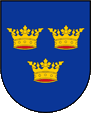
bis 1804,
Wappenschild von Galizien,
Quelle, nach: Österreichisch-Ungarische Wappenrolle
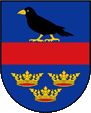
Wappenschild von Galizien,
Quelle, nach: Ströhl, Große Wappenrolle
Wappenschild von Lodomerien,
Quelle, nach: Ströhl, Große Wappenrolle
Wappenschild von Galizien und Lodomerien
ca.1890–1918,
Wappen Königreich Galizien,
Quelle, nach: Ströhl, Wappenrolle Österreich-Ungarns, 1890, via Wikipedia (D)
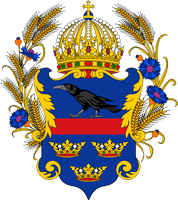
Das Wappen des Kronlandes "Königreich Galizien und Lodomerien mit dem Großherzogtum Krakau und den Herzogtümern Auschwitz und Zator" zeigte einen blauen Schild, mit einer roten Binde, oberhalb der Binde eine schwarze Dohle und unterhalb drei goldene Kronen. Das Wappen von Galizien zeigte ursprünglich nur drei goldene Kronen auf Blau. Wann es in dieser Form eingeführt wurde ist unklar, entweder beim Titelerwerb im Jahre 1741 durch Kaiserin Maria Theresia, oder 1772, als mit der Ersten Polnischen Teilung auch das Land Galizien und Lodomerien an die Österreichischen Habsburger kam. Im Zuge der Titelregulierung des kaiserlichen Hauses im Jahre 1804 wurde die rote Binde auf das Feld gelegt und die schwarze Dohle ergänzt, die angebliche Wappenfigur des alten Fürstentums Halytsch. In Wirklichkeit dürfte es eine Schöpfung neuerer Zeiten sein, ein Versuch ein "redendes Wappen" zu schaffen. Die Dohle heißt in vielen slawischen Sprachen (nur nicht im Polnischen) "Galka", woraus dann "Galizien" abzuleiten wäre.
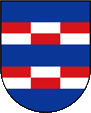
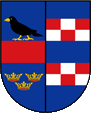
Das Wappen von Lodomerien zeigte auf blauem Grund zwei Silber und Rot geschachte Querbalken. In der Praxis wurde nur das Wappen Galiziens verwendet. Sehr selten findet man einen gespaltenen Schild in Anwendung, der die Wappenbilder von Galizien und Lodomerien nebeneinander zeigt. Warum das Wappen von Lodomerien in der Praxis keine Rolle spielte ist nicht geklärt, es kann nur vermutet werden: Der zweite Teil des Namens "Lodomerien mit dem Großherzogtum Krakau und den Herzogtümern Auschwitz und Zator" wurde in der Praxis meißt weggelassen, so dass nur vom "Königreich Galizien" oder "Galizien" gesprochen wurde. Das historische Königtum von Lodomerien ist ohnehin mehr symbolischer Natur, denn beide Länder wurden 1228 von Daniel von Lodomerien (Wladimir) durch die Eroberung von Galizien (Halytsch) vereint, und Daniel (im Besitz beider Territorien) zum König von Galizien und Wolhynien (Lodomerien) gekrönt. Nach dem Aussterben der Dynastie und der Ermordung des Erben (Bolesław von Masowien) im Jahre 1340 brachen Kriege zwischen Polen und Litauen um den Besitz des Landes aus und das Land wurde Jahre später zwischen Polen (Halytsch und Kulm) und Litauen (Wolhynien und Podlachien) aufgeteilt. Als die Region in Folge der ersten Polnischen Teilung 1772 an Österreich kam, wurde Lodomerien quasi neu entdeckt und als eine weitere Perle der Österreichischen Krone hinzugefügt, obwohl die Hauptstadt Lodomeriens, Wladimir-Wolynski, sogar außerhalb des Österreichischen Herrschaftsbereichs lag. Selbst die Heraldik Lodomeriens stammt aus dem 18. Jahrhundert.
Als Habsburgisches Kronland trug das Wappen des Landes die galizische Königskrone. Der österreichische Heraldiker Hugo Gerard Ströhl hat das Wappen um 1890, in seiner letzten bekannten Ausführung, mit landestypischer Flora umgeben. Für das Königreich Galizien waren das Weizenähren und Kornblumen, welche die Bedeutung des Landes als Landwirtschaftsregion hervorheben sollten.
Quelle: Österreichisch-Ungarische Wappenrolle,
Wikipedia (D),
Volker Preuß
Karte ca. 1910:
Quelle: Volker Preuß
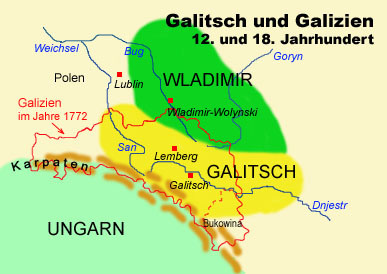
Quelle: Volker Preuß
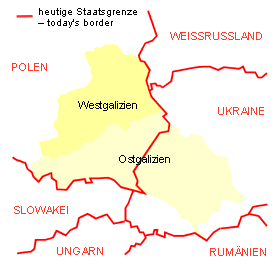
Quelle: Volker Preuß,
Galizien und seine Unterteilung in Ost- und Westgalizien im 18. Jahrhundert
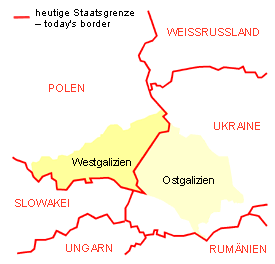
Quelle: Volker Preuß,
Galizien und seine Unterteilung in Ost- und Westgalizien im 20. Jahrhundert
Fläche: 78.502 km²
Einwohner: 8.025.700 (1910), davon 58% Polen, 36% Ruthenen (Ukrainer), 5% Juden, 2% Deutsche
Bevölkerungsdichte: 102 Ew./km² (1910)
Hauptstadt: Lemberg (heute: Lwow, Lviv), 160.000 Ew. (1900), 735.000 Ew. (2007)
Sprachen (bis 1918): Polnisch, Ukrainisch, Deutsch
Zeitzone: im heutigen Westgalizien: MEZ, im heutigen Ostgalizien: MEZ + 2 h
Quelle:
Wikipedia (D)
9. Jahrhundert · Herausbildung des Wolynischen Fürstentums Wladimir und eines Weiß-Kroatischen Fürstentums nördlich der Karpaten
10. Jahrhundert · Eroberung durch die Rus von Kiew, die Weiß-Kroaten werden jedoch von den polnischen Großfürsten zu Krakau abhängig, sie verlassen das Land Richtung Süden, Wladimir wird von der Kiewer Rus unabhängig
1145 · erste Erwähnung des nördlich der Karpaten gelegenen Fürstentums Halytsch (Halytsch, Halitsch, Galitsch) benannt nach der Hauptstadt, unter der Herrschaft des Hauses Wladimirowitsch
1189 · Vertreibung des Fürsten Wladimir von Halytsch durch den Fürsten Roman von Wladimir
1190 · König Bela III. von Ungarn, krönt sich selbst zum "König von Galizien" (Rex Galatiae), sein Sohn Andreas wird Statthalter in Galizien
1191 · Fürst Wladimir von Halytsch vertreibt Andreas, den ungarischen Statthalter, mit polnischer Hilfe
1198 · Tod des Fürsten Wladimir von Halytsch, Aussterben der Wladimirowitschen, Roman von Wladimir tritt mit polnischer Unterstützung das Erbe an
1205 · Tod des Fürsten Roman von Wladimir, wachsende Einflüsse Polens und Ungarns
1215 · Polnisch-Ungarischer Ausgleich: Daniel (der Sohn Romans) erhält Wladimir (Lodomerien), Koloman (der 2. Sohn des ungarischen Königs) erhält Galizien, Koloman wird zum König von Galizien gekrönt
1220 · Eroberung Galiziens durch die Rus von Nowgorod
1228 · Daniel von Lodomerien erobert Galizien
1241 · Einfall der Mongolen
1244 · Daniel wird den Mongolen tributpflichtig
1253 · Daniel wird in Drogitschin von einem päpstlichen Legaten zum "König von Galizien" gekrönt
1266 · Tod von König Daniel, Nachfolger wird dessen Sohn Schwarno, Anbindung von Galizien (und Lodomerien) an Litauen
1340 · Aussterben des Hauses Roman, der König von Polen (Kasimir III.) tritt das Erbe in Galizien an
1349 · Litauen nimmt Lodomerien in Besitz
1370 · Tod von Kasimir III. König von Polen, Galizien und Lodomerien kommen zu Ungarn
1382 · Heirat von Hedwig (Prinzessin von Ungarn) mit dem Großfürsten Wladislaw Jagiello von Polen-Litauen, Galizien und Lodomerien kommen zu Polen
1741 · Kaiserin Maria Theresia von Habsburg erwirbt den Titel "König von Galizien und Lodomerien"
1772 · Erste Polnische Teilung, Galizien und Lodomerien (ab 1795 Ostgalizien genannt) kommt an die Österreichischen Habsburger
1795 · Dritte Polnische Teilung, Kleinpolen (Herzogtum Krakau-Sendomir, ab 1795 Westgalizien genannt) kommt an die Österreichischen Habsburger
1797–1809 · Französische Revolutionskriege: ein Teil Österreichs (Steiermark) wird 1797 von den Franzosen besetzt
1809 · Österreich muss Westgalizien an das Großherzogtum Warschau abtreten
1814/1815 · Wiener Kongress, Neuordnung Europas nach der Ära Napoléon, das Großherzogtum Warschau wird zwischen Russland und Preußen aufgeteilt, die Republik Krakau bleibt als polnischer Staat bestehen
1830 · Aufstände der Polen
1846 · die Republik Krakau kommt als Großherzogtum Krakau zum Kaiserreich Österreich
1848/1849 · Revolution in Wien, neue Verfassung: die Titular-Erblande der Habsburger im Kaiserreich Österreich werden zu Kronländern mit eigenen Landtagen umgewandelt, das Königreich von Galizien und Lodomerien wird so ein Kronland des Kaiserreichs Österreich, das Großherzogtum Krakau wird dem Kronland Königreich von Galizien und Lodomerien angeschlossen
1861 · Abtrennung der Bukowina von Galizien als eigenes Kronland
1919 · im Zuge der Auflösung Österreich-Ungarns kommt Galizien an Polen
1939 · Polen wird zwischen dem Deutschen Reich und der Sowjetunion in etwa entlang der Curzon-Linie aufgeteilt, damit wird Galizien geteilt, Westgalizien kommt zum Deutschen Reich, Ostgalizien kommt an die Sowjetunion und wird der Sowjet-Ukraine angegliedert
Quelle: Atlas zur Geschichte,
Wikipedia (D),
World Statesmen,
RetroBib Retrobibliothek,
Discovery '97,
Volker Preuß
Der Name "Galizien" leitet sich aus Wort "Halitsch" bzw. "Halytsch" oder "Galitsch" ab, dem früheren Namen des Landes als slawisches Fürstentum, benannt nach der gleichnamigen, am Fluss Dnjestr gelegenen Haupstadt. Lodomerien ist der latinisierte Name des früheren Fürstentums "Wladimir" in Wolhynien. "Wladimir" heißt übersetzt "Beherrsche die Welt".
Quelle:
Wikipedia (D)
weitere Seiten zu Österreich (historische Flaggen und Wappen):
• Reich der Österreichischen Habsburger (bis 1804)
• Kaiserreich Österreich (1804–1867)
• Österreich-Ungarn (1867–1918)
• Republik Österreich (seit 1918)