mobile Ansicht, to the English Version tap the flag

- Tirol
- Bundesland der Republik Österreich
- ehemaliges österreichisches Kronland: Gefürstete Grafschaft Tirol
• Flaggen des Bundeslandes Tirol
• historische Flagge
• andere Flaggen
• Bedeutung/Ursprung der Flagge
• Wappen des Bundeslandes Tirol
• andere Wappen
• Bedeutung/Ursprung des Wappens
• Landkarte der Bundesländer Österreichs
• Landkarte der früheren Kronländer Österreich-Ungarns (bis 1918)
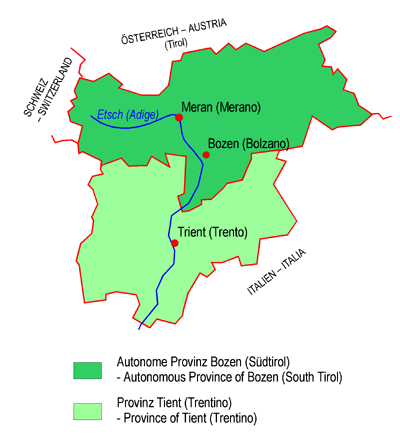
• Landkarte von Südtirol
• Zahlen und Fakten
• Geschichte
• Ursprung des Landesnamens

Landesflagge (Landesfarben),
Seitenverhältnis = 2:3,
Quelle, nach: Wikipedia (D),
Färbung, nach: Dr. Peter Diem www.peter-diem.at


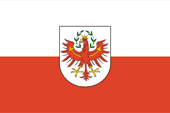
Dienstflagge,
Seitenverhältnis = 2:3,
Quelle, nach: Wikipedia (D),
Färbung, nach: Dr. Peter Diem www.peter-diem.at



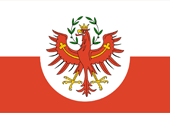
1946–1949,
Landesflagge (Landesfarben),
Seitenverhältnis = 2:3,
Quelle, nach: Flaggen Enzyklopädie

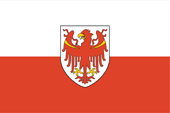
Offizielle Flagge von Südtirol (Alto-Adige),
Seitenverhältnis = 2:3,
Quelle, nach: F l a n k e r / CC BY via: Wikipedia (D)
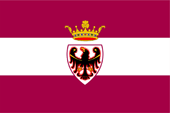
Offizielle Flagge von Welschtirol (Trentino),
Seitenverhältnis = 2:3,
Quelle, nach: User:Fulvio314 / Public domain, via: Wikipedia (D)
Die Flagge von Tirol stammt aus dem frühen 19. Jahrhundert und zeigt zwei Streifen in Weiß und Rot. Sie wurde am 10.03.1949 eingeführt. Die Farben der Flagge leiten sich aus den Farben des Wappens ab (roter Adler auf Silber).
In der Zeit der Monarchie hatte das Land, wie alle Kronländer der österreichischen Krone, seine eigenen, sogenannten Landesfarben, die unter anderem auf horizontal getreiften zwei- oder dreistreifigen Flaggen gezeigt wurden. Die Landesfarben waren sehr oft dem jeweiligen Wappen des Kronlandes entnommen oder wurden duch eine weitere, nicht im Wappen enthaltene Farbe ergänzt, oder sie gingen auf ältere Modelle des Landeswappens zurück (z.B. Krain). Offiziell waren die Landesfarben aber nie geregelt oder festgelegt worden, so dass deren Reihenfolge in der Praxis of variierte oder die Farben gar an sich abwichen. Der österreichische Heraldiker Hugo Gerard Ströhl (1851–1919) hat sich wohl als erster des Themas angenommen und wahrscheinlich um das Jahr 1890 herum die Landesfarben auf den Flaggen bei den jeweiligen Landesbehörden abgefragt und zusammengestellt. Für Tirol wurden Weiß und Rot als Landesfarben für das Kronland ermittelt.
Österreich trat 1938 als ein Land dem Deutschen Reich bei. Die föderalen Strukturen spielten keine Rolle, sie wurden komplett durch die Gaue der NSDAP abgelöst, die Länder wurden abgeschafft. Ämter und Behörden hatten ab jetzt die Dienstflagge des Reiches zu verwenden. Die entsprechenden Landesfarben existierten möglicherweise weiter, auf jeden Fall aber nicht in Form von Flaggen. Sie wurden möglicherweise vereinzelt an Uniformen der SA oder bei bestimmten Dienstgraden der Hitlerjugend in der Brustschnur verwendet.
Die Flaggen der Österreichischen Bundesländer werden mit oder ohne Wappen gezeigt. Amtlich verwendet, tragen sie immer das Wappen, jedoch darf auch die Bevölkerung Flaggen mit Wappen verwenden.
Die Flagge Tirols, die 1946 eingeführt und 1949 durch das heutige Modell ersetzt wurde zeigt den Adler stark vergrößert in der Mitte der weiß-roten Flagge auf einer weißen Scheibe. Sie erfreut sich noch immer einiger Beliebtheit, kommt aber nach und nach aus der Mode, die Flagge mit dem Wappen ist deutlich mehr verbreitet.
Für die Farben der Flaggen der österreichischen Bundesländer scheint es keine gesetzlichen Regelungen zu geben, sie werden, da offenbar nicht definiert, in der Praxis in einem gewissen Standardbereich wiedergegeben. Der österreichische Publizist und Medienwissenschaftler Dr. Peter Diem gibt aber Empfehlungen für die Wiedergabe der Farben: Für Tirol ein helles Rot, am ehesten Pantone 179 entsprechend.
Quelle: Dr. Peter Diem austria-forum.org,
Wikipedia (D),
Flaggen Enzyklopädie,
Flags of the World,
Volker Preuß,
Österreichisch-Ungarische Wappenrolle
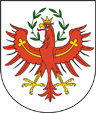
seit 1946,
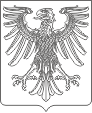
Wappen von Tirol,
Quelle, nach: Landeswappen (PDF) / Public domain Wikipedia (D),
Färbung, nach: Dr. Peter Diem www.peter-diem.at
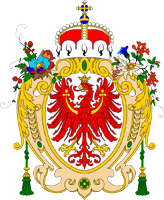
ca.1890–1918,
Wappen Gefürstete Grafschaft Tirol,
Quelle, nach: Ströhl, Wappenrolle Österreich-Ungarns, 1890, via Wikipedia (D)
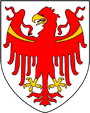
seit 1983,
Wappen Provinz Südtirol in Italien,
Quelle, nach: Helga von Aufschnaiter, nach/by: F l a n k e r / Public domain
via: Wikipedia (D)
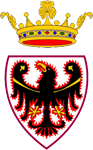
seit 1988,
Wappen Provinz Welschtirol (Trentino) in Italien,
Quelle, nach: King John of Bohemia (vectorized by Gothika)This W3C-unspecified vector image was created with Adobe Illustrator. / Public domain via: Wikipedia (D)
"Das Tiroler Wappen zeigt in silbernem Schild einen roten, golden bekrönten nach heraldisch rechts blickenden Adler mit goldenen Waffen, mit goldenen Flügelspangen mit Kleeblattenden und einem nach oben offenen grünen Kranz hinter seinem Haupt." Zitat von Dr. Peter Diem auf: Flags of the World
"Das alte Tiroler Landeswappen „roter Adler auf silbernem (weißem) Grund“ ist in Abbildungen seit 1271/1286 farbig überliefert. Als älteste Darstellung gilt das Fresko in der Kapelle von Schloss Tirol aus der Zeit von 1271 bis 1286. Eine Beschreibung mit Angabe der Farben ist im Wappengedicht (Clipeus Teutonicorum) des Domherren Konrad on Mure, das um 1250 entstanden ist, enthalten: „Fert aquilam Tyrolis clipeus prestante rubore, que nigri pedis est alias albente colore“ (Das weiße Schild Tirols führt einen Adler von hervorstechender roter Farbe und schwarzen Füßen). Zum Unterschied dazu war es seit dem 14. Jahrhundert üblich, die Fänge und die Waffen des Adlers golden zu färben. Im Jahre 1416 erhielt der Adler eine Krone, und im 1567 einen grünen Kranz um seinen Kopf." Zitat von: Mirko Costa, Bruneck, Südtirol
Der Tiroler Adler wird in verschiedener Gestalt von verschieden politischen Körperschaften verwendet, so vom Österreichischen Bundesland Tirol, aber auch von der Autonomen Provinz Südtirol (Alto-Adige) und ähnlich auch in der Autonomen Provinz Trient (Trentino, in Deutsch: Welschtirol). Die beiden Autonomen Provinzen Südtirol und Trient bilden zusammen die Italienische Region Trient-Südtirol (Trentino-Alto-Adige).
Der Adler ist im Prinzip immer der gleiche, nur orientierte man sich entweder an historischen Vorlagen, so wie das Wappen zu bestimmten Zeiten in einem bestimmten Jahrhundert ausgesehen hat, oder ein Künstler hat das Wappen neu gestaltet. So wurde das heutige Wappen des Bundeslands Tirol im Jahre 1946 geschaffen. Der Adler trägt die 1416 verliehene Krone und das Wappen zeigt den 1567 ergänzten grünen Kranz. Der grüne Kranz wurde quasi wiederbelebt, denn in den zurückliegenden Zeiten wurde auf dessen Darstellung verzichtet. Für Südtirol ist die Vorlage das Wappen der Grafen von Tirol, ausgeführt so wie auf der rechten Flügelaußenseite des Altars von Schloss Tirol aus dem Jahre 1370, mit goldenen Flügelspangen. Es wurde im Jahre 1982 von der Künstlerin Helga von Aufschnaiter neu gestaltet. In dieser Form wurde das Wappen im Jahre 1983 vom italienischen Staatspräsidenten bestätigt. Für Welschtirol (Provinz Trient) ist die Vorlage das Wappen, das Nikolaus Abrein, zwischen 1338 und 1347 Fürstbischof von Trient, im Jahre 1339 eingeführt hat. Es ist zwar auch ein Adler, jedoch schwarz, mit goldenen Flügelspangen und Kleeblattenden, in einem rotem Flammenkranz. Ein solches Adlermodell wird "Wenzelsadler" genannt, benannt nach St. Wenzel, ein Märtyrer und böhmischer Fürst aus dem herrschenden Geschlecht der Přemysliden aus der ersten Hälfte des 10. Jahrhunderts.
Zur Zeit des österreichischen Kronlandes befand sich oberhalb des Schildes noch eine Krone, genau genommen ein Fürstenhut. Er steht für die gefürstete Grafschaft. Der österreichische Heraldiker Hugo Gerard Ströhl hat das Wappen um 1890, in seiner letzten bekannten Ausführung, mit landestypischer Flora umgeben. Für die Gefürstete Grafschaft Tirol waren das Blüten und Pflanzen der Alpen und des Südens, welche die Lage des Landes in den Alpen und südlich davon hervorheben sollten.
Quelle: Wikipedia (D),
Flaggen Enzyklopädie,
Dr. Peter Diem on: Flags of the World,
Quelle/Source: Mirko Costa, Bruneck, Südtirol,
Volker Preuß,
Österreichisch-Ungarische Wappenrolle
Lesen Sie hier:
Hintergründe, Geschichte und Fakten zum Thema "Der Adler in der Heraldik"; Ausführungen, Varianten und Entwicklung.
Die Bundesländer Österreichs:
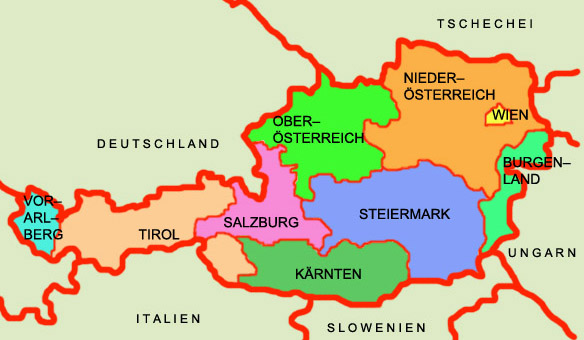
Quelle: Volker Preuß
• Burgenland
• Kärnten
• Niederösterreich
• Oberösterreich
• Salzburg
• Steiermark
• Tirol
• Vorarlberg
• Wien
Karte ca. 1910:
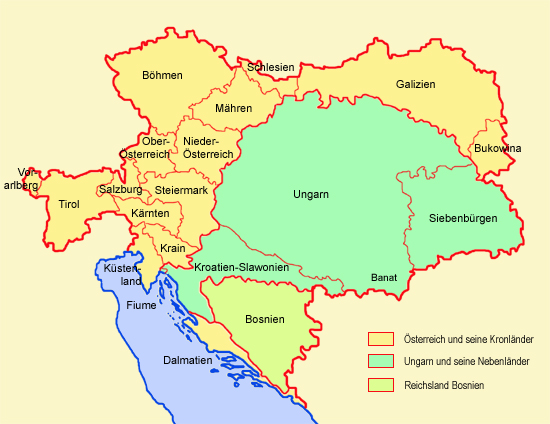
Quelle: Volker Preuß
Quelle: Volker Preuß
Fläche: 12.640 km²
Einwohner: 754.700 (2019)
Bevölkerungsdichte: 60 Ew./km²
Hauptstadt: Innsbruck, 132.100 Ew. (2019)
Amtssprache: Deutsch
Währung: 1 Euro = 100 Cent
Zeitzone: MEZ
Quelle: Wikipedia (D)
Antike · im heutigen Land Tirol siedeln Räter, Illyrer, Etrusker und Kelten
ab 14 v.Chr. · römische Eroberung, Errichtung der Provinzen Noricum und Raetia
166–168 · Einfälle des germanischen Stammes der Markomannen
213 · Einfälle der Alemannen
409–452 · Hunneneinfälle
476 · Absetzung des letzten römischen Kaisers Romulus Augustulus, Ende des (West)Römischen Reiches, das heutige Tirol kommt zum Reich der Ostgoten
536 · Eroberung durch das Frankenreich der Merowinger, Besiedlung durch Bajuwaren und Langobarden, Herausbildung des Herzogtums Bayern, zu dem das heutige Tirol gehört
788 · Eroberung Bayerns durch das Frankenreich der Karolinger
843/870/880 · bei der Teilung des Frankenreiches wird Tirol geteilt, der Norden kommt zum Ostfänkischen Königreich (später Deutsches Reich genannt), und der Süden (Grafschaften Trient und Brixen, beide später Bistümer) zur Mark Verona die zu Italien gehört
12. Jahrhundert · Konsolidierung des Territoriums durch die Grafen von Tirol, Trennung von Bayern
1258 · Aussterben der Grafen von Tirol, das Land kommt an das Haus Görz
1363 · die Grafschaft Tirol kommt an das Haus Habsburg
1803 · Reichsdeputationshauptschluß, die Bistümer Brixen und Trient werden säkularisiert und Tirol angschlossen
26.12.1805 · Friede von Preßburg nach dem Dritten Koalitionskrieg, Österreich mus Tirol an Bayern abtreten
1809 · nach Aufständen wurde Tirol zwischen dem Königreich Italien (Südtirol), dem französischen Illyrien (Osttirol) und Bayern (Nordtirol) aufgeteilt
1814/1815 · Wiener Kongreß zur Neuordnung Europas nach Napoléon, ganz Tirol kommt zu Österreich
1848/1849 · Revolution, neue Verfassung: die Titular-Erblande der Habsburger im Kaiserreich Österreich werden zu Kronländern mit eigenen Landtagen umgewandelt,
so auch die Gefürstete Grafschaft Tirol
12.11.1918 · Proklamation von Deutsch-Österreich zur Republik Österreich, Tirol wird österreichisches Bundesland
10.09.1919 · Friedensvertrag von Saint-Germain, Österreich muss Tirol südlich des Brennerpasses (quasi Südtirol) an Italien abtreten
13.03.1938 · Anschluss ganz Österreichs an das Deutsche Reich, an die Stelle des Landes Tirol tritt der "NS-Gau Tirol-Vorarlberg"
27.04.1945 · Proklamation der Republik Österreich "Zweite Republik", Tirol wird erneut österreichisches Bundesland, bleibt jedoch bis 1955 von französischen Truppen besetzt
1948 · 1. Autonomiestatut für die Provinz Südtirol (in Italien)
1955 · Abzug der Besatzungstruppen
1972 · 2. Autonomiestatut für die Provinz Südtirol (in Italien)
Quelle: Atlas zur Geschichte,
Wikipedia (D),
World Statesmen,
RetroBib Retrobibliothek,
Discovery '97,
Volker Preuß
Der Name des Landes "Tirol" geht auf die Burg Tirol bei Meran (heute Südtirol) zurück, von der die ersten Grafen des Landes stammten. Der Name "Tirol" selbst könnte keltischen Ursprungs sein, denn ter oder tir heißt "Erde", "Acker" oder "Grund", Tirol wäre wörtlich das "Erdland".
Was ist eine Gefürstete Grafschaft? Eine Grafschaft wird von einem Grafen regiert. Ein Graf untersteht normalerweise einem höheren Adeligen, z.B. einem Herzog - die Grafschaft ist somit Teil eines Herzogtums. Ein Herzog gehört, im Gegensatz zum Grafen, als Reichsfürst zum Hochadel, untersteht dem Kaiser direkt und hat Zutritt zum den Kaiser beratenden Reichsfürstenrat. Der Kaiser konnte jedoch einen Grafen in den Stand eines Reichsfürsten erheben, ohne das er einen neuen, höheren Titel bekam. Er hatte Zutritt zum Reichsfürstenrat und wurde "gefürsteter Graf" oder "Reichsgraf" genannt.
Quelle: Wikipedia (D),
Atlas der wahren Namen
weitere Seiten zu Österreich (historische Flaggen und Wappen):
• Reich der Österreichischen Habsburger (bis 1804)
• Kaiserreich Österreich (1804–1867)
• Österreich-Ungarn (1867–1918)
• Republik Österreich (seit 1918)