mobile Ansicht, to the English Version tap the flag


- historische Region in Spanien
- 10. bis 13. Jahrhundert Königreich León
- 13. bis 19. Jahrhundert Teil des Königreichs Kastilien-León
- heute Teil der Autonomen Region Kastilien-León
- Eigenbezeichnung:
– Spanisch: León
– Leónesisch: Llión
• Flaggen
• Bedeutung/Ursprung der Flagge
• Wappen
• Bedeutung/Ursprung des Wappens
• Landkarte der historischen Königreiche auf der Iberischen Halbinsel
• Zahlen und Fakten
• Geschichte
• Ursprung des Landesnamens
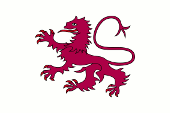
11. Jahrhundert,
Flagge von León,
Quelle, nach: Wikipedia (ES),
Heralder, CC BY-SA 3.0, via Wikimedia Commons


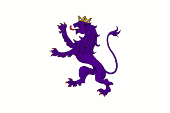
inoffizielle Flagge der Region León,
Quelle, nach: Wikipedia (ES),
David Ll L, CC BY-SA 4.0, via Wikimedia Commons

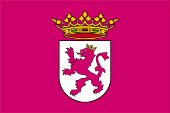
"La Purpurada",
Flagge lokaler Nationalisten,
Quelle, nach: Wikipedia (ES),
Oren neu dag, CC BY-SA 3.0, via Wikimedia Commons
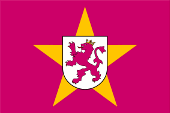
Flagge linksgerichteter lokaler Nationalisten,
Quelle, nach: Wikipedia (ES),
Oren neu dag, CC BY-SA 3.0, via Wikimedia Commons

Die Flagge des alten Königreichs León war, wie damals üblich eine Wappenflagge. Das heißt, eine Flagge die das Bild des Wappens des Landes (eigentlich des Herrschers) zeigte. Demzufolge ist das Flaggentuch einfarbig weiß mit einem rot-violetten Löwen in der Mitte. In dieser Frühzeit der Flaggen waren diese eigentlich auch nicht so geformt wie unsere heutigen Flaggen. Die Flaggen glichen eher Wappen, die man mit der geraden Seite am Mast befestigte. Der Löwe zeigt rote Krallen und eine rote Zunge und ist golden bekrönt. Die Farbe des Löwen wird wird Morado (Maulbeerfarben) genannt. Dabei kann sie sehr verschieden aussehen, von Violett bis hin zu Lila, auch Rotbraun oder gar Magenta. Genauso wird die Farbe mal Rot, mal Morado, mal Violett und mal Purpur genannt. Es ist nahezu unmöglich hier einen Standard zu finden. Erste Abbildungen des Löwen von León finden sich zu Beginn des 12. Jahrhunderts auf Münzen, vorher wurde ein Kreuz verwendet, und auch auf Siegeln, wobei die Form des Löwen sehr unterschiedlich ausfiel. Erste Darstellungen in Farbe gab es schon Anfang des 11. Jahrhunderts, sie zeigen einen purpurnen (lila) Löwen auf weiß (Silber), am Ende des 12. Jahrhunderts erschien der Löwe in Violett. Es gab aber auch naturfarbene Darstellungen oder auch Abbildungen in Gold. Ab dem Ende des 13. Jahrhunderts trug der Löwe dann auch eine Krone, um die königliche Macht zu unterstreichen. Gerade im alten Königreich war die Heraldik der des Königreichs León und der Stadt León praktisch nicht zu trennen. Nachdem León dynastisch mit Kastilien verschmolzen war trat die Heraldik des Königreichs León in den Hintergrund, wurde nicht weiter betrieben und gepflegt. Natürlich tauchte der Löwe in Wappen und Flaggen des Königreichs Kastilien-León auf, jedoch wurde er ab dem 15. Jahrhundert fast ausschließlich in Rot dargestellt. Jetzt war es an der Stadt León, das heraldische Erbe weiter zu tragen. Der Löwe im Stadtwappen war meist in Violett gehalten, selten in Rot, auch die Flagge der Stadt war einfarbig Rot. 1977 kam es zum Streit, weil für die Flagge des Provinzrats von León die Farbe Purpur gefordert wurde, der alten Traditionen des Landes wegen. Im Jahre 1982, also ein Jahr bevor 1983 die die autonome Gemeinschaft Kastilien-León geschaffen wurde, wurde die Heraldik definiert, die für Kastilien-León einen purpurnen (lila) Löwen vorsieht, was demzufolge amtlich vorgeschrieben wäre. Dennoch wird in der Praxis sehr häufig Violett für den Löwen eingesetzt. Wahrscheinlich hat die Farbe Violett einen gewissen Beigeschmack, denn sie wird mit der umstrittenen Republik Spanien (1931–1939) in Verbindung gebracht, deren Flagge die Farben Rot, Gelb und Violett zeigte, um neben den Farben Kastiliens auch León zu repräsentieren. Politische und kulturelle Gruppen welche die Identität von León erhalten und fördern wollen, oder gar die Unabhängigkeit des Landes wünschen, verwenden heute meist eine Flagge die "La Purpurada" ("Die Purpurne") genannt wird. Sie ist einfarbig purpur und zeigt in der Mitte das Wappen des Königreiches León mit einem purpurnem Löwen.
Quelle: 1.) Wikipedia (ES), 2.) Wikipedia (ES), 3.) Wikipedia (ES), Wikipedia (DE), Volker Preuß
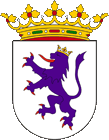
Wappen von León,
Quelle, nach: Wikipedia (DE)
Das Wappen des alten Königreichs León ist einfarbig weiß (silbern) mit einem rot-violetten Löwen in der Mitte. Das Wappen ist ein "redendes Wappen", denn Löwe heißt auf Leónesisch "Llión" und auf Spanisch "León". Der Löwe zeigt rote Krallen und eine rote Zunge und ist golden bekrönt. Die Farbe des Löwen wird wird Morado (Maulbeerfarben) genannt. Dabei kann sie sehr verschieden aussehen, von Violett bis hin zu Lila, auch Rotbraun oder gar Magenta. Genauso wird die Farbe mal Rot, mal Morado, mal Violett und mal Purpur genannt. Es ist nahezu unmöglich hier einen Standard zu finden. Erste Abbildungen des Löwen von León finden sich zu Beginn des 12. Jahrhunderts auf Münzen, vorher wurde ein Kreuz verwendet, und auch auf Siegeln, wobei die Form des Löwen sehr unterschiedlich ausfiel. Erste Darstellungen in Farbe gab es schon Anfang des 11. Jahrhunderts, sie zeigen einen purpurnen (lila) Löwen violetten Löwen auf weiß (Silber), am Ende des 12. Jahrhunderts erschien der Löwe in Violett. Es gab aber auch naturfarbene Darstellungen oder auch Abbildungen in Gold. Ab dem Ende des 13. Jahrhunderts trug der Löwe dann auch eine Krone, um die königliche Macht zu unterstreichen. Gerade im alten Königreich war die Heraldik der des Königreichs León und der Stadt León praktisch nicht zu trennen. Nachdem León dynastisch mit Kastilien verschmolzen war trat die Heraldik des Königreichs León in den Hintergrund, wurde nicht weiter betrieben und gepflegt. Natürlich tauchte der Löwe in Wappen und Flaggen des Königreichs Kastilien-León auf, jedoch wurde er ab dem 15. Jahrhundert fast ausschließlich in Rot dargestellt. Jetzt war es an der Stadt León, das heraldische Erbe weiter zu tragen. Der Löwe im Stadtwappen war meist in Violett gehalten, selten in Rot, auch die Flagge der Stadt war einfarbig Rot. 1977 kam es zum Streit, weil für die Flagge des Provinzrats von León die Farbe Purpur gefordert wurde, der alten Traditionen des Landes wegen. Im Jahre 1982, also ein Jahr bevor 1983 die die autonome Gemeinschaft Kastilien-León geschaffen wurde, wurde die Heraldik definiert, die für Kastilien-León einen purpurnen (lila) Löwen vorsieht, was demzufolge amtlich vorgeschrieben wäre. Dennoch wird in der Praxis sehr häufig Violett für den Löwen eingesetzt. Wahrscheinlich hat die Farbe Violett einen gewissen Beigeschmack, denn sie wird mit der umstrittenen Republik Spanien (1931–1939) in Verbindung gebracht, deren Flagge die Farben Rot, Gelb und Violett zeigte, um neben den Farben Kastiliens auch León zu repräsentieren.
Quelle: 1.) Wikipedia (ES), 2.) Wikipedia (ES), 3.) Wikipedia (ES), Wikipedia (DE), Volker Preuß
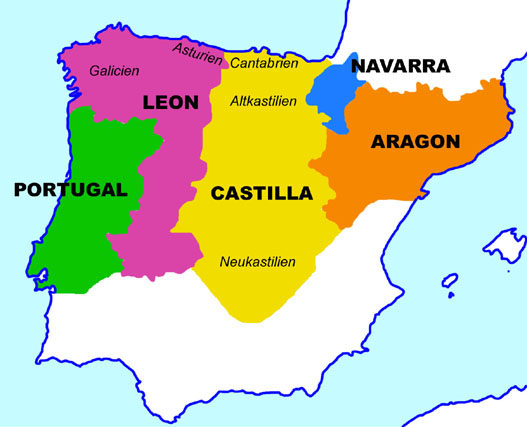
Karte der historischen Königreiche auf der Iberischen Halbinsel (ca. 1220):
Landkarte/Map: Volker Preuß
Fläche:
zur Zeit seiner größten Ausdehnung, ca. 50.000 km²
Einwohner:
im Mittelalter meist Leónesen, sowie Nachfahren anderer Iberer, aber auch Nachfahren der Westgoten
Hauptstadt:
León
Sprache:
Leónesisch
Quelle: RetroBib Retrobibliothek, Volker Preuß
Die Geschichte Leóns beginnt im Prinzip mit dem Königreich Oviedo/Asturien. Jedoch entsteht León tatsächlich erst mit der Erbteilung dieses Königreichs im Jahre 910.
Frühzeit · Besiedlung des heutigen Asturiens durch das indogermanische Volk der Kantabrer (lateinisch: Cantabri)
ca. 600 v.Chr. · Einwanderung von Kelten, Herausbildung der Keltiberer
200 v. Chr. · Zweiter Punischer Krieg, das Römische Reich erwirbt die Besitzungen Karthagos in Iberien, Unterwerfung der ganzen Iberischen Halbinsel bis zum Jahre 19 v.Chr., römische Besiedlung, Romanisierung, das heutige Asturien kommt erst 22 v.Chr. zur römischen Provinz Hispania Tarraconensis
ca. 400 · Völkerwanderung, Durchzug germanischer Alanen, Sweben und Westgoten, das heutige Asturien wird Teil des Westgotenreiches
711–714 · Vernichtung des Westgotenreichs durch von Nordafrika kommende Araber, die Westgoten ziehen sich nach Asturien und Kantabrien zurück, es gelingt den Arabern nicht Asturien zu erobern
716 · Herzog Pelayo (Pelagius), flieht aus der Gefangenschaft des zu den Arabern loyalen Westgotenkönigs Witiza von Toledo nach Oviedo in Asturien
718 · die Westgoten wählen Pelayo zu ihrem Fürsten
722 · Schlacht von Covadonga, Fürst Pelayo von Oviedo schlägt die Araber, Beginn des Befreiungskrieges der Iberischen Völker gegen die Araber (Reconquista)
739–757 · Herrschaft von Alfons I., verheiratet mit Hermesinde der Tochter von Pelayo, ab 753 König von Oviedo (Asturien)
856 · König Ordoño I. von Oviedo (Asturien) befreit die Stadt León von den Moslems und besetzt ganz Galicien
910 · Tod von König Alfons III. von Oviedo, Erbteilung seines Reiches unter seinen Söhnen, sein Sohn Garcia I. wird König von León, sein Sohn Ordoño II. wird König von Galicien, sein Sohn Fruela II. erbt Asturien
914 · Tod von König Garcia, sein Bruder König Ordono II. von Galizien erbt León
914–924 · Herrschaft von König Ordono II. von Galizien und Ovideo (Asturien)
924 · Tod von König Ordoño II., das Erbe fällt an König Fruela II. von Oviedo (Asturien), er verlegt seine Residenz von Oviedo nach León, das Land wird ab jetzt Königreich León genannt
925 · die Grafen von Burgos spalten die Grafschaft Kastilien vom Königreich León ab
931–950 · Herrschaft von König Ramiro II., ein Sohn von Ordono II., Vereinigung von Galicien, Asturien und León unter einer Krone (Königreich León), erolgreiche Kriege gegen die Araber, Ausdehnung des Reiches
950–957 · Herrschaft von König Ordono III., ein Sohn von Ramiro II., erolgreiche Kriege gegen die Araber, Ausdehnung des Reiches
957–966 · Herrschaft von König Sancho I., Erbstreitigkeiten
966–982 · Herrschaft von König Ramiro III., Erbstreitigkeiten, Unruhen, Arabereinfälle
982–990 · Herrschaft von König Bermudos II., Unruhen, Arabereinfälle
996 · Sultan Almansor erobert die Stadt León und kann sie bis zu seinem Tod halten, danach von König Alfons V. zurückerobert
999–1027 · Herrschaft von König Alfons V., Konstituierung des Landes
1028–1037 · Herrschaft von König Bermudo III., ein Sohn von Alfons V.
1037 · König Bermudo III. von León greift das Königreich Kastilien an, Niederlage und Tod von Bermudo in der Schlacht am Rio Carrión, somit Aussterben der Dynastie Pelayo, König Ferdinand von Kastilien erbt das Königreich León, somit sind Kastilien, León, Asturien und Galicien unter einer Krone vereint (Königreich Kastilien-León)
1139 · Graf Alfons Heinrich von Portugal (der Sohn von Heinrich von Burgund) spaltet Portugal von Kastilien-León ab
1157 · Tod von König Alfons' VII. von Kastillien, Erbteilung, León wird wieder ein eigenes Königreich
1230 · León und Kastillien werden unter König Ferdinand III. von Kastilien wieder unter einer Krone vereinigt, Königreich Kastillien-León
León ist zwischen 1230 und 1479 fester Bestandteil des Königreichs Kastilien-León. Im Jahre 1469 heiratet Isabella I., Königin von Kastilien-León Ferdinand II., den Prinzen und Thronfolger von Aragónien. Beide werden 1479 zu Königen von Spanien gekrönt, und somit Kastilien-León und Aragónien zu einem einzigen Land vereinigt. Das alte León wird damit Bestandteil Spaniens und sinkt zu einer rein landschaftlichen Bedeutung herab.
1808–1813 · León ist durch französische Truppen besetzt
1936–1939 · Spanischer Bürgerkrieg, León kämpft an der Seite der Franco-Truppen gegen die sozialistische Zentralregierung
25.03.1983 · Kastillien-León erhält das Autonomiestatut innerhalb Spaniens
Quelle: Wikipedia (ES),
RetroBib Retrobibliothek,
Volker Preuß
Der Name des Landes geht auf die Stadt "León" zurück. Im Jahre 924 verlegte der König von Oviedo seine Residenz in diese Stadt, und der Name der Stadt wurde von dieser Zeit an auf das ganze Land übertragen. Der Name der Stadt geht auf die Zeit der Römer zurück und entstammt dem Wort "Legio", dem Legionslager der hier stationierten Legion VII. Gemina.
Quelle: RetroBib Retrobibliothek,
Volker Preuß