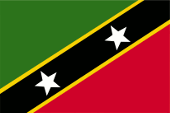
Die heutige Flagge von St. Kitts und Nevis wurde von Edrice Lewis entworfen und am 19.09.1983 anlässlich der Unabhängigkeit eingeführt. Sie zeigt einen diagonalen, gelb gesäumten, schwarzen Streifen mit zwei weißen fünfzackigen Sternen, ein grünes Feld links oben, und ein rotes Feld rechts unten. Das Schwarz steht für die afrikanischen Wurzeln der meisten der Landesbewohner, Gelb für die Sonne und Grün für die Fruchtbarkeit des Landes. Rot steht für das Blut, das im Kampf zur Erlangung der Unabhängigkeit vergossen wurde. Die weißen Sterne symbolisieren die beiden Inseln. Sie drücken außerdem die Hoffnung auf Freiheit und Frieden aus. Die Farben sind wahrscheinlich nicht definiert, das britische Verteidigungsministerium gibt in seiner Publikation mit Vorschiftscharakter "Flags of all Nations" folgende Farben an: Grün = pt 364 c, Rot = pt 186 c, Gelb = pt 116 c.
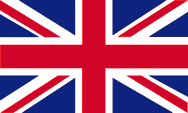
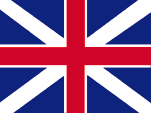
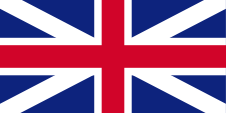
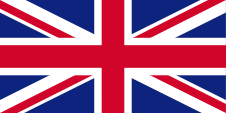
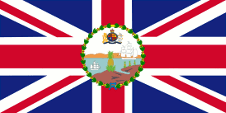
Anfänglich waren die Inseln, insbedondere St. Christopher (St. Kitts), zwischen Frankreich und England/Großbritannien umstritten. Im Vertrag von Utrecht, im Jahre 1713, bekam Großbritannien St. Christopher offiziell zugesprochen, so das ab jenem Jahr die Flagge von Großbritannien unangefochten über den Inseln wehte, die zwischen 1671 und 1816 und dann wieder ab 1833 administrativ zur britischen Kolonie der Leeward-Inseln gehörten. Die Leeward-Inseln waren somit Teil des United Kingdom, erhielten eine eigene Verwaltung und einen eigenen Gouverneur. An Land, bis 1864 auch zur See, repräsentierten der einzelne Bürger und auch die Behörden ihren Status als Bürger oder Organe des United Kingdom, durch die Verwendung des Union Jack, "Union Flag" genannt.
Großbritannien hatte in Jahr 1864 ein Flaggensystem eingeführt, in dem:
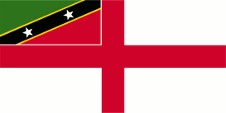
• Kriegsschiffe einen sogenannten "White Ensign" (Marineflagge), eine weiße Flagge oft mit durchgehendem roten Georgskreuz und mit dem Union Jack in der Oberecke,
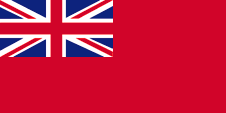
• Handelsschiffe einen "Red Ensign" (auch "Civil Ensign" → Bürgerflagge genannt, die eigentl. Handelsflagge), eine rote Flagge mit dem Union Jack in der Oberecke, und
• Dienstschiffe einen "Blue Ensign" (Regierungsflagge → die eigentliche Staatsflagge), eine blaue Flagge mit dem Union Jack in der Oberecke führten.
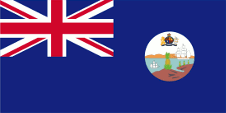
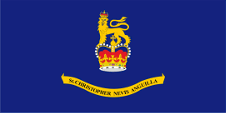
Seit 1865 durften Schiffe von Kolonialregierungen einen Blue Ensign mit einem Badge (Abzeichen) im fliegenden Ende verwenden. Für alle anderen Zwecke war ab diesem Zeitpunkt an Land ausschließlich der britische Union Jack zu verwenden und zur See die übliche rote britische Handelsflagge, der "Red Ensign". Wenn die britische Admiralität der Kolonie die entsprechende Erlaubnis erteilt hatte, durften Handelsschiffe und private Seeleute dieser Kolonien einen Red Ensign mit dem Bagde führen. Dies war für die Leeward-Inseln nicht der Fall. Die jeweiligen Regierungen sollten entsprechene Bagdes zur Verfügung stellen.
Ein solches Badge war oft eine auf einer Scheibe platzierte regionale landschaftliche Darstellung, zeigte oft Schiffe, historische Begebenheiten oder konnte auch nur eine Art Logo sein. Sehr oft zeigte ein Badge zusätzlich den Namen des Landes oder auch einen Wahlspruch. Einige Besitzungen hatten aber auch schon von Anfang an ein Wappen, bzw. erhielten über die Jahre eine eigenes Wappen und das Badge wurde abgeschafft. Um ein weitgehend einheitliches Erscheinungsbild im fliegenden Ende der Flaggen zu gewährleisten, wurden Wappen und auch andere Symbole auf einer weißen Scheibe in der Größe der früheren Badges dargestellt. Es gab hier aber auch Ausnahmen, denn einige Kolonien verwendeten diese weiße Scheibe nicht, und platzierten ihr Wappen oder auch nur das Wappenschild - manchmal auch vergrößert - direkt auf das Flaggentuch. Schon in den 40-er Jahren wurde dazu übergegangen die weißen Scheiben zu entfernen und das Wappen direkt zu platzieren oder vergrößert dazustellen. Dieser Umstellungsprozess erfolgte allmählich, nirgendwo gleichzeitig und vollständig. In einigen britischen Besitzungen sind bis heute Flaggen mit der weißen Scheibe in Gebrauch, in anderen nicht mehr und in einigen Gebieten gibt es beide Varianten nebeneinander. Die Leeward-Inseln erhielten im Jahre 1871 ein eigenes Badge. Es zeigte eine Ananas an einer Küste mit zwei Schiffen.
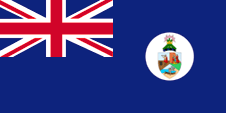
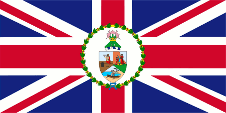
St. Christopher (St. Kitts), Nevis und Anguilla waren bereits 1882 innerhalb der Kolonie der Leeward-Inseln verwaltungstechnisch zu einer Kolonie vereinigt worden: Kolonie St. Christopher (St. Kitts), Nevis und Anguilla. Wahrscheinlich waren auf den einzelnen Inseln bereits eigene Siegel in Verwendung deren Bilder 1958 auf einem Wappenschild zusammengefasst wurden, als die Kolonie der Leeward-Inseln aufgelöst würde und die Kolonie St. Christopher (St. Kitts), Nevis und Anguilla eigene Hoheitszeichen verwenden durfte. Dieses Wappenschild wurde auf einer weißen Scheibe zum Badge der Kolonie, das auf einem "Blue Ensign" verwendet wurde. Das Wappenschild war dreigeteilt und zeigte die Wappenbilder der einzelnen Inseln: Kolumbus mit einem Fernrohr an Bord eines Schiffs (St. Kitts), drei Jungfrauen an einer Quelle (Nevis) und einen Eingeborenen mit seinem Boot an einer Küste (Anguilla).
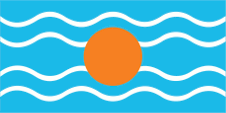
Gleichzeitig war die Kolonie von 1958 bis 1962 Teil der Britischen Kolonie "Westindische Föderation", ein Versuch die Verwaltung zusammenzufassen und auch den Unabhängigkeitsbestrebungen der zugehörigen Inseln und Kolonien entgegenzuwirken. Die Flagge der "Westindische Föderation" war ein hellblaues Flaggentuch mit vier waagerechten weißen Wellenlinien und einer goldenen Scheibe in der Mitte. Sie symbolisierte die Sonne über der Karibischen See. Über den Farbton des Blau ist man sich im Zweifel, es wird oft das übliche Britische Heraldikblau angenommen. Eine Zeitgenössische Beschreibung nennt jedoch ein "kaiserliches Blau" was Hellblau wäre und auch viele zeitgenössische Drucke zeigen dieses helle Blau.
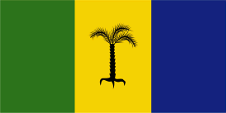
Am 27.02.1967 wurde durch Großbritannien innere Selbstverwaltung gewährt, und St. Kitts, Nevis und Anguilla wurden ein autonomer, mit Großbritannien assoziierter Staat. In diesem Zusammenhang wurde eine neue Flagge eingeführt, welche die Tradition der "Union Flag" und der "Blue Ensigns" beendete. Diese Flagge zeigte drei senkrechte Streifen in Grün, Gelb und Blau, und in der Mitte des gelben Streifens eine schwarze Palme mit drei Zweigen (St.Kitts, Nevis und Anguilla). Flaggen mit gleichen Farben wurden und werden auch in Grenada und in St. Vincent benutzt. Zur Unabhängigkeit am 19.09.1983 wurde dann die heutige Flagge eingeführt.
Im Jahre 1971 wurde Anguilla ausgegliedert und wieder der britischen Verwaltung unterstellt und ist seit 1980 eine eigenständige Kolonie.
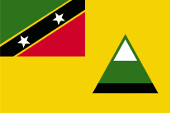
Die Flagge von Nevis zeigt die Flagge von St. Kitts/Nevis im Obereck und im wehenden die Kontur des Vulkans Nevis Peak, der die Insel dominiert. Es gibt auch eine Variante der Flagge, die am Fuß des Vulkans einen blauen Streifen zeigt.
Quelle:
Die Welt der Flaggen,
Flaggen Wappen Hymnen,
Flags of all Nations,
Flags of the World,
Wikipedia (EN),
Volker Preuß
seit 1967,
Wappen von St. Kitts/Nevis,
Quelle, nach: Corel Draw 4
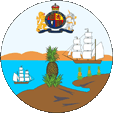
1871–1958,
Leeward-Inseln,
Badge (Emblem, Abzeichen) der Leeward-Inseln,
Quelle, nach: Flags of the World
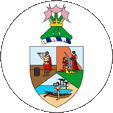
1958–1967,
Saint Christopher, Nevis and Anguilla,
Badge (Emblem, Abzeichen) von St. Christopher, Nevis und Anguilla,
Quelle, nach: Flags of the World
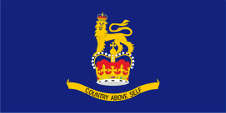
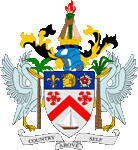
Das Staatswappen von St. Kitts und Nevis wurde am 16.02.1967 eingeführt. Das Schild zeigt in einem blauen Schildhaupt eine Lilie, den Kopf einer Karibin und eine Tudor-Rose. Damit wird die Geschichte der Inseln verkörpert, die in der Vergangenheit zwischen Großbritannien und Frankreich umstritten waren. Im mittleren Teil des Schildes, auf silbernem Grund, zwei rote Poinciana-Blüten, ein Segelschiff und dazwischen ein roter Winkel (Sparren). Schildhalter sind zwei Pelikane. Oberhalb des Schildes ein Helm mit gold-schwarzen Decken, eine schwarz-blaue Wulst sowie eine Fackel, die von drei verschiedenfarbigen Menschenarmen gehalten wird – Symbol der drei Rassen auf den Inseln. Das Motto in dem silbernen Spruchband lautete ursprünglich "Unity and Trinity" → "Einheit und Dreifaltigkeit". Dieses wurde zur Unabhängigkeit in "Country above self" → "Das Land über das Selbst" geändert, ebenso wie das Schiff, das seit 1983 anstelle von zwei Masten nur noch einen Mast hat. Das Badge (Abzeichen) der Leeward-Inseln, zu denen St. Christopher (St. Kitts), Nevis und Anguilla zwischen 1871 und 1958 gehörten, zeigte eine Ananas an einer Küste mit zwei Schiffen. St. Christopher (St. Kitts), Nevis und Anguilla waren bereits 1882 innerhalb der Kolonie der Leeward-Inseln verwaltungstechnisch zu einer Kolonie vereinigt worden: Kolonie St. Christopher (St. Kitts), Nevis und Anguilla. Wahrscheinlich waren auf den einzelnen Inseln bereits eigene Siegel in Verwendung deren Bilder 1958 auf einem Wappenschild zusammengefasst wurden, als die Kolonie der Leeward-Inseln aufgelöst würde und die Kolonie St. Christopher (St. Kitts), Nevis und Anguilla eigene Hoheitszeichen verwenden durfte. Dieses Wappenschild wurde auf einer weißen Scheibe zum Badge der Kolonie, das auf einem "Blue Ensign" verwendet wurde. Das Wappenschild war dreigeteilt und zeigte die Wappenbilder der einzelnen Inseln: Kolumbus mit einem Fernrohr an Bord eines Schiffs (St. Kitts), drei Jungfrauen an einer Quelle (Nevis) und einen Eingeborenen mit seinem Boot an einer Küste (Anguilla).
Quelle: Die Welt der Flaggen,
Flaggen Wappen Hymnen,
Flags of the World,
Wikipedia (EN),
Volker Preuß
Lage:
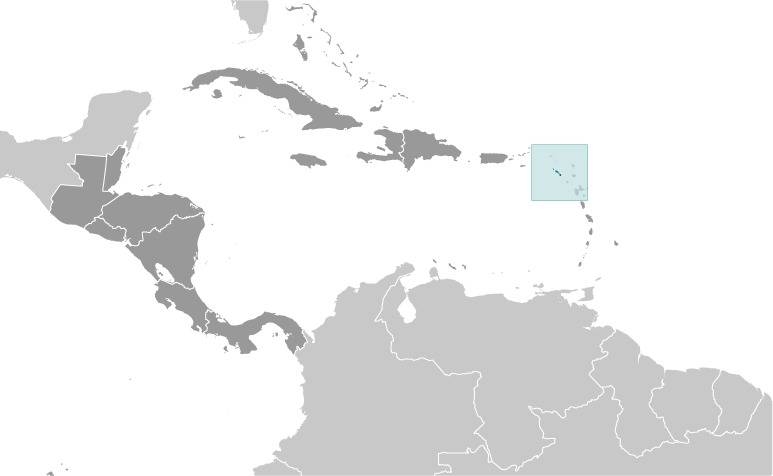
Quelle/Source: CIA World Factbook
Landkarte des Landes:
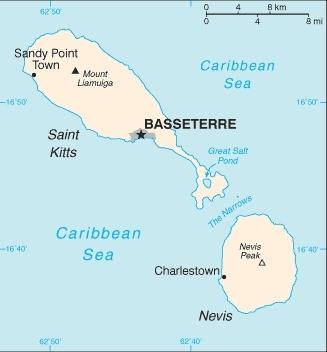
Quelle/Source: CIA World Factbook
Fläche: 261 km², davon St. Kitts: 168 km², Nevis: 93 km²
Einwohner: 53.000 (2020), davon 90% Afrikaner, 5,0% Mulatten, 3,0% Asiaten, 1,0% Europäer (Briten und Portugiesen)
Religionen: 41% Protestanten, 36% Anglikaner, 12% Katholiken
Bevölkerungsdichte: 203 Ew./km²
Hauptstadt: Basseterre, 14.000 Ew. (2021)
Amtssprache: Englisch
sonstige Sprachen: kreolische Dialekte
Währung: Ostkaribischer Dollar (XCD, EC-$) = 100 Cents
Zeitzone: MEZ – 5 h
Quelle:
Wikipedia (D)
Nevis:
Fläche: 93 km²
Einwohner: 11.500
Bevölkerungsdichte: 124 Ew./km²
Hauptstadt: Charlestown, 1.700 Ew.
Quelle:
Wikipedia (D)
1493 · der spanische Seefahrer Christoph Kolumbus entdeckt die Inseln und nennt sie San Cristóbal (St. Christopherus, heutzutage verkürzt auf "St. Kitts") und Santa María de las Nieves, die Inseln wurden Spanischer Besitz, jedoch nicht kolonisiert
1620 · Inbesitznahme von Nevis durch England
1623 · Besiedlung von St. Kitts durch Engländer
1625 · Besiedlung von St. Kitts durch Franzosen
1627–1666 · St. Kitts ist zwischen England und Frankreich geteilt
1628 · Besiedlung von Nevis durch Engländer aus St. Kitts
1666–1671 · St. Kitts ist französischer Besitz
1671–1689 · St. Kitts ist zwischen England und Frankreich geteilt, der britische Besitz wird der Kolonie Leeward-Inseln angeschlossen
1689–1690 · St. Kitts ist französischer Besitz
1690 · St. Kitts wird britischer Besitz und wird wieder der Kolonie Leeward-Inseln angeschlossen
1706 · vorübergehende französische Besetzung
1713 · Vertrag von Utrecht, Großbritannien erhält St. Kitts offiziell zugesprochen
1782–1783 · vorübergehende französische Besetzung
1816 · die Kolonie Leeward-Inseln wird aufgelöst, St. Kitts wird mit Anguilla, Nevis und den Jungferninseln zusammengefasst
1833 · Neugründung der Kolonie Leeward-Inseln, bis 1958 Teil der Britischen Kolonie der Leeward-Inseln
1882 · die britischen Besitzungen St. Kitts, Nevis und Anguilla werden innerhalb der Kolonie Leeward-Inseln verwaltungstechnisch vereinigt (Kolonie St. Kitts, Nevis und Anguilla)
1958–1962 · Teil der Britischen Kolonie "Westindische Föderation"
27.02.1967 · Großbritannien gewährt innere Selbstverwaltung (Autonomie als mit Großbritannien assoziierter Staat)
1969 · Forderungen nach Unabhängigkeit auf Anguilla
1971 · Anguilla wird wieder der britischen Verwaltung unterstellt
1980 · Anguilla wird von St. Kitts/Nevis getrennt und eine eigenständige Kolonie
19.09.1983 · Großbritannien gewährt die Unabhängigkeit im Rahmen des Commonwealth of Nations, Nevis erhält jedoch eine eingeschränkte Selbstverwaltung
13.10.1997 · das Parlament von Nevis proklamiert die Unabhängigkeit der Insel, wird nicht anerkannt
10.08.1998 · eine Volksabstimmung auf Nevis für staatliche Unabhängigkeit scheitert
Quelle:
Atlas zur Geschichte,
World Statesmen,
Wikipedia (EN)
Als Kolumbus im Jahre 1493 die heutige Insel St. Kitts entdeckte, nannte er sie San Cristóbal (nach anderen Quellen Isla de San Jorge). Der Name St. Christopher wird in der heutigen Zeit nur noch verkürzt wiedergegeben: "St. Kitts".
Als Kolumbus im Jahre 1493 die heutige Insel Nevis entdeckte, nannte er sie Santa María de las Nieves (Heilige Maria vom Schnee), weil er die Wolken am Vulkan Nevis Peak für Schnee gehalten hat. Aus "Nieves" wurde im laufe der Jahre schließlich "Nevis".
Die Kalinago, die voreuropäischen Bewohner von St. Kitts, nannten die Insel "Liamuiga", was so viel wie "fruchtbares Land" bedeutet.
Quelle: Wikipedia (EN)