Quelle, nach: Flags of the World


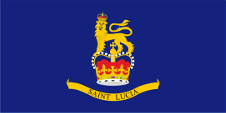
seit 1979,
Flagge des Generalgouverneurs,
Seitenverhältnis = 1:2,
Quelle, nach: Flags of the World


St. Lucia
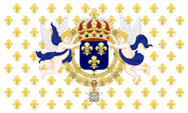
ab 1650,
Flagge Frankreichs,
Quelle, nach: Sodacan [CC BY-SA 3.0], via Wikimedia Commons

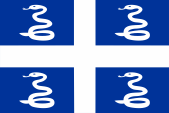
1766–1796,
Handelsflagge für St. Lucia und Martinique,
Quelle, nach: Wikipedia (EN)
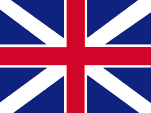
1664–1707,
Flagge des Commonwealth von England, Schottland und Irland,
Quelle, nach: Die Welt der Flaggen
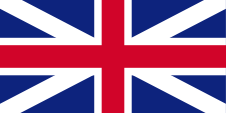
1707–1801,
Flagge von Großbritannien,
Quelle, nach:
Die Welt der Flaggen
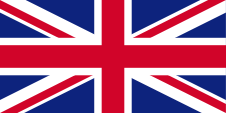
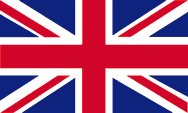
1801–1967,
Union Flag → quasi Nationalflagge,
Flagge von Großbritannien,
Seitenverhältnis = 1:2,
Quelle, nach: Wikipedia (EN)
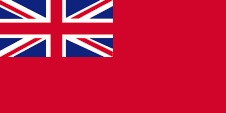
1864–1979,
Handelsflagge,
Seitenverhältnis = 1:2,
Quelle, nach: Flags of all Nations
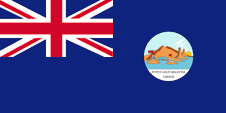
1875–1939,
Flagge der Regierung (Staatsflagge),
Seitenverhältnis = 1:2,
Quelle, nach: Flags of the World
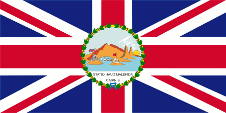
1875–1939,
Flagge des Administrators/Kommissars,
Seitenverhältnis = 1:2,
Quelle, nach:
Flags of the World
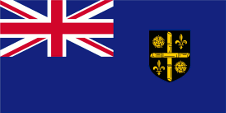
1939–1967,
Flagge der Regierung (Staatsflagge),
Seitenverhältnis = 1:2,
Quelle, nach: Flags of the World
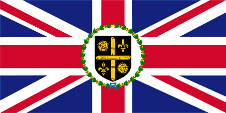
1939–1979,
Flagge des Administrators/Kommissars,
Seitenverhältnis = 1:2,
Quelle, nach:
Flags of the World
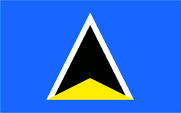
1967–1979,
National- und Staatsflagge,
Seitenverhältnis = 5:8,
Quelle, nach: Flags of the World
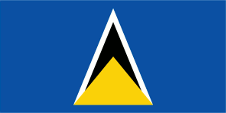
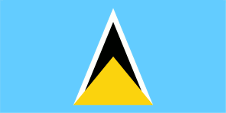
1979–2002,
National-, Staats- und Handeslflagge,
Seitenverhältnis = 1:2,
Quelle, nach: Flags of the World, Wikipedia (EN)
Windward-Inseln (1833–1958):
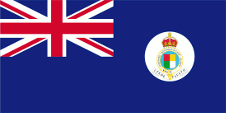
1886–1958,
zweifelhaft,
Flagge der Regierung (Staatsflagge),
Seitenverhältnis = 1:2,
Quelle, nach: Flags of the World
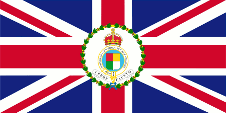
1886–1960,
Flagge des Gouverneurs,
Seitenverhältnis = 1:2,
Quelle, nach:
Flags of the World
Westindische Föderation (1958–1962):
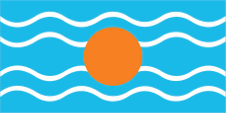
Flagge der Westindischen Föderation,
Seitenverhältnis = 1:2,
Quelle, nach: Flags of the World
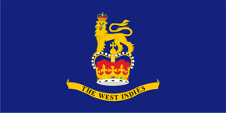
Flagge des Generalouverneurs,
Seitenverhältnis = 1:2,
Quelle, nach:
Flags of the World
Die Flagge von St. Lucia wurde – in ihrer Grundform – am 01.03.1967 für den assoziierten Staat eingeführt, und mit Erlangung der Unabhängigkeit am 22.02.1979 offiziell übernommen. Sie wurde von dem einheimischen Künstler Dunstan St. Omer entworfen und zeigt drei aufeinanderliegende Dreiecke in den Farben Gelb (heute: Orange/Gold), Schwarz und Weiß, auf blauem (heute: himmelblauem) Grund. Das Blau repräsentiert den Himmel und das Meer, das Dreiecksmuster die aus ihm aufsteigende Insel; eine stilisierte Darstellung des aus dem Meer aufsteigenden Doppelgipfel der beiden kegelförmigen Vulkane Gros Piton und Petit Piton an der Südwestküste des Landes. Gelb steht für Sonnenschein, Sandstrände und Wohlstand, während das Schwarz einerseits auf den vulkanischen Ursprung des Inselstaats verweist, andererseits stehen Weiß und Schwarz für die beiden Bevölkerungsgruppen. Bei Erlangung der Unabhängigkeit (1979) wurde der Aufbau der Flagge geringfügig geändert. Sie hat ab diesem Jahr das Format 1:2 und der stilisierte Berg ist spitzer und steiler, so dass sie heute im Seitenverhältnis 1:2 erscheint. Vorher betrug das Seitenverhältnis 5:8. Seit dem Jahre 2002 wird ein wesentlich helleres Blau (Himmelblau) als Farbe des Flaggentuchs verwendet. Die Farben sind wahrscheinlich nicht definiert.
Anfänglich war die Insel zwischen Frankreich und England/Großbritannien umstritten. Im Pariser Frieden von 1814, bekam Großbritannien die Insel offiziell zugesprochen, so das ab jenem Jahr die Flagge von Großbritannien unangefochten über den Inseln wehte, die zwischen 1838 und 1958 administrativ zur britischen Kolonie der Windward-Inseln gehörte. Die Windward-Inseln waren Teil des United Kingdom, hatten eine eigene Verwaltung und einen eigenen Gouverneur. An Land, bis 1864 auch zur See, repräsentierten der einzelne Bürger und auch die Behörden ihren Status als Bürger oder Organe des United Kingdom, durch die Verwendung des Union Jack, "Union Flag" genannt.
Großbritannien hatte in Jahr 1864 ein Flaggensystem eingeführt, in dem:
• Kriegsschiffe einen sogenannten "White Ensign" (Marineflagge), eine weiße Flagge oft mit durchgehendem roten Georgskreuz und mit dem Union Jack in der Oberecke,
• Handelsschiffe einen "Red Ensign" (auch "Civil Ensign" → Bürgerflagge genannt, die eigentl. Handelsflagge), eine rote Flagge mit dem Union Jack in der Oberecke, und
• Dienstschiffe einen "Blue Ensign" (Regierungsflagge → die eigentliche Staatsflagge), eine blaue Flagge mit dem Union Jack in der Oberecke führten.
Seit 1865 durften Schiffe von Kolonialregierungen einen Blue Ensign mit einem Badge (Abzeichen) im fliegenden Ende verwenden. Für alle anderen Zwecke war ab diesem Zeitpunkt an Land ausschließlich der britische Union Jack zu verwenden und zur See die übliche rote britische Handelsflagge, der "Red Ensign". Wenn die britische Admiralität der Kolonie die entsprechende Erlaubnis erteilt hatte, durften Handelsschiffe und private Seeleute dieser Kolonien einen Red Ensign mit dem Bagde führen. Dies war für die Windward-Inseln nicht der Fall. Die jeweiligen Regierungen sollten entsprechene Bagdes zur Verfügung stellen.
Ein solches Badge war oft eine auf einer Scheibe platzierte regionale landschaftliche Darstellung, zeigte oft Schiffe, historische Begebenheiten oder konnte auch nur eine Art Logo sein. Sehr oft zeigte ein Badge zusätzlich den Namen des Landes oder auch einen Wahlspruch. Einige Besitzungen hatten aber auch schon von Anfang an ein Wappen, bzw. erhielten über die Jahre eine eigenes Wappen und das Badge wurde abgeschafft. Um ein weitgehend einheitliches Erscheinungsbild im fliegenden Ende der Flaggen zu gewährleisten, wurden Wappen und auch andere Symbole auf einer weißen Scheibe in der Größe der früheren Badges dargestellt. Es gab hier aber auch Ausnahmen, denn einige Kolonien verwendeten diese weiße Scheibe nicht, und platzierten ihr Wappen oder auch nur das Wappenschild - manchmal auch vergrößert - direkt auf das Flaggentuch. Schon in den 40-er Jahren wurde dazu übergegangen die weißen Scheiben zu entfernen und das Wappen direkt zu platzieren oder vergrößert dazustellen. Dieser Umstellungsprozess erfolgte allmählich, nirgendwo gleichzeitig und vollständig. In einigen britischen Besitzungen sind bis heute Flaggen mit der weißen Scheibe in Gebrauch, in anderen nicht mehr und in einigen Gebieten gibt es beide Varianten nebeneinander. Die Windward-Inseln erhielten im Jahre 1886 ein eigenes Badge. Es zeigte einen vierfach geteilten Schild mit den Farben Rot, Gelb, Grün und Weiß, umgeben von einem weißen Gurt mit der Inschrift "Governor in Chief, Windward Islands", oberhalb die britische Krone. Unterhalb ein weißes Spruchband mit dem Motto der Inseln: "i pede fausto" → "Gehe mit gesegnetem Fuß".
Die einzelnen Kolonien der Windward-Inseln führten jedoch ihre eigenen "Blue Ensigns" mit einem eigenen Badge, lediglich der Gouverneur nutzte das Badge auf seiner Flagge. Ein "Blue Ensign" für die Windward-Inseln könnte dennoch existiert haben. Von 1875 bis 1939 verwendete die Regierung von St. Lucia, als britische Kolonie, die blaue britische Dienstflagge (Blue Ensign) mit einem Badge im wehenden Teil der Flagge. Das Badge zeigte auf einer Scheibe ein Bild der Soufriére-Bucht mit vier ankernden Schiffen und die beiden kegelförmigen Vulkane Gros Piton und Petit Piton. Unterhalb das damalige Motto der Insel: "Statio haud malefida carinis" → "Bei Schiffen ist Stillstand nichts Schlechtes". Zwischen 1939 und 1967 wurde als Badge das Wappenschild der Kolonie auf der Dienstflagge (Blue Ensign) verwendet.
Gleichzeitig war die Kolonie von 1958 bis 1962 Teil der Britischen Kolonie "Westindische Föderation", ein Versuch die Verwaltung zusammenzufassen und auch den Unabhängigkeitsbestrebungen der zugehörigen Inseln und Kolonien entgegenzuwirken. Die Flagge der "Westindische Föderation" war ein hellblaues Flaggentuch mit vier waagerechten weißen Wellenlinien und einer goldenen Scheibe in der Mitte. Sie symbolisierte die Sonne über der Karibischen See. Über den Farbton des Blau ist man sich im Zweifel, es wird oft das übliche Britische Heraldikblau angenommen. Eine Zeitgenössische Beschreibung nennt jedoch ein "kaiserliches Blau" was Hellblau wäre und auch viele zeitgenössische Drucke zeigen dieses helle Blau.
Am 27.02.1967 wurde von Großbritannien die innere Selbstverwaltung gewährt, und St. Lucia wurde ein autonomer, mit Großbritannien assoziierter Staat. In diesem Zusammenhang wurde die heutige Flagge eingeführt, welche die Tradition der "Blue Ensigns" beendete.
Quelle: Die Welt der Flaggen,
Flaggen Wappen Hymnen,
Flags of the World,
Wikipedia (EN),
Volker Preuß
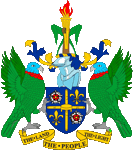
seit 1979,
Wappen von St. Lucia,
Quelle, nach: Corel Draw 4
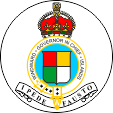
1886–1958,
Windward-Inseln,
Badge (Emblem, Abzeichen) der Windward-Inseln,
Quelle, nach: Flags of the World
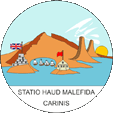
1875–1939,
Saint Lucia,
Badge (Emblem, Abzeichen) von St. Lucia,
Quelle, nach: Flags of the World
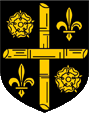
1939–1967,
Saint Lucia,
Wappenschild und Badge (Emblem, Abzeichen) von St. Lucia,
Quelle, nach: Flags of the World
Das Staatswappen wurde am 16.08.1939 verliehen, und mehrfach verändert; Am 01.03.1967, als St. Lucia ein assoziierter Staat wurde, und am 22.02.1979, als St. Lucia die Unabhängigkeit erlangte. Der Wappenschild ist geteilt durch ein schwebendes Kreuz aus Bambus, in den Quartieren zwei Rosen und zwei Lilien, die auf die britische und französische Kolonialherrschaft in der Vergangenheit verweisen. Als Schildhalter fungieren links und rechts des Schildes zwei grüne Papageien. Über dem Schild ein europäischer Helm mit einer üppigen Helmzier. In der Mitte, auf dem Helm, ein Menschenarm mit einer Fackel. Unterhalb des Wappenschildes das Spruchband mit dem Staatsmotto: "The Land, the People, the Light" → "Das Land, das Volk, das Licht".
Quelle:
Die Welt der Flaggen,
Flaggen Wappen Hymnen,
Wikipedia (EN),
Volker Preuß
Lage:
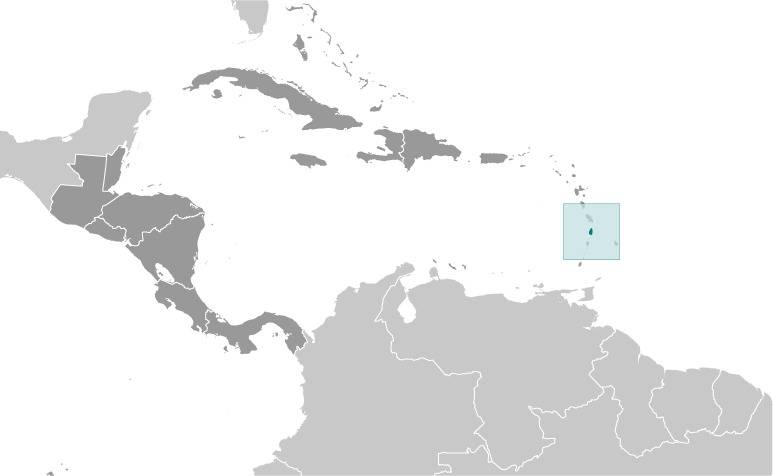
Quelle/Source: CIA World Factbook
Landkarte des Landes:
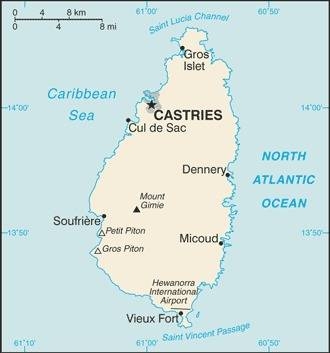
Quelle/Source: CIA World Factbook
Fläche: 616 km²
Einwohner: 178.696, davon 85% Schwarze, 11% Mulatten, 2% Inder, 1% Europäer
Religionen: 67% Katholiken, 10% Protestanten, 2% Rastafari, 2% Anglikaner
Bevölkerungsdichte: 290 Ew./km²
Hauptstadt: Castries, 3.661 Ew. (2010)
Amtssprache: Englisch
sonstige Sprachen: französisches Kreolisch
Währung: Ostkaribischer Dollar (XCD, EC-$) = 100 Cents
Zeitzone: MEZ – 5 h
Quelle:
Wikipedia (D)
wahrscheinliche Möglichkeiten der Entdeckung der Insel:
• 1499 · der spanische Seefahrer Juan de la Cosa entdeckt die Insel und nennt sie "El Falcon"
• 13. Dezember 1502 · der spanische Seefahrer Christoph Kolumbus entdeckt die Insel und nennt sie "Isla de Santa Lucia", die Insel wurde Spanischer Besitz, jedoch nicht kolonisiert
• 13. Dezember 1502 · am Gedenktag der Heiligen Lucia von Syrakus erleidet ein französischer Segler Schiffbruch, die überlebende Besatzung nennt die Insel nach der Heiligen Lucia ("Sainte Lucie"), dieser Tag ist heute der Nationalfeiertag
1600 · für einige Jahre niederländischer Stützpunkt
1605 · erste englische Besiedlung scheitert am Widerstand der Kariben auf der Insel
1639–1640 · zweite englische Besiedlung scheitert am Widerstand der Kariben auf der Insel
1647 · französische Besiedlung
1650 · es gelingt den Franzosen ihr Einflussgebiet auf der Insel auszudehnen
1650–1664 · St. Lucia ist französische Kolonie, Dezimierung der Kariben
1664–1667 · St. Lucia ist von England besetzt, Dezimierung der Kariben
1667–1803 · der Besitz der Insel wechselt sehr häufig zwischen Frankreich und England/Großbritannien, ebenso wurde sie in diesem Zeitraum zwei mal zum neutralen Gebiet erklärt, Dezimierung und Ausrottung der Kariben
1814 · der Britische Besitz der Insel wird vertraglich bestätigt
1838 · St. Lucia wird Kronkolonie
1838–1958 · Teil der Britischen Kolonie der Windward-Inseln
1958–1962 · Teil der Britischen Kolonie "Westindische Föderation"
27.02.1967 · Großbritannien gewährt innere Selbstverwaltung (Autonomie als mit Großbritannien assoziierter Staat)
22.02.1979 · Großbritannien gewährt die Unabhängigkeit im Rahmen des Commonwealth of Nations
Quelle:
Atlas zur Geschichte,
World Statesmen,
Wikipedia (EN)
Den Namen "St. Lucia" erhielt diese Insel entweder von Kolumbus oder von französischen Schiffbrüchigen am Tag der Heiligen Lucia im Jahre 1502 verliehen. Die Heilige Lucia lebte in etwa zwischen 285 und 310 in Syrakus auf Sizilien. Sie starb einen grausamen Märtyrertod für ihren Glauben. Sie gilt als die Patronin des Lichtes.
Quelle: Wikipedia (EN)