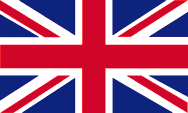
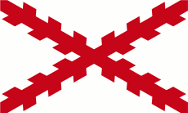
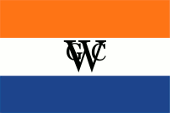
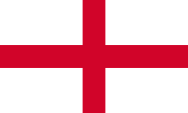
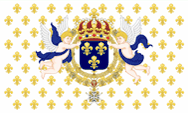
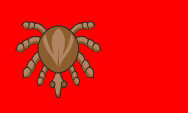
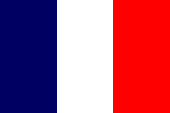
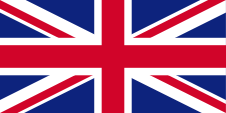
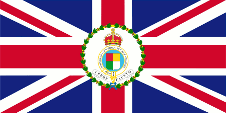
In der sehr bewegten Geschichte der Insel wechselten deren Besitzer oft, und damit die hier verwendeten Flaggen. Zuletzt hatte sich Großbritannien im Jahre 1803 den Besitz der Insel gesichert, so das ab jenem Jahr die Flagge von Großbritannien unangefochten über der Insel wehte, die zwischen 1838 und 1889 administrativ zur britischen Kolonie der Windward-Inseln gehörte. Die Windward-Inseln waren Teil des United Kingdom, hatten eine eigene Verwaltung und einen eigenen Gouverneur. An Land, bis 1864 auch zur See, repräsentierten der einzelne Bürger und auch die Behörden ihren Status als Bürger oder Organe des United Kingdom, durch die Verwendung des Union Jack, "Union Flag" genannt.
Großbritannien hatte in Jahr 1864 ein Flaggensystem eingeführt, in dem: • Kriegsschiffe einen sogenannten "White Ensign" (Marineflagge), eine weiße Flagge oft mit durchgehendem roten Georgskreuz und mit dem Union Jack in der Oberecke, • Handelsschiffe einen "Red Ensign" (auch "Civil Ensign" → Bürgerflagge genannt, die eigentl. Handelsflagge), eine rote Flagge mit dem Union Jack in der Oberecke, und • Dienstschiffe einen "Blue Ensign" (Regierungsflagge → die eigentliche Staatsflagge), eine blaue Flagge mit dem Union Jack in der Oberecke führten.
Seit 1865 durften Schiffe von Kolonialregierungen einen Blue Ensign mit einem Badge (Abzeichen) im fliegenden Ende verwenden. Für alle anderen Zwecke war ab diesem Zeitpunkt an Land ausschließlich der britische Union Jack zu verwenden und zur See die übliche rote britische Handelsflagge, der "Red Ensign". Wenn die britische Admiralität der Kolonie die entsprechende Erlaubnis erteilt hatte, durften Handelsschiffe und private Seeleute dieser Kolonien einen Red Ensign mit dem Bagde führen. Dies war für Tobago und auch die Windward Inseln nicht der Fall. Die jeweiligen Regierungen sollten entsprechende Bagdes zur Verfügung stellen.
Ein solches Badge war oft eine auf einer Scheibe platzierte regionale landschaftliche Darstellung, zeigte oft Schiffe, historische Begebenheiten oder konnte auch nur eine Art Logo sein. Sehr oft zeigte ein Badge zusätzlich den Namen des Landes oder auch einen Wahlspruch. Einige Besitzungen hatten aber auch schon von Anfang an ein Wappen, bzw. erhielten über die Jahre eine eigenes Wappen und das Badge wurde abgeschafft. Um ein weitgehend einheitliches Erscheinungsbild im fliegenden Ende der Flaggen zu gewährleisten, wurden Wappen und auch andere Symbole auf einer weißen Scheibe in der Größe der früheren Badges dargestellt. Es gab hier aber auch Ausnahmen, denn einige Kolonien verwendeten diese weiße Scheibe nicht, und platzierten ihr Wappen oder auch nur das Wappenschild - manchmal auch vergrößert - direkt auf das Flaggentuch. Schon in den 40-er Jahren wurde dazu übergegangen die weißen Scheiben zu entfernen und das Wappen direkt zu platzieren oder vergrößert dazustellen. Dieser Umstellungsprozess erfolgte allmählich, nirgendwo gleichzeitig und vollständig. In einigen britischen Besitzungen sind bis heute Flaggen mit der weißen Scheibe in Gebrauch, in anderen nicht mehr und in einigen Gebieten gibt es beide Varianten nebeneinander.
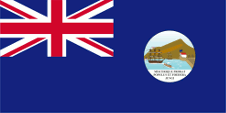
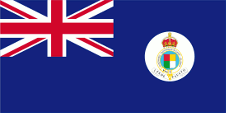
Die Windward-Inseln erhielten im Jahre 1886 ein eigenes Badge. Es zeigte einen vierfach geteilten Schild mit den Farben Rot, Gelb, Grün und Weiß, umgeben von einem weißen Gurt mit der Inschrift "Governor in Chief, Windward Islands", oberhalb die britische Krone. Unterhalb ein weißes Spruchband mit dem Motto der Inseln: "i pede fausto" → "Gehe mit gesegnetem Fuß". Die einzelnen Kolonien der Windward-Inseln führten jedoch ihre eigenen "Blue Ensigns" mit einem eigenen Badge, lediglich der Gouverneur nutzte das Badge auf seiner Flagge. Ein "Blue Ensign" für die Windward-Inseln könnte dennoch existiert haben.
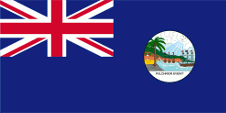
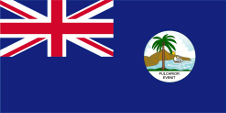
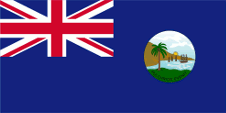
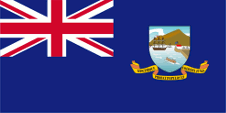
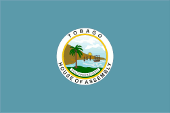
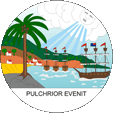
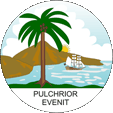
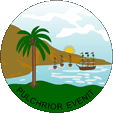
Ab 1877 verwendete die Regierung von Tobago, als britische Kolonie, die blaue britische Dienstflagge (Blue Ensign) mit einem Badge im wehenden Teil der Flagge. Das 1877 eingeführte Badge zeigte eine gebirgige Küstenlandschaft mit einer Ortschaft und Feldern, in den Küstengewässern liegen vier Schiffe (3 davon drei im Hintergrund) mit gerefften Segeln auf der Reede. Im Vordergrund steht eine Palme. Der untere Teil der Scheibe zeigt das Motto der Insel auf einer weißen Fläche: "Pulchrior evenit" → "Sie wird immer schöner". Das Badge wurde wahrscheinlich 1880 abgeändert, es zeigte jetzt die Landschaft ohne eine Ortschaft aber mit einer aufgehenden Sonne, lediglich ein Segelschiff unter vollen Segeln an der Küste und im Vordergrund die Palme und unten wieder das Motto. Im Jahre 1889 – es ist das Jahr in dem Tobago der Verwaltung von Trinidad unterstellt wurde – wurde noch mal ein neues Badge eingeführt. Es zeigte jetzt die Landschaft ohne eine Ortschaft aber wieder mit einer aufgehenden Sonne, in den Küstengewässern liegen vier Schiffe (3 davon drei im Hintergrund) mit gerefften Segeln auf der Reede. Im Vordergrund erscheint wieder die Palme und unten wieder das Motto. Das Badge erscheint seit 1980 in der Flagge des Abgeordnetenhauses des mittlerweile autonomen Tobago.
Das 1877 eingeführte Badge zeigte eine gebirgige Küstenlandschaft mit einer Ortschaft und Feldern, in den Küstengewässern liegen vier Schiffe (3 davon drei im Hintergrund) mit gerefften Segeln auf der Reede. Im Vordergrund steht eine Palme. Der untere Teil der Scheibe zeigt das Motto der Insel auf einer weißen Fläche: "Pulchrior evenit" → "Sie wird immer schöner". Das Badge wurde wahrscheinlich 1880 abgeändert, es zeigte jetzt die Landschaft ohne eine Ortschaft aber mit einer aufgehenden Sonne, lediglich ein Segelschiff unter vollen Segeln an der Küste und im Vordergrund die Palme und unten wieder das Motto. Im Jahre 1889 – es ist das Jahr in dem Tobago der Verwaltung von Trinidad unterstellt wurde – wurde noch mal ein neues Badge eingeführt. Es zeigte jetzt die Landschaft ohne eine Ortschaft aber wieder mit einer aufgehenden Sonne, in den Küstengewässern liegen vier Schiffe (3 davon drei im Hintergrund) mit gerefften Segeln auf der Reede. Im Vordergrund erscheint wieder die Palme und unten wieder das Motto. Das Badge erscheint seit 1980 in der Flagge des Abgeordnetenhauses des mittlerweile autonomen Tobago.
04.08.1498 · die Insel wird wahrscheinlich von Kolumbus entdeckt und für Spanien Spanien in Besitz genommen, Kolumbus nennt sie "Bella Forma", nach anderen Quellen "Isla de la Asunción"
1502 · die spanischen Seefahrer Alonzo de Ojeda und Juan de la Cosa besuchen die Insel und nennen sie "Isla La Magdalena", dann wird die Insel "Tavaco" genannt, später "Tabagua" und schließlich "Tobago", es erfolgt keine kontinuierliche spanische Besiedelung und Kolonisation
1628–1636 · Niederländische Kolonie "Nieuw Walcheren", betrieben durch die Niederländische Westindien-Kompanie
1654–1659 · das Herzogtum Kurland betreibt die Kolonie "Neu Kurland" im Nordwesten der Insel
1680–1693 · das Herzogtum Kurland betreibt erneut die Kolonie "Neu Kurland"
1748 · Tobago wird zum Neutralen Gebiet erklärt
1763 · Großbritannien erwibt Tobago mit dem Pariser Vertrag
1764–1781 · Tobago ist eine eigenständige britische Kolonie
1781–1793 · Tobago ist eine französische Kolonie
1793 · Großbritannien besetzt Tobago
1802–1803 · Tobago ist eine französische Kolonie
1803 · Tobago wird eine britische Kronkolonie
1833–1889 · Tobago ist Teil der britischen Kolonie der Windward-Inseln
01.01.1889 · Tobago wird der Verwaltung von Trinidad unterstellt
01.01.1899 · Tobago wird mit Trinidad zur Kolonie Trindad und Tobago vereinigt
1959 · die Insel Tobago erhält eine eigene Verwaltungsabteilung, ab 1964 ein Ministerium, hat ab 1977 einen eigenständigen Teil der Zentralverwaltung
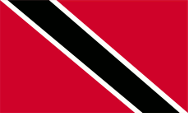
31.08.1962 · Großbritannien gewährt Trindad und Tobago die Unabhängigkeit im Rahmen des Commonwealth of Nations, das Land wird konstitutionelle Monarchie unter dem britischen Monarchen als Staatsoberhaupt
1980 · die Insel Tobago erhält Autonomie, Bildung des Tobago House of Assembly
Tobago wurde im Jahre 1498 durch den spanischen Seefahrer Christoph Kolumbus entdeckt. Er nannte sie "Bella Forma" (die Wohlgeformte), nach anderen Quellen "Isla de la Asunción" (Himmelfahrtsinsel). Nur wenige Jahre später wurde sie "Isla La Magdalena" genannt (Magdaleneninsel). Später hatte die Insel viele Namen, je nach ihrem jeweiligen Besitzer. So auch "Nieuw Walcheren" oder "Neukurland". Die Franzosen und Briten nannten sie "Tobago". Der Name geht auf das Wort Tabak zurück. Angeblich geht auch der Ursprung dieses Inselnamens auf Kolumbus zurück, weil er beobachtet hatte, dass die Kariben Tobacco-Blätter in einer Tambaku rauchten, und er habe der Insel darauf hin diesen Namen gegeben.