|
|
| Übersicht Contents: | |
| Flaggen Flags: | ||
|
||
|
||
| historische Flaggen historical Flags: |
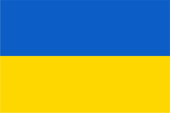
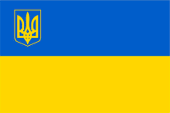
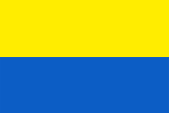
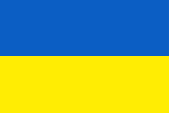
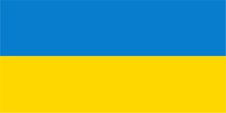
| Die heutige Flagge der Ukraine wurde erstmals am 29.04.1918 eingeführt, und am 21.01.1992 erneut angenommen. Sie zeigt zwei waagerechte Streifen in Blau und Gelb. Das helle Blau steht für den Himmel und das Goldgelb für die Weizenfelder des Landes. Gelb und Blau sind die Nationalfarben der Ukraine. Sie haben ihre Wurzeln in einem sehr alten Wappen von Galizien, das einen goldenen Löwen auf blauem Grund zeigte. Eine Flagge mit dieser Symbolik wurde im Jahr 1848 angenommen und auf dem Slawenkongress in Prag gezeigt. | The todays flag of Ukraine was introduced for the first time on 29th of April in 1918, and re-introduced on 21st of January in 1992. It shows two horizontal stripes in blue and yellow. The pale blue stands for the heaven and the golden yellow for the wheat fields of the country. Yellow and blue are the national colours of Ukraine. They have their roots in a very old coat of arms of Galicia, which showed a golden lion on blue ground. A flag with this symbolism was adoped in the year 1848 and became showed on the Slavic congress in Prague. |
| Nach der Russischen Revolution von 1905 tauchten in der Ukraine blau-gelbe und gelb-blaue Streifenflaggen auf. | After the Russian revolution of 1905 arised in the Ukraine blue-yellow and yellow-blue striped flags. |
| Nach der Bauernrevolte von 1917 wurde offiziell eine gelb-blaue Streifenflagge angenommen. Sie zeigte sie Streifen in der heraldisch korrekten Reihenfolge, Gelb über Blau. | After the farmer's revolt of 1917 was officially adoped a yellow-blue striped flag. It showed the stripes in the heraldic correct sequence, yellow over blue. |
| Nach einem Putsch im Jahre 1918 wurden die Farben umgedreht, und damit die heutige Flagge angenommen. | After a coup détat in the year 1918 the colours became inverted and in this way was adoped the todays flag. |
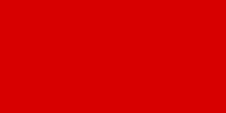
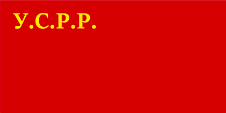
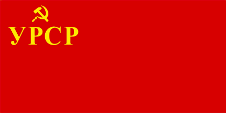
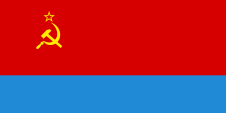
| Nachdem die russischen Bolschewisten die Ukraine im Jahre 1921 erobert hatten, wurde umgehend eine Ukrainische Sowjetrepublik gegründet, die 1922 Gründungsmitglied der Sowjetunion wurde. Sie verwendete die typischen roten Flaggen mit den Initialen der Sowjetrepublik in der Oberecke, ab 1937 ergänzt um Hammer, Sichel und Stern. Im Jahre 1949 wurde eine neue Flagge für die Ukrainische Sowjetrepublik angenommen. Sie zeigte zwei waagrechte Streifen in Rot und Blau im Verhältnis 2:1 und in der Oberecke des großen roten Feldes Hammer, Sichel und Stern. | After the Russian bolschevists
conquered the Ukraine in the year 1921, was immediately established an Ukrainian soviet
republic, which became founding component of the Soviet Union in 1922. It used the typical
red flags with the initials of the soviet republic in the upper staff quadrant, since 1937
completed by hammer, sickle and star. In the year 1949 was adoped a new flag for the Ukrainian Soviet Republic. It showed two horizontal stripes in red and blue in ratio 2:1 and in the upper staff quadrant of the big red field hammer, sickle and star. |
| Nach dem Ende der Sowjetunion im Jahr 1991 tauchte die blau-gelbe Fahne wieder auf und sie wurde am 21.01.1992 offiziell wieder eingefürt. | After the end of the Soviet Union in 1991 arised the blue-yellow flag again and it became officially re-introduced on 21st of January in 1992. |
| Wappen Coat of Arms: | ||
|
||
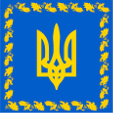
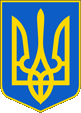
| Das kleine Staatswappen der Ukraine zeigt einen blauen goldumrandeten Schild mit einem gelben Dreizack (ukrain.: Trizub). Dieses Symbol wurde schon um das Jahr 1000 auf Münzen der Kiewer Rus verwendet. Der Dreizack gilt als umstritten, daher wurde er auf Erlass des Präsidenten im Jahre 1992 nur für das kleine Wappen angenommen. Ein großes Wappen wurde bisher jedoch nicht eingeführt. | The small coat of arms of
Ukraine shows a blue golden bordered shield with a yellow trident (ukrain.: Trizub). This
symbol was already in use on coins of the Rus of Kiev about the year 1000. The trident is disputed, from there was it adoped only for the small coat of arms by decree of the president in the year 1992. A big coat of arms hitherto was not introduced. |
| Zahlen und Fakten Numbers and Facts: | |
|
|
|
|
|
|
|
|
|
|
|
|
|
|
| Landkarte Map: |
|
|
| Antike · Stämme der Ostslawen
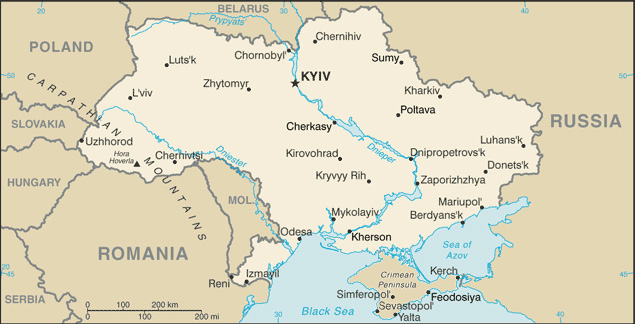
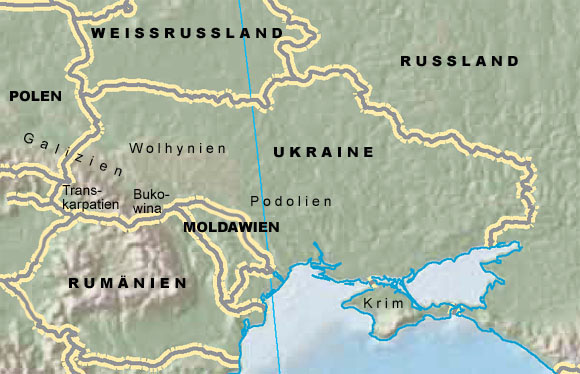
siedeln aus dem nördlichen Karpatenraum kommend im Raum nördlich des Schwarzen Meeres an ab 800 · Schwedische Normannen, sogenanne Waräger, dringen über die Flüsse Memel (Neman), Westliche Dwina, Newa und Wolchow in Siedlungsraum der Ostslawen vor 862 · der Waräger Rjurik erobert die Stadt Nowgorod, der hiesige slawische Stamm der Slowenen erhebt Rjurik zum "Fürsten von Nowgorod", dieser begründet so die Nowgoroder Rus, einen normannischen Feudalstaat, und die bis 1598 herrschende Rjurik-Dynastie 862880 · die Waräger erreichen den Dnjepr und dringen nach Süden vor ca. 882 · die Waräger Askold und Dir erobern Kiew und gründen die Kiewer Rus, einen weiteren normannischen Feudalstaat, der Waräger Oleg, Nachfolger von Rjurik, strebt die Vereinigung von Nowgorod und Kiew an 882 · Vereinigung von Kiew und Nowgorod, Gründung des Kiewer Reichs 911 · Oleg dringt entlang des Dnjepr bis zum Schwarzen Meer vor und belagert erfolgreich Konstantinopel, die Hauptstadt des Byzantinischen Reiches, Abschluss eines Handelsvertrages mit Byzanz 962973 · Herrschaft des Swjatoslaw im Kiewer Reich, Feldzüge gegen die slawischen Stämme der Wjatitschen, Wolynier und Drewljanen, sowie gegen Chasaren und Wolgabulgaren 988 · Wladimir der Heilige führt das Christentum ein 10191054 · Herrschaft von Jaroslaw dem Weisen, das Kiewer Reich entfaltet seine größte Macht und Ausdehnung, im Norden bis an das Weiße Meer, im Osten bis zur Nördlichen Dwina, Suchona, Wolga, Oka, Don, im Süden bis an das Schwarze Meer, im Westen bis zu den Karpaten und fast bis zur Weichsel, sowie bis zur heutigen Ostgrenze der Baltischen Staaten ca. 10501150 · die Kumanen Erobern den Süden des Kiewer Reiches, Verlust des Zugangs zum Schwarzen Meer, Niedergang des Handels, beginnender Zerfall des Reiches ca. 1150 · das Kiewer Reich zerfällt in mehrere Staaten, die wichtigsten: Fürstentum Wladimir-Wolynien im Westen, Rus von Nowgorod im Nordwesten, und Fürstentum Wladimir-Susdal im Nordosten, Galitsch und Kiew im Süden, Murom-Rjasan im Osten 1237 · Ankunft der Mongolen, Fall von Rjasan 12371238 · Eroberung von Wladimir-Susdal durch die Mongolen 1240 · Eroberung von Kiew, Wladimir-Wolynien und Galitsch durch die Mongolen 13501365 · Eroberung von Wolhynien, Polodlien, Galitsch (Galizien) und Kiew (Ukraine) durch Polen 1648 · Aufstände gegen die polnische Herrschaft, Gründung eines ukrainischen Kosakenstaates 1654 · die Ost-Ukraine wird von Polen and Russland abgetreten und wird eine russische Provinz 1772 · Erste Polnische Teilung, um dem wachsenden russischen Einfluss im Polnischen Staat entgegenzuwirken, sichern Österreich und Preußen weite polnische Gebiete vor dem russischen Zugriff durch deren Annexion, Preußen annektiert Westpreußen, Ermland, Pommerellen (ohne Danzig), das Kulmer Land, das nördliche Kujawien und das Netzegebiet, Österreich annektiert Galizien, die südlichen Teile der Wojewodschaften Krakau und Sandomir, die Wojewodschaft Reussen mit Lemberg, Rußland annektiert alles polnische Territorium östlich der Düna und des Dnjepr, in der Folgezeit erreichen die Zustände im Land eine deutliche Besserung, jedoch ruft die Magnatenkonföderation (Adelsversammlung) von Targowitza im Jahre 1792 russische Hilfe ins Land 1793 · Zweite Polnische Teilung, um erneut dem wachsenden russischen Einfluss im Polnischen Staat entgegenzuwirken, sichert Preußen weitere polnische Gebiete vor dem russichen Zugriff durch deren Annexion, Preußen annektiert Großpolen (Südpreußen) und Danzig), Rußland annektiert die Ukraine, Ost-Polesien und Ost-Wolynien, daraufhin kommt es 1794 zum nationalen Volksaufstand unter Tadeusz Kosciuszko, der sich vor allem gegen die Russen und den pro-russischen Adel richtete, erneuter politischer, wirtschaftlicher und kultureller Verfall 1795 · Dritte Polnische Teilung, um dem weiter wachsenden russischen Einfluss in Polen entgegenzuwirken, sichern Österreich und Preußen wiederum weite polnische Gebiete vor dem russichen Zugriff durch deren Annexion, Preußen annektiert Neuostpreußen (Masowien und Teile Litauens), Österreich annektiert Kleinpolen (West-Galizien), Rußland annektiert alles verliebene polnische Territorium (West-Polesien und West-Wolynien, Litauen und Kurland), die Existenz des polnischen Staats war damit beenedet 12.03.1917 · bürgerliche "Februarrevolution" in Russland 15.03.1917 · Abdankung des Zaren Nikolaus II., Ende der Monarchie, Bildung einer provisorischen Regierung der Republik Russland unter Fürst Georgij Jewgenjewitsch Lwow, später unter Alexander Fjodorowitsch Kerenskij März 1917 · anarchistischer Bauern-Putsch in der Ukraine, sie löst sich von Russland und erklärt ihre Unabhängigkeit 07.11.1917 · bolschewistischer Putsch in Russland ("Oktoberrevolution"), Kommunisten unter W.I.Lenin ergreifen die Macht Februar bis Mai 1918 · Erster Weltrieg (19141918), da die Bolschewisten die Unterzeichnung des Friedens von Brest-Litowsk verzögerten, besetzten deutsche und österreichische Truppen große Teile Weißrusslands, der Ukraine und Russlands, in etwa bis zu den Flüssen Don, Donez, Sejm, Dnjepr und Welikaja 29.04.1918 · Militärputsch in der Ukraine 11.11.1918 · Ende des Ersten Weltkriegs, die deutschen und österreichischen Truppen ziehen sich aus der Ukraine zurück 1921 · Krieg Sowjetrusslands gegen die Ukraine, Errichtung der Sowjetmacht, Deportationen nach Sibirien, die Ukraine wird zur Ukrainischen Sozialistischen Sowjetrepublik 30.12.1922 · Gründung der Sowjetunion (UdSSR), Zusammenschluss der Sowjetrepubliken von Russland (RSFSR), Weißrussland, der Ukraine und der Transkaukasischen Föderation 19321933 · Kollektivierung der Landwirtschaft, Hungersnot, Tod von ca. 3,5 Millionen Ukrainern (Holodomor) 19411944 · im Zweiten Weltkrieg von deutschen Truppen besetzt, Ukrainer kämpften in großer Zahl innerhalb der Sowjetischen Truppen gegen die Deutschen, jedoch erhofften sich einige Ukrainer (ca. 300.000) eine Befreiung von Russland und vom Bolschewismus und kämpften in den Reihen der Deutschen Wehrmacht, oder Spezialeinheiten auf der Seite des Deutschen Reiches 24.10.1945 · Gründungsmitglied den Vereinten Nationen (UNO) 19441947 · Vertreibung fast aller Polen aus der Ukraine (ca. 1 000 000), Ansiedlung von aus Polen vertriebenen Ukrainern (ca. 400 000) 19441947 · Anti-Sowjetischer Partisanenkrieg 1954 · die Halbinsel Krim wird der Ukraine angegliedert 16.07.1990 · die Ukraine erklärt ihre Souveränität 24.08.1991 · die Ukraine erklärt ihre Unabhängigkeit 08.12.1991 · Russland, die Ukraine und Weißrussland gründen die Gemeinschaft Unabhängiger Staaten (GUS) 21.12.1991 · Beitritt aller ehemaligen Sowjetrepubliken der UdSSR zur GUS (außer Georgien), endgültiges Ende der Sowjetunion 1994 · Wahlen, Sonderstatus für die Krim 1996 · Verfassung für die Krim, sie wird autonome Republik |
| antiquity · tribes of the
Eastern Slavs settle coming from the Northern Carpathian Area in the region
northern the Black Sea since 800 · Swedish Normans, so named Varegers, invade over the rivers Memel (Neman), Western Dvina, Neva and Volchov into the environment of the Eastern Slavs 862 · the Vareger Rjurik conquers the town of Nowgorod, the local Slavonic tribe of the Slovenes elevates Rjurik to the "Prince of Novgorod", that establishes in this way the Rus of Novgorod, a Norman feudal state, and the until 1598 ruling Rjurik Dynasty 862880 · the Varegers reach the Dnjepr River and advance to south ca. 882 · the Varegers Askold and Dir conquer Kiev and establish the Rus of Kiev, a further Norman feudal state, the Vareger Oleg, successor of Rjurik, aims for the unification of Novgorod and Kiev 882 · unification of Kiev and Novgorod, establishment of the Empire of Kiev 911 · Oleg advances along Dnjepr River to the Black Sea and beleaguered successfully Constantinople the capital of the Byzantian Empire, making of a trade treaty with Byzantium 962973 · reign of Svjatoslav in the Empire of Kiev, campaigns against the Slavonic tribes of the Vjatitshes, Wolynians and Drevljans, as well as against Chasars and Volga Bulgarians 988 · Vladimir the Saint introduces the Christianity 10191054 · reign of Yaroslav the Wise, the Empire of Kiev evolves its greatest power and dilation, in the north to the White Sea, in the East to the rivers Northern Dvina, Sukhona, Volga, Oka, Don, in the south to the Black Sea, in the west to the Carpathia Mountains and nearly to the Weichsel River, as well as to the todays eastern border of the Baltic states ca. 10501150 · the people of Kumans conquers the south of the Empire of Kiev, loss of accession to the Black Sea, decay of trading, beginning disintegration of the empire ca. 1150 · the Empire of Kiev disintegrates in several states, the most important: Principality of Vladimir-Wolynia in the west, Rus of Novgorod in the northwest, and Principality of Vladimir-Susdal in the northeast, Galitsh and Kiev in the south, Murom-Rjasan in the east 1237 · arrival of the Mongols, fall of Rjasan 12371238 · conquest of Vladimir-Susdal by the Mongols 1240 · conquest of Kiew, Wladimir-Wolynia and Galitsh by the Mongols 13501365 · conquest of Wolynia, Polodlia, Galitsh (Galicia) and Kiev (Ukraine) by Poland 1648 · riotings against the Polish rule, establishment of an Ukrainian Cossack state 1654 · the Eastern Ukraine becomes ceded from Poland to Russia and becomes a Russian province 1772 · First Polish Division, to counteract the growing Russian influence in the Polish state protect Austria and Prussia broad Polish territories against the Russian pounce by its annexation, Prussia annexes West Prussia, Ermland, Pommerellen (without Danzig), the Kulm Country, the northern Kuyavia and the Netze Area, Austria annexes Galicia, the southern parts of the Districts of Krakau and Sandomir, the District of Reussen with Lemberg, Russia annexes all Polish territory eastern the Duena River and the Dnjepr River, in the afteryears the conditions in the country become conspicuously better, but the Confederation of Magnats (nobilitie's assembly) of Targowica in the year 1792 calls for Russian support 1793 · Second Polish Division, to counteract the growing Russian influence in the Polish state again protects Prussia once more broad Polish territories against the Russian pounce by its annexation, Prussia annexes Great Poland (South Prussia) and Danzig, Russia annexes the Ukraine, Eastern Polesia and Eastern Wolynia, as a result of that in 1794 occurs the national people's revolt under Tadeusz Kosciuszko which was especially orientated against the Russians and the pro-Russian aristocracy, once more political, economical and cultural decline 1795 · Third Polish Division, to counteract the more growing Russian influence in the Polish state again protect Prussia ans Austria once more broad Polish territories against the Russian pounce by its annexation, Prussia annexes New East Prussia (Masovia and parts of Lithuania), Austria annexes Little Poland (Western Galicia), Russia annexes all the remained Polish territory (Western Polesia and Western Wolynia, Lithuania and Kurland), the existence of the Polish state finished 12th of March 1917 · civil "Februar Revolution" in Russia 15th of March 1917 · resignation of Tsar Nikolaus II., end of monarchy, formation of a provisional government of the Republic of Russia under Prince Georgij Jevgenyewitsh Lvov, later under Alexander Fyodorowitsh Kerenskij March 1917 · anarchistic farmer's revolt in Ukraine, it separates from Russia and declares its independence 7th of November 1917 · bolshevist coup détat ("October Revolution"), communists under W.I.Lenin seize the Power February to May 1918 · First World War (19141918), because the Bolshevists retarded the signing of the Peace of Brest-Litovsk, German and Austro-Hungarian troops occupied large parts of Belarus, Ukraine and Russia, ca. to the rivers Don, Donez, Sejm, Dnjepr and Velikaya 29th of May 1918 · military coup détat in the Ukraine 11th of November 1918 · end of the First World War, the German and Austrian troops withdraw from Ukraine 1921 · war of Soviet Russia against Ukraine, estblishment of the Soviet power, deportations to Sibiria, the Ukraine becomes the Ukrainian Socialistic Soviet Republic 30th of December 1922 · foundation of the Soviet Union (USSR), combination of the Soviet Republics of Russia (RSFSR), Belarus (White Russia), Ukraine and of the Transcaucasian Federation 19321933 · collectivization of farming, famine, death of ca. 3,5 millions of Ukrainians (Holodomor) 19411944 · occupied by German troops in the Second World War, Ukrainian fight in large numbers within the Soviet troops against the Germans, but some Ukrainians (ca. 300.000) hoped for a liberation from Russia and from the bolshevism and fought within the lines of the German War Might, or within special units by the hands of the German Empire 24th of October 1945 · Founding component of the United Nations (UNO) 19441947 · expulsion of nearly all Polish out of the Ukraine (ca. 1 000 000), settlement of from Poland expulsed Ukrainians (ca. 400 000) 19441947 · anti-soviet partisan war 1954 · Crimea peninsula becomes annexed to Ukraine 16th of July 1990 · the Ukraine declares its sovereignty 24th of August 1991 · the Ukraine declares its independence 8th of December 1991 · Russia, Ukraine and Belarus (White Russia) establish the Commonwealth of Independent States (CIS) 21st of December 1991 · joining of all former Soviet Republics of the USSR to the CIS (except Georgia), irrevocable end of the Soviet Union 1994 · elections, special status for Crimea 1996 · constitution for Crimea, it becomes an autonomous republic |
| Der Name der Ukraine leitet sich ab von der russischen Redewendung "u kraijna", was "an der Grenze" heißt. Die Ukraine ist das "Grenzland". | The name Ukraine is derived from the Russian expression "u kraijna", what means "at the border". The Ukraine is the "border land". |