mobile Ansicht, to the English Version tap the flag

- parlamentarische Republik
- Eigenbezeichnung: Magyarország
• Flaggen
• inoffizielle Flaggen
• historische Flaggen und Wappen von der Protoheraldik bis zum 19. Jahrhundert
• historische Flaggen - Österreich-Ungarn
• historische Flaggen ab 1919
• Bedeutung/Ursprung der Flagge
• Wappen
• historische Wappen
• Bedeutung/Ursprung des Wappens
• Flugzeugkokarde
• Landkarte
• Zahlen und Fakten
• Geschichte
• Ursprung des Landesnamens
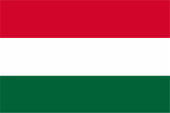
National- und Handelsflagge,
Seitenverhältnis = 2:3,
Quelle, nach: Wikipedia (D)


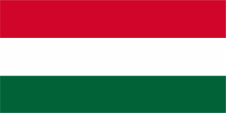
Staatsflagge,
Seitenverhältnis = 1:2,
Quelle, nach: Wikipedia (D)


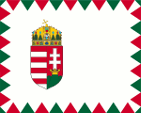
Kriegsflagge,
Seitenverhältnis = 3:4,
Quelle, nach: Flags of the World
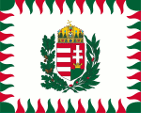
Truppenfahne,
Seitenverhältnis = 3:4,
Quelle, nach: Flags of the World

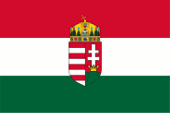
inoffizielle Nationalflagge,
Seitenverhältnis = 2:3,
Quelle, nach: Foto, news.cgtn.com
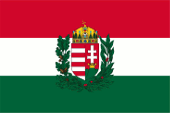
inoffizielle Nationalflagge,
Seitenverhältnis = 2:3,
Quelle, nach: Foto, www.gettyimages.ch
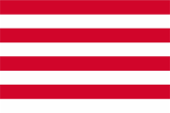
"Arpad-Flagge",
inoffizielle Nationalflagge
Seitenverhältnis = 2:3,
Quelle, nach: Foto, www.alamy.com
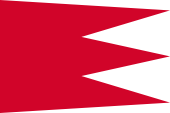
Rechteckige Flaggen, wie wir sie kennen, sind meist Produkte der Neuzeit. Im Mittelalter waren Fahnen oft anders geformt, zeigten die Form eines Wappens, waren quadratisch oder trugen Schwänze. Sie symbolisierten keine Nation, sondern zeigten das Bild des Wappens des Herrschers auf einem Fahnentuch. So auch in Ungarn.
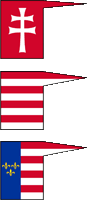
10. Jahrhundert,
Fürst Arpad,
in modernem Zuschnitt
Quelle, nach: Flaggen Wappen Hymnen
9. Jahrhundert bis 1301,
Arpad-Dynastie,
in modernem Zuschnitt,
Quelle, nach: Flags of the World
11. Jahrhundert,
König Stephan,
in modernem Zuschnitt,
Quelle, nach: Flags of the World
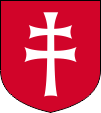
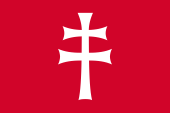
ab ca. 1172,
König Bela III.,
in modernem Zuschnitt,
Quelle, nach: Flags of the World
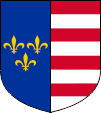
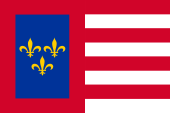
1301–1382,
Haus Anjou,
in modernem Zuschnitt,
Quelle, nach: Flags of the World
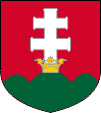
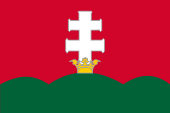
14. Jahrhundert,
Ungarn,
in modernem Zuschnitt,
Quelle, nach: Wikipedia (D)
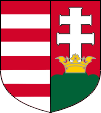
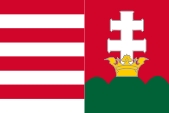
15.-17. Jahrhundert,
Ungarn,
in modernem Zuschnitt,
Quelle, nach: Wikipedia (D)
18. Jahrhundert,
Ungarn,
Quelle, nach: Flaggen und Wappen der Welt
1848/1849,
Republik Ungarn,
Quelle, nach: Wikipedia (D)
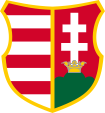
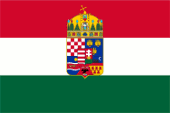
1867–1908,
Königreich Ungarn,
Seitenverhältnis = 2:3 (?),
Quelle, nach: Wikipedia (D)
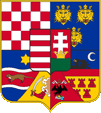
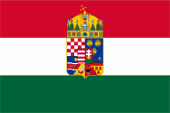
1908–1918,
Königreich Ungarn,
Seitenverhältnis = 2:3,
Quelle, nach: Wikipedia (D)
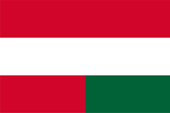
1869–1918, Österreich-Ungarn,
Landesfarben,
Seitenverhältnis = 2:3,
Quelle, nach: World Statesmen

1908–1918, Königreich Ungarn,
Flagge des Königreichs Ungarn,
Seitenverhältnis = 2:3,
Quelle, nach: Wikipedia (D)
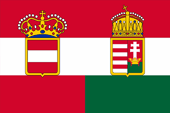
1869–1918, Österreich-Ungarn,
Handelsflagge,
Seitenverhältnis = 2:3,
Quelle, nach: Flags of the World
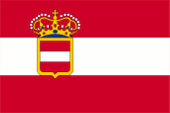
1894–1915, Österreich-Ungarn,
Marine- und Kriegsflagge,
Seitenverhältnis = 2:3,
Quelle, nach: Flaggenbuch, Reichs-Marine-Amt, Berlin, 1905
via: zeljko-heimer-fame.from.hr
1918–1949,
Nationalflagge,
Seitenverhältnis = 2:3,
Quelle, nach: World Statesmen
1919–1944,
Staatsflagge,
Seitenverhältnis = 2:3,
Quelle, nach: Jürgen Kaltschmitt
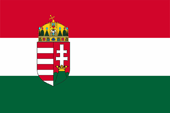
1919–1944,
Handelsflagge,
Seitenverhältnis = 2:3,
Quelle, nach: Jürgen Kaltschmitt
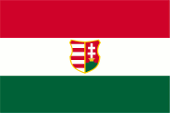
1946–1949,
Staatsflagge,
Seitenverhältnis = 2:3,
Quelle, nach: Jürgen Kaltschmitt
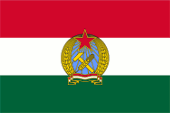
1949–1956,
National-, Staats und Handelsflagge,
Seitenverhältnis = 2:3,
Quelle, nach: Jürgen Kaltschmitt
Die Flagge Ungarns zeigt drei waagerechte Streifen in Rot, Weiß und Grün. Sie wurde in der heutigen Form erstmals im 19. Jahrhundert verwendet. In ihrer heutigen Funktion als National-, Staats- und Handelsflagge wurde sie erstmals am 01.10.1957 gehisst. Eine Verordnung aus dem Jahr 2000 legt für offzielle Flaggen ein Seitenverhältnis von 1:2 fest. Die National- und die Handelsflagge verblieben bei 2:3. Die Farbtöne der Farben der Flagge sind definiert, zuletzt mit der Vorschrift MSZ 1361:2009. Die gibt vor: Pantone TCX 18-1660 Tomato - Hex #CE2939 - für Rot und Pantone TCX 18-6320 - Hex #477050 für Grün. Aus den Hex-Werten lassen sich folgende Pantone Farbtöne ableiten: Rot = Pantone 711 C, Grün = Pantone 626 C. Die Farben der Flagge werden heute folgendermaßen interpretiert: Weiß steht für die Reinheit, Grün für die Hoffnung und Rot für das im Kampf um die Freiheit vergossene Blut.
Die Farbe Rot geht auf die Banner des Fürsten Árpád (9.Jhd.) zurück, der im Jahre 895 die Ungarn in ihre heutige Heimat geführt hat. Das Weiß geht auf ein byzantinisches Doppelkreuz zurück, das dem ungarischen König Bela III. vom Kaiser von Byzanz verliehen worden war. Die Farben Rot und Weiß in acht Streifen gelten auch als die Farben der Arpaden und sind teilweise Legende. Erstmalig nachgewiesen auf einer Urkunde von König Emmerich (1196–1204). Die Streifen sollen angeblich die vier Flüsse Donau, Theis, Save und Drau verkörpern. Dieses Muster wurde später mit der Region Niederungarn (Altungarn, das heutige Ungarn) in Verbindung gebracht. Das Grün geht auf das Wappen von König Bela (1061–1063) zurück, der ein Wappen verwendete, das einen grünen Dreiberg auf einem roten Schild zeigte, darauf ein weißes Doppelkreuz. Die kleine Krone am Fuß des Kreuzes wurde erst im 17. Jahrhundert ergänzt. Dieses Wappen wurde später mit der Region Oberungarn (Neuungarn, die heutige Slowakei) in Verbindung gebracht. Die drei Berge repräsentieren seit dem 17. Jahrhundert die Gebirge Tatra, Matra und Fatra.
Unter der Herrschaft von Maria Theresia, zwischen 1740 und 1780, Königin von Böhmen und Ungarn, Erzherzogin von Österreich und deutsche Kaiserin, wurde die Verwendung von Flaggen mit der Heraldik Oberungarns erlaubt. Im Jahre 1848, dem Jahr der Revolutionen, wurden viele Flaggen nach französischem Vorbild als dreifarbige Flagge geschaffen. So auch die heutige ungarische Flagge mit den drei Streifen in Rot, Weiß und Grün. Diese drei Farben zeigte angeblich schon das Band, welches das Siegel von König Andreas II. an einer Urkunde aus dem Jahre 1222 hielt. Mit dem österreichisch-ungarischen Ausgleich und der Schaffung der österreichisch-ungarischen Doppelmonarchie (1867) wurden die ungarischen Farben im wehenden Teil der Nationalflagge und der Handelsflagge Österreich-Ungarns verwendet. Die rot-weiß-grüne Flagge wurde anlässlich der Unabhängigkeit und Proklamation der Republik am 16.11.1918 als Flagge angenommen. Nach dem Sturz von Admiral Horthy durch deutsche Truppen im März 1944 wurde das Wappen 1945 geändert. Nach dem Krieg führte die Regierung Tildy das 1848 geschaffene Kossuth-Wappen (ohne Krone) wieder ein. Nach der kommunistischen Machtergreifung im Zusammenhang mit der Besetzung Ungarns durch sowjetische Truppen im Zweiten Weltkrieg, wurde am 18.08.1949 die Volksrepublik Ungarn proklamiert und eine neue Flagge eingeführt. Sie zeigte ein neues Wappen mit kommunistischer Symbolik. Im Jahre 1956 kam es zu einem antikommunistischen Volksaufstand. Während des Aufstandes wurden Flaggen verwendet, die ein Loch in der Mitte hatten. Das kommunistische Wappen war aus ihnen herausgeschnitten worden. Auch wurden Flaggen mit dem Wappen senkrecht geteilt, und nur die Elemente ohne Wappen wieder zusammengenäht. Nach dem Aufstand wurde am 01.10.1957 ein neues Wappen eingeführt, jedoch bis zum Ende des Kommunismus im Jahre 1989 nicht mehr auf der Flagge verwendet.
Quelle:
Flags of the World,
Wikipedia (D),
Die Welt der Flaggen,
Flaggen Wappen Hymnen,
Flaggen und Wappen der Welt,
Flaggen Enzyklopädie,
Flaggen-Atlas Erde,
Jürgen Kaltschmitt
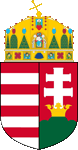
Wappen von Ungarn,
Quelle, nach: Tibor Piros,
Public domain, via Wikimedia Commons
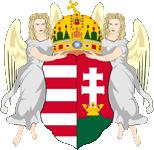
1867–1918,
kleines Wappen Ungarns
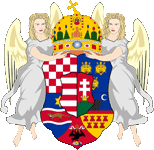
1867–1908,
großes Wappen Ungarns
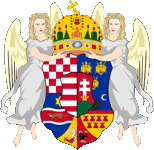
1908–1918,
großes Wappen Ungarns
1918–1944,
Wappen Ungarns unter Horthy,
Quelle, nach: Tibor Piros,
Public domain, via Wikimedia Commons
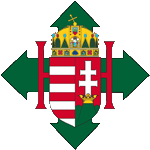
1945,
Wappen Ungarns unter Szálasi,
Quelle, nach: Jürgen Kaltschmitt
1946–1949,
Wappen Ungarns unter Tildy,
Quelle, nach: Jürgen Kaltschmitt
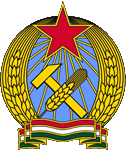
1949–1957,
Wappen Ungarns,
Quelle, nach: By Thommy [CC0 or Public domain],
via Wikimedia Commons

1956,
Hoheitszeichen auf Fahrzeugen und Ausrüstung der am antikommunistischen Aufstand beteiligten ungarischen Truppen,
Quelle, nach: Jürgen Kaltschmitt
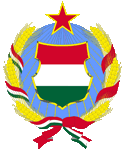
1957–1989,
Wappen Ungarns,
Quelle, nach: Corel Draw 4
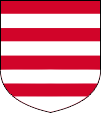
Das heutige Wappen Ungarns wurde am 03.07.1990, nach anderen Quellen am 11.07.1990 wieder eingeführt. Es zeigt einen gespaltenen Schild, links die Heraldik Niederungarns (Altungarn, das heutige Ungarn), ein acht mal rot und weiß gestreiftes Feld, und rechts die Heraldik Oberungarns (Neuungarn, die heutige Slowakei). Darüber die Stephanskrone. In dieser Form, wurde es 1464 erstmals abgebildet, zur Zeit des Königs Mattias Corvinius aus dem Hause Hunyadi. Im Jahre 1699 wurde Ungarn ein habsburgisches Kronland. Wenige Jahre später tauchte der geteilte Schild wieder auf, und zwar auf Flaggen des aufständischen Fürsten Rákóczi II. Die Habsburger gestatteten dann ab der Mitte des 18. Jahrhunderts die Verwendung des Dpoppelkreuzes mit dem Dreiberg. Offiziell wurde geteilte Schild erst wieder 1848/49, zur Zeit der Republik Ungarn. Nach dem Ausgleich (1867) wurde er offiziell für die ungarische Reichshälfte übernommen und bis 1918 beibehalten. Ab März 1920 wurde das Wappen wieder offiziell für das nunmehr unabhängige Ungarn übernommen. Zwischen 1944 und 1949 wurde die Stephanskrone vom Wappen entfernt und 1949 wurde es abgeschafft. 1956 taucht es zum antikommunistischen Aufstand kurz wieder auf, und wird nach der kommunistischen Ära ab Juli 1990 wieder als Wappen Ungarns - mit der Stephanskrone - angenommen. Die Farbe Rot geht auf die Banner Fürsten Árpád (9.Jhd.) zurück, der im Jahre 895 die Ungarn in ihre heutige Heimat geführt hat. Das byzantinische Doppelkreuz Weiß geht den ungarischen König Bela III. zurück. Es wurde ihm vom Kaiser von Byzanz verliehen. Die Farben Rot und Weiß in acht Streifen gelten auch als die Farben der Arpaden und sind teilweise Legende. Erstmalig nachgewiesen auf einer Urkunde von König Emmerich (1196–1204). Die Streifen sollen angeblich die vier Flüsse Donau, Theis, Save und Drau verkörpern. Dieses Muster wurde später mit der Region Niederungarn (Altungarn, das heutige Ungarn) in Verbindung gebracht. Der grüne Dreiberg geht auf das Wappen von König Bela (1061–1063) zurück, der ein Wappen verwendete, ihn auf einem roten Schild zeigte, darauf das weiße Doppelkreuz. Die kleine Krone am Fuß des Kreuzes wurde erst im 17. Jahrhundert ergänzt. Dieses Wappen wurde später mit der Region Oberungarn (Neuungarn, die heutige Slowakei) in Verbindung gebracht. Die drei Berge repräsentieren seit dem 17. Jahrhundert die Gebirge Tatra, Matra und Fatra. Diese beiden Elemente, das rot-weiß gestreifte Feld und das Doppelkreuz mit dem Dreiberg bestimmten über die Jahrhunderte die Heraldik Ungarns, entweder einzeln, oder auf einem Schild vereint oder auch um die Heraldik der jeweils herrschenden Dynastie ergänzt.
Unter der Herrschaft von Maria Theresia, zwischen 1740 und 1780, Königin von Böhmen und Ungarn, Erzherzogin von Österreich und deutsche Kaiserin, wurde die Verwendung von Flaggen mit der Heraldik Oberungarns erlaubt. Das große Wappen des Königreichs Ungarn zeigte ab 1867 in einem mehrfach geteilten Schild die Heraldik der Kronlande des Reiches (Kroatien, Dalmatien, Slawonien, Siebenbürgen und Fiume, ab 1908 auch Bosnien) belegt mit dem ungarischen Herzschild. Mit dem Ende der Habsburger Monarchie erlangte Ungarn die Unabhängigkeit, jedoch verlor es alle seine Kronländer, so dass das Wappenschild nur noch die Heraldik Ober- und Niederungarns zeigte, obwohl Oberungarn (Slowakei) Teil der Tschechoslowakei geworden war. Nach dem Sturz von Admiral Horthy durch deutsche Truppen im März 1944 wurde das Wappen 1945 geändert. Nach dem Krieg führte die Regierung Tildy das 1848 geschaffene Kossuth-Wappen (ohne Krone) wieder ein, benannt nach dem Revolutionär Lajos Kossuth, der Ungarn 1848/1849 in die Freiheit führen wollte. Nach der kommunistischen Machtergreifung im, Zusammenhang mit der Besetzung Ungarns durch sowjetische Truppen im Zweiten Weltkrieg, wurde am 18.08.1949 die Volksrepublik Ungarn proklamiert und ein neues Wappen mit kommunistischer Symbolik eingeführt. Es zeigte eine Ähre und einen Hammer über Kreuz, unterhalb eines roten Sterns vor einem blauen Hintergund, umgeben von Weizenähren. Nach dem antikommunistischen Volksaufstand im Jahre 1956 wurde am 01.10.1957 ein neues Wappen eingeführt. Es zeigte einen Schild mit den Farben Ungarns unterhalb eines roten Sterns vor einem blauen Hintergrund, umgeben von Weizenähren, die mit Bändern in den ungarischen Farben zusammengehalten wurden. Mit dem Ende des Kommunismus in Ungarn wurde dieses Wappen abgeschafft und man kehrte zur alten Heraldik zurück.
Quelle:
Wikipedia (D),
Die Welt der Flaggen,
Flaggen Wappen Hymnen,
Flaggen und Wappen der Welt,
Jürgen Kaltschmitt
Der ungarische Fürst Stephan war – mit Unterstützung des Deutschen Kaisers Otto III. – mit dem Wunsch um die Königswürde erfolgreich an Papst Silvester II. herangetreten. Dazu wurde Ungarn vom Fürsten dem Papst formal geschenkt, der es als Königreich und päpstliches Lehen an (nunmehr) König Stephan I. übergab. Dazu wurde er im Jahre 1000 mit einer vom Papst übersandten Krone gekrönt und erhielt den Titel 'Apostolische Majestät'. Diese Krone, die wirkliche Stephanskrone (in Ungarn bis heute so genannt), ging schon im Jahre 1074 in Österreich verloren. Wie sie aussah ist nicht überliefert. Man vermutet eine einfache Reif- oder Zackenkrone ohne Bügel. Die älteste Abbildung davon geht auf das 15. Jahrhundert zurück, und wird schon damals ein Produkt der Vermutung gewesen sein. Supported by the German Emperor Otto III, the Hungarian Prince Stephan had successfully appealed to Pope Silvester II., with the wish for the King's dignity. In this way Hungary was formally given by the prince to the Pope, who handed it back to (the henceforth) King Stephen I. as kingdom and papal fiefdom. For this purpose he was crowned in the year 1000 with a crown sent by the Pope and to him was given the title 'Apostolic Majesty'. This crown, the real Stephen's Crown (so called in Hungary until today), was lost in the year 1074 in Austria. What it looked like is not passed down. One suspects a simple ripe or spiked crown without a bow. The oldest depiction of it dates back to the 15th century, and it will already have been a product of conjecture. Die Krone, die heute das Wappen Ungarns ziert, ist im deutschen Sprachraum als 'Stephanskrone' bekannt. In Ungarn wird sie 'Heilige Krone' genannt.
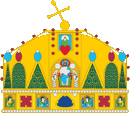
Sie entstand zwischen dem 11. und 13. Jahrhundert, wahrscheinlich nach byzantinischem Vorbild, hat einen Bügel, seitliche Pendilien (Schmuckkettchen) und Zierplatten. Im Jahre 1464 wurde sie erstmals auf Münzen abgebildet, zusammen mit dem zweigeteilten ungarischen Wappen.
Quelle: Jürgen Kaltschmitt
Das Jahr 1848 war das 'Jahr der Revolutionen', fast überall in Europa kam es zu Erhebungen und Aufständen, nicht nur in Frankreich oder Deutschland, nein, auch in Ungarn. Dort wollte der Revolutionär Lajos Kossuth die Ungarn in die Freiheit führen. Die Habsburger, deren Reich an einigen Ecken zu brennen anfing, riefen russische Truppen ins Land. 1849 mußte die ungarische Revolutionsarmee vor den kaiserlich-russischen Truppen bei Vilagos/Hellburg/Sina kapitulieren. Die dort erbeuteten ungarischen Fahnen wurden nach Russland verbracht und dort auch verwahrt.
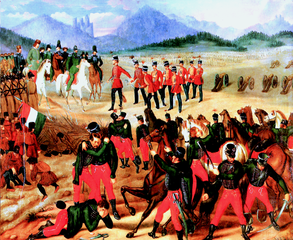
Kapitulation der ungarischen Armee in Világos, 13. August 1849
Quelle/Source: István Szkicsák-Klinovszky (1820 – c. 1880),
Public domain, via Wikimedia Commons, click/tip to enlarge
1940 schlug Stalin Admiral Horthy ein Tauschgeschäft vor: das Königreich Ungarn läßt den inhaftierten, ungarischen, kommunistischen Funktionär Màtàs Ràkosi ("Stalins bester Schüler, 1956 "Stalins schlimmster Bluthund") frei und lässt ihn in die Sowjetunion ausreisen. Im Gegenzug gibt die Sowjetunion die – immer noch vorhandenen – Fahnen der ungarischen Revolutionsarmee von 1848/49 an das Königreich Ungarn zurück, was dann auch beiderseits geschah. In den Jahren 1945/46, nachdem die Rote Armee Ungarn im Verlauf des Zweiten Weltkriegs erobert hatte und besetzt hielt, wurden die erneut erbeuteten Fahnen wieder nach (Sowjet)Russland verbracht. 1948 gaben die Sowjets anläßlich des 100-jährigen Jubiläums der ungarischen Revolution zumindest einen Teil der ungarischen 48er-Revolutionsflaggen wieder an die nunmehrige Republik Ungarn zurück. Nach der brutalen Niederschlagung des ungarischen Volksaufstandes im Oktober 1956 sollen die Kossuth-Flaggen wieder in die Sowjet-Union verbracht worden sein und in den 1960er-Jahren erneut an die (Volks)Republik Ungarn zurückgegeben worden sein.
Quelle: Jürgen Kaltschmitt
Seit dem Frühjahr 1943 hatte Ungarn Friedensfühler in Richtung der westlichen Alliierten ausgestreckt, was den deutschen Geheimdiensten nicht verborgen blieb. Am 18.3.1944 machte Adolf Hitler Admiral Horthy klar, daß Widerstand zwecklos sei, wenn die deutsche Wehrmacht zur Sicherung der Ostfront in Ungarn einrücken werde. Dies erfolgte am 19.03.1944 als "Unternehmen Margarethe". Dies wurde sowohl von der ungarischen Armee als auch von der Zivilbevölkerung "mit Erleichterung" begrüßt. Die Exzesse unter Béla Kun, dem Führer der Ungarischen Räterepublik (21. März 1919 bis zum 1. August 1919), der sogenannte "Rote Terror", waren nicht vergressen. Horthy blieb formal weiterhin im Amt, eine neue, den Deutschen genehme Regierung wurde ernannt. Im August 1944 wechselte Rumänien die Seiten. Am 15.10.1944 wurde ein Waffenstillstand zwischen der Horthy-Regierung und den Sowjets verkündet. Daraufhin wurde Horthy verhaftet und auf Reichsgebiet interniert. Am 16.10.1944 putschten deutsche Truppen und die Miliz der hungaristischen Pfeilkreuzler ("Unternehmen "Panzerfaust") in Budapest, Ferenc Szálasi wurde als Staatsführer eingesetzt und der "Staat Ungarn" proklamiert. Das Wappen Ungarns behielt die Stephanskrone, auf die Szalsi übrigens seinen Amtseid leistete. Der Regierungssitz wurde alsbald nach Güns/Köszeg verlegt. Ein neues ungarisches Staatswappen wurde am 01.01.1945 eingeführt: das traditionelle Wappe mit aufgelegter Stephanskrone belegte ein großes, rotes "H" (Hungarismus) undieses wiederum belegte ein grünes Pfeilkreuz. Auch das Staatssiegel wurde entsprechend geändert. Wahrscheinlich blieben dieses neue Staatswappen/Staatssiegel reine Theorie, bis zum 04.04.1945 war ganz Ungarn von der roten Armee besetzt. Am 16.10.1944 lief der ungarische Generaloberst Béla Miklós zu den sowjetischen Linien über. Infolge dessen proklamierte er in Debrecen, dem provisorischen Sitz seiner Gegenregierung, den "Staat Ungarn". Er wurde Ministerpräsident eines alliierten-sowjetfreundlichen Kabinetts. Man verstand sich als königlich-ungarische Regierung mit Admiral Horthy als Verweser! Offenbar blieb das ungarische Staatswappen mit der Stephanskrone auch hier (zunächst) unangetastet, denn es gibt ein Foto des Politikers Zoltán Tildy am Rednerpult, wie er eine Parlaments-Sitzung eröffnet. Das Rednerpult ist geschmückt mit der Nationalflagge, mit dem bekannten Wappen mit aufgesetzter Stephanskrone. Flankiert ist Tildy von zwei Parlamentsgardisten in Husarenuniform. Eine solche Garde hatten sonst nur die Könige Ungarns, Admiral Horthy und Ferenc Szalasi als Staatsführer. Am 01.02.1946 wurde in Folge von Wahlen die Republik Ungarn unter Zoltán Tildy proklamiert, das Kossuth-Wappen (= ohne Krone) von 1848 wieder eingeführt. 1948 feierte man 100 Jahre ungarische Revolution und es gibt ein Foto der Tribüne mit ungarischen und sowjetischen Funktionären im Schmuck des Kossuth-Wappens. Schließlich wurde Ungarn am 20.08.1949 zur Volksrepublik und führte das berüchtigte "Ràkosi-Wappen" als Staatsemblem ein.
Quelle: Jürgen Kaltschmitt
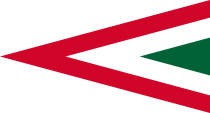
seit 1991,
Flugzeugkokarde,
Quelle, nach: Wikipedia (EN)
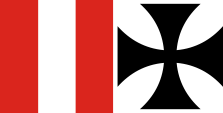
1914–1916, Österreich-Ungarn,
Flugzeugkokarde,
Quelle, nach: Wikipedia (EN)
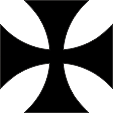
1917–1918, Österreich-Ungarn,
Flugzeugkokarde,
Quelle, nach: Wikipedia (EN)
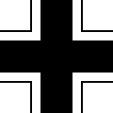
1918, Österreich-Ungarn,
Flugzeugkokarde,
Quelle, nach: Wikipedia (DE)
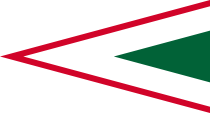
1938–1941,
Flugzeugkokarde,
Quelle, nach: Wikipedia (EN)

1942–1945,
Flugzeugkokarde,
Quelle, nach: Wikipedia (EN)
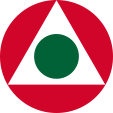
1948–1949,
Flugzeugkokarde,
Quelle, nach: Wikipedia (EN)

1949–1951,
Flugzeugkokarde,
Quelle, nach: Wikipedia (EN)
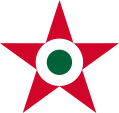
1951–1990,
Flugzeugkokarde,
Quelle, nach: Wikipedia (EN)
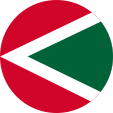
1990–1991,
Flugzeugkokarde,
Quelle, nach: Wikipedia (EN)
Lage:
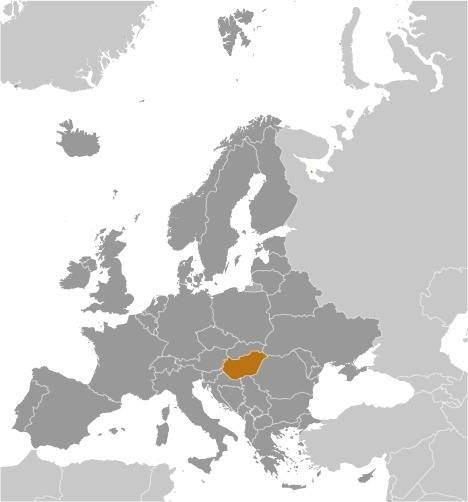
Quelle: CIA World Factbook
Landkarte des Landes:
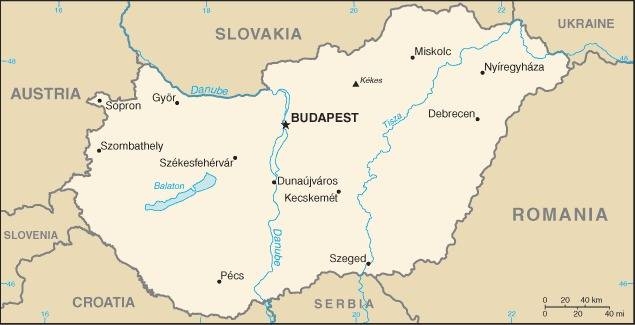
Quelle/Source: CIA World Factbook
interaktive Landkarte Österreich-Ungarns, ca. 1910:
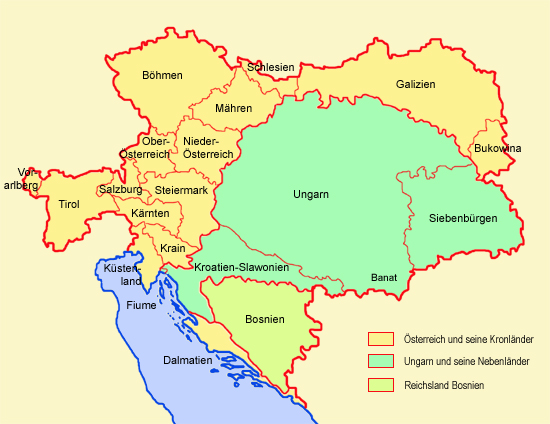
Quelle/Source: Volker Preuß
Fläche: 93.036 km²
Einwohner: 9.599.744 (2023), davon 92% Ungarn, 2% Zigeuner, 0,6% Deutsche, 0,2% Slowaken, 0,15% Kroaten, ferner Rumänen, Ukrainer, Serben u.a.
Religionen: 39% Katholiken, 12% Calvinisten, 2% Protestanten, 18% Nicht-Religiöse
Bevölkerungsdichte: 103 Ew./km²
Hauptstadt: Budapest, 1.671.004 Ew. (2023)
Amtssprache: Ungarisch
sonstige Sprachen: Englisch, Deutsch, Französisch
Währung: 1 Forint (HUF, Ft) = 100 Fillér
Zeitzone: MEZ
Quelle:
Wikipedia (DE)
9. Jhd. · Vertreibung des Nomadenvolkes der Ungarn aus ihrem Land (Etelköz, Zwischenstromland) zwischen den Flüssen Don und Dnjepr durch die Petschenegen, unter Fürst Árpád (895–907) erfolgt die Landnahme in Pannonien (dem heutigen Ungarn) an Theiß und mittlerer Donau
910–955 · Raubzüge der Ungarn durch Europa (Balkan, Italien, Frankreich, Deutschland)
955 · Schlacht auf dem Lechfeld bei Augsburg, Niederlage der Ungarn gegen den deutschen König Otto dem Großen, die Ungarn werden seßhaft
972–997 · Herrschaft von Fürst Gyécsa (Géza), Christianisierung
1000 · Papst Silvester II. lässt Fürst Stephan (István) zum König krönen
1000–1038 · Herrschaft von König Stephan I. (István I.)
1090–1110 · Unterwerfung Kroatiens und Siebenbürgens
1203 · Unterwerfung Dalmatiens
12. Jhd. · Einwanderung deutscher Siedler
1241–1243 · Mongoleninvasion, Teile des Landes werden von den Mongolen besetzt
1290–1301 · Herrschaft von König Andreas III. (letzter Arpade)
1308 · Karl I. (Károly) von Anjou wird König von Ungarn
1370 · Ludwig der Große, I. (Lajos), Sohn von Karl, wird König von Ungarn
1382 · Tod von Ludwig I., Aussterben der Dynastie, die Krone geht an den Verlobten der ältesten Tochter von König Ludwig, den Luxemburger Sigismund
1396 · Schlacht bei Nikopoli, Niederlage des Kreuzheeres (Ungarn, Frankreich, Mähren, Bayern, Böhmen) gegen die vordringenden Türken
1440–1444 · Herrschaft von König Wladyslaw III. (Ulászló I.) aus dem Hause der Jagiellonen
1444 · Wahl von János (Johann) Hunyadi zum Reichsverweser
1458 · Wahl von Matthias I. Corvinus (Sohn von Hunyadi) zum König
1463 · Sieg gegen die Türken
1479 · Frieden von Olmütz, Mähren, Schlesien und die Lausitz werden von Polen an den König Ungarn abgetreten
1485 · Eroberung von Wien
1490 · Tod von Matthias I. Corvinus, Zerfall des Reiches
1490–1526 · Herrschaft der Könige aus dem Hause der Jagiellonen
1526 · Türkenschlacht bei Mohács, Tod von König Ludwig II., Ungarn verliert seine Unabhängigkeit, der Großteil des Landes kommt an das Osmanische Reich, der westliche Teil kommt an Habsburg (Österreich), Siebenbürgen wird (kurzzeitig) ein selbstständiges Fürstentum
1683–1699 · Türkenkriege, ganz Ungarn wird durch die Habsburger von den Türken befreit und wird Habsburgisches Kronland
1848/49 · Revolutionsjahre in Ungarn, Wahl von Lajos Kossuth zum Reichsverweser, Proklamation der Republik Ungarn am 13.04.1849, Ungarn erklärt seine Unabhängigkeit, Niederschlagung durch österreichische und russische Truppen, die ungarische Revolutionsarmee kapituliert am 18.08.1849 bei Világos
08.02.1867 · Österreichisch-Ungarischer Ausgleich, gleiches Recht für beide Landesteile, Entstehung der Doppelmonarchie Österreich-Ungarn, Österreich: bestehend aus den österreichischen Kronländern, Ungarn: bestehend aus Ungarn selbst und seinen Nebenländern (Kroatien, Siebenbürgen und Slawonien), das Haus Habsburg stellt in einer Person den Kaiser von Österreich und den König von Ungarn, Einrichtung von gemeinsamen Ministerien in Außenpolitik, Finanzen und Verteidigung
1878 · Berliner Kongress, Österreich-Ungarn erhält Bosnien (einschl. Herzegowina)
1908 · Bosnien wird Österreich-Ungarn als Reichsland angegliedert
28.06.1914 · Ermordung des österreichischen Thronfolgers Franz Ferdinand und seiner Frau, Beginn des Ersten Weltkriegs (1914–1918), das Deutsche Reich ist dabei Verbündeter Österreichs
01.11.1918 · Unabhängigkeitserklärung Ungarns
03.11.1918 · Waffenstillstand
13.11.1918 · Karl IV. (Karl I.), verzichtet in Ungarn zeitweilig auf die Ausübung seiner Herrschaft, Ende der Habsburger Monarchie
16.11.1918 · Proklamation der Demokratischen Republik Ungarn unter Ministerpräsident Mihály Károlyi
21.03.1919–01.08.1919 · Kommunistischer Ausftand unter Béla Kun ('Föderative Ungarische Sozialistische Räte-Republik')
10.09.1919 · Friedensvertrag von Saint-Germain, Österreich erkennt die Unabhängigkeit Ungarns an
01.03.1920 · Wahl von Admiral Miklós Horthy zum Reichsverweser, Proklamation des Königreichs Ungarn unter der nominellen Herrschaft des Habsburgers Karl IV.
04.06.1920 · Vertrag von Trianon, Ungarn muss die Slowakei, Transkarpatien, Siebenbürgen, Kroatien, Bosnien, Slawonien, Wojvodina, Burgenland und das Banat abtreten (75% seines Territoriums, 60% seiner Bevölkerung)
21.03.1921 · Absetzung des Königs Karl IV.
1938 · Ungarn annektiert Teile der Slowakei und Transkarpatien
1940 · Ungarn annektiert Nordsiebenbürgen, Vojvodina und das Banat
1941 · Ungarn tritt an der Seite der Achsenmächte in den Zweiten Weltkieg ein
15.10.1944 · Miklós Horthy beginnt Waffenstillstandsverhandlungen mit den sowjetischen Truppen
16.10.1944 · Besetzung Ungarns durch deutsche Truppen, Absetzung von Admiral Horthy, Einsetzung einer neuen Regierung unter Ferenc Szálasi (Staat Ungarn)
1944/1945 · Besetzung des Landes durch sowjetische Truppen
21.12.1944 · die provisorische Nationalversammlung wählt Béla Miklós in Debrecen mit sowjetischer Billigung zum Ministerpräsidenten des Staates Ungarn, dessen Regierung im Februar 1945 in Budapest einzieht
01.02.1946 · Proklamation der Republik Ungarn
1947 · Friedensvertrag von Paris, Herstellung der Grenzen von 1937, Zahlung von Reparationen, vertreibung eines Großteils der Deutschen Bevölkerung (260.000 Personen, 53.000 davon werden ermordet), Enteignung von Großgrundbesitz, Verstaatlichung der Industrie
1947–1949 · Machtergreifung durch die Ungarischen Kommunisten unter Hilfe der sowjetischen Besatzungsarmee, Einführung eines Kommunistischen Einparteiensystems
20.08.1949 · Proklamation der Ungarischen Volksrepublik
23.10.1956 · antikommunistische Revolution, Machtergreifung durch Imre Nagy, Austritt aus dem Warschauer Pakt, Demokratisierung
01.11.–04.11.1956 · Niederschlagung der Revolution durch fünf sowjetische Divisionen, hunderte Todesopfer, bis 1963 Hinrichtung von 400 Aufständischen, Flucht von 200.000 Ungarn ins Ausland, Aufstockung der sowjetischen Besatzungstruppen auf 100.000 Mann
ab 1963 · schrittweise Liberalisierung der Wirtschaft
19.08.1989 · offizielle Öffnung der Grenzsperranlagen nach Österreich
23.10.1989 · Proklamation der Republik Ungarn, Mehrparteiensystem
25.03.1990 · Wahlen
1990–1991 · Abzug der sowjetischen Besatzungstruppen
12.03.1999 · Ungarn wird Mitglied der NATO
01.05.2004 · Ungarn wird Mitglied der Europäischen Union
01.01.2012 · Inkrafttreten einer neuen Verfassung, der Staat nennt sich ab jetzt nur 'Ungarn'
Quelle:
Atlas zur Geschichte,
Wikipedia (D),
World Statesmen,
Discovery '97,
Weltgeschichte,
Volker Preuß
Der Name "Ungarn" geht auf das Volk der "Ungarn" zurück. Sich selbst nennen die Ungarn "Magyaren", was von dem ugrischen Wort "Mantsche" abstammt und "Menschen" heißt. Nach einer anderen Theorie hätten die Magyaren ihre Sprache als "Ugrisch" bezeichnet, woraus Ungarisch bzw. Ungarn wurde. Die Magyaren waren einer der sieben ungarischen Stämme, die nach Pannonien einwanderten, der unter Fürst Árpád die anderen Stämme unter sich vereinigte. Das Wort "Ungarn" stammt vom slawischen Wort "Onoguren", woraus "Hungaren" wurde, weil man die Ungarn irrtümlich für Hunnen hielt. Die Bezeichnung "Onoguren" geht auf das bulgaren-türkische Wort "on-ogur" zurück, was "zehn Stämme" heißt.
Quelle:
Wikipedia (D),
Atlas der wahren Namen,
Handbuch der geographischen Namen