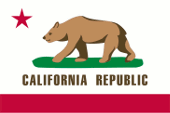
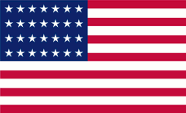
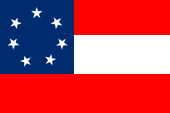
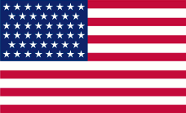
Die Flagge Kaliforniens zeigt oberhalb eines roten waagerechten Streifens ein großes weißes Feld und darin einen braunen Bär auf einem grünen Podest, den Namen des Staates und in der Oberecke einen roten, fünfzackigen Stern. Der Stern geht auf das Jahr 1836 zurück, als die Autonomiebewegung des zu Mexiko gehörenden Kalifornien eine weiße Flagge mit einem roten fünfzackigen Stern darin entwarf. Der Stern stand für den Frieden und sollte außerdem an den "Lone Star of Texas" erinnern. Der "Lone Star" ist ein Flaggensymbol, das einen einsamen Stern verkörpert, der sich den anderen Sternen in der Flagge der USA anschließen will, er ist das Sinnbild für einen gewünschten Beitritt zur USA. Das gab es nicht nur in Texas oder Kalifornien, auch in Westflorida, Kuba und Puerto Rico. Als Ergebnis des Mexikanisch-US-amerikanischen Kriegs (1846–1848) gelang die Abtrennung Kaliforniens von Mexiko und für das Land wurde offiziell eine Flagge eingeführt. Sie wurde von William Todd entworfen und erstmals am 14.06.1846 gehisst, als US-amerikanische Siedler in Sonoma die Republik Kalifornien proklamierten. Diese Flagge zeigte ursprünglich zwei horizontale Streifen in Weiß und Rot im Verhältnis 5:1 und in der Oberecke des breiten weißen Streifens den roten Stern und einen roten Bär (Symbol für Stärke) und darunter den Name des Staates. Am 07.07.1846 holte Commodore John Drake Sloat vom Pazifikgeschwader der US-Navy in Monterey, der Hauptstadt von Alta California, die Bärenflagge ein und hisste erstmals die Flagge der USA und beanspruchte Kalifornien für die Vereinigten Staaten. Damit wehte ab diesem Zeitpunkt die Flagge der USA über dem Land. Lediglich in der Zeit des Bürgerkriegs (1861–1865) wurde die Bärenflagge wiederbelebt, und zwar von Gruppen, welche die Konföderierten Staaten (CSA) unterstützten. Am 04.07.1861 wurde von Major J. P. Gillis kurz die Flagge der Konföderation entrollt, die damals in den CSA verwendete "Stars and Bars". Die Bärenflagge wurde am 03.02.1911 wiederbelebt und etwas verändert als Flagge des Staates Kalifornien wieder eingeführt. Sie zeigte oberhalb des schmalen roten Streifens in der Mitte des breiten weißen Streifen einen braunen Bär auf einem grünen Podest, darunter den Name des 1846 proklamierten Staates und den roten, fünfzackigen Stern in der Oberecke. Das Design war im Statut von 1911 beschreiben, jedoch nicht standardisiert, so dass es in Details verschiedene Ausführungen gab. Im Jahre 1953 wurde das Aussehen der Flagge genormt und das heutige Design eingeführt. Heute stehen der rote Streifen für Mut, das Weiß für Reinheit, der Stern für Souveränität und der Bär für Stärke. In den USA wird dieses Flagge gerne scherzhaft als "Kommunistenflagge" bezeichnet, weil sie einen Bären zeigt, und obendrein noch einen roten Stern. "Bären" ist nämlich eine scherzhafte Bezeichnung für die (Sowjet-)Russen.
1542 · der spanische Seefahrer Juan Rodríguez Cabrillo erreicht die Küste des Landes und nimmt es für Spanien formell in Besitz
1579 · der englische Seefahrer Sir Francis Drake erreicht die Küste des Landes und nimmt es für England formell in Besitz
1587–1603 · die spanischen Seefahrer Pedro de Unamuno (1587), Sebastian Rodriquez Cermeno (1595) und Sebastian Vizcaino (1602–1603) erkunden die Küste
1602 · Kalifornien (Südkalifornien, heute zu Mexiko) wird Teil des spanischen Vizekönigreichs Neuspanien
ca. 1650–1770 · spanische Erkundung von Nordkalifornien (Alta California, das heutige Kalifornien)
1770 · spanische Besiedelung, Errichtung von Missionsstationen
1776 · Gründung von San Franzisco als spanische Franziskanermission
1812 · Gründung von Fort Ross als russische Kolonie und Stützpunkt
1821 · Unabhängigkeit für Mexiko, Kalifornien wird mexikanische Provinz
1839 · der Schweizer Johann August Sutter gründet die Kolonie Neu-Helvetien an der Küste nördlich von San Francisco
1841 · Neu-Helvetien erwirbt Fort Ross von Russland
1846–1848 · Mexikanisch-US-amerikanischer Krieg, amerikanische Siedler proklamieren 1846 die Unabhängigkeit von Kalifornien (California Republic), Mexiko verliert im Krieg etwa 40% seines Staatsgebiets an die USA, darunter auch Kalifornien (Vertrag von Guadalupe Hidalgo am 02.02.1848)
Herbst 1848 · Sutter verliert Neu-Helvetien im Zuge des kalifornischen Goldrausches
09.09.1850 · Kalifornien wird 31. Bundesstaat der USA
1854 · Sacramento wird zur Hauptstadt Kaliforniens ernannt
Das Land Kalifornien heißt auf Spanisch und in Englisch "California". Zum Ursprung des Namens California gibt es drei Theorien: 1.) Der Name ist spanisch-lateinischen Ursprungs als Zusammensetzung der Worte "caliente" und "fornax", was "heißer Ofen" heißt. 2.) Der Name entstammt der griechischen Mythologie und geht auf die Amazonenkönigin "Kalliphia" zurück, und wurde dem Land von den Spaniern wegen des Auftauchens weiblicher indianischer Kriegerinnen gegeben. 3.) Der Name entstammt einem im Jahre 1510 veröffentlichten Roman des Spaniers Garci Rodríguez de Montalvo, in dem ein sagenhaftes Goldland namens "California" vorkommt.