mobile Ansicht, to the English Version tap the flag
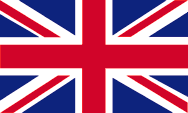

- Außenbesitzung Großbritanniens
- Kronkolonie
- Eigenbezeichnung: British Virgin Islands Colony
• Flaggen
• historische Flaggen
• Bedeutung/Ursprung der Flagge
• Wappen
• Bedeutung/Ursprung des Wappens
• Landkarte
• Zahlen und Fakten
• Geschichte
• Ursprung des Landesnamens
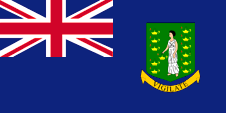
National- und Staatsflagge,
Seitenverhältnis = 1:2,
Quelle, nach:
Wikipedia (EN),
Flags of all Nations,
Corel Draw 4


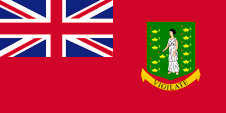
Handelsflagge,
Seitenverhältnis = 1:2,
Quelle, nach:
Wikipedia (EN),
Flags of all Nations,
Corel Draw 4

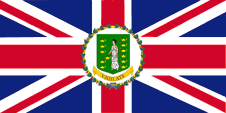
Flagge des Gouverneurs,
Seitenverhältnis = 1:2,
Quelle, nach:
Wikipedia (EN),
Flags of the World,
Corel Draw 4

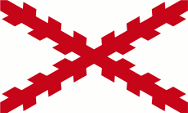
16. Jhd.,
Die Inseln gehören zum spanischen Machtbereich
Quelle, nach:
Wikipedia (EN)

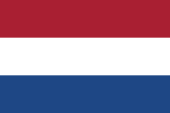
17. Jhd.,
Die Niederlande versuchen die Inseln zu kolonisieren
Quelle, nach: World Statesmen
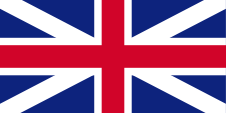
1713–1801,
Flagge von Großbritannien,
Seitenverhältnis = 1:2,
Quelle, nach:
Die Welt der Flaggen
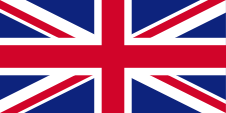
1801–1874,
Flagge von Großbritannien,
Seitenverhältnis = 1:2,
Quelle, nach:
World Statesmen
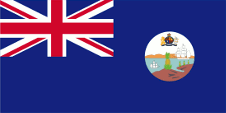
1874–1956,
Leeward-Inseln,
Flagge der Regierung (Staatsflagge),
Seitenverhältnis = 1:2,
Quelle, nach: Wikipedia (EN)
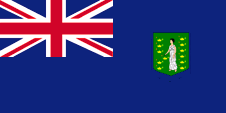
1956–1960,
Flagge der Regierung (Staatsflagge),
Seitenverhältnis = 1:2,
Quelle, nach:
World Statesmen
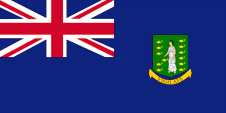
1960–1999,
Flagge der Regierung (Staatsflagge),
Seitenverhältnis = 1:2,
Quelle, nach: World Statesmen
Ursprünglich gehörten die Britischen Jungferninseln zur britischen Kolonie der Leeward-Inseln und wurden im Jahre 1960 eine eigenständige Kolonie. Die Nationalflagge ist ein sogenannter "Blue Ensign", ein dunkelblaues Flaggentuch mit einer Flaggendarstellung – dem britischen Union Jack – in der Oberecke. Der Union Jack weist auf die Verbindungen zu Großbritannien hin. Großbritannien hatte in Jahr 1864 ein Flaggensystem eingeführt, in dem:
• Kriegsschiffe einen sogenannten "White Ensign" (Marineflagge), eine weiße Flagge oft mit durchgehendem roten Georgskreuz und mit dem Union Jack in der Oberecke,
• Handelsschiffe einen "Red Ensign" (auch "Civil Ensign" => Bürgerflagge genannt, die eigentl. Handelsflagge), eine rote Flagge mit dem Union Jack in der Oberecke, und
• Dienstschiffe einen "Blue Ensign" (Regierungsflagge => die eigentl. Staatsflagge), eine blaue Flagge mit dem Union Jack in der Oberecke führten.
Seit 1865 durften Schiffe von Kolonialregierungen einen Blue Ensign mit einem Badge (Abzeichen) im fliegenden Ende führen. Die jeweiligen Regierungen sollten entsprechene Bagdes zur Verfügung stellen. Handelsschiffe und seefahrende Privatpersonen aus Kolonien dürfen nur dann einen Red Ensign mit Badge führen, wenn von der britischen Admiralität eine entsprechende Erlaubnis für die Kolonie erteilt wurde. Eine solche Erlaubnis wurde den Inseln bis zum Jahr 2001 nicht erteilt. Dennoch gingen Privatpersonen unerlaubt dazu über, anstelle der einfachen roten Handelsflagge (sog. Red Ensign), diese mit dem Badge zu verwenden.
Ein solches Badge war oft eine auf einer Scheibe platzierte regionale landschaftliche Darstellung, zeigte oft Schiffe, historische Begebenheiten oder konnte auch nur eine Art Logo sein. Sehr oft zeigte ein Badge zusätzlich den Namen des Landes oder auch einen Wahlspruch. Einige Besitzungen hatten aber auch schon von Anfang an ein Wappen, bzw. erhielten über die Jahre eine eigenes Wappen und das Badge wurde abgeschafft. Um ein weitgehend einheitliches Erscheinungsbild im fliegenden Ende der Flaggen zu gewährleisten, wurden Wappen und auch andere Symbole auf einer weißen Scheibe in der Größe der früheren Badges dargestellt. Es gab hier aber auch Ausnahmen, denn einige Kolonien verwendeten diese weiße Scheibe nicht, und platzierten ihr Wappen oder auch nur das Wappenschild - manchmal auch vergrößert - direkt auf das Flaggentuch. Schon in den 40-er Jahre wurde dazu übergegangen die weiße Scheibe zu entfernen und das Wappen direkt zu platzieren oder vergrößert dazustellen. Dieser Umstellungsprozess erfolgte allmählich, nirgendwo gleichzeitig und vollständig. In einigen britischen Besitzungen sind bis heute Flaggen mit der weißen Scheibe in Gebrauch, in anderen nicht mehr und in einigen Gebieten gibt es beide Varianten nebeneinander.
Die Leeward-Inseln erhielten im Jahre 1871 ein eigenes Badge. Es zeigte eine Ananas an einer Küste mit zwei Schiffen. Die Britischen Jungferninseln erhielten 1956 ein eigenes Wappen, das auf einem "Blue Ensign" als Badge verwendet wurde. Das Badge zeigt ein grünes Wappenschild, auf dem die "weise Jungfrau" dargestellt ist, die eine Öllampe in der Hand hält und von mehreren Öllampen umgeben ist. Die weise Jungfrau ist die Heilige Ursula, und die Öllampen stehen für sie und die anderen elf Jungfrauen, die von den Hunnen ermordet wurden. Am 15.11.1960 wurde ein goldenes Spruchband mit einem Motto ergänzt. Das Motto lautet "Vigilate", und heißt "Seid wachsam!".
Ab 1999 erfolgte die Darstellung des Wappens auf der Flagge wesentlich vergrößert und die blaue Flagge durfte auch als Nationalflagge bezeichnet und verwendet werden, also an Land und auch von Privatpersonen. Im Jahre 2001 folgte die Erlaubnis, anstelle der einfachen britischen roten Handelsflagge (sog. Red Ensign), diesen mit dem Wappen zu verwenden, als Handelsflagge, von Privatpersonen auf See.
Quelle:
Flags of the World,
Flaggen Enzyklopädie,
Die Welt der Flaggen,
Wikipedia (EN)
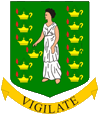
seit 1956,
Wappen der Britischen Jungferninseln,
Quelle/Source nach/by:
Flags of all Nations,
Corel Draw 4
Das Wappen der Britischen Jungferninseln wurde 1956 eingeführt und zeigt ein grünes Wappenschild, auf dem die "weise Jungfrau" dargestellt ist, die eine Öllampe in der Hand hält und von mehreren Öllampen umgeben ist. Die weise Jungfrau ist die Heilige Ursula, und die Öllampen stehen für sie und die anderen elf Jungfrauen, die von den Hunnen ermordet wurden. Am 15.11.1960 wurde ein goldenes Spruchband mit einem Motto ergänzt. Das Motto lautet "Vigilate", und heißt "Seid wachsam!". Außerhalb der Flagge wird das Wappen mit einem goldenen Kranz umgeben.
Quelle:
Flags of the World,
Flaggen Enzyklopädie
Lage:
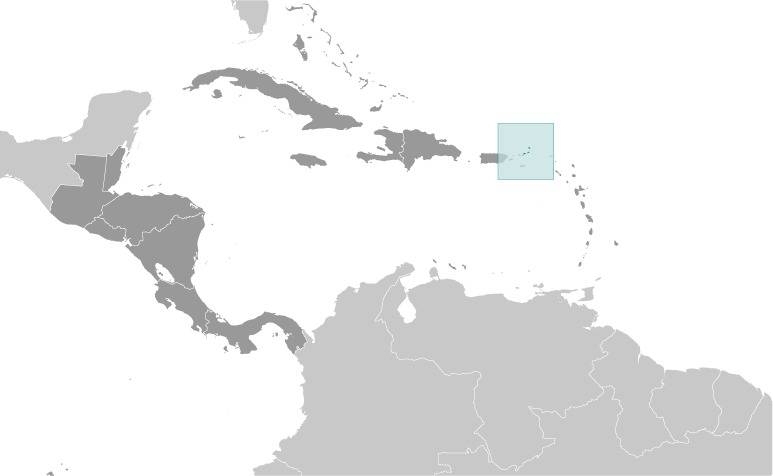
Quelle: CIA World Factbook
Landkarte des Landes:
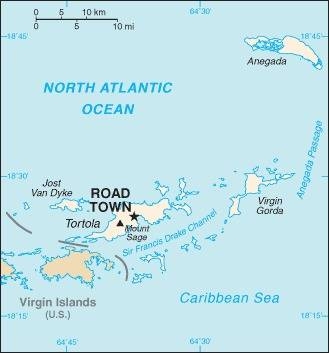
Quelle: CIA World Factbook
Landkarte des Landes:
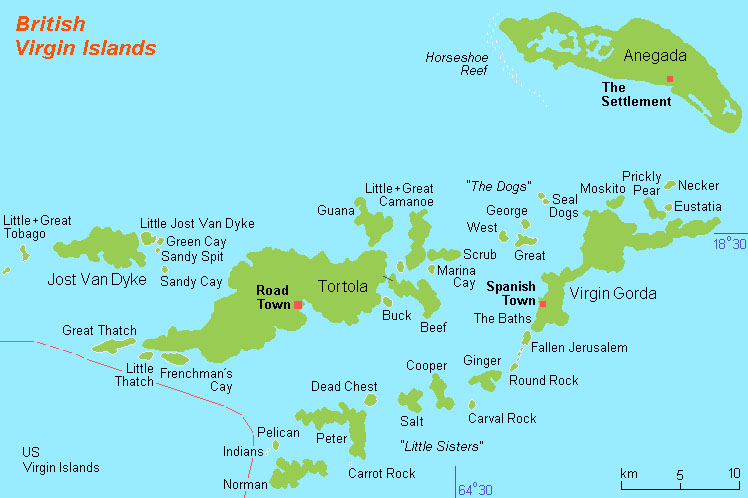
Quelle: Hobe / Holger Behr, Public domain, via Wikimedia Commons,
zum Vergrößern tippen/anklicken
Fläche: 150 km², davon Tortola 55 km², Anegada 39 km², Virgin Gorda 22 km², Jost van Dyke 8 km²
Einwohner: 37.380 (2020), davon 76% of Afroamerikaner, 6% Lateinamerikaner, 5% Europäer
Religionen: 61% Protestanten (versch. Konfession), 9% Anglikaner, 9% Katholiken
Bevölkerungsdichte: 249 Ew./km²
Hauptstadt: Road Town, 9.300 Ew. (2010)
Amtssprache: Englisch
Währung: 1 US-Dollar (US$) = 100 Cents
Zeitzone: MEZ – 5 h
Quelle: Wikipedia (D),
CIA World Factbook
14.11.1493 · der Spanische Seefahrer Christoph Columbus entdeckt die Inseln und nimmt sie für Spanien in Besitz
1625 · Niederländer gründen auf Tortola (früher: Santa Ana) eine Siedlung
1628 · England nimmt Tortola in Besitz
1645 · Engländer gründen auf Tortola eine Siedlung
05.02.1646 · die englische Siedlung auf Tortola wird von Spaniern zerstört
1648 · Niederländer gründen auf Tortola, Anegada und Virgin Gorda erneut eine Siedlung
1665 · englische Truppen besetzen Tortola, Beginn der englischen Besiedlung
1672 · die Niederländer verlassen Tortola, Tortola wird offiziell eine englische Kolonie, die der Kolonie der Leeward-Inseln angeschlossen wird
1680 · Engländer vertreiben die Niederländer von Anegada und Virgin Gorda und beginnen die englische Besiedlung und Kolonisation
1713 · die Britischen Jungferninseln werden eine Kronkolonie
1773 · die Britischen Jungferninseln erreichen ihre heutige administrative Ausdehnung
1816–1833 · die Britischen Jungferninseln sind der "Kolonie St. Christopher, Nevis, Anguilla und die Britischen Jungferninseln" angeschlossen
1833–1960 · die Britischen Jungferninseln sind der Kolonie der Britischen Leeward-Inseln angeschlossen
01.01.1960 · die Britischen Jungferninseln werden eine eigenständige Kolonie
18.04.1967 · Großbritannien gewährt Selbstverwaltung (Autonomie)
Quelle:
Wikipedia (D),
World Statesmen
Der Name "Jungferninseln" bezieht sich auf die Heilige Ursula und die anderen elf Jungfrauen, die einst von den Hunnen ermordet wurden.
Quelle: Flaggen Enzyklopädie