mobile Ansicht, to the English Version tap the flag

- Republik Botswana (auch Botsuana)
- autoritäre präsidiale Republik mit Mehrparteiensystem
- Eigenbezeichnungen: Republic of Botswana (engl.), Lafatsche la Botsuana (seswana)
- früherer Name: Betschuanaland
• Flaggen
• historische Flaggen
• Bedeutung/Ursprung der Flagge
• Wappen
• Bedeutung/Ursprung des Wappens
• Flugzeugkokarde
• Landkarte
• Zahlen und Fakten
• Geschichte
• Ursprung des Landesnamens
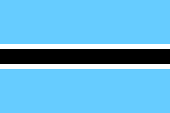
Nationalflagge,
Seitenverhältnis = 2:3,
Quelle, nach:
Corel Draw 4


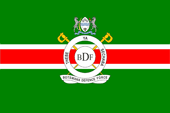
Flagge der Armee
Seitenverhältnis = 2:3,
Quelle, nach:
Flags of the World

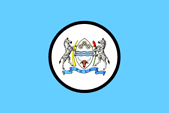
Präsidentenflagge
Seitenverhältnis = 2:3,
Quelle, nach:
Wikipedia (NL)

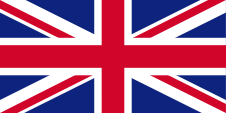
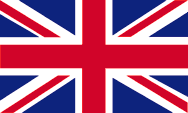
1884–1966,
Flagge von Großbritannien,
Quelle, nach: World Statesmen
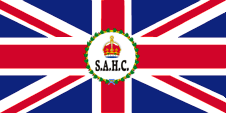
1907–1931,
Flagge des Hohen Kommissars,
Quelle, nach:
Flags of the World
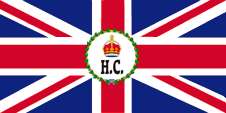
1931–1966,
Flagge des Hohen Kommissars,
Quelle, nach:
Flags of the World
Die heutige Flagge ist seit dem 25.01.1966 (nach anderen Quellen seit dem 30.09.1966) eingeführt, von George Winstanley geschaffen, und geht auf die Flagge der Botswana Democratic Party (drei horizontale Streifen in Weiß, Rot und Schwarz) zurück. Sie zeigt insgesamt fünf waagerechte Streifen, drei Streifen in Hellblau, Schwarz und Hellblau, jeweils durch einen schmalen weißen Streifen getrennt, im Verhältnis 9:1:4:1:9. Das Hellblau steht für die Sehnsucht des Landes nach Wasser und symbolisiert auch den blauen Himmel über dem Land. Schwarz steht für die Mehrheit der Bevölkerung, Weiß für die weiße Minderheit. Die Flagge drückt somit den Wunsch eines friedlichen Zusammenlebens der schwarzen Bevölkerung mit der weißen Minderheit aus.
Quelle: Flaggen Wappen Hymnen,
Flaggen und Wappen der Welt
Zur Zeit des britischen Protektorats hatte Betschuanaland keine eigene Flagge. Es wurde durch einen britischen Hohen Kommissar von Südafrika aus verwaltet, und es wurde der britische Union Jack verwendet. Der britische Hohe Kommissar hatte seit 1907 seine eigene Flagge. Es handelte sich um die für Hohe Kommissare übliche Flagge, den Britischen Union Jack mit dem Abzeichen des Hohen Kommissars in der Mitte, eine von einem Kranz umgebene Abkürzung mit der britischen Krone darüber. Bis 1931 war der Britische Hohe Kommissar für Südafrika (Abkürzung: S.A.H.C.) für Betschuanaland zuständig, das von Mafeking in Südafrika aus verwaltet wurde. Nach dem Westminsterstatut wurde Südafrika 1931 unabhängig, und der Hohe Kommissar war nur noch für Betschuanaland, Basutoland und Swasiland zuständig (Abkürzung: H.C.).
Quelle: Flags of the World

Wappen von Botswana,
Quelle, nach:
Corel Draw 4
Das Staatswappen von Botswana ist seit dem 25.01.1966 (30.09.1966) eingeführt. Es zeigt auf einem weißen afrikanischen Schild drei blaue Wellenlinien, darüber die Industrie symbolisierende Zahnräder, und darunter ein die Landwirtschaft symbolisierender Stierkopf. Die Wellenlinien stehen für das Wasser, und verweisen, wie die Inschrift "Pula" (Regen), auf die große Bedeutung des Wassers. Schildhalter sind Zebras. Die Farben Schwarz und Weiß symbolisieren auch hier die beiden Rassen, die im Lande leben. Links und rechts des Wappens ist noch ein Elefantenstoßzahn und eine Sorghum-Pflanze zu sehen.
Quelle:
Flaggen Wappen Hymnen,
Flaggen und Wappen der Welt

Flugzeugkokarde,
Quelle, nach: Wikipedia (EN)
Lage:
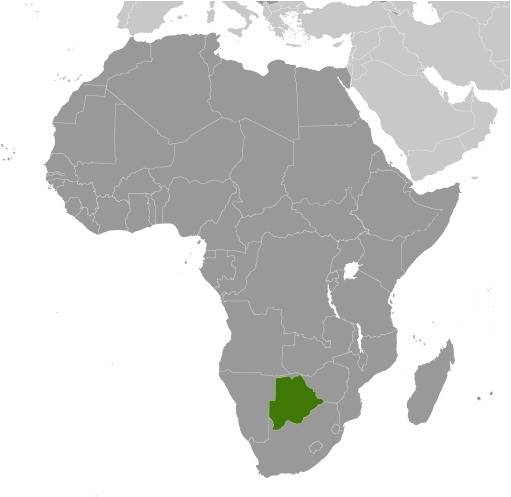
Quelle: CIA World Factbook
Landkarte des Landes:
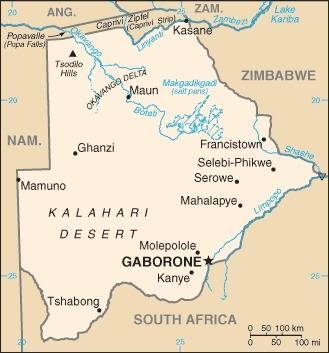
Quelle: CIA World Factbook
Fläche: 581.730 km²
Einwohner: 2.249.100 (2018), davon 75% Tswana (Betschuanen), 12% Shona, 6% Buschmänner (San und Khoikhoi), 2% Europäer
Religionen: 49% Animisten, 29% Protestanten, 9% Katholiken, 12% andere Christen
Bevölkerungsdichte: 4 Ew./km²
Hauptstadt: Gaborone, 231.600 Ew. (2011)
Amtssprachen: Setswana (Seswana), Englisch
Währung: 1 Pula (BWP, P) = 100 Thebe
Zeitzone: MEZ + 1 h
Quelle:
Wikipedia (D)
16./17. Jhd. · Tswana beginnen zu siedeln
1820 · beginnende britische Kolonisierung
1889 · britische Verwaltung
1895 · britisches Protektorat
30.09.1966 · Unabhängigkeit von Großbritannien
1985–1986 · Streitigkeiten mit Südafrika
Quelle: Atlas zur Geschichte,
Wikipedia (D)
Der Name des Landes leitet sich vom Namen des Volkes der Tswana ab, die 75% der Bevölkerung stellen.
Quelle: Wikipedia (D)