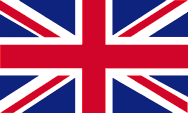
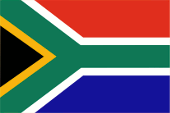
Quelle, nach: Flags of the World


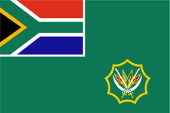
seit 2003,
Flagge der Verteidigungskräfte,
Seitenverhältnis = 2:3,
Quelle, nach: Flags of the World

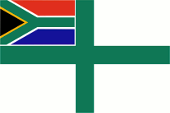
seit 1994,
Marineflagge,
Seitenverhältnis = 2:3,
Quelle, nach: Flags of the World
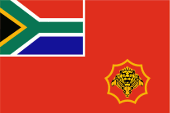
seit 2003,
Flagge des Heeres,
Seitenverhältnis = 2:3,
Quelle, nach: Flags of the World
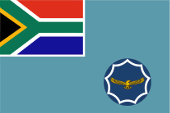
seit 2003,
Flagge der Luftwaffe,
Seitenverhältnis = 2:3,
Quelle, nach: Flags of the World
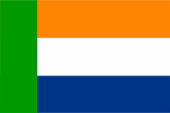
"Vryheidsvlag",
Flagge der Buren,
Seitenverhältnis = 2:3,
Quelle, nach: Flags of the World

Die Südafrikanische Union entstand 1910 durch die Vereinigung folgender britischer Kolonien: Kapkolonie, Natal, Oranjefluss-Kolonie (Oranje-Freistaat) und Transvaal.
Niederländische Kapkolonie:
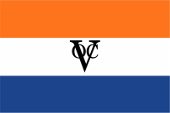
1602–1660,
Flagge der Niederländischen Ostindien-Kompanie,
Quelle, nach:
commons.wikimedia.org
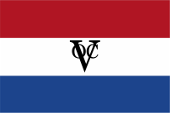
1660–1798,
Flagge der Niederländischen Ostindien-Kompanie,
Quelle, nach:
commons.wikimedia.org
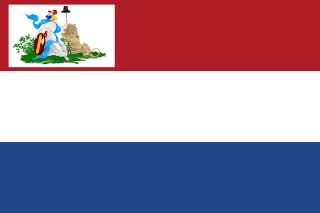
1798–1806, Batavische Republik,
Flagge der Niederlande,
Quelle, nach: Tom Lemmens, CC0,
via Wikimedia Commons
Südafrikanische Union:
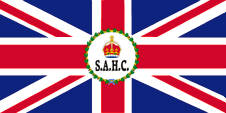
1878–1931,
Flagge des Hohen Kommissars,
Seitenverhältnis = 1:2,
Quelle, nach: Flags of the World
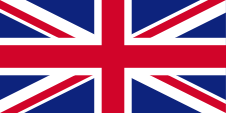
1910–1928,
Union Flag → quasi Nationalflagge,
Flagge von Großbritannien,
Seitenverhältnis = 1:2,
Quelle: Wikipedia (EN)
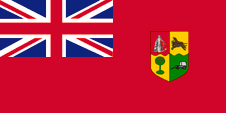
1910–1912,
National- und Handelsflagge,
Seitenverhältnis = 1:2,
Quelle, nach: Flags of the World
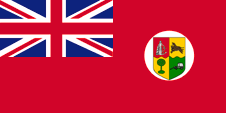
1912–1928,
National- und Handelsflagge,
Seitenverhältnis = 1:2,
Quelle, nach: Flags of the World
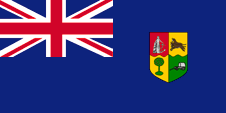
1910–1928,
Flagge der Regierung (Staatsflagge),
Seitenverhältnis = 1:2,
Quelle, nach:
Flags of the World
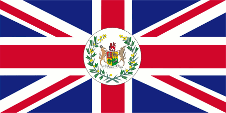
1910–1931,
Flagge des Generalgouverneurs,
Seitenverhältnis = 1:2,
Quelle, nach:
Flags of the World
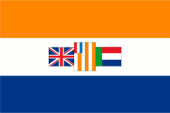
1928–1982,
National-, Staats-, Handelsflagge und Gösch,
Seitenverhältnis = 2:3,
Quelle, nach: Wikipedia (EN), Flags of the World
1928–1951,
Handelsflagge,
Seitenverhältnis = 1:2,
Quelle, nach: Flags of the World
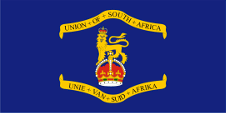
1931–1953,
Flagge des Generalgouverneurs,
Seitenverhältnis = 1:2,
Quelle, nach:
Flags of the World
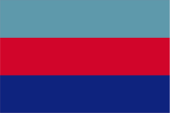
1947–1981,
Flagge der Verteidigungskräfte,
Seitenverhältnis = 2:3,
Quelle, nach: Flags of the World
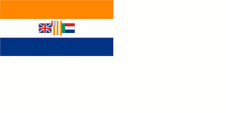
1946–1951,
Marineflagge,
Seitenverhältnis = 1:2,
Quelle, nach: Flags of the World
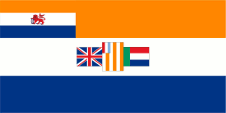
1951–1952,
Marineflagge,
Seitenverhältnis = 1:2,
Quelle, nach: Flags of the World
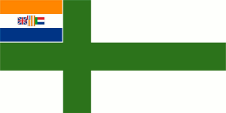
1952–1981,
Marineflagge,
Seitenverhältnis = 1:2,
Quelle, nach: Flags of the World
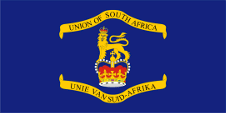
1953–1961,
Flagge des Generalgouverneurs,
Seitenverhältnis = 1:2,
Quelle, nach:
Flags of the World
Republik Südafrika:
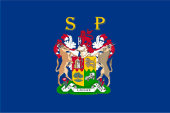
1961–1984,
Flagge des Präsidenten,
Seitenverhältnis = 2:3,
Quelle, nach: Flags of the World
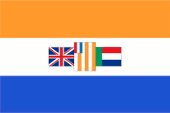
1982–1994,
National-, Staats-, Handelsflagge und Gösch,
Seitenverhältnis = 2:3,
Quelle, nach: Wikipedia (EN), Flags of the World
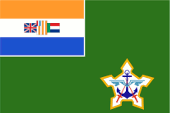
1981–1994,
Flagge der Verteidigungskräfte,
Seitenverhältnis = 2:3,
Quelle, nach: Flags of the World
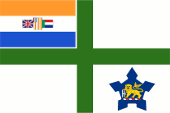
1981–1994,
Marineflagge,
Seitenverhältnis = 2:3,
Quelle, nach: Flags of the World
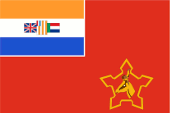
1973–1994,
Flagge des Heeres,
Seitenverhältnis = 2:3,
Quelle, nach: Flags of the World
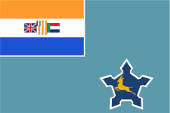
1982–1994,
Flagge der Luftwaffe,
Seitenverhältnis = 2:3,
Quelle, nach: Flags of the World
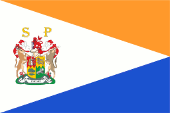
1984–1994,
Flagge des Präsidenten,
Seitenverhältnis = 2:3,
Quelle, nach:
Flags of the World
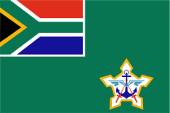
1994–2003,
Flagge der Verteidigungskräfte,
Seitenverhältnis = 2:3,
Quelle, nach: Flags of the World
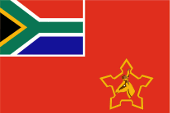
1994–2002,
Flagge des Heeres,
Seitenverhältnis = 2:3,
Quelle, nach: Flags of the World
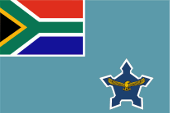
1994–2003,
Flagge der Luftwaffe,
Seitenverhältnis = 2:3,
Quelle, nach: Flags of the World
Die heutige Flagge Südafrikas wurde am 27.04.1994 eingeführt. Sie zeigt ein liegendes, grünes Ypsilon mit einem schwarzem Feld am Mast, abgetrennt mit einem goldenem Streifen; ein oberes rotes und ein unteres blaues Feld werden mit schmalen weißen Streifen vom Ypsilon abgetrennt. Die Farben der Flagge scheinen definiert, sind jedoch niedergelegt in einer Doktorarbeit der Universität von Pretoria von 1984 "Die Nationalflagge Südafrikas in historischer Perspektive", und zwar als Pantone Farbtöne: Grün = pt 3415 c, Gelb = pt 1235 c, Rot = pt 179 c, Blau = Pantone Reflex Blue. Zur Bedeutung der Farben gibt es zwei Theorien:
• Die Flagge ist eine Kombination der Farben des ANC (Schwarz, Grün und Gelb), der bedeutendsten Organisation der schwarzen Südafrikaner, und der Farben der "Vierkleur" (Grün, Rot, Weiß und Blau). Die "Vierkleur" ist die Flagge des ehemaligen Landes Transvaal, welches hier stellvertretend für die weißen Südafrikaner steht. Das "Y" symbolisiert den Weg des geeinten Landes in die Zukunft.
• Die Farben sollen für die historischen Gebietseinheiten Kapland, Natal, Oranje-Freistaat und Transvaal stehen. Die Farben Rot, Weiß und Blau, die Farben der niederländischen Flagge, sollen auf die weiße Minderheit im Land hinweisen. Die schwarze Farbe vertritt die Bevölkerungsmehrheit.
Die Geschichte der Flaggen des Landes lässt sich in vier Zeitabschnitte unterteilen. 1.) die Zeit als britische Kolonie "Südafrikanische Union", ohne eigene Flagge, vollständig dem britischen Ensign-System unterworfen, bis 1928. 2.) die Zeit als britische Kolonie "Südafrikanische Union", jedoch mit einer eigenen Flagge, bis 1961, 3.) die Zeit der "Republik Südafrika" als eine unabhängige, aufstrebende und wirtschaftlich sehr erfolgreiche Nation, bis 1994, 4.) die Zeit des heutigen Südafrika.
Ursprünglich, vor der Unterwerfung durch die Briten, bestanden in Südafrika Republiken der Buren, deren Flaggen und Heraldik fast ausschließlich niederländischen Ursprungs waren. Die Flagge von Transvaal war die niederländische Flagge mit einem senkrechten grünen Balken am Mast. Sie wurde "Vierkleur" (vier Farben) genannt. Die Flagge des Oranje-Freistaates zeigte sieben Streifen in Weiß und Orange und die niederländische Flagge in der Oberecke. Es gab noch weitere Burenstaaten, Goshen, Stellaland, Natal und die Neue Republik.
Nach der Eroberung der Burenstaaten durch Großbritannien im Burenkrieg (1899–1902) wurde im Jahre 1910 die Südafrikanische Union durch Zusammenschluss der ehemaligen Burenprovinzen und der britischen Kolonien gebildet, so das ab jenem Jahr die Flagge von Großbritannien über dem Land wehte. An Land und auch zur See, repräsentierte der einzelne Bürger durch einen "Red Ensign", Behörden und Ämter zur See durch einen "Blue Ensign".
Großbritannien hatte in Jahr 1864 ein Flaggensystem eingeführt, in dem:
• Kriegsschiffe einen sogenannten "White Ensign" (Marineflagge), eine weiße Flagge oft mit durchgehendem roten Georgskreuz und mit dem Union Jack in der Oberecke,
• Handelsschiffe einen "Red Ensign" (auch "Civil Ensign" → Bürgerflagge genannt, die eigentl. Handelsflagge), eine rote Flagge mit dem Union Jack in der Oberecke, und
• Dienstschiffe einen "Blue Ensign" (Regierungsflagge → die eigentliche Staatsflagge), eine blaue Flagge mit dem Union Jack in der Oberecke führten.
Seit 1865 durften Schiffe von Kolonialregierungen einen Blue Ensign mit einem Badge (Abzeichen) im fliegenden Ende verwenden. Die jeweiligen Regierungen sollten entsprechende Bagdes zur Verfügung stellen. Wenn die britische Admiralität der Kolonie die entsprechende Erlaubnis erteilt hatte, durften Handelsschiffe und private Seeleute dieser Kolonien einen Red Ensign mit dem Bagde führen. Dies war für die Südafrikanische Union von Beginn an der Fall. Der "Red Ensign" mit dem Badge durfte sogar an Land, als Nationalflagge verwendet werden.
Ein solches Badge war oft eine auf einer Scheibe platzierte regionale landschaftliche Darstellung, zeigte oft Schiffe, historische Begebenheiten oder konnte auch nur eine Art Logo sein. Sehr oft zeigte ein Badge zusätzlich den Namen des Landes oder auch einen Wahlspruch. Einige Besitzungen hatten aber auch schon von Anfang an ein Wappen, bzw. erhielten über die Jahre eine eigenes Wappen und das Badge wurde abgeschafft. Um ein weitgehend einheitliches Erscheinungsbild im fliegenden Ende der Flaggen zu gewährleisten, wurden Wappen und auch andere Symbole auf einer weißen Scheibe in der Größe der früheren Badges dargestellt. Es gab hier aber auch Ausnahmen, denn einige Kolonien verwendeten diese weiße Scheibe nicht, und platzierten ihr Wappen oder auch nur das Wappenschild - manchmal auch vergrößert - direkt auf das Flaggentuch. Schon in den 40-er Jahren wurde dazu übergegangen die weißen Scheiben zu entfernen und das Wappen direkt zu platzieren oder vergrößert dazustellen. Dieser Umstellungsprozess erfolgte allmählich, nirgendwo gleichzeitig und vollständig. In einigen britischen Besitzungen sind bis heute Flaggen mit der weißen Scheibe in Gebrauch, in anderen nicht mehr und in einigen Gebieten gibt es beide Varianten nebeneinander. Die Südafrikanische Union zeigte im wehenden Ende ihrer Roten und Blauen Ensigns kein typisches Badge, sondern das Wappenschild des der Kolonie im Jahre 1910 verliehenen Wappens. Der Schild war gevierteilt und zeigte in den einzelnen Feldern: eine Frau mit Anker (Kapprovinz), zwei laufende Gnus (Natal), einen Orangenbaum (Oranje-Freistaat), einen Trek-Wagen (Transvaal).
Der zunächst zuständige britische Hohe Kommissar hatte seine eigene Flagge. Es handelte sich um die für Hohe Kommissare übliche Flagge, den Britischen Union Jack mit dem Abzeichen des Hohen Kommissars in der Mitte, eine von einem Kranz umgebene Abkürzung mit der britischen Krone darüber. Der Hohe Kommissar war für Südafrika, Betschuanaland, Basutoland und Swasiland zuständig. Nach dem Westminsterstatut wurde Südafrika 1931 unabhängig. Zusätzlich gab es ab 1910 einen Generalgouverneur, auch nach 1931, er war der Vertreter des Staatsoberhaupts, des britischen Monarchen. Das endete 1961, als Südafrika Republik wurde, das Amt des Präsidenten wurde eingeführt, der auch eine eigene Flagge hatte.
Am 31.05.1928 (nach anderen Quellen am 31.03.1928) wurde eine neue, eigene Flagge für die Südafrikanische Union angenommen. Sie zeigte drei waagerechte Streifen in Orange, Weiß und Blau und in der Mitte des weißen Streifens drei kleinere Flaggen: den Union Jack (für die ehemals britischen Kolonien Natal und Kapland), die Flagge des Oranje-Freistaats und die Flagge Transvaals. Die Flagge orientierte sich in der Gestaltung an der Flagge der Niederlande (auch "Prinsenvlag" genannt), die in Südafrika jedoch "Van-Riebeeck-Flagge" heißt, da sie von den frühen niederländischen Siedlern benutzt wurde. Ursprünglich wurde diese Flagge nur an an Land und immer neben dem Union Jack gehisst. Diese Regelung wurde jedoch im Jahre 1957 aufgehoben. Im Jahre 1982 wurden die Farben der Flagge einer Revision unterzogen, man hatte festgestellt, dass Blau und Orange zu dunkel seien und nicht den ursprünglichen Beschreibungen entsprechen würden. In Folge dessen wurden die Farbtöne angepasst. Mit der Einführung der heutigen Flagge am 27.04.1994 wurde diese Flagge abgeschafft. Seit August 2019 ist das zeigen dieser Flagge in Südafrika verboten. Es gilt der Straftatbestand der Hassrede. Das Verbot wurde verhängt, weil weiße Einwohner Südafrikas die Flagge auf Demonstrationen mitführten in denen sie auf ihre durch Enteignungen und willkürliche Tötungen gekennzeichnete, missliche Lage aufmerksam machen wollten.
Quelle:
Die Welt der Flaggen,
Flaggen und Wappen der Welt,
Flaggen Enzyklopädie,
Flaggen-Atlas Erde,
Wikipedia (EN),
Flags of the World,
Volker Preuß
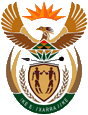
seit 2000,
Wappen von Südafrika,
Quelle, nach: wikimedia.org
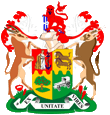
1932–2000,
Wappen von Südafrika,
Quelle, nach: Corel Draw 4
Das heutige Wappen Südafrikas wurde am 28.04.2000 eingeführt. Es zeigt einen naturfarbenen Schild mit zwei Hottentotten (Khoisan), die sich mit den Händen berühren. Links und rechts des Schildes Getreideähren und Elefantenstoßzähne. Oberhalb des Schildes, über Kreuz, ein Speer und eine Keule. Darüber ein Sekretärvogel mit weit ausgebreiteten Schwingen. Er trägt eine stilisierte Protea-Blume auf der Brust. Über dem Kopf des Sekretärs ein goldener Bogen mit sieben Strahlen. Unterhalb, auf einem grünen Spruchband, das Motto des Landes in der Sprache der Hottentotten in silbernen Buchstaben: !KE E:/XARRA//KE (→ "Verschiedene Völker verbinden sich"). Die Hottentotten gelten als die Ureinwohner des Landes, denn die anderen schwarzen Völker und die weißen Siedler drangen zur gleichen Zeit in deren Siedlungsraum ein.
Das vorher gültige Wappen war am 17.09.1910 vom Britischen König Georg V. verliehen worden. Es zeigte einen gevierteilten Schild und in den einzelnen Feldern: eine Frau mit Anker (Kapprovinz), zwei laufende Gnus (Natal), einen Orangenbaum (Oranje-Freistaat), einen Trek-Wagen (Transvaal). Schildhalter waren eine Antilope und ein Springbock und oberhalb des Schildes erschien die Helmzier, ein roter Löwe mit einem blau-weißen Rutenbündel in den Fängen. Unterhalb das Staatsmotto in einem Spruchband: "Ex Unitate Vires" → "Einigkeit macht stark". Seit 1930 ruhte das Schild zusätzlich auf einem grünen Rasen-Postament und 1932 erschien oberhalb des Schildes zuätzlich ein Helm mit rot-weißen Helmdecken und im Rasen-Postament rote Protea-Blüten.
Quelle:
Flaggen und Wappen der Welt,
Wikipedia (DE),
Volker Preuß
seit 2003,
Flugzeugkokarde,
Quelle, nach: Wikipedia (EN)
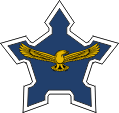
1994–2003,
Flugzeugkokarde,
Quelle, nach: Wikipedia (EN)

1957–1994,
Flugzeugkokarde,
Quelle, nach: Wikipedia (EN)

1947–1957,
Flugzeugkokarde,
Quelle, nach: Wikipedia (EN)
Lage:
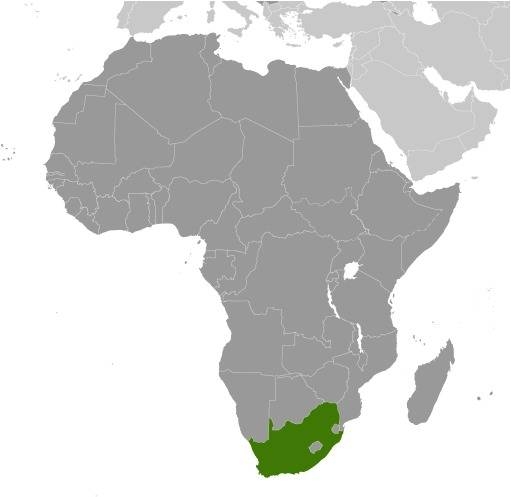
Quelle/Source: CIA World Factbook
Landkarte des Landes:
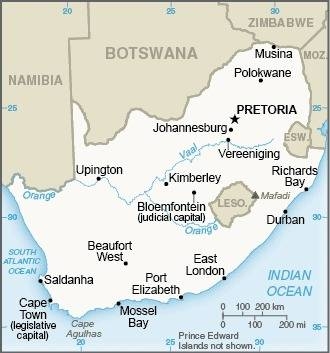
Quelle/Source: CIA World Factbook
Fläche: 1.221.037 km²
Einwohner: 60.143.000 (2021), davon 81% Schwarze, 8% Mulatten (Coloureds), 7% Europäer, 3% Asiaten
Religionen: 60 % Protestanten, 6,8 % Katholiken, 4,4 % Animisten, 3,2 % Anglikaner, 1,6 % Moslems, 11 % Nicht-Religiöse
Bevölkerungsdichte: 49 Ew./km²
Hauptstadt: Pretoria, 741.651 Ew. (2011)
Amtssprachen: Afrikaans, Englisch, 9 Bantusprachen
Währung: 1 Rand (ZAR, R) = 100 Cents
Zeitzone: MEZ + 1 h
Quelle: Wikipedia (DE),
CIA World Factbook
Antike/Mittelalter · im heutigen Südafrika leben Khoisanide Völker (so genannten Hottentotten oder Buschmänner)
1488 · der portugiesische Seefahrer Bartolomëu Diaz erreicht das Kap der Guten Hoffnung
1497 · der portugiesische Seefahrer Vasco da Gama umsegelt das Kap der Guten Hoffnung auf dem Weg nach Indien
15./16. Jahrhundert · Einwanderung schwarzer Bantu-Völker (Ndebele, Xhosa, Zulu, Sotho, Tswana, Swati, Venda, Tsonga ...)
1602 · die Niederländer nehmen das Land um das Kap der Guten Hoffnung in Besitz (Kapland), Besiedlung durch Buren (Bauern niederländischer und deutscher Abstammung, Eigenbezeichnung: Afrikaander)
1652 · Jan van Riebeeck gründet die Siedlung Kapstadt im Auftrag der Niederländischen Ostindienkompanie
1806 · Großbritannien besetzt das Kapland
1814 · Großbritannien nimmt Kapland offiziell in Besitz, Gründung der Britischen Kapkolonie
1833 · Aufhebung der Sklaverei
1836–1885 · die Buren verlassen in langen Treks das Kapland in Richtung Osten und Nordosten und gründen mehrere Burenrepubliken (1838 Natal, 1854 Oranje-Freistaat, 1853 Transvaal, 1883 Stellaland, 1883 Goshen, 1884 Neue Republik ...), die britische Kolonialmacht verfolgt die Buren
1845 · die Briten erobern Natal
1877 · die Briten unterwerfen die Südafrikanische Republik (Transvaal)
1881 · antibritischer Burenaufstand in Transvaal, Großbritannien gewährt Autonomie
1884 · die Briten besetzen die Walfischbucht (Walvisbaai, Walfish Bay) in Südwestafrika
1884 · Wiederherstellung der Südafrikanischen Republik in Transvaal
1885 · die Briten erobern Stellaland und Goshen, Anschluss an Britisch-Betschuanaland
1888 · die Briten erobern die Neue Republik, Anschluss an Transvaal
1899–1902 · Burenkrieg, Großbritannien unterwirft die Burenstaaten Oranje-Freistaat und Transvaal, beide werden Britische Kolonien, Verfolgung und Internierung der Buren, Einrichtung von Konzentrationslagern ("Conzentration Camps") für die Buren
1910 · Großbritannien schließt die Kolonien Oranje-Freistaat, Transvaal, Natal und Kapprovinz zur Südafrikanischen Union zusammen, Status eines britischen Dominions
09.07.1915 · Südafrika besetzt ganz Deutsch-Südwestafrika
1920 · Versailler Diktat, das Deutsche Reich verliert alle seine Kolonien, Deutsch-Südwestafrika wird ein Mandatsgebiet des Völkerbundes unter südafrikanischem Mandat
11.12.1931 · Westminsterstatut, Großbritannien gewährt der Südafrikanischen Union die Unabhängigkeit im Rahmen des Commonwealth of Nations
1939 · der Versuch im Zweiten Weltkrieg neutral zu bleiben scheitert
1939–1945 · Beteiligung am Zweiten Weltkrieg
1945 · Mitglied der UNO
1948 · Wahlsieg der Nationalen Partei, offizielle Einführung der Rassentrennung
1960 · Verbot des ANC und der PAC
31.05.1961 · die Südafrikanische Union verlässt den Commonwealth of Nations, Proklamation der Republik Südafrika
1976 · Gründung des Homelands Transkei (für Xhosa)
1971 · Gründung des Homelands Bophuthatswana (für Tswana)
1979 · Gründung des Homelands Venda (für Venda)
1983 · neue Verfassung, Präsidialsystem
1981 · Gründung des Homelands Ciskei (für Xhosa)
1984 · neue Verfassung
21.03.1990 · Südafrika gewährt Südwestafrika (Namibia) die Unabhängigkeit
01.03.1994 · Südafrika tritt die Walfischbucht an Namibia ab
27.04.1994 · neue Verfassung, offizielle Abschaffung der Rassentrennung, Auflösung der Homelands, Wiederaufnahme in den Commonwealth of Nations
1997 · neue Verfassung
2008 · landesweite, fremdenfeindliche Übergriffe durch schwarze Südafrikaner
2014 · die Partei "Economic Freedom Fighters" (EFF), eine extrem militante, radikale und rassistische Partei der schwarzen Bevölkerungsmehrheit, zieht erstmals ins Parlament ein und wird drittstärkste Kraft
2015 · landesweite, fremdenfeindliche Übergriffe durch schwarze Südafrikaner
2018 · Pläne für entschädigungslose Landenteignungen der weißen Farmer werden erörtert (seit 1994 werden jährlich ca. 60 weiße Farmer ermordet, seit 1994 haben auf Grund der Zustände ca. 1 Million weiße Staatsbürger das Land verlassen)
Quelle:
Atlas zur Geschichte,
World Statesmen,
Discovery '97,
www.focus.de,
Wikipedia (EN)
Der Name "Südafrika" beschreibt zu allererst die geographische Lage des Landes. Er geht auf die Burenrepublik Transvaal zurück, die 1853–1877 und 1884–1902 diesen Namen trug.
Quelle: Volker Preuß