mobile Ansicht, to the English Version tap the flag

- Republik Kiribati
- präsidiale Republik mit parlamentarischen Ansätzen
- Eigenbezeichnung: Ribaberikin Kiribati
- früherer Name: Gilbert-Inseln
• Flagge
• historische Flaggen
• Bedeutung/Ursprung der Flagge
• Wappen
• Bedeutung/Ursprung des Wappens
• Landkarte
• Zahlen und Fakten
• Dependenzen (Landesteile)
• Geschichte
• Ursprung des Landesnamens
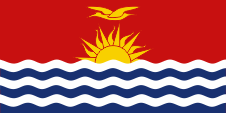
Nationalflagge,
Seitenverhältnis = 1:2,
Quelle, nach: Corel Draw 4


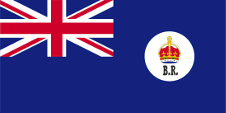
1893–1916,
Gilbert Islands Protectorate,
Flagge des Britischen Resident Commissioner,
Seitenverhältnis = 1:2,
Quelle, nach:
Flags of the World

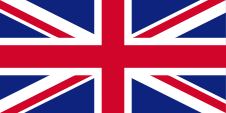
1916–1969,
Union Flag → quasi Nationalflagge,
Flagge von Großbritannien,
Seitenverhältnis = 1:2,
Quelle, nach: Wikipedia (EN)
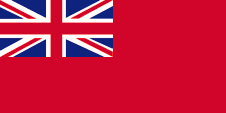
1916–1979,
Handelsflagge,
Seitenverhältnis = 1:2,
Quelle, nach: Flags of all Nations
1916–1971,
Gilbert and Ellice Islands Colony,
Flagge des Britischen Resident Commissioner,
Seitenverhältnis = 1:2,
Quelle, nach:
Flags of the World
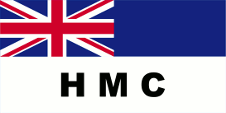
1916–1975,
Gilbert and Ellice Islands Colony,
Flagge des Zolls,
Seitenverhältnis = 1:2,
Quelle, nach:
Flags of the World
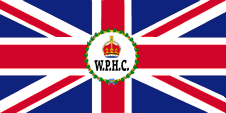
1877–1953,
Flagge des Hohen Kommissars für den Westpazifik,
Seitenverhältnis = 1:2,
Quelle, nach:
Flags of the World
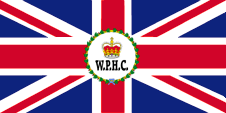
1953–1971,
Flagge des Hohen Kommissars für den Westpazifik,
Seitenverhältnis = 1:2,
Quelle, nach:
Flags of the World
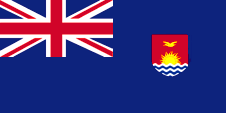
1937–1969,
Gilbert and Ellice Islands Colony,
Flagge der Regierung (Staatsflagge),
Seitenverhältnis = 1:2,
Quelle, nach:
Flags of the World
1969–1975,
Gilbert and Ellice Islands Colony,
National- und Staatsflagge,
Seitenverhältnis = 1:2,
Quelle, nach:
Flags of the World
1975–1979,
Gilbert Islands Colony,
National- und Staatsflagge,
Seitenverhältnis = 1:2,
Quelle, nach:
Flags of the World
1975–1993,
Gilbert Islands & Kiribati,
Flagge des Zolls,
Seitenverhältnis = 1:2,
Quelle, nach:
Flags of the World
Das Design der Flagge entspricht dem des Staatswappens und zeigt ein großes rotes Feld und darin einen Fregattvogel über einer oberhalb von drei blau-weißen Wellenlinien aufgehenden Sonne. Der Fregattvogel steht für Stärke und Freiheit und die Wellenlinen für den Pazifik, in dem die Inseln des Staates liegen. Die Flagge siegte in einem Wettbewerb, und wurde am 12.07.1979 anlässlich der Unabhängigkeit erstmals offiziell gehisst. Die Farben der Flagge von Kiribati folgen dem britischen BSI-Standard: Rot = 539 - Currant red, Gelb = 355 - Lemon, Blau = 110 - Roundel blue. Im Pantone-Mischsystem würde das folgenden Werten entsprechen: Rot = pt 1795, Gelb = pt 116, Blau = pt 294. In der britischen Kolonialzeit wurde die übliche blaue Dienstflagge (Blue Ensign) mit dem Union Jack in der Oberecke und dem Emblem des Landes im wehenden Teil der Flagge verwendet. Der Union Jack in der Oberecke wieß auf die Verbindungen zu Großbritannien hin. Großbritannien hatte in Jahr 1864 ein Flaggensystem eingeführt, in dem:
• Kriegsschiffe einen sogenannten "White Ensign" (Marineflagge), eine weiße Flagge oft mit durchgehendem roten Georgskreuz und mit dem Union Jack in der Oberecke,
• Handelsschiffe einen "Red Ensign" (auch "Civil Ensign" → Bürgerflagge genannt, die eigentl. Handelsflagge), eine rote Flagge mit dem Union Jack in der Oberecke, und
• Dienstschiffe einen "Blue Ensign" (Regierungsflagge → die eigentl. Staatsflagge), eine blaue Flagge mit dem Union Jack in der Oberecke führten.
Seit 1865 durften Schiffe von Kolonialregierungen einen Blue Ensign mit einem Badge (Abzeichen) im fliegenden Ende führen. Die jeweiligen Regierungen sollten entsprechene Bagdes zur Verfügung stellen. Handelsschiffe und seefahrende Privatpersonen aus Kolonien dürfen nur dann einen Red Ensign mit Badge führen, wenn von der britischen Admiralität eine entsprechende Erlaubnis für die Kolonie erteilt wurde. Ein solches Badge war oft eine auf einer Scheibe platzierte regionale landschaftliche Darstellung, zeigte oft Schiffe, historische Begebenheiten oder konnte auch nur eine Art Logo sein. Sehr oft zeigte ein Badge zusätzlich den Namen des Landes oder auch einen Wahlspruch. Einige Besitzungen hatten aber auch schon von Anfang an ein Wappen, bzw. erhielten über die Jahre eine eigenes Wappen und das Badge wurde abgeschafft. Um ein weitgehend einheitliches Erscheinungsbild im fliegenden Ende der Flaggen zu gewährleisten, wurden Wappen und auch andere Symbole auf einer weißen Scheibe in der Größe der früheren Badges dargestellt. Es gab hier aber auch Ausnahmen, denn einige Kolonien verwendeten diese weiße Scheibe nicht, und platzierten ihr Wappen oder auch nur das Wappenschild - manchmal auch vergrößert - direkt auf das Flaggentuch. Schon in den 40-er Jahre wurde dazu übergegangen die weiße Scheibe zu entfernen und das Wappen direkt zu platzieren oder vergrößert dazustellen. Dieser Umstellungsprozess erfolgte allmählich, nirgendwo gleichzeitig und vollständig. In einigen britischen Besitzungen sind bis heute Flaggen mit der weißen Scheibe in Gebrauch, in anderen nicht mehr und in einigen Gebieten gibt es beide Varianten nebeneinander. Seit 1916 bildeten die Ellice-Inseln zusammen mit den Gilbert-Inseln die Kolonie Gilbert- und Ellice-Inseln. Ab 1937 über die Abrennung der Ellice-Inseln in den Jahren 1975/1976 hinaus, wurde der Blue Ensign mit dem Wappenschild der Kolonie bis zur Unabhängikeit verwendet. Es zeigte einen gelben Fregattvogel (Symbol von Stärke und Freiheit) auf rotem Grund über einer aufgehenden gelben Sonne, darunter drei gewellte blau-weiße Streifen (Symbol für den Pazifik, in dem die Inseln liegen).
Quelle:
Die Welt der Flaggen, Flaggen Wappen Hymnen, Wikipedia (D)
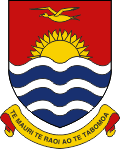
seit 1979,
Wappen von Kiribati,
Quelle, nach: Flags of the World
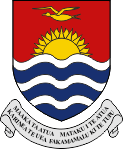
1937–1979,
Wappen der Gilbert- und Ellice-Inseln,
Quelle, nach: Flags of the World
Das Staatswappen, das der Kolonie der Gilbert- und Ellice-Inseln am 01.05.1937 verliehen wurde, zeigt, genau wie die Flagge, einen gelben Fregattvogel in rotem Feld über einer aufgehenden gelber Sonne, darunter drei gewellte blau-weiße Streifen. Das goldene Spruchband unter dem Wappen trägt seit 1979 das Motto "Te Mauri Te Raoi ao Te Tabomoa" ("Gesundheit, Frieden, Wohlstand", nach anderer Übersetzung "Glück, Frieden und Fortschritt"). Das vorher silberne Spruchband trug vorher in zwei Sprachen (Gilbertesisch und Tuvaluisch) das Motto "Fürchte Gott und ehre den König".
Quelle:
Die Welt der Flaggen, Flaggen Wappen Hymnen, Flags of the World
Lage:
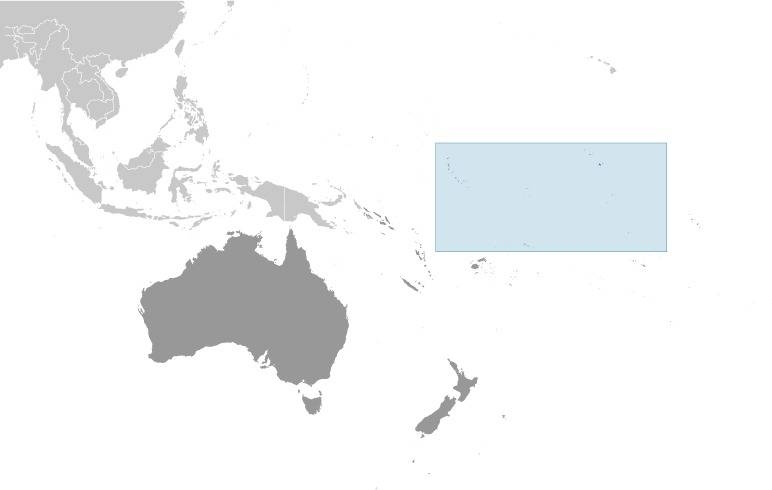
Quelle/Source: CIA World Factbook
Landkarte des Landes:
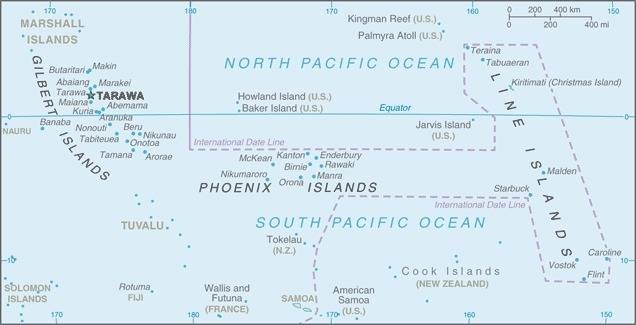
Quelle/Source: CIA World Factbook
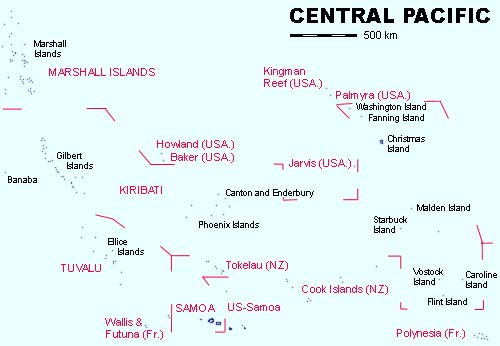
Quelle/Source: Volker Preuß
Fläche: 726 km², Dependenzen (← hier klicken)
Einwohner: 119.438 (2020), davon 96% Mikronesier (Gilbertesen), 1,2% Europäer, 1% Polynesier, 0,5% Chinesen, Banabaer, Tuvaluer
Religionen: 59% Katholiken, 30% Protestanten, 8% andere Christen, 2% Bahai
Bevölkerungsdichte: 165 Ew./km²
Hauptstadt: South Tarawa (Gilbertinseln), 63.439 Ew. (2020)
Amtssprachen: Englisch, Gilbertesisch (Kiribatisch)
Währungen: 1 Australischer Dollar (AUD) = 100 Cent, 1 Kiribati-Dollar (KID) = 100 Cent
Zeitzone: MEZ + 11 bis + 13 h
Quelle: Wikipedia (D)
Gilbertinseln
Hauptinselgruppe von Kiribati
281 km², 108.331 Ew. (2020),
1537 · der Spanier Grijaloa entdeckt die Gilbert-Inseln
1777 · der Brite James Cook erforscht die Gilbert-Inseln
1860 · britische Kolonisierung
1892 · die Gilbert-Inseln werden britisches Protektorat
1916 · mit den Ellice-Inseln zusammengefasst
1979 · als Kiribati unabhängig
Ocean-Insel (Banaba)
6 km², 333 Ew. (2020),
1900 · Entdeckung von Phosphatvorkommen, britische Inbesitznahme
1916 · zu den Gilbert- und Ellice-Inseln
1979 · zu Kiribati
1981 · Forderungen nach Unabhängigkeit
Canton und Enderbury
zur Gruppe der Phönix-Inseln,
14 km², unbewohnt,
anfänglich zwischen USA und Großbritannien umstrittene Inselgruppe
1939 · Bildung eines britisch-US-amerikanischen Kondominiums
1979 · zu Kiribati
Phönix-Inseln
28 km², 41 Ew. (2020),
1889 · britische Inbesitznahme
1916 · zu den Gilbert- und Ellice-Inseln
1979 · zu Kiribati
1995 · Umsiedlung vom 1 500 Menschen von Tarawa auf Eilande der Phoenix-Inseln
Washington-Insel (Teraina)
zur Gruppe der Linien-Inseln,
14 km², 1.893 Ew. (2020),
1889 · britische Inbesitznahme
1916 · zu den Gilbert- und Ellice-Inseln
1979 · zu Kiribati
Fanning-Insel (Tabuaeran)
zur Gruppe der Linien-Inseln,
34 km², 1.990 Ew. (2020),
1889 · britische Inbesitznahme
1916 · zu den Gilbert- und Ellice-Inseln
1979 · zu Kiribati
Christmas-Insel (Kirimati)
zur Gruppe der Linien-Inseln,
388 km², 7.369 Ew. (2020),
1777 · vom Briten James Cook entdeckt
1888 · britische Inbesitznahme
1916 · zu den Gilbert- und Ellice-Inseln
1957 · britische Atomtests
1979 · zu Kiribati
Malden-Insel
zur Gruppe der Linien-Inseln,
40 km², seit 1927 unbewohnt,
Spuren vorzeitlicher Besiedelung
1864 · britische Inbesitznahme
1916 · zu den Gilbert- und Ellice-Inseln
1957 · britische Atomtests
1979 · zu Kiribati
Starbuck-Insel
zur Gruppe der Linien-Inseln,
16 km², seit 1920 unbewohnt,
1866 · britische Inbesitznahme
1916 · zu den Gilbert- und Ellice-Inseln
1920 · der Guano-Abbau wird eingestellt
1979 · zu Kiribati
Vostock-Insel
zur Gruppe der Linien-Inseln,
0,5 km², unbewohnt,
1916 · zu den Gilbert- und Ellice-Inseln
1979 · zu Kiribati
Caroline-Insel
zur Gruppe der Linien-Inseln,
4 km², seit 1930 unbewohnt,
1795 · vom Briten W. R. Broughton entdeckt
1868 · britische Inbesitznahme
1916 · zu den Gilbert- und Ellice-Inseln
1979 · zu Kiribati
Flint-Insel
zur Gruppe der Linien-Inseln,
3 km², seit 1930 unbewohnt,
1916 · zu den Gilbert- und Ellice-Inseln
1979 · zu Kiribati
1537 · der Spanier Grijaloa entdeckt die Gilbert-Inseln
1568 · der Spanier Alvaro de Mendana entdeckt die Gilbert-Inseln
1606 · der Spanier Quiros erforscht die Gilbert-Inseln
1777 · der Brite James Cook erforscht die Gilbert-Inseln
1857 · Beginn der christlichen Missionierung
1860 · Besiedelung und Kolonisierung durch die Briten, Anlage von Plantagen, Versklavung großer Teile der Bevölkerung
1888 · britische Inbesitznahme der Christmas-Insel und weiterer entlegener Inseln und Inselgruppen
1892 · Großbritannien nimmt die Gilbert-Inseln in Besitz, Zusammenlegung mit den Ellice-Inseln (das heutige Tuvalu) zum Protektorat Gilbert- und Ellice-Inseln
1900 · die Briten entdecken von Phosphatvorkommen auf Insel Banaba, britische Inbesitznahme
1916 · das Protektorat Gilbert- und Ellice-Inseln wird Britische Kronkolonie
1941–1943 · die Gilbert- und Ellice-Inseln sind von japanischen Truppen besetzt
1957 · britische Atomtests bei Christmas Island (Kirimati)
01.10.1975 · Abtrennung der Ellice-Inseln als eigenständige Kolonie
1977 · Großbritannien gewährt innere Autonomie für die Gilbert-Inseln
01.10.1978 · die Ellice-Inseln werden unter dem Namen Tuvalu unabhängig
12.07.1979 · die Gilbert-Inseln werden unter dem Namen Kiribati unabhängig
1981 · die Insel Banaba fordert die Unabhängigkeit von Kiribati
1988 · Umsiedlung vom 5 000 Menschen von Tarawa auf Eilande der Linien-Inseln
1995 · Umsiedlung vom 1 500 Menschen von Tarawa auf Eilande der Phoenix-Inseln
1996 · die Datumsgrenze, die zuvor zwischen den Gilbert- und den Phönix-Inseln verlief, wird hinter die östliche Grenze Kiribatis verlegt
1999 · Beitritt zur UNO
Quelle:
Atlas zur Geschichte,
Wikipedia (D),
Discovery '97
Der Name des Landes, den die Einheimischen "kiribas" aussprechen, geht auf den Namen "Gilbert-Inseln" zurück, auf einheimische Art und verändert ausgesprochen und sprachlich abgeschliffen.
Quelle: Handbuch der geographischen Namen