mobile Ansicht, to the English Version tap the flag

- Republik Weißrussland
- präsidiale Republik
- Eigenbezeichnung: Respublika Belarus
- früherer Name: Weißruthenien
• Flaggen
• historische Flaggen
• regionale Flagge
• Bedeutung/Ursprung der Flagge
• Wappen
• Bedeutung/Ursprung des Wappens
• Flugzeugkokarde
• Landkarte
• Zahlen und Fakten
• Geschichte
• Ursprung des Landesnamens
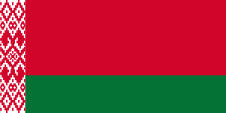
Nationalflagge,
Seitenverhältnis = 1:2,
Quelle, nach: Wikipedia (D)


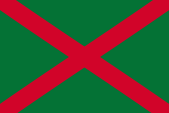
Flagge des Grenschutzes,
Seitenverhältnis = 2:3,
Quelle, nach: Wikipedia (D)
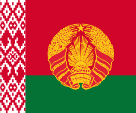
Flagge des Präsidenten,
Seitenverhältnis = 1:1,
Quelle, nach: Wikipedia (D)


1917–1919,
Nationalflagge,
Seitenverhältnis = 2:3,
Quelle, nach: Wikipedia (D)
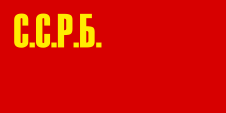
1919,
Flagge der Sozialistischen Sowjetrepublik Weißrussland,
Seitenverhältnis = 1:2,
Quelle, nach: World Statesmen

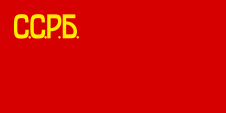
1920–1927,
Flagge der Sozialistischen Sowjetrepublik Weißrussland,
Seitenverhältnis = 1:2,
Quelle, nach: World Statesmen
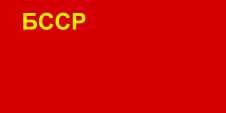
1927–1937,
Flagge der Weißrussische Sozialistische Sowjetrepublik,
Seitenverhältnis = 1:2,
Quelle, nach: World Statesmen
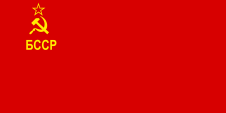
1937–1951,
Flagge der Weißruss. Soz. Sowjetrepublik,
Seitenverhältnis = 1:2,
Quelle, nach: World Statesmen
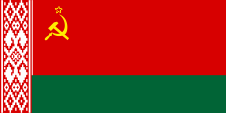
1951–1991,
Flagge der Weißruss. Soz. Sowjetrepublik,
Seitenverhältnis = 1:2,
Quelle, nach: World Statesmen
1991–1995,
Nationalflagge,
Seitenverhältnis = 1:2,
Quelle, nach: Wikipedia (D)
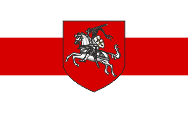
1991–1995,
Nationalflagge - inoffizielle Variante mit Wappen
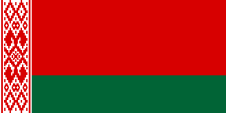
1995–2012,
Nationalflagge,
Seitenverhältnis = 1:2,
Quelle, nach: Wikipedia (D)


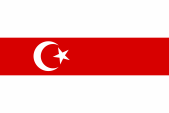
Flagge der islamischen Tataren in Weißrussland,
Seitenverhältnis = 2:3,
Quelle, nach: Wikipedia (D)
Die weiß-rot-weiße bürgerliche Flagge Weißrusslands erschien unmittelbar nach der Abdankung des russischen Zaren im Jahre 1917, und geht auf die heraldische Figur des weißen Ritters von Litauen zurück (Pahonia). Nach einer anderen Theorie repräsentieren die Farben den Namen des Landes, Weiß = "Bela", Rot = "Rus". Aus dem Wort "Rus" leitet sich der Name "Russland" ab, denn es bezieht sich auf die rotblonden Haare der Normannen, der Urväter des russischen Staates.
Nach einem erfolgreichen kommunistischen Putsch wurde Jahre 1919 eine einfarbige rote Flagge mit den goldenen Initialen "SSRB" im Obereck eingeführt, die etwa 1937 um einen goldenen Hammer und Sichel ergänzt wurde. Am 25.12.1951 wurde eine neue Flagge eingeführt. Sie zeigte zwei Streifen in Rot und Grün im Verhältnis 2:1, und am Liek auf einem roten senkrechten Balken ein Volkskunst-Ornament und im Obereck des roten Streifens Stern, Hammer und Sichel. Rot steht für Kommunismus, Grün für die Wälder und Landwirtschaft. Das rot-weiße Ornament symbolisiert die Geschichte des Landes. Am 19.09.1991 wurde im Obersten Sowjet der Unabhängigen Republik Weißrussland beschlossen, die bürgerlichen Staatssymbole aus den Jahren 1917 bis 1919 wieder einzuführen.
Nachdem A. G. Lukaschenko im Jahre 1994 Präsident geworden war, forcierte er im Rahmen seiner prosowjetischen Politik die Wiedereinführung der alten Symbole. So wurde von Veteranenrganisationen, natürlich unter Leitung des Staatspräsidenten Lukaschenko, am am 14.05.1995 eine Volksabstimmung über die Staatssymbole initiiert. Jedoch waren vorher kleine Änderungen empfohlen worden. Der Hammer, die Sichel und der Stern entfielen, und das Ornament erschien in Rot auf Weiß. Die neue prokommunistische Flagge wurde am 07.06.1995 offiziell eingeführt und später noch einmal leicht abgeändert (senkrechter weißer Streifen). Der gleiche Volksentscheid beschloss auch über das neue alte Staatswappen. Es wurde am 07.06.1995 offiziell eingeführt. Die Farben der Nationalflagge sind in der "Verordnung STB 911-2008 Nationalflagge der Republik Belarus" geregelt. Sie werden folgendermaßen angegeben: Rot = Pantone 186, Grün = Pantone 356. Am 20.02.2012 wurden einige kleine Änderungen an der Flagge beschlossen. Die schmalen roten Streifen links und rechts des Volkskunst-Ornaments sind wurden entfernt, es reicht jetzt direkt bis zum Rand, und die Breite des Ornaments wurde auf ein Neuntel der Flaggenbreite festgelegt.
Quelle: Flaggen und Wappen der Welt,
Flags of the World,
Die Welt der Flaggen,
Flaggen und Wappen, Wikipedia (EN)
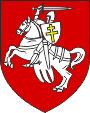
1917–1919, 1991–1995,
Wappen von Weißrussland,
Quelle: Wikipedia (D)
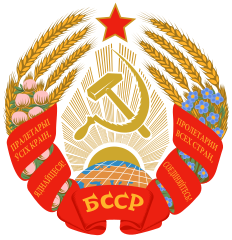
1981–1991,
Wappen der Weißruss. Soz. Sowjetrepublik,
Quelle: Jam123, Public domain, via Wikimedia Commons
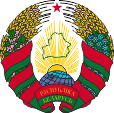
1995–2020,
Wappen von Weißrussland,
Quelle: Wikipedia (D)
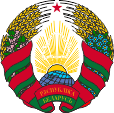
seit/since 2020,
Wappen von Weißrussland,
Quelle: Wikipedia (D)
Das neue prokommunistische Wappen wurde, wie die Flagge, am 07.06.1995 über einen Volksentscheid offiziell eingeführt. Es ähnelt dem Wappen der Sowjetrepublik. Es zeigt anstelle von Hammer und Sichel eine grüne Konturlandkarte der Weißrussischen Republik in goldenen Sonnenstrahlen oberhalb der Erdkugel. Über der Landkarte befindet sich ein roter fünfzackiger Stern. Das ganze Wappen ist von einem Kranz goldener Ähren, mit von rechts eingeflochtenen Kleeblüten, und von links eingeflochtenen Leinblüten, umgeben. Die Ähren sind anstatt von einem roten von einem grün-roten Band umbunden, welches im unteren Teil die goldene Aufschrift "Respublika Belarus" trägt. Im Jahre 2020 wurde das Wappen ein klein wenig abgeändert: Die Kontur der Landkarte wurde von Grün auf Gold abgeändert und der rote Stern ein klein wenig vergrößert.
Das bürgerliche Wappen von Weißrussland wird "Pahonia" genannt, und ist das nationale Emblem von Weißrussland und das historische Wappen vieler Städte in Weißrussland. Es entstand im alten Navahradak (Novgorodok), der ersten Hauptstadt des Großherzogtums Litauen. "Pahonia" heißt "Verfolgung" und symbolisiert die Verfolgung eines Feindes in Verteidigung der Heimat. Es war das Wappen des Großherzogtums Litauen, zu welchem Weißrussland über 5 Jahrhunderte gehörte. Im Jahre 1918 übernahm die Weißrussische Demokratische Republik es als Wappen, genauso wie im Jahre 1991 das Parlament der Unabhängigen Republik Weißrussland.
Quelle:
Flaggen und Wappen der Welt,
Wikipedia (D),
Volker Preuss

Flugzeugkokarde,
Quelle, nach: Wikipedia (EN)
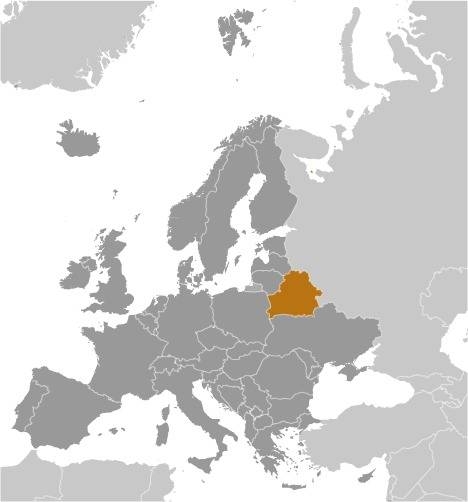
Lage:
Quelle: CIA World Factbook
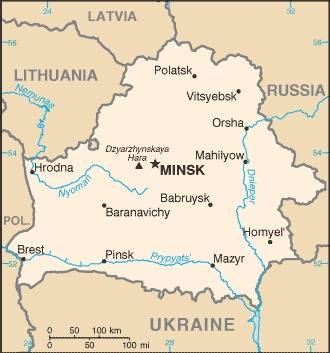
Landkarte des Landes:
Quelle: CIA World Factbook
Fläche: 207.595 km²
Einwohner: 9.504.700 (2017), davon 84% Weißrussen (Kleinrussen), 8% Russen (Großrussen), 3% Polen, 2% Ukrainer, und auch 3.500 Deutsche
Religionen: 48% Russisch Othodox, 7% Katholiken, 41% Nicht-Religiöse
Bevölkerungsdichte: 46 Ew./km²
Hauptstadt: Mensk (Minsk), 2.020.600 Ew. (2020)
Amtssprachen: Weißrussisch, Russisch
Währung: 1 Weißrussischer Rubel (Br, BYN) = 100 Kopeken
Zeitzone: MEZ + 2 h
Quelle: Wikipedia (D)
882–1240 · zur Kiewer Rus
1240 · mongolische Eroberung
1322 · zu Litauen
1569 · zu Polen
1654 · Gebietsabtretungen an Russland
1772–1795 · schrittweise Angliederung an Russland
1917 · deutsche Besetzung
25.03.1918 · Proklamation der Weißrussischen Republik
1919 · kommunistischer Putsch, Errichtung der Sowjetrepublik
1919 · Besetzung durch Polen
1920 · sowjetische Eroberung
1921 · Gebietsabtretungen an Polen
1922 · Beitritt zur Sowjetunion (UdSSR)
1941–1944 · deutsche Besetzung
1945 · Angliederung polnischer Gebiete
August 1991 · Unabhängigkeit
1994 · Beginn der sowjetischen Restauration
Quelle: Atlas zur Geschichte,
World Statesmen,
Wikipedia (D)
Der Name „Weißrussland“ ist ein wörtliche übersetzung des Wortes „Belarus“, der weißrussische Eigenname des Landes. Der Ursprung liegt in der früher bei den Slawen oder auch bei den Mongolen üblichen Bezeichnung der Himmelsrichtungen mit Farben. Slawisch: Norden = Weiß, Osten = Rot, Süden = Schwarz, Westen = Blau; Mongolisch: Norden = Schwarz, Osten = Blau, Süden = Rot, Westen = Weiß. Der alte lateinische Name Russlands ist Ruthenien, die Ruthenen waren die gemeinsamen Vorfahren der heutigen Ukrainer, Russen und Weißrussen. Ruthenien war vom 13. bis zum 15. Jahrhundert von den Mongolen besetzt oder abhängig, der Zeitraum in dem sich das Volk der Weißrussen herausbildete, und es ist nicht mehr feststellbar, ob mit „Weiß“ nun der Norden oder der Westen gemeint war. „Weißrussland“ heißt also „Nordrussland“ oder „Westrussland“. Ein ähnlicher, heute nicht mehr gebräuchlicher Name ist "Rotrussland", das Ostgalizien der späteren Zeit, also die Region um Lemberg in der heutigen Ukraine. Rotrussland liegt im Osten der ehemaligen Kiewer Rus, ein Hinweis darauf, das hier mit Rot Osten gemeint ist.
Der Name "Russland" geht auf die Staatsbezeichnung der mittelalterlichen Russischen Staaten zurück, die "Rus". über die Bedeutung des Wortes "Rus" sind zwei Theorien bekannt: 1.) "Rus" geht auf das germanische Wort für "Rot" zurück, und bezieht sich auf die rotblonden Haare der Normannen, der Urväter des russischen Staates. 2.) "Rus" geht auf das germanische Wort für "Ruderer" zurück, die Finnen nennen die Schweden bis heute "Ruotsi". Gerne wird auch folgende sehr poetische aber unwahrscheinliche Herleitung des Ursprungs des Namens bemüht. Die Farbe Weiß im Landesnamen sei auf die vielen Birkenwälder des Landes zurückzuführen, deren weiße Stämme das Erscheinungsbild des Landes prägen.
Heute gibt es Versuche mittels politisch gesteuerter Sprachakrobatik einen Unterschied zwischen Belarus als Weißrussland und Russland selbst herbeizureden, weil die Schreibung mit nur einem "s" keine Identifikation mit Russland zulassen würde. Aber, alle ruthenischen Länder haben ihr Wurzel in einem einzigen Staat, der Kiewer Rus, auch in ethnisch gemeinsamen Vorfahren, den Ruthenen. Es spielt dabei keine Rolle, ob diese Länder heute Russland, Ukraine oder Weißrussland heißen. Es handelt sich eindeutig um sogenanntes "framing", das mit der Übernahme von bestimmten, logisch klingenden Formulierungen politisch agitiert und manipuliert. Kurioserweise zeigt sich gerade bei dieser politischen Sprachregelung – mit dem Hinweis auf die Rus mit einem "s" – die Gemeinsamkeit der ruthenischen Staaten.
Quelle: Handbuch der geographischen Namen,
Volker Preuss