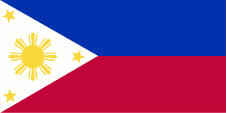
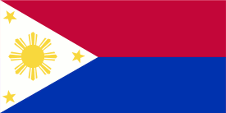
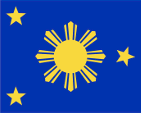
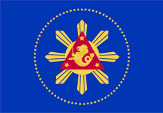
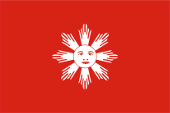
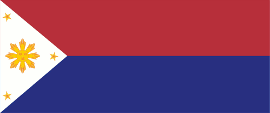
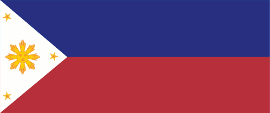
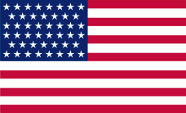
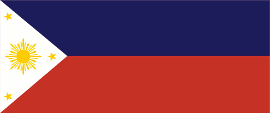
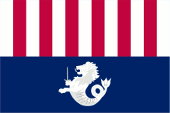
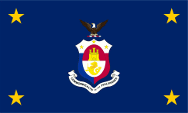
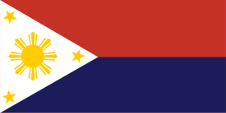
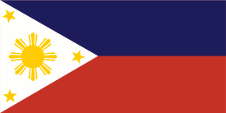
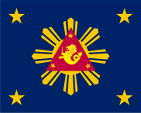
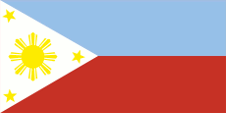
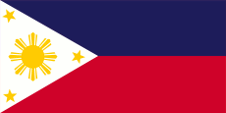
Die Flagge der Philippinen wurde am 12.06.1898 erstmals offiziell gehisst und zeigte nach kleineren Veränderungen in der Form des weißen Dreiecks und der Sonne in dessen Mitte ab 1936 das heutige Design. Sie zeigt zwei waagerechte Streifen in Blau und Rot mit einem gleichschenkligen weißen Dreieck am Liek. Innerhalb des Dreiecks befindet sich eine goldene achtstrahlige Sonne, umgeben von drei goldenen fünfzackigen Sternen. Die Gestaltungselemente der Flagge der Philippinen sind weitgehend freimaurerischen Ursprungs. So das Sonnenemblem und auch das gleichschenklige Dreieck. Die Farbe Rot steht für Mut, Tapferkeit, Ritterlichkeit und Entschlossenheit, Blau steht für Idealismus und Patriotismus, und Weiß für Reinheit und Frieden. Die Sonne verkörpert die Freiheit und repräsentiert jene acht Provinzen, von denen die Freiheitsbewegung ihren Ausgang nahm. Die drei Sterne stehen für die drei Hauptlandesteile: die beiden Inseln Luzon und Mindanao und die Visayan-lnselgruppe. Im Kriegszustand wird die Flagge offiziell, also per Dekret, umgedreht gehisst, so dass der rote Streifen oben zu sehen ist. Das war zuletzt zwischen 1936 und 1945 so praktiziert worden. Die Farben der Flagge der Philippinen sind zuletzt Im „Republic Act Nr. 8491“ vom 1998 festgelegt worden, wie es scheint auf: Blau = Pantone 286, Rot = Pantone 193 und Gelb = Pantone 122. Sie wurden erstmals 1955 festgelegt, allerdings auf „dunkelblau“ und „karmesinrot“. Über die Jahre wurde der Farbton des Blau recht oft geändert, so ab 1985 auf hellblau, ab 1986 wieder dunkelblau und seit 1998 könnte man von „mittelblau“ reden. Durch die häufigen Änderungen, die immer ihre Zeit brauchen bis sie sich auch in der Praxis durchgesetzt haben, wird es immer wieder zu Verwirrungen gekommen sein, so dass bis heute recht unterschiredliche Angaben dazu zu finden sind. Sicher ist, dass das Blau in der Nationalflagge das gleiche zu sein hat wie das Blau in der Flagge des Präsidenten. Diesen Rückschluss lassen Fotos zu, auf denen beide Flaggen abgebildet sind. Die Flagge der Philippinen hat ihe Wurzeln in der anti-spanischen Freiheitsbewegung und geht indirekt auf die Flagge der im Jahre 1892 gegründeten Bewegung "Katipunan" zurück. Diese zeigte zunächst ein, später drei weiße "K" auf rotem Grund. Im Jahre 1896 wurden die Buchstaben entfernt und durch die Abbildung einer weißen achstrahligen Sonne mit einem Gesicht ersetzt. Nach verschiedenen Varianten wurde schließlich am 12.06.1898 – dem Tag der ersten Unabhängigkeitserklärung – die heutige Flagge gehisst. Unter der US-amerikanischen Kolonialherrschaft war die Flagge zwischen 1907 und 1917 verboten (nach anderen Quellen bis 1920). Das am 24.03.1934 proklamierte Philippine Commonwealth übernahm die Flagge offiziell am 14.05.1935. Die 1941 eindringenden Japaner untersagten die Verwendung der Flagge ebenfalls, allerdings nur bis zum 14.10.1943, als Japan die Philippinen in eine Art Unabhängigkeit entlies. Als die Philippinen am 04.07.1946 von den USA in die Unabhängigkeit entlassen wurden, wurde die Flagge für die Republik Philippinen übernommen. Die Präsidentenflagge der Philippinen ist gestalterisch an der Flagge des Präsidenten der USA orientiert. Sie zeigt ein einfarbiges blaues Tuch mit einem Kreis aus vielen weißen Sternen und darin eine goldene achtstrahlige Sonne. Die Sonne ist von einem roten Dreieck welches einen goldenen Seelöwen und drei goldenen Sterne zeigt bedeckt. Die vielen weißen Sterne sollen die 75 Provinzen der Republik repräsentieren, jedoch entspricht die Anzahl der Sterne auf der Flagge nicht nicht deren tatsächlicher Anzahl.
Quelle:
Flaggen Wappen Hymnen,
Flaggen und Wappen der Welt,
Die Welt der Flaggen,
Wikipedia (EN),
getrealphilippines.com
seit 1998,
Wappen der Philippinen,
Quelle, nach: Wikipedia (ES),
officialgazette.gov.ph file: evolutionofPHLflag
1905–1935,
Wappen der Philippinen,
Quelle, nach: Wikipedia (ES),
officialgazette.gov.ph file: evolutionofPHLflag
1935–1946,
Wappen der Philippinen,
Quelle, nach: Wikipedia (ES),
officialgazette.gov.ph file: evolutionofPHLflag
1943–1945,
Wappen der Philippinen,
Quelle, nach: Wikipedia (ES),
officialgazette.gov.ph file: evolutionofPHLflag
1946–1978,
Wappen der Philippinen,
Quelle, nach: Wikipedia (ES),
officialgazette.gov.ph file: evolutionofPHLflag
1978–1985,
Wappen der Philippinen,
Quelle, nach: Wikipedia (ES),
officialgazette.gov.ph file: evolutionofPHLflag
1985–1986,
Wappen der Philippinen,
Quelle, nach: Wikipedia (ES),
officialgazette.gov.ph file: evolutionofPHLflag
1986–1998,
Wappen der Philippinen,
Quelle, nach: Wikipedia (ES),
officialgazette.gov.ph file: evolutionofPHLflag
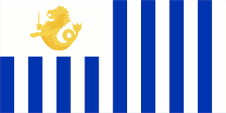
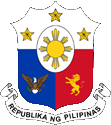
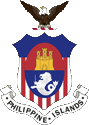
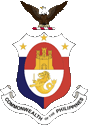
Das heutige Staatswappen wurde wurde anlässlich der Unabhängigkeit am 04.07.1946 eingeführt. Die Grundfarben, die Sonne und die Sterne wurden der Flagge entnommen. Der Löwe erinnert an die spanische (1596–1898), der Adler mit den drei Pfeilen in den Fängen an die US-amerikanische Herrschaft (1898–1942 und 1945–1946). Die Sonne in der Mitte symbolisiert die Unabhängigkeit des Landes. Das Wappen wird unterhalb durch ein weißes Schriftband ergänzt. Ursprünglich trug es den Landesnamen als englische Inschrift "Republic of the Philippines" (Republik Philippinen), die 1981 ersetzt wurde durch die Tagalog-Inschrift "Isang Bansa Isang Diva" (Ein Volk ein Geist). Nach dem Ende der Präsidialdiktatur des Ferdinand Marcos wurde 1987 wieder die Staatsbezeichnung in das Spruchband eingesetzt, diesmal jedoch in Tagalog: "Republika ng Pilipinas". Ein sehr wichtiges Element der Heraldik der Philippinen ist der sogenannte Seelöwe, ein Mischwesen aus Löwe und Delfin, ein Schwert in der Hand haltend. Dieses Symbol war 1596 der Stadt Manila verliehen worden und geht wahrscheinlich auf das 1565 gegründete Generalkapitanat der Philippinen zurück, das dem Vizekönigreich Neuspanien unterstellt war und bis 1898 bestand. Das Wappen des Generalkapitanats zeigte den Seelöwen in Grün und mit einer goldenen Krone auf goldenem Untergrund. Bereits 1998 wurde ein modifiziertes Wappen eingeführt, das auf den US-Adler und den spanischen Löwen verzichtet, weil sie die koloniale Vergangenheit präsentieren, jedoch wurde es offiziell noch nicht bestätigt.
Quelle:
Flaggen Wappen Hymnen,
Flaggen und Wappen der Welt,
Die Welt der Flaggen,
Wikipedia (EN),
Volker Preuß

Flugzeugkokarde,
Quelle/Source, nach/by: Wikipedia (EN)

1936–1942, 1945–1947,
Flugzeugkokarde,
Quelle/Source, nach/by: Wikipedia (EN)
Lage:
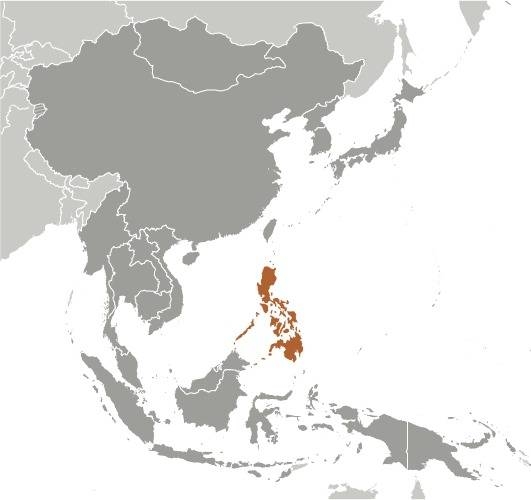
Quelle/Source: CIA World Factbook
Landkarte des Landes:
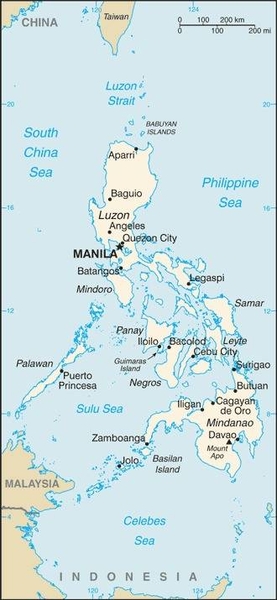
Quelle/Source: CIA World Factbook
Fläche: ca. 300.000 km²
Einwohner: 109.035.343 (2020), davon 24.4% Tagalog, 11.4% Bisaya/Binisaya, 9.9% Cebuano, 8.8% Ilocano, 8.4% Hiligaynon/Ilonggo, 6.8% Bikol/Bicol, 4% Waray, 1,5% Chinesen, ca. 23% anderer lokaler Abstammung, ferner 300.000 US-Amerikaner, auch Inder, Araber und Japaner
Religionen: 80% Katholiken, 6% Moslems, 2,5% Protestanten
Bevölkerungsdichte: 363 Ew./km²
Hauptstadt: Manila, 1.780.148 Ew. (2015)
Amtssprachen: Philippinisch (oder Pilipino), Englisch
sonstige Sprachen: Tagalog, Cebuano, Spanisch
Währung: 1 Philippinischer Peso (PHP) = 100 Centavos
Zeitzone: MEZ + 7 h
Quelle:
Wikipedia (DE),
Wikipedia (EN),
CIA World Factbook
14./15. Jhd. · der Sulu-Archipel und die Insel Mindanao gehören zum indonesischen Reich Madschapahit
15./16. Jhd. · Entstehung von lokalen Monarchien auf Cebu, Luzon und dem Sulu-Archipel, Islamisierung
1521 · Entdeckung durch den im Auftrag Spaniens erstmals die Welt umsegelnden portugiesischen Seefahrer Fernão de Magalhães
1526/1527 · Erforschung von Mindanao durch eine Expedition des Spaniers Loaisa
1542/1543 · der spanische Seefahrer López de Villalobos erreicht die Inseln und benennt sie nach Philipp II. dem Thronfolger des spanischen Königs Karl V.
1565 · Gründung des Generalkapitanats der Philippinen (dem Vizekönigreich Neuspanien unterstellt), Beginn der Eroberung und Kolonisierung durch Spanien
1571 · Gründung von Manila
1588 · anti-spanischer Aufstand in und um Manila
1744–1830 · nach einem Aufstand faktische Unabhängigkeit der Insel Bohol
1762 · Eroberung und Besetzung von Manila durch die Briten
1764 · Abzug der Briten
1872 · anti-spanischer Cavite-Aufstand
1892 · Gründung der Freiheitsbewegung "Katipunan"
21.04.–10.12.1898 · Spanisch-Amerikanischer Krieg (01.05.1898: Sieg der USA in der Seeschlacht in der Manila-Bucht, 12.06.1898: die Philippinen proklamieren die Unabhängigkeit, Juni 1898: Eroberung von Puerto Rico durch US-amerikanische Truppen, 03.07.1898: Sieg der USA in der Seeschlacht von Santiago de Cuba, 13.08.1898: US-Truppen besetzen Manila, 14.08.1898: Kapitulation der spanischen Truppen auf den Philippinen)
10.12.1898 · Frieden von Paris, Spanien tritt die Philippinen, Kuba, Puerto Rico und Guam an die USA ab
1916 · die USA gewähren den Philippinen beschränkte Selbstverwaltung
24.03.1934 · erweiterte Selbstverwaltung im Rahmen eines "Commonwealth"
10.12.1941 · Beginn der Besetzung durch japanische Truppen
Mai 1942 · die gesamten Philippinen sind unter japanischer Kontrolle, Gewährung beschränkter Selbstverwaltung unter japanischer Oberhoheit
14.10.1943 · Japan gewährt den Philippinen "Unabhängigkeit", Status eines Satellitenstaats
20.10.1944 · Landung US-amerikanischer Truppen, Beginn der Rückeroberung und Rekolonialisierung durch die USA
04.07.1946 · Proklamation der Unabhängigkeit, die USA sichern sich dauerhaften militärischen, politischen und wirtschaftlichen Einfluss durch Pacht von 23 Militärstützpunkten auf 99 Jahre (bis 2045)
30.08.1951 · Militärpakt mit den USA
1954 · die Philippinen sind Gründungsmitglied der SEATO
1955 · Laurel-Langley-Abkommen, die USA erhalten Sonderrechte auf den Philippinen
1959 · die USA reduzieren die Anzahl ihrer Militärstüztzpunkte auf sieben und reduzieren die Dauer der Pacht auf 25 Jahre (bis 1971)
1965 · Ferdinand Marcos wird Präsident
1972–1986 · Präsidialdiktatur ("Neue Gesellschaft") des Ferdinand Marcos
1966 · die Philippinen entsenden 2000 Soldaten nach Vietnam
1977 · Auflösung der SEATO
1986 · Aktivitäten der moslemischen NMLF-Rebellengruppe im Süden des Landes (NMLF = National Moro Liberation Front)
1996 · Waffenstillstand zwischen Regierung und NMLF, eine Splittergruppe, die MILF, setzt den Kampf fort (MILF = Moro Islamic Liberation Front)
1997 · Waffenstillstand zwischen Regierung und MILF, eine Splittergruppe, die "Abu-Sayyaf", setzt den Kampf fort
2000 · starke Aktivitäten der moslemischen Abu-Sayyaf-Rebellengruppe im Süden des Landes, Sturm von Regierungstruppen auf das Hauptquartier der MILF, Zerschlagung der Abu-Sayyaf-Gruppe
Quelle:
Atlas zur Geschichte,
Weltgeschichte,
Wikipedia (DE),
World Statesmen,
Volker Preuß
Als Magellan die heutigen Philippinen entdeckte, gab er ihnen den Namen "San-Lazarus-Archipel", wahrscheinlich weil er am 16.03.1521 – dem Tag des Heiligen Lazarus – die Insel Samar erblickte, welche zu dieser Inselgruppe gehört. Im Jahre 1542 benannte López de Villalobos die Inseln zu Ehren von Philipp II. dem Thronfolger des Spanischen Königs und Römisch-Deutschen Kaisers Karl V. um.
Quelle: Handbuch der geographischen Namen, Wikipedia (DE)
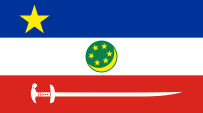
Flagge der ARMM
Seitenverhältnis = 5:9,
Quelle/Source: Wikipedia (EN)


Die ARMM wurde im Jahr 2008 gegründet und 2012 noch ein wenig vergrößert, in der Hoffnung den Terror der Islamischen Moros durch Zugeständnisse an Selbstverwaltung zu mindern. Die ARMM umfasst 26.974 km², in den Regionen Lanao del Sur und Maguindanao, sowie den Inselgruppen, Basilan, Sulu, Tawi-Tawi, mit insgesamt 3.250.000 Einwohnern. Die Hauptstadt ist Cotabato City.
Quelle: Wikipedia (EN)
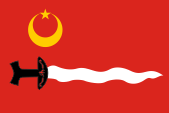
Flagge der Nationalen Moro Befreiungsfront
Seitenverhältnis = 2:3,
Quelle/Source: Flags of the World
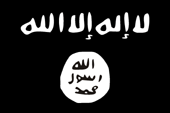
Flagge der Abu Sayyaf
Seitenverhältnis = 2:3,
Quelle/Source: Wikipedia (DE)
Die islamischen Moros der Südphilippinen (besonders auf Mindanao) kämpften die Hälfte des 20. Jahrhunderts lang für ihre Unabhängigkeit. Sie beanspruchen für ihren Staat die Inseln Mindanao, Palawan, das Sulu-Archipel und die Calamian Inselgruppe. Bewaffnete Konflikte gibt es derzeit nahezu nur auf Mindanao. Die wichtigste Untergrundarmee, die Nationale Moro Befreiungsfront, unterzeichnete 1996 einen Friedensvertrag, und 2008 wurde eine Islamische Autonome Region gegründet. Eine Splittergruppe, die Islamische Moro Befreiungsfront, setzt den Kampf neben anderen Gruppen, auch solchen wie Abu Sayyaf, fort. Das Wort "Moro" kommt aus dem Spanischen und meint "Mohr" oder "Moslem".
Quelle: UNPO, 2002