mobile Ansicht, to the English Version tap the flag


- Aostatal
- Region Italiens
- Eigenbezeichnung: Valle d'Aosta
• Flaggen
• Bedeutung/Ursprung der Flagge
• Landkarte der Regionen Italiens
• Zahlen und Fakten
• Geschichte
• Ursprung des Landesnamens

Flagge des Aostatals,
Seitenverhältnis = 2:3,
Quelle, nach: Wikipedia (D)


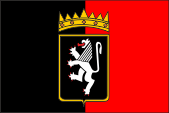
Flagge des Aostatals,
Variante mit Wappen,
Seitenverhältnis = 2:3,
Quelle, nach: flagsonline.it

Die Flagge des Aostatals zeigt zwei senkrechte Streifen in Rot und Schwarz und in der Mitte das Wappen der Region. Dieses zeigt einen golden umrandeten Schild mit einem silbernen Löwen auf Schwarz. Über dem Wappen erscheint eine goldene Krone. Über den Ursprung des Wappens ist nichts bekannt. Es gibt auch Versionen der Flagge ohne Wappen.
Quelle: Wikipedia (D)
alle Bezeichnungen in Italienisch
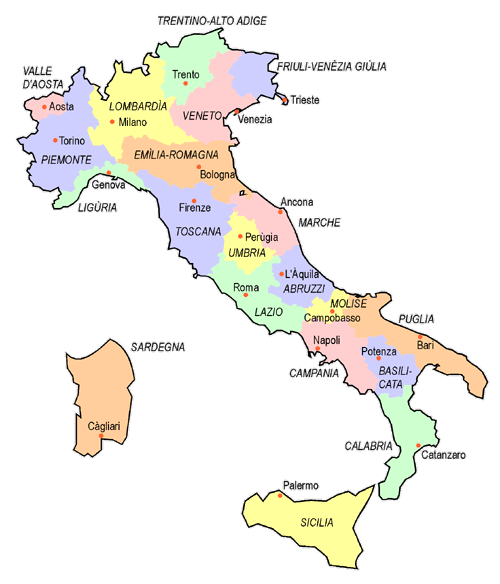
Quelle: Volker Preuß
Fläche: 3.263 km²
Einwohner: 126.800 (2016), davon ca. 80% Aostaner (Franzosen)
Bevölkerungsdichte: 39 Ew./km²
Hauptstadt: Aosta, 34.300 Ew. (2016)
Sprachen: Französisch, Italienisch
Zeitzone: MEZ
Quelle: Wikipedia (D)
2000 v.Chr. · Einwanderung des Salassi-Volkes
1500 v.Chr. · Einwanderung von Kelten
4.Jhd. v.Chr. bis 25 v.Chr. · römische Eroberung, das Aostatal kommt zur zur Provinz Italia
401 · Abzug der letzten römischen Truppen
443 · das Aostatal kommt zum Reich der Burgunder
534 · Eroberung durch die Franken, Eingliederung des Aostatals in das Frankenreich der Karolinger
870 · bei der Teilung der Karolingischen Reiche kommt das Aostatal zum Königreich Italien
880 · bei einer erneuten Teilung der Karolingischen Reiche kommt das Aostatal zum Königreich Hochburgund
933 · Hochburgund und Niederburgund werden zum Königreich Burgund (Arelat) vereinigt
10. Jhd. · Enfälle von Ungarn und Sarazenen
1032/34 · Burgund (einschließlich Aostatal) kommt an das Deutsche Königreich
1095 · das Aostatal wird Grafschaft des Königreichs Burgund
1191 · das Aostatal kommt an die Grafschaft Savoyen, erhält jedoch einen autonomen Sonderstatus
1720 · Vereinigung Sardiniens mit dem Land Savoyen-Piemont, Errichtung des Königreichs Sardinien-Piemont durch das Haus Savoyen
1770 · das Haus Savoyen beendet den autonomen Sonderstatus und bindet das Tal eng an das Königreich Sardinien-Piemont
1797 · nach der Eroberung durch französische Truppen verbleibt das Aostatal bei Piemont (napolèonischer Satellitenstaat)
1802 · Annexion ganz Piemonts durch das napolèonische Frankreich
1814 · das Königreich Sardinien-Piemont wird wiederhergestellt
1859 · Unabhängigkeitskrieg gegen Österreich im heutigen Norditalien, Frankreich greift ein, Österreich verliert und räumt Norditalien, Frankreich annektiert das Land Savoyen ohne das Aostatal
1861 · König Vittorio Emanuele von Sardinien-Piemont proklamiert das Königreich Italien
1881 · die Regionen Aostatal und Piemont werden vereinigt
1945 · des Aostatal erhält einen autonomen Status innerhalb der Region Piemont
1947 · das Aostatal spaltet sich von Piemont ab
1948 · Anerkennung der Autonomie des Aostatals, Einrichtung der italienischen Region Aostatal
1971 · die Stadt Aosta wird als Hauptstadt endgültig anerkannt
Quelle: Atlas zur Geschichte,
Wikipedia (D),
World Statesmen
Der Name "Aosta" geht auf die Römische Ortsbezeichnung "Augusta Praetoria" zurück.
Quelle: Handbuch der geographischen Namen

Mit freundlicher Untersützung von: