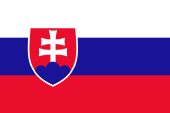
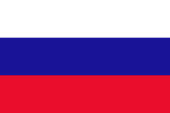
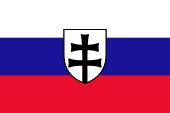
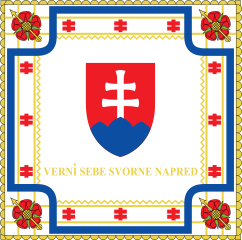
Die heutige Flagge der Slowakei wurde am 01.01.1993 anlässlich der Unabhängigkeit eingeführt. Sie zeigt drei waagerechte Streifen in Weiß, Blau und Rot mit dem Staatswappen nahe dem Flaggenmast. Das Aussehen von Flagge und Wappen wurde im "Gesetz des Nationalrates der Slowakischen Republik über die nationalen Symbole der Slowakischen Republik und ihre Verwendung vom 18. Februar 1993" geregelt, jedoch ohne auf die Farbtöne einzugehen. Der farbige Abdruck im Gesetzblatt auf Seite 371 lässt vermuten, dass folgende Pantone-Farbtöne die Farbschattierungen korrekt wiedergeben könnten: Rot = Pantone 185, Blau = Pantone Reflex Blue. Viele slawische Völker schufen sich in der Zeit nach 1848 (dem Jahr der Revolutionen) – im Zusammenhang mit einem erstarkenden slawischen Nationalismus – eigene Flaggen. Dabei spielte der Panslawismus eine bedeutende Rolle, eine politische Bewegung des 18./19. Jahrhunderts, die alle Slawen in einer Nation einen wollte. Die meisten slawischen Völker lebten jedoch in dieser Zeit unter österreichischer, türkischer oder auch deutscher Herrschaft. Der Panslawismus sah in Russland ein Vorbild, denn die Russen waren, neben Montenegro, die einzige freie slawische Nation. Und so wurden die Farben der russischen Flagge zum Idol der Panslawisten, und letztlich farbliches Vorbild bei der Gestaltung der Flaggen vieler slawischer Nationen. Diese Flaggen trugen und tragen bis auf wenige Ausnahmen die russischen Farben Weiß, Blau und Rot als gemeinsames Merkmal. Daher wird diese Farbkombination "Panslawische Farben" genannt. Am 23.04.1848 nahmen die Slowaken zunächst eine weiß-rote Flagge an, die im August nach um die Farbe Blau ergänzt wurde (siehe weiter oben, Panslawische Farben). Die heutige Reihenfolge der Farben wurde im Jahre 1868 festgelegt. Offiziell wurde die Flagge jedoch nicht, da die Slowakei bis zum Friedensvertrag von Saint-Germain am 10.09.1919 ein Teil Ungarns war. danach wurde sie ein Bestandteil des Staates Tschechoslowakei. Erst im Jahre 1939 wurde unter deutschem Schutz die Slowakische Republik gegründet, die am 23.06.1939 die weiß-blau-rote Trikolore als Nationalflagge annahm. Zwischen 1945 und 1992 war die Slowakei vorübergehend wieder ein Teil der Tschechoslowakei. Nach dem Sturz der kommunistischen Herrschaft wurde am 01.03.1990 die weiß-blau-rote Trikolore wieder als Nationalflagge der Slowakei (noch immer föderaler Teilstaat der Tschechoslowakei) angenommen. Die Trikolore in den Farben Weiß, Blau und Rot entsprach jedoch der alten russischen Flagge die bis zum bolschewistischen Putsch durch Lenin (1917) und die darauf folgende Gründung von Sowjet-Russland (1918) verwendet wurde. Im Zusammenhang mit dem Untergang der Sowjetunion nahm Russland am 23.08.1991 wieder seine alte Trikolore an. Die Flagge der Slowakei glich nun derjenigen von Russland. Daher wurde im Zusammenhang mit der Verabschiedung der neuen Verfassung der unabhängigen Slowakei im September 1992 beschlossen, die Flagge ab dem 01.01.1993 um das Staatswappen zu ergänzen.
Quelle: Flaggen und Wappen der Welt,
Wikipedia (DE),
Flags of the World,
zákon o štátnych symboloch z 18. februára 1993,
Volker Preuß
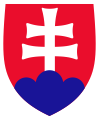
Wappen der Slowakei,
Quelle, nach: zákon o štátnych symboloch z 18. februára 1993
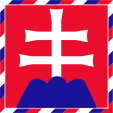
Das Staatswappen der Slowakei zeigt einen frühgotischen, abgerundeten Schild in Rot mit einem weißen Doppelkreuz auf einem blauen Dreiberg. Es geht auf das historische Wappen von Oberungarn zurück, und erinnert an die frühere Zugehörigkeit der Slowakei zum Königreich Ungarn. Der Dreiberg steht für die slowakischen Gebirge Tatra, Matra und Fatra. Ab 1848 wurde er in der Slowakei in Blau anstelle Grün dargestellt. Das byzantinische Doppelkreuz erinnert an die Christianisierung des Landes im 9. Jahrhundert und steht für die drei Heiligen Benedikt, Konstantin und Michael.
Quelle: Flaggen und Wappen der Welt,
Wikipedia (DE),
zákon o štátnych symboloch z 18. februára 1993,
Volker Preuß
seit 1993,
Flugzeugkokarde,
Quelle/Source, nach/by: Wikipedia (EN)
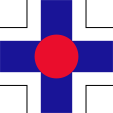
1940–1945,
Flugzeugkokarde,
Quelle/Source, nach/by: Wikipedia (EN)
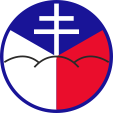
1944, Putschisten,
Flugzeugkokarde,
Quelle/Source, nach/by: Wikipedia (EN)
Lage:
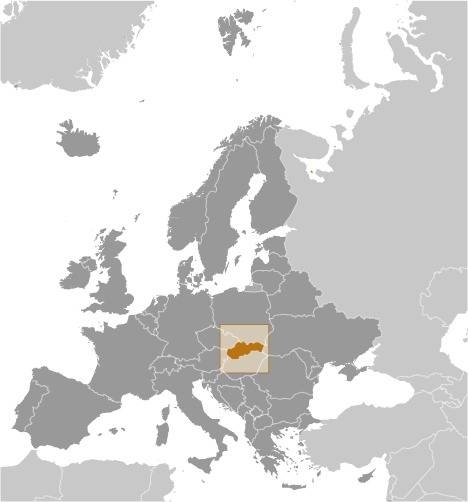
Quelle/Source: CIA World Factbook
Landkarte des Landes:
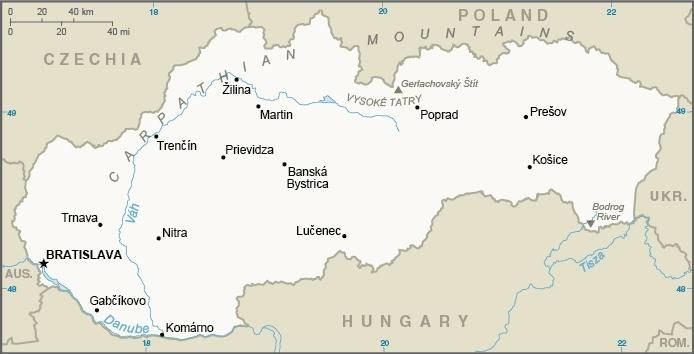
Quelle/Source: CIA World Factbook
Fläche: 49.035 km²
Einwohner: 5.500.000 (2023), davon 84% Slowaken, 8% Ungarn, 0,6% Ukrainer und Russinen, 0,5% Tschechen, 0,1% Polen, 0,1% Deutsche
Religionen: 60% Katholiken, 9% Protestanten, 24% Nicht-Religiöse
Bevölkerungsdichte: 112 Ew./km²
Hauptstadt: Bratislava (Deutsch: Pressburg, Ungarisch: Pozsony), 476.922 Ew. (2022)
Amtssprache: Slowakisch
sonstige Sprachen: Ungarisch, Tschechisch, Deutsch
Währung ab dem 01.01.2009: 1 Euro (EUR, €) = 100 Cent
Währung bis zum 31.12.2008: Slowakische Krone (Sk) = 100 Heller
Zeitzone: MEZ
Quelle:
Wikipedia (D)
Antike · Besiedlung durch Kelten
300–200 v.Chr. · Besiedlung durch Sweben, Wandalen, Quaden, Markomannen und Langobarden
6. Jahrhundert · Besiedlung durch Slowaken, Abhängigkeit von den Awaren
8. Jahrhundert · Abhängigkeit vom Fränkischen Reich
9. Jahrhundert · zum Großmährischen Reich
10. Jahrhundert · Böhmen, Polen und Ungarn versuchen abwechselnd die Slowakei zu annektieren
1018 · die Slowakei wird ein Teil Ungarns, bleibt jedoch zunächst ein Teilfürstentum (tertia pars regni)
1321 · mit Matthäus von Trentschin stirbt der letzte slowakische Fürst
1687 · die Slowakei kommt mit Ungarn an das Haus Habsburg
10.09.1919 · Friedensvertrag von Saint-Germain, die Slowakei wird von Ungarn unabhängig, jedoch mit der Tschechei (Böhmen) zum Staat Tschechoslowakei zusammengeschlossen
01.09.1939 · Einmarsch deutscher und slowakischer Truppen in Polen (03.09. Frankreich und Großbritannien erklären dem Deutschen Reich den Krieg, Beginn des Zweiten Weltkriegs)
14.03.1939 · die Slowakische Volkspartei proklamiert unter Josef Tiso (1887–1947) die Slowakische Republik, Beitritt zum Drei-Mächte-Pakt (Achse)
1941–1945 · Beteiligung der Slowakei am Krieg des Deutschen Reiches gegen die Sowjetunion, 1944 Putsch von einem Drittel der slowakischen Armee gegen die Slowakische Volkspartei und deutsche Besatzungstruppen, 1945 Besetzung durch sowjetische Truppen
Mai 1945 · Wiederherstellung der Tschechoslowakei als sozialistische Republik unter sowjetischen Einfluss
18.04.1947 · Hinrichtung von Josef Tiso
01.01.1969 · die Slowakei wird ein Föderativer Teilstaat (Slowakische Sozialistische Republik) innerhalb der Tschechoslowakischen Sozialistischen Republik (ÇSSR)
1989 · Sturz des kommunistischen Regimes in Prag, Unabhängigkeitsbestrebungen in der Slowakei
17.07.1992 · die Slowakei erklärt ihre Souveränität
02.09.1992 · Verfassung
01.01.1993 · Endgültige Trennung von der Tschechei, die Slowakei wird unabhängig
2004 · die Slowakei wird Mitglied der Europäischen Union
2009 · die Slowakei tritt der Euro-Zone bei
Quelle: Atlas zur Geschichte,
Wikipedia (DE),
World Statesmen
Der Name des Landes geht natürlich auf die Slowaken zurück, die wichtigste Volksgruppe des Landes. Das Wort "Slowak" geht auf das slawische Wort "slovit" zurück, was "sprechen" heißt. Die Slowaken sind also die "Sprechenden". Beachtenswert sind die Parallelen zu Slowenien, Slawonien und zu den "Slawen" überhaupt.
Quelle: Atlas der wahren Namen, Handbuch der geographischen Namen