mobile Ansicht, to the English Version tap the flag

- Tschechoslowakische Republik (Tschechoslowakei)
- 1918–1938 und 1945–1992 bestehender, Tschechien und die Slowakei vereinigender Staat
- Eigenbezeichnung 1990–1992: Ceskoslovenská Republika (Ceskoslovensko)
- Verweise: Tschechien / Slowakei
• Flaggen
• Bedeutung/Ursprung der Flagge
• Wappen
• Bedeutung/Ursprung des Wappens
• Flugzeugkokarde
• Zahlen und Fakten
• Geschichte
• Ursprung des Landesnamens
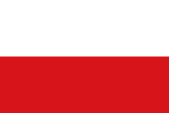
1918–1920,
Nationalflagge der Tschechoslowakei,
Seitenverhältnis = 2:3,
Quelle, nach:
Flags of the World


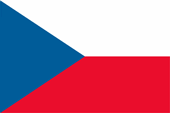
1920–1992,
Nationalflagge der Tschechoslowakei,
Seitenverhältnis = 2:3,
Quelle, nach: Flags of the World

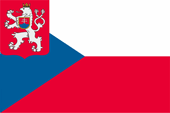
1935–1939, 1945–1955,
Flagge der Patrouillenboote,
Seitenverhältnis = 2:3,
Quelle, nach: Flags of the World

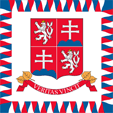
1990–1992,
Standarte des Präsidenten der Tschechoslowakei,
Quelle, nach: Flags of the World,
Wikipedia (D)
19. Jahrhundert,
Böhmische Farben der Tschechen,
Seitenverhältnis = 2:3,
Quelle, nach: Flaggen und Wappen der Welt
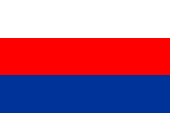
19. Jahrhundert,
Farben der Slawen in Mähren,
Seitenverhältnis = 2:3,
Quelle, nach: Flaggen und Wappen der Welt
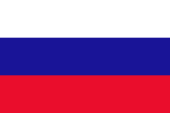
seit 1868,
Farben der Slowaken,
Seitenverhältnis = 2:3,
Quelle, nach: Flaggen und Wappen der Welt
1990–1992,
Flagge der tschechischen Teilrepublik innerhalb der Tschechoslowakei,
Seitenverhältnis = 2:3,
Quelle, nach: Flags of the World
1990–1992,
Flagge der slowakischen Teilrepublik innerhalb der Tschechoslowakei,
Seitenverhältnis = 2:3,
Quelle, nach: Flags of the World

Die Flagge der Tschechoslowakei wurde am 30.03.1920 eingeführt, und am 17.12.1992 in Vorbereitung der Abspaltung der Slowakei für Tschechien übernommen. Sie zeigt zwei waagerechte Streifen in Weiß und Rot und am Mast ein blaues, bis zu Mitte der Flagge reichendes, gleichschenkliges Dreieck. Die Farben Weiß und Rot sind die seit dem 12. Jahrhundert bekannten böhmischen Wappenfarben (weißer Löwe auf Rot), während das blaue Dreieck die Slowakei repräsentieren sollte.
Viele slawische Völker schufen sich in der Zeit nach 1848 (dem Jahr der Revolutionen) – im Zusammenhang mit einem erstarkenden slawischen Nationalismus – eigene Flaggen. Dabei spielte der Panslawismus eine bedeutende Rolle, eine politische Bewegung des 18./19. Jahrhunderts, die alle Slawen in einer Nation einen wollte. Die meisten slawischen Völker lebten jedoch in dieser Zeit unter österreichischer, türkischer oder auch deutscher Herrschaft. Der Panslawismus sah in Russland ein Vorbild, denn die Russen waren, neben Montenegro, die einzige freie slawische Nation. Und so wurden die Farben der russischen Flagge zum Idol der Panslawisten, und letztlich farbliches Vorbild bei der Gestaltung der Flaggen vieler slawischer Nationen. Diese Flaggen trugen und tragen bis auf wenige Ausnahmen die russischen Farben Weiß, Blau und Rot als gemeinsames Merkmal. Daher wird diese Farbkombination "Panslawische Farben" genannt. Erstmals wurden die drei Farben im Jahre 1848 auf dem Slawenkongress in Prag in einer längsgestreiften Trikolore gezeigt. Sie stand für die Tschechen und die Slowaken. Die Slawen in Mähren bevorzugten letztlich die horizontale Farbkombination von Weiß, Rot und Blau, die sich auch auf das alte (und heute wieder verwendete Wappen Mährens) von vor 1462 zurückführen lassen.
Dennoch wurde als erste Flagge der Tschechoslowakei am 28.10.1918, den Tag der Gründung des Staates, auf Empfehlung des Nationalrates der Tschechoslowakei eine horizontal gestreifte Bikolore in den böhmischen Farben Weiß und Rot eingeführt. Aber, die neuen Nachbarstaaten der Tschechoslowakei, Österreich und auch Polen, verwendeten die gleichen Farben, so dass eine Unterscheidung notwendig wurde. Außerdem war die Slowakei in der bestehenden Flagge nicht repräsentiert. So wurde am 30.03.1920 – nach vielen Diskussionen – die bekannte Flagge der Tschechoslowakei offiziell eingeführt.
Quelle: Flags of the World,
Die Welt der Flaggen,
Flaggen und Wappen der Welt
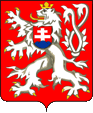
1920–1938, 1945–1960,
kleines Wappen der Tschechoslowakei
Quelle, nach: See page for author / CC BY-SA
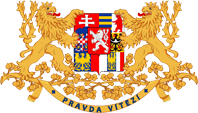
1918–1938, 1945–1960,
großes Wappen der Tschechoslowakei,
Quelle, nach: Shazz / CC BY-SA
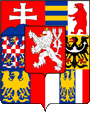
1918–1938, 1945–1960,
Schild des großen Wappens der Tschechoslowakei,
Quelle, nach: Shazz / CC BY-SA
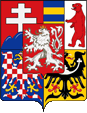
1920–1939, 1945–1960,
Mittleres Wappen der Tschechoslowakei,
Quelle,
nach: See page for author / CC BY-SA
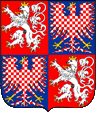
1939–1945,
großes Wappen des Reichsprotektorats Böhmen und Mähren,
Quelle, nach:
Fornax / Public domain
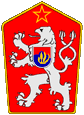
1960–1990,
kleines Wappen der Tschechoslowakei,
Quelle, nach:
Wikipedia (EN)
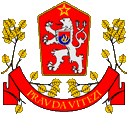
1960–1990,
großes Wappen der Tschechoslowakei,
Quelle, nach:
Wikipedia (EN)
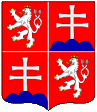
1990–1992,
Wappen der Tschechoslowakei,
Quelle, nach:
Wikipedia (D)
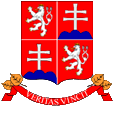
1990–1992,
Wappen der Tschechoslowakei auf der Präsidentenstandarte,
Quelle, nach:
Wikipedia (D)
Das große und und teilweise auch das mittlere Wappen der Tschechoslowakei zeigten (außer zwischen den Jahren 1960 und 1990) immer die Heraldik der vielen historischen Regionen, die 1918 zur Tschechoslowakei zusammengefasst worden waren: Böhmen, Mähren, Schlesien, Slowakei, Karpatenukraine, Teschen, Troppau und Ratibor. Das kleine Wappen kombinierte meist den zweischwänzigen böhmischen Löwen mit einem Brustschild, der das historische Wappen der Slowakei enthielt, außer zwischen 1960 und 1990. Der Wappenspruch lautete: "Pravda vitezi", ab 1990 auch in Latein: "Veritas vincit" → "Die Wahrheit siegt".
Quelle: Wikipedia (EN),
Volker Preuß
Lesen Sie hier:
Hintergründe, Geschichte und Fakten zum Thema "Der Löwe in der Heraldik". Ausführungen, Varianten, Entwicklung, sowie Panther und Leoparden.


1918–1920,
Flugzeugkokarde,
Quelle/Source, nach/by: Wikipedia (EN)
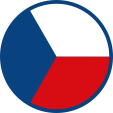
1920–1938, 1945–1992,
Flugzeugkokarde,
Quelle/Source, nach/by: Wikipedia (EN)
Fläche (1983): 127.877 km²
Einwohner: 15.400.000 (1983), davon 64% Tschechen und Mährer, 31% Slowaken, 3,8% Ungarn, 0,4% Polen, 0,4% Deutsche, 0,3% Ukrainer, 0,1% Russen
Bevölkerungsdichte: 120 Ew./km² (1983)
Hauptstadt: Prag (tschechisch: Praha), 1.200.000 Ew. (1983)
Amtssprachen: Tschechisch, Slowakisch
sonstige Sprachen: Deutsch, Ungarisch
Währung: 1 Tschechoslowakische Krone (Kcs) = 100 Heller
Zeitzone: MEZ
Quelle: Länder der Erde
Geschichte Böhmens bis 1918 (→ hier klicken)
Geschichte Mährens bis 1918 (→ hier klicken)
Geschichte Österreichisch-Schlesiens bis 1918 (→ hier klicken)
Geschichte der Slowakei (→ hier klicken)
Geschichte der Karpatenukraine (→ hier klicken)
28.10.1918 · Gründung der Tschechoslowakei durch den Zusammenschluss von Böhmen, Mähren, Österreichisch-Schlesien, der Slowakei und der Karpatenukraine
29.09.1938 · die Tschechoslowakei tritt das Sudetenland an das Deutsche Reich ab
02.10.1938 · Polen besetzt und annektiert das Teschener Land
14.03.1939 · die Slowakische Volkspartei proklamiert unter Josef Tiso (1887–1947) die Slowakische Republik, Zerfall der Tschechoslowakei, die Karpatenukraine wird von Ungarn annektiert
15.03.1939 · Einmarch deutscher Truppen, Bildung des Reichsprotektorates Böhmen und Mähren
09.05.1945 · Machtübernahmne durch Ex-Präsident Beneš, Wiederherstellung der Tschechoslowakei
1945–1948 · Vertreibung von 2,75 Millionen Deutschen und Hunderttausenden von Ungarn mit Hunderttausenden von Toten
1946 · Wahlen, 38% Stimmen für die Kommunisten
1948 · Ausschaltung des bürgerlichen Lagers, Rücktritt von Beneš, kommunistische Machtergreifung
1968 · Reformbewegung, "Prager Frühling", gewaltsam durch sowjetische Truppen niedergeschlagen
24.11.1989 · Rücktritt der kommunistischen Regierung
09.06.1990 · Wahlen
1992 · Vereinbarungen zur Auflösung der Tschechoslowakei
01.01.1993 · Auflösung der Tschechoslowakei, Unabhängigkeit für Tschechien und die Slowakei
Quelle: Wikipedia (D),
World Statesmen,
Discovery '97,
Weltgeschichte
Der Name "Tschechoslowakei" verbindet die beiden geographischen Begriffe "Tschechien/Tschechei" und "Slowakei" zu einem Wort.
Quelle: Volker Preuß