Quelle, nach: Flags of the World


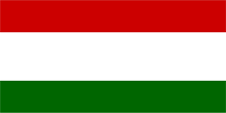
Handelsflagge,
zweifelhaft,
Seitenverhältnis = 1:2,
Quelle, nach: Wikipedia (EN)

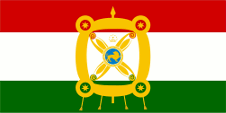
Flagge des Präsidenten,
Seitenverhältnis = 1:2,
Quelle, nach: Fry1989, Public domain,
via Wikimedia Commons

Das Territorium des heutigen Tadschikistan gehörte bis 1920 zum Khanat Buchara, war aber ab 1868 ein Protektorat von Russland, gehörte von 1920 bis 1924 zur Sozialistischen Volksrepublik Buchara, und zusätzlich bis 1924 zur Turkestanischen Autonomen Sowjetrepublik und von 1924 bis 1929 als eine autonome Republik zur Usbekischen Sozialistischen Sowjetrepublik.

1931–1935,
Flagge der Tadschikischen Sozialistischen Sowjetrepublik,
Seitenverhältnis = 1:2,
Quelle, nach: World Statesmen
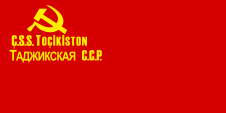
1935–1937,
Flagge der Tadschikischen Sozialistischen Sowjetrepublik,
Seitenverhältnis = 1:2,
Quelle, nach: World Statesmen
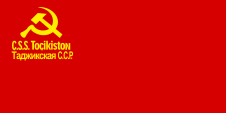
1937–1938,
Flagge der Tadschikischen Sozialistischen Sowjetrepublik,
Seitenverhältnis = 1:2,
Quelle, nach: World Statesmen
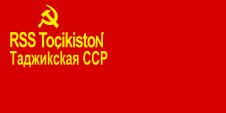
1938–1940,
Flagge der Tadschikischen Sozialistischen Sowjetrepublik,
Seitenverhältnis = 1:2,
Quelle, nach: World Statesmen
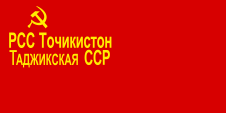
1940–1953,
Flagge der Tadschikischen Sozialistischen Sowjetrepublik,
Seitenverhältnis = 1:2,
Quelle, nach: World Statesmen
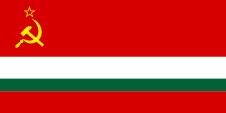
1953–1991,
Flagge der Tadschikischen Sozialistischen Sowjetrepublik,
Seitenverhältnis = 1:2,
Quelle, nach: World Statesmen
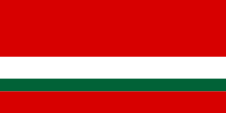
1991–1992,
Flagge der Republik Tadschikistan,
Seitenverhältnis = 1:2,
Quelle, nach: Flags of the World
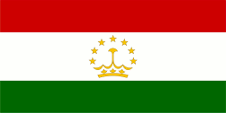
Die heutige Flagge Tadschikistans wurde am 24.11.1992 eingeführt. Sie zeigt drei waagerechte Streifen in Rot, Weiß und Grün im Verhältnis 2:3:2. Die Farben der Flagge scheinen definiert zu sein, jedoch ließ sich nichts zur rechtlichen Grundlage finden, keine Gesetz und keine Verordnung. Dabei werden die Farben unter anderem im Hex-Farbraum definiert: Rot = #CC0000, Gelb = #F8C300 und Grün = #006600. Das würde folgenden Farben im Pantone-Farbraum entsprechen: Rot = pt 485 c, Gelb = pt 123 c und Grün = pt 364 c. In der Mitte des breiten weißen Mittelstreifens befindet sich eine stilisierte goldene Krone und darüber sieben in einem Halbkreis angeordnete goldene Sterne.
Zur Gestaltung und auch zur Bedeutung der Farben gibt es mehrere Erklärungen:
• die am 24.11.1992 verabschiedete "Verordnung über die Staatsflagge der Republik Tadschikistan" beschreibt die Flagge als ein ein Symbol der des unzerstörbaren Bündnisses von Arbeitern, Bauern und Intellektuellen. Die Arbeiter werden durch Rot symbolisiert, die Bauern durch Grün und die Intelligenz durch Weiß.
• Rot steht für das Land, Weiß steht für die für das Land so wichtige Baumwolle und Grün steht für die anderen landwirtschaftlichen Produkte.
• Rot steht für das Feuer, Weiß steht für das Wasser und Grün steht für die Erde.
• Rot steht für die Einheit des Volkes und Brüderlichkeit mit den anderen Nationen, Weiß steht für die Baumwolle aber auch den Schnee in den Bergen, Grün steht für die fruchtbaren Täler des Landes.
• Rot, Weiß und Grün sind auch die Farben Irans, und auf diese Weise wird die Verwandtschaft der Tadschiken mit den Iranern (Persern) zum Ausdruck gebracht.
• Die drei Streifen repräsentieren die drei großen Zeitalter: die Epoche der goldenen Zeit, des Kampfes und des Untergangs.
• Bei der Gestaltung der Flagge haben die oberen drei Streifen der Flagge der ehemaligen Sowjetrepublik Tadschikistan als Vorlage gedient.
• Die Farben sind historisch begründet und zeigen die Farben der früheren Stände des Landes, Rot als Farbe des Militäradels, als Symbol für militärische Tapferkeit und Selbstaufopferung im Namen hoher Ideale, Weiß als Farbe der islamischen Geistlichen, Spiritualität, moralische Reinheit und Heiligkeit darstellend und Grün als die Farbe der freien Gemeindemitglieder aus den Reihen der Viehzüchter und Landwirte, Natur, Jugend und Wohlstand symbolisierend.
• Im Pamir symbolisiert Rot bis heute Glück, Wohlbefinden und Freude, Weiß steht für Reinheit und Klarheit und Grün für Jugend und Wohlstand.
• Rot steht für Freiheit und Unabhängigkeit, Weiß für Frieden und Ruhe und Grün für Jugend und Wohlstand.
• Die Flagge zeigt insgesamt sieben Sterne. Diese standen für die Schöpfer der Flagge ursprünglich für sieben sehr bekannte persisch-tadschikische Dichter. Später wurden die die "sieben glückverheißenden Räume der arischen Weite" hineininterpretiert, und heute sieht man darin die sieben historischen und kulturellen Regionen des modernen Tadschikistans: Sogd, Zarafshan, Hissar, Garm, Vakhsh, Khatlon und Badakhshan.
• Die stilisierte Krone auf der Flagge (sie ist auch im Wappen zu finden), repräsentiert das tadschikische Volk, das sich selber "Tojik" nennt. In dem Wort "tojik" lässt sich das Wort "toj" finden, was "Krone" heißt.
• Die Krone und auch die Sterne symbolisieren die Unabhängigkeit des Landes.
• Die Krone gilt als Symbol des Grundprinzips der alten persischen Religion des Zoroastrismus (Zarathustra).
• Die sieben Sterne stehen in der tadschikischen Tradition für die sieben wunderhaften Obstgärten des Himmels, die durch sieben Berggipfel mit je einem leuchtenden Stern an der Spitze getrennt sind. Von daher wird die Zahl Sieben interpretiert als Zahl der Perfektion, als Verkörperung des Glücks und als Schlüssel zum Erfolg.
• Die sieben Sterne stehen für den Heiligen Geist und die sechs Schutzgeister der Rinder, des Feuers, des Metalls, der Erde, des Wassers und der Pflanzen.
Die Tadschiken hatten bis in die heutige Zeit hinein keinen eigenen Staat, so das immer die Flagge jeweiligen Souveräns verwendet wurde. Die erst 1929 gegründete Tadschikische Sozialistische Sowjetrepublik verwendete die übliche kommunistische rote Flagge mit dem Landesnamen, die 1935 um Hammer und Sichel ergänzt wurde. Am 20.03.1953 wurde für die Tadschikische Sozialistische Sowjetrepublik eine neue Flagge angenommen. Sie zeigte vier waagerechte Streifen in Rot, Weiß, Grün und Rot im Verhältnis 5:2:1:2 und in der Oberecke Hammer, Sichel und Sowjetstern in Gold. Die erste Flagge, die zwischen 1929 und 1931 verwendet worden war, war ebenfalls einfarbig rot, zeigte in der Oberecke jedoch eine aufwändig gestaltete Scheibe mit dem ringsum laufendem Landesnamen und einem sowjetisch gestalteten Wappen mit Hammer und Sichel in der Mitte. Erst 2006 wurde eine Präsidentenflagge eingeführt. Sie orientiert sich an der Nationalflagge, zeigt jedoch in der Mitte, über allem, das 'Derafsh Kaviani', die königlichen Standarte der Sassaniden.
Die englischsprachige Wikipedia zeigt eine Flagge ohne Wappen, die als Bürgerliche Flagge und Handelsflagge bezeichnet wird, somit eine Flagge die erstens durch jedermann verwendet werden darf, bzw. auf See den nichtstaatlichen Charakter eines privaten Schiffs unterstreicht. Damit würde diese Flagge teilweise mit dem Prinzip der Nationalflagge konkurrieren. Die tatsächliche Existenz einer solchen Flagge ist bis dato nicht nachgewiesen.
Quelle:
Wikipedia (RU),
Wikipedia (EN),
Wikipedia (DE),
Flags of the World,
Flaggen-Atlas Erde,
Flaggen und Wappen der Welt,
Flaggen Enzyklopädie
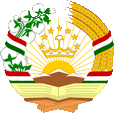
seit 1993,
Wappen von Tadschikistan,
Quelle, nach: mfa.tj

1992–1993,
Wappen von Tadschikistan,
Quelle, nach: Leonid 2, Public domain,
via Wikimedia Commons
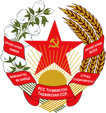
1940–1992,
Wappen der Tadschikischen Sozialistischen Sowjetrepublik,
Quelle, nach: TheSign 1998, Public domain,
via Wikimedia Commons
Das heutige Wappen Tadschikistans wurde am 28.12.1993 eingeführt und zeigt eine über schneebedeckten Bergen aufgehende goldene Sonne, darüber eine stilisierte goldene Krone und darüber sieben in einem Halbkreis angeordnete goldene Sterne, umgeben von einem Kranz aus Baumwollzweigen und Getreideähren, die von einem rot-weiß-grünen Band umwunden sind. Im unteren Teil ein goldenes Buch auf einer Decke.
Es gibt einige Erklärungen zum Design:
• Die stilisierte Krone auf der Flagge (sie ist auch im Wappen zu finden), repräsentiert das tadschikische Volk, das sich selber "Tojik" nennt. In dem Wort "tojik" lässt sich das Wort "toj" finden, was "Krone" heißt.
• Die Krone und auch die Sterne symbolisieren die Unabhängigkeit des Landes.
• Die Krone gilt als Symbol des Grundprinzips der alten persischen Religion des Zoroastrismus (Zarathustra).
• Die sieben Sterne stehen in der tadschikischen Tradition für die sieben wunderhaften Obstgärten des Himmels, die durch sieben Berggipfel mit je einem leuchtenden Stern an der Spitze getrennt sind. Von daher wird die Zahl Sieben interpretiert als Zahl der Perfektion, als Verkörperung des Glücks und als Schlüssel zum Erfolg.
• Die sieben Sterne stehen für den Heiligen Geist und die sechs Schutzgeister der Rinder, des Feuers, des Metalls, der Erde, des Wassers und der Pflanzen.
Quelle:
Wikipedia (RU),
Wikipedia (EN),
Wikipedia (DE),
Flags of the World,
Flaggen und Wappen der Welt

Flugzeugkokarde,
Quelle/Source, nach/by: Wikipedia (EN)
Lage:
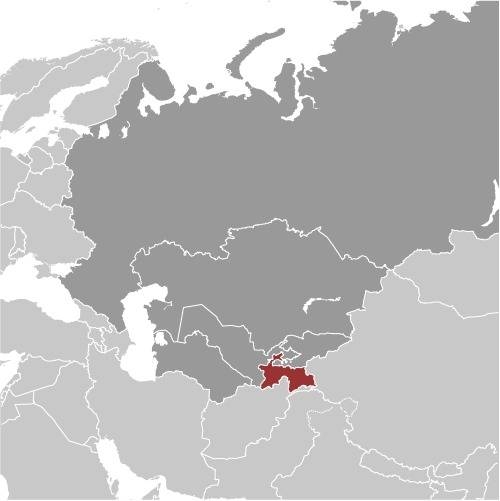
Quelle/Source: CIA World Factbook
Landkarte des Landes:
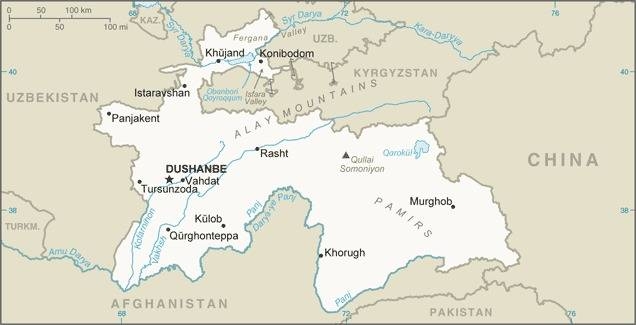
Quelle/Source: CIA World Factbook
Fläche: 143.100 km²
Einwohner: 10.000.000 (2022), davon 84,3 % Tadschiken, 13,8 % Usbeken, 0,8 % Kirgisen, 0,5 % Russen, und auch Tataren, Ukrainer und Deutsche
Religionen: 90 % Moslems (meist Sunniten), 3,1 % Christen, und einige Bahais und Zoroastrier
Bevölkerungsdichte: 70 Ew./km²
Hauptstadt: Duschanbe (Name 1929–1961: Stalinabad), 1.201.800 Ew. (2022)
Amtssprachen: Tadschikisch, Russisch
sonstige Sprachen: Usbekisch
Währung: 1 Somoni (TJS) = 100 Diram
Zeitzone: MEZ + 4 h
Quelle:
Wikipedia (D)
Antike · Besiedlung durch iranische Völker (Baktrer, Sogder)
328/329 v.Chr. · Alexander der Große unterwirft die Bakter und Sogder und erobert Teile des heutigen westlichen Tadschikistans
ca. 3. Jhd. v.Chr. · das heutige Tadschikistan gehört zum Griechisch-Baktrischen Reich (Diadochen)
ca. 2. Jhd. v.Chr. · erste Erwähnung der Tadschiken ("Ta-Hia") in chinesischen Quellen
4.–6. Jhd. n.Chr. · Invasion der Weißhunnen (Hephtaliten), das heutige westliche Tadschikistan gehört zum Hephtalitenreich
560 n.Chr. · Unterwerfung durch Turkvölker
700–750 · Eroberung durch die Araber, Islamisierung
874–999 · unter der Herrschaft der persischen Samaniten, Teil der Arabischen Kalifats
11. Jhd. · zum Reich der Karachaniden
1220–1280 · unter der Herrschaft der Hunnen
14. Jhd. · zum Reich Timur Lenks
14.–15. Jhd. · zum Reich der Mawarannhar (Samarkand)
17. Jhd. · zum Khanat Buchara
1868 · das Khanat Buchara wird russisches Protektorat
1876 · die nördliche Pamir-Region kommt an Russland
1895 · die zentrale Pamir-Region (Badachschan) kommt an Russland
1917–1920 · Bürgerkrieg zwischen Bolschewisten, Anti-Bolschewisten und Nationalisten
30.04.1918 · Gründung der Turkestanischen Autonomen Sozialistischen Sowjetrepublik innerhalb Sowjetrusslands (ca. heutiges Turkmenistan, Usbekistan, südliches Kasachstan, westliches Tadschikistan)
1920 · endgültige Errichtung der Sowjetdiktatur
30.12.1922 · Gründung der Sowjetunion (UdSSR)
14.10.1924 · Auflösung der Turkestanischen Autonomen Sozialistischen Sowjetrepublik, Aufteilung in die Sowjetrepubliken Kirgisien, Usbekistan und Turkmenistan, Gebietsabtretungen an die Kasachische ASSR, Tadschikistan wird zunächst eine Autonome Sozialistische Sowjetrepublik innerhalb Usbekistans
05.12.1929 · Abtrennung Tadschikistans von Usbekistan als eigene Sozialistische Sowjetrepublik, Anschluss der nördlichen und zentralen Pamir-Region (Badachschan)
1941–1945 · Ansiedlung von Rußlanddeutschen wegen angeblicher Kollaboration mit Deutschland
1990 · Souveränitätserklärung
09.09.1991 · Unabhängigkeitserklärung, Tadschikistan wird Mitglied der GUS
31.12.1991 · die Sowjetunion löst sich auf
1992–1997 · Bürgerkrieg zwischen Regierung und ethnischen, religiösen und politischen Gruppen
1993 · Verbot von vier oppositionellen Parteien
2001 · vorübergehende Stationierung von französischen und US-Truppen in Chorugh und Duschanbe
Quelle:
Atlas zur Geschichte,
World Statesmen,
Wikipedia (D)
Der Name "Tadschikistan" ist als "Land der Tadschiken" zu verstehen, in der Landessprache heißt "Tadschikistan" jedoch "Land der Siedler". Andere Quellen sehen die "Tadschiken" als die "Bekröhnten", denn sie nennen sich selber "Tojik" und im Wort "tojik" lässt sich das Wort "toj" finden, was "Krone" heißt. So wird unterstellt, das früher einige Tadschiken Kronen getragen hätten und so der name von Volk und Land entstanden sei. Eine andere Theorie unterstellt die Bezeichnung "Tadschik" wurde den Tadschiken von den benachbarten Turkvölkern gegeben und würde "Moslem" bedeuten. Ferner wird unterstellt, das der arabische Stammesname "Tayyi" (und daraus "Tadschik") eine bei Turkvölkern verwendete Bezeichnung für Perser sei.
Quelle:
Flags of the World,
Wikipedia (D),
Die Völker der Erde,
Handbuch der geographischen Namen