Quelle, nach: Flags of the World


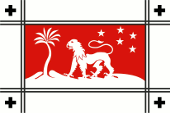
1885–1895,
Flagge der Deutsch-Ostafrikanischen Gesellschaft (DOAG),
Seitenverhältnis = 2:3(?),
Quelle, nach: Flags of the World
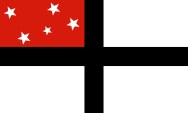
1895–1920,
Flagge der Deutsch-Ostafrikanischen Gesellschaft (DOAG),
Seitenverhältnis = 3:5,
Quelle, nach: Flags of the World
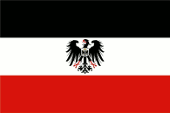
1898–1919,
Flagge des Gouverneurs der Kolonie Deutsch-Ostafrika,
Seitenverhältnis = 2:3,
Quelle, nach: Flags of the World
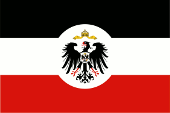
1892–1919,
Deutsches Reich,
Dienstflagge Kolonialamt / Auswärtiges Amt,
Seitenverhältnis = 2:3,
Quelle, nach: Flags of the World
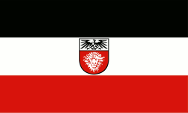
1914,
geplante Flagge für Deutsch-Ostafrika,
Seitenverhältnis = 3:5,
Quelle, nach: Flags of the World, Flag Reconstruction
following Mark Sensen (Feb 98)
based on traditional interpretation from Afrika-Nachrichten article 1933
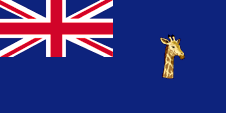
1919–1961,
Flagge der Regierung (Staatsflagge),
Seitenverhältnis = 1:2,
Quelle, nach: Flags of the World
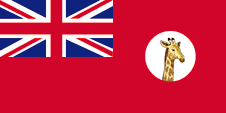
1919–1961,
Handelsflagge,
Seitenverhältnis = 1:2,
Quelle, nach: Flags of the World
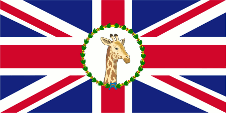
1919–1961,
Flagge des Gouverneurs,
Seitenverhältnis = 1:2,
Quelle, nach: Flags of the World
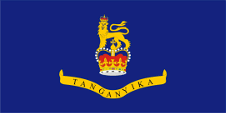
1961–1962,
Flagge des Generalgouverneurs,
Seitenverhältnis = 1:2,
Quelle, nach: Flags of the World
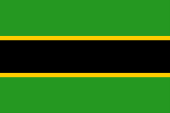
Die Flagge Tanganjikas ging auf die Flagge der TANU-Partei zurück. Sie wurde anlässlich der Unabhängigkeit im Jahre 1961 geschaffen, indem auf der TANU-Flagge schmale gelben Trennstreifen zwischen Schwarz und Grün eingefügt wurden. Als Sansibar sich mit Tanganjika zu Tansania zusammenschloss wurden die Flaggen beider Länder zur heutigen Nationalflagge von Tansania verschmolzen.
Unter der Verwaltung der Deutsch-Ostafrikanischen Gesellschaft (1885–1890) wurde die Flagge dieser Organisation verwendet. Die 1885 geschaffene Flagge war weiß mit einem roten Mittelfeld, das durch schwarze, jedoch bis zum Rand der Flagge reichende Doppellinien vom weißen Rand getrennt war. Im roten Mittelfeld erschien in Weiß eine stilisierte Landschaft mit einem Löwen, einer Palme und den fünf Sternen des Kreuzes des Südens. Die Ecken der Flagge zeigten vier schwarze gemeine, griechische Kreuze mit gleich langen Balken. Im Jahre 1895 wurde eine neue Flagge für die Gesellschaft eingeführt. Sie wird Carl-Peters-Flagge oder Petersflagge genannt, nach Carl Peters, dem Gründer von Deutsch-Ostafrika. Diese Flagge war weiß mit einem durchgehenden schwarzen Balkenkreuz und einer roten Oberecke, die mittels fünf weißer Sterne das Sternbild des "Kreuz des Südens" anzeigte. Als deutsche Kolonie verwendete das Land ab 1890 keine besondere Nationalflagge. Es galten die Farben des Deutschen Reiches: Schwarz, Weiß und Rot. Behörden verwendeten die Flagge des Kolonialamtes sowie Abarten davon. Diese war zwar schwarz, weiß und rot waagerecht gestreift und zeigte in der Mitte eine weiße Scheibe mit dem Reichsadler. Ab 1913 wurde überlegt, für die Kolonien eigene Hoheitszeichen zu schaffen. Erste Entwürfe lagen 1914 vor, jedoch wurde das Projekt wegen des Ausbruchs des Ersten Weltkriegs und wegen des Verlusts der Kolonien nicht mehr realisiert.
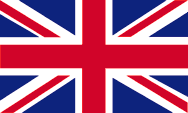
Nachdem Tanganjika nach dem Ende des Ersten Weltkrieges und in Folge des Versailler Diktats als Mandatsgebiet Völkerbunds unter britische Verwaltung gestellt worden war, wurde das britische Flaggensystem mit einem "Blue Ensign" und einem "Red Ensign" eingeführt, ein rotes und ein dunkelblaues Flaggentuch mit einer Flaggendarstellung – dem britischen Union Jack – in der Oberecke. Der Union Jack wies auf die Verbindungen zu Großbritannien hin.
Großbritannien hatte in Jahr 1864 ein Flaggensystem eingeführt, in dem:
• Kriegsschiffe einen sogenannten "White Ensign" (Marineflagge), eine weiße Flagge oft mit durchgehendem roten Georgskreuz und mit dem Union Jack in der Oberecke,
• Handelsschiffe einen "Red Ensign" (auch "Civil Ensign" → Bürgerflagge genannt, die eigentl. Handelsflagge), eine rote Flagge mit dem Union Jack in der Oberecke, und
• Dienstschiffe einen "Blue Ensign" (Regierungsflagge → die eigentl. Staatsflagge), eine blaue Flagge mit dem Union Jack in der Oberecke führten.
Seit 1865 durften Schiffe von Kolonialregierungen einen Blue Ensign mit einem Badge (Abzeichen) im fliegenden Ende führen. Die jeweiligen Regierungen sollten entsprechene Bagdes zur Verfügung stellen. Handelsschiffe und seefahrende Privatpersonen aus Kolonien dürfen nur dann einen Red Ensign mit Badge führen, wenn von der britischen Admiralität eine entsprechende Erlaubnis für die Kolonie erteilt wurde. Diese Erlaubnis war Tanganjika erteilt worden, so dass ein "Red Ensign", ein rotes Flaggentuch mit dem britischen Union Jack in der Oberecke und dem Badge der Mandatsverwaltung als Handelsflagge verwendet werden konnte. Das Badge war ein Giraffenkopf, der nur auf dem Red Ensign auf einer weißen Scheibe dargestellt wurde.
Ein solches Badge war bei britischen Kolonien oft eine auf einer Scheibe platzierte regionale landschaftliche Darstellung, zeigte oft Schiffe, historische Begebenheiten oder konnte auch nur eine Art Logo sein. Sehr oft zeigte ein Badge zusätzlich den Namen des Landes oder auch einen Wahlspruch. Einige Besitzungen hatten aber auch schon von Anfang an ein Wappen, bzw. erhielten über die Jahre eine eigenes Wappen und das Badge wurde abgeschafft. Um ein weitgehend einheitliches Erscheinungsbild im fliegenden Ende der Flaggen zu gewährleisten, wurden Wappen und auch andere Symbole auf einer weißen Scheibe in der Größe der früheren Badges dargestellt. Es gab hier aber auch Ausnahmen, denn einige Kolonien verwendeten diese weiße Scheibe nicht, und platzierten ihr Wappen oder auch nur das Wappenschild – manchmal auch vergrößert – direkt auf das Flaggentuch. Schon in den 40-er Jahre wurde dazu übergegangen die weiße Scheibe zu entfernen und das Wappen direkt zu platzieren oder vergrößert dazustellen. Dieser Umstellungsprozess erfolgte allmählich, nirgendwo gleichzeitig und vollständig. In einigen britischen Besitzungen sind bis heute Flaggen mit der weißen Scheibe in Gebrauch, in anderen nicht mehr und in einigen Gebieten gibt es beide Varianten nebeneinander.
Quelle:
1.) Flags of the World,
2.) Flags of the World,
Wikipedia (D),
Die Welt der Flaggen,
Volker Preuß
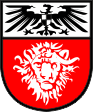
1914,
geplantes Wappen von Deutsch-Ostafrika,
Quelle, nach: Flags of the World, Flag Reconstruction
following Mark Sensen (Feb 98)
based on traditional interpretation from Afrika-Nachrichten article 1933

1919–1961,
Emblem von Tanganjika,
Quelle, nach: Flags of the World
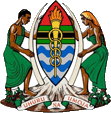
1961–1964,
Wappen von Tanganjika,
Quelle, nach: Poohgun - junmon
[Public domain], via Wikimedia Commons
Das Wappen der Republik Tanganjika, zeigte zwischen 1961 und 1964 einen Massai-Schild mit drei untereinander angeordneten Feldern, darin unter anderem die Nationalflagge von Tanganjika, und blaue Wellenlinien (Meer) und über allem eine Fackel (Freiheitsfackel). Schildhalter sind ein Bantu-Mann und eine Bantu-Frau, die beide einen Elefantenstoßzahn halten. Der Schild ruht auf dem Berg Kilimandscharo, links Kaffee- und rechts Baumwollpflanzen. Das Landesmotto steht in roten Buchstaben auf einem weißen Spruchband. Es ist in Suaheli und lautet: "Uhuru na Umoja" → "Freiheit und Einheit". Das Land war einst eine deutsche Kolonie. Die deutschen Kolonien unterstanden – Kiautschou ausgenommen – dem Reichskolonialamt. Entsprechend verwendeten Behörden dessen Siegel, Flaggen und das Reichswappen. Ab 1913 wurde überlegt, für die Kolonien eigene Hoheitszeichen zu schaffen. Erste Entwürfe lagen 1914 vor, jedoch wurde das Projekt wegen des Ausbruchs des Ersten Weltkriegs und wegen des Verlusts der Kolonien nicht mehr realisiert. Das gedachte Aussehen der Wappen und Flaggen konnte in den 20er und 30er Jahren des 20. Jahrhunderts anhand von Fragmenten lediglich rekonstruiert werden. Die meisten Rekonstruktionen beziehen sich auf einen Artikel der Zeitung "Afrika-Nachrichten" von 1933 und die daraus folgenden Rekonstruktionen des niederländischen Vexillologen Mark Sensen vom Februar 1998, die auch auf diesen Seiten berücksichtigt werden. Die Wappen der Kolonien sollten oberhalb des Wappenschilds noch die Kaiserkrone tragen, jedoch nicht auf den Flaggen, wenn man der Rekonstruktion von Mark Sensen folgt. Die Wappenschilde zeigten immer den gleichen Aufbau: Ein horizontal zweigeteiltes Schild, dessen Schildhaupt auf weiß den Reichsadler mit dem Brustschild des Hauses Hohenzollern zeigte. Im Hauptteil eine stilisierte Darstellung von Pflanzen, Tieren oder Landschaften, die je nach Land unterschiedlich gefärbt waren. Das geplante Wappen von Deutsch-Ostafrika zeigte einen weißen Löwenkopf auf rotem Grund. In seiner Zeit als britisches Mandatsgebiet hatte das Land ein eigenes Emblem, ein sogenanntes Badge, das Abzeichen der Mandatsverwaltung. Das Badge war ein Giraffenkopf, der nur auf dem Red Ensign auf einer weißen Scheibe dargestellt wurde.
Quelle:
Wikipedia (D),
Wikipedia (EN),
Volker Preuß
Fläche: 942.626 km²
Einwohner: ca. 9.000.000 (1961), davon 95% Bantu-Stämme, 2% Massai
Bevölkerungsdichte: 10 Ew./km² (1961)
Hauptstadt: Dar es Salaam (Daressalam), ca 100.00 Ew. (1961)
Sprachen: Suaheli, Englisch, Bantu-Sprachen
Währung: Ostafrikanischer Schilling (Sh) = 100 Cents
Zeitzone: MEZ + 2 h
Quelle:
Wikipedia (EN)
Antike · Siedlungsgebiet der Bantu-Stämme
10. Jahrhundert · Eindringen des Islam entlang der Küste
975 · Gründung von Kilwa als arabischer Handelsstützpunkt
1499 · Vasco da Gama segelt auf dem Weg nach Indien entlang der Küste
1505 · Eroberung von Kilwa durch die Portugiesen, Inbesitznahme der gesamten Ostküste Afrikas
1698–1730 · die Küste Tanganjikas fällt an Oman
1856 · Tod des Sultans von Oman, in Folge britischem Drucks Teilung des Landes (Teilung der Dynastie in zwei Linien) in das Sultanat Oman und das Sultanat Sansibar, die Küste Tanganjikas kommt an Sansibar
17.02.1885 · Carl Peters erwibt im Namen der Deutsch-Ostafrikanischen Gesellschaft (DOAG) Territorien im Landesinneren vom Sultan von Sansibar
27.05.1885 · Errichtung des Protektorats Deutsch-Ostafrika einschließlich Deutsch-Witu (im heutigen Kenia gelegen)
28.04.1888 · die DOAG pachtet die Küste des Festlands vom Sultan von Sansibar
01.07.1890 · Helgoland-Sansibar-Vertrag, das Deutsche Reich verzichtet auf sein Protektorat über Sansibar, im Gegenzug Erwerb der Insel Helgoland von Großbritannien und die Abtretung von Deutsch-Witu an Großbritannien
20.11.1890 · die Verwaltung des Protektorats Deutsch-Ostafrika wird der DOAG nach Aufständen und Unruhen entzogen, Bildung der Kolonie Deutsch-Ostafrika
1896/1890 · Grenzverträge mit Großbritannien und Portugal
1914–1918 · Erster Weltkrieg (1916 · britische, indische, südafrikanische, belgische und portugiesische Truppen erobern Deutsch-Ostafrika, Widerstand der deutschen Schutztruppe bis zum 14.11.1918)
1918 · portugiesische Truppen besetzen das Ruvuma-Dreieck
1919 · Ruanda und Urundi kommen unter belgische Kontrolle
1920 · das Ruvuma-Dreieck wird an Portugal abgetreten (zu Portugiesisch-Ostafrika [Moçambique])
20.07.1922 · Deutsch-Ostafrika wird unter dem Namen Tanganjika britisches Mandatsgebiet des Völkerbundes
11.12.1946 · Tanganjika wird britisches Treuhandgebiet der UNO
1954 · Gründung der TANU-Partei (Tanganyika African National Union), sie fordert die Unabhängigkeit des Landes
01.05.1961 · Großbritannien gewährt Selbstverwaltung
09.12.1961 · Großbritannien gewährt die Unabhängigkeit im Rahmen des Commonwealth of Nations
09.06.1962 · Gründung der "Republik Tanganjika"
27.04.1964 · die Volksrepublik Sansibar vereinigt sich mit der Republik Tanganjika zur "Vereinigten Republik von Tanganjika und Sansibar"
29.10.1964 · Umbenennung in "Vereinigte Republik Tansania"
1965 · Etablierung eines Einparteiensystems (TANU in Tanganjika, ASP in Sansibar)
1977 · TANU und ASP schließen sich zur CCM-Einheitspartei zusammen
1978 · Krieg mit Uganda
1992 · Ende des Einparteiensystems
2000 · Erstarken der Tanganjika-Nationalbewegung
Quelle:
Atlas zur Geschichte,
Wikipedia (D),
Discovery '97,
Volker Preuß
Der Name "Tanganjika" bedeutet "Land der vielen Stämme". Daher hat auch der Tanganjika-See seinen Namen. In der Zeit als Deutsche Kolonie wurde der Name Deutsch-Ostafrika verwendet. Nachdem Deutsch-Ostafrika als Völkerbundsmandat an Großbritannien übergeben wurde, konnte der Name nicht in Britisch-Ostafrika abgeändert werden, weil bereits das heutige Kenia diesen Namen trug. Man besann sich wieder des alten Namens "Tanganjika".
Quelle:
Handbuch der geographischen Namen,
Volker Preuß