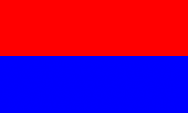
Landesfarben,
Quelle, nach: Flags of the World


• unter den Dänischen Königen aus dem dem Haus Schleswig-Holstein-Gottorf:
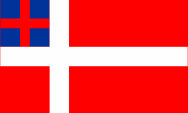
1667–1773,
Landesflagge,
Variante(?),
Quelle, nach: oldenburgische-landschaft.de
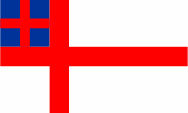
1667–1773,
Landesflagge,
Variante(?),
Quelle, nach: Hermann Lübbing (Archivdirektor des Staatsarchivs Oldenburg), 1953, nach: schmid-ol.de
• als Grafschaft (ab 1777 Herzogtum) im Heiligen Römischen Reich Deutscher Nation unter dem Haus Schleswig-Holstein-Gottorf:
Landesfarben,
Quelle, nach: Flags of the World
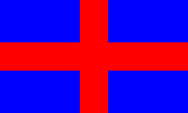
1774–1804,
Staatsflagge an Land,
Quelle, nach: Ralf Stelter, 13 Feb 2001 on: Flags of the World

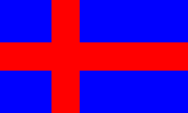
1774–1804,
Staatsflagge zur See,
Quelle, nach: Ralf Stelter, 13 Feb 2001 on: Flags of the World
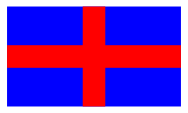
1776–1810,
Lotsen(ruf)flagge,
Quelle, nach: schmid-ol.de
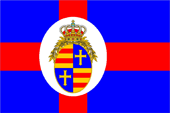
1804–1810,
Staatsflagge an Land,
Quelle, nach: Mattern und Neubecker, nach by: schmid-ol.de
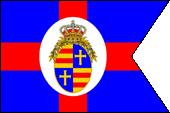
1804–1810,
Staatsflagge zur See,
Quelle, nach: Mattern und Neubecker, nach by: schmid-ol.de
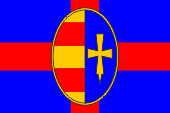
1777–1823,
Standarte des Herzogs,
Quelle, nach: herzogl. Haus- und Central-Archiv, nach by: schmid-ol.de
• zwischen 1811 und 1813 war das Land von Frankreich annektiert:
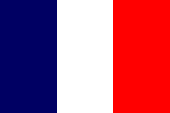
1810–1913,
die Flagge Frankreichs

• als Großherzogtum im Deutschen Bund unter dem Haus Schleswig-Holstein-Gottorf:
Landesfarben,
Quelle, nach: Flags of the World
1815–1866,
Staatsflagge an Land,
Seitenverhältnis = 3:5,
Quelle, nach: Ralf Stelter, 13 Feb 2001 on: Flags of the World
1815–1866,
Staatsflagge zur See,
Seitenverhältnis = 3:5,
Quelle, nach: Ralf Stelter, 13 Feb 2001 on: Flags of the World
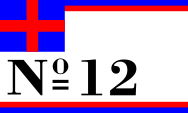
1815–1866,
Handelsflagge mit laufender Nummer,
Quelle, nach: schmid-ol.de
1815–1866,
Lotsen(ruf)flagge,
Quelle, nach: schmid-ol.de
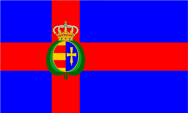
1823–1829,
Standarte des Herzogs,
Seitenverhältnis = 3:5,
Quelle, nach: herzogl. Haus- und Central-Archiv, nach by: schmid-ol.de
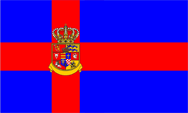
1829–1853,
Standarte des Großherzogs,
Seitenverhältnis = 3:5,
Quelle, nach: schmid-ol.de
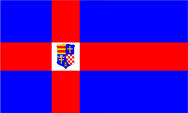
1853–1882,
Standarte des Großherzogs,
Seitenverhältnis = 3:5,
Quelle, nach: Flags of the World
• als Großherzogtum im Deutschen Reich unter dem Haus Schleswig-Holstein-Gottorf:
Landesfarben,
Quelle, nach: Flags of the World
1871–1918,
Landesflagge,
Seitenverhältnis = 3:5,
Quelle, nach:
Flags of the World
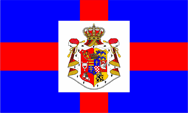
1871–1919
Staatsflagge an Land,
Seitenverhältnis = 3:5,
Quelle, nach:
Flags of the World
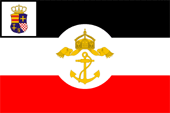
1902–1919,
Seedienstflagge,
Seitenverhältnis = 2:3,
Quelle, nach: Wikipedia (D)
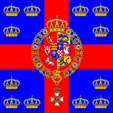
1882–1918,
Standarte des Großherzogs,
Seitenverhältnis = 1:1,
Quelle, nach:
Flags of the World
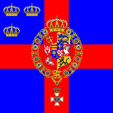
1882–1918,
Standarte des Erb-Großherzogs,
Seitenverhältnis = 1:1,
Quelle, nach:
Flags of the World
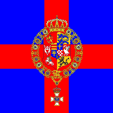
1882–1918,
Standarte der Herzöge,
Seitenverhältnis = 1:1,
Quelle, nach:
Flags of the World
• als Freistaat im Deutschen Reich:
Landesfarben,
Quelle, nach: Flags of the World
1918–1934,
Landesflagge,
Seitenverhältnis = 3:5,
Quelle, nach: Flags of the World
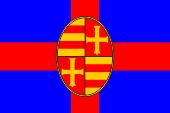
1919–1926,
Seedienstflagge,
Seitenverhältnis = 2:3,
Quelle, nach: Wikipedia (D)
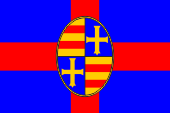
1926–1933,
Seedienstflagge,
Seitenverhältnis = 2:3,
Quelle, nach: Wikipedia (D)
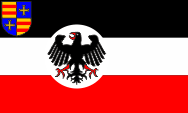
1933–1934,
Seedienstflagge (zweifelhaft),
Seitenverhältnis = 3:5,
Quelle, nach: schmid-ol.de
• im Land Niedersachsen in der BRD:
Flagge des ehemaligen Landes Oldenburg,
Seitenverhältnis = 3:5,
Quelle, nach: Flags of the World


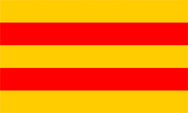
Bis 1667 entsprachen die Landesfarben der Grafschaft Oldenburg den Farben und dem Wappen der Grafen von Oldenburg, auf Gold zwei rote Balken. Das Haus starb 1667 aus.
In der Zeit, in der das Land zur Dänischen Krone gehörte, wird eine dänische Flagge erwähnt, ein weißes Kreuz auf Rot und in der Oberecke das Oldenburger rote Kreuz auf Blau. Man spricht aber auch von einer farbigen Umkehrung der dänischen Flagge, also weißes Kreuz auf Rot!
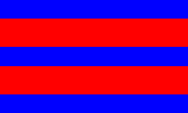
Die Landesfarben von Oldenburg entsprechen den Farben und dem Wappen des ehemaligen Herrschergeschlechts, der Großherzöge von Oldenburg aus dem Haus Holstein-Gottorf, in dem Blau/Gold (Holstein) und Weiß/Rot (Schleswig-Gottorf) kombiniert wurden. Entsprechende rot-blaue Flaggen sind ab dem 17. Jahrhundert überliefert, aber auch Flaggen mit zwischen neun und zwölf blauen, roten und gelben Streifen.
Die Standarten des Großherzogs, seines Erben und die der Prinzen (Herzöge) wurden 1882 eingeführt. Sie zeigen den gleichen Grundaufbau, das rote Kreuz auf Blau, in der Mitte das mittlere Wappen der herrschenden Dynastie, des Hauses Oldenburg, umgeben von der Kette des Hausordens des Hauses. Die Anzahl der Kronen auf der Standarte unterscheidet die dynastische Stellung. Die Quellenlage zu diesen Standarten ist recht dürftig, jedoch fällt auf, dass die Standarten in einem helleren Blau erscheinen sollen als für Oldenburg üblich. Dafür gibt es keinen heraldischen Grund, wahrscheinlich eher einen praktischen. Im Jahr 1882 wird man je eine der Standarten in Handarbeit produziert haben, und als Grundlage ein wahrscheinlich mit Indigo blaugefärbtes Gewebe genutzt haben, das nach 35 Jahren, zum Ende der Monarchie, nicht mehr ganz so frisch aussah.
Im Jahre 1933 ergriffen die Nationalsozialisten die Macht in Deutschland, was sich in einer Übergangsphase bis 1934 im Aussehen von vielen Wappen und Flaggen bemerkbar machen sollte. Auf den Dienstflaggen wurde nun eine Darstellung des Reichsadlers verwendet, so wie sie auf der Flagge des Reichspräsidenten zu sehen war. Der Adler wurde ohne Schild, nur auf einer weißen Scheibe, ein wenig außer der Mitte in Richtung Fahnenmast verschoben platziert. Für die Nationalsozialisten galten die föderale Struktur des Deutschen Reiches, seine historisch gewachsenen Länder, als überholt, als Relikte einer zu überwindenenden Vergangenheit. In diesem Sinne wurden mehrere Gesetze erlassen, am 31.03.1933 das 'Vorläufige Gesetz zur Gleichschaltung der Länder mit dem Reich', am 07.04.1933 das 'Zweite Gesetz zur Gleichschaltung der Länder mit dem Reich' und schließlich, am 30.01.1934 das 'Gesetz über den Neuaufbau des Reiches'. Die föderale Länder-Struktur des Deutschen Reiches wurde damit durch die Gaue der NSDAP abgelöst, die Länder wurden bedeutungslos. Ämter und Behörden hatten ab jetzt die Hakenkreuzflagge als Dienstflagge zu verwenden, und zwar bis zum 15. September 1935, als mit dem Reichsflaggengesetz eine Dienstflagge für alle Ämter und Behörden des Reiches geschaffen wurde. Die Ministerpräsidenten der Länder, ab spätestens 1933 alle von der NSDAP – und dann meist Reichsstatthalter genannt – blieben jedoch bis 1945 im Amt. Die entsprechenden Landesfarben galten mit Einschränkungen zwar weiter, auf jeden Fall aber nicht in Form von Flaggen. Sie wurden z.B. vereinzelt an Uniformen der SA oder bei bestimmten Dienstgraden der Hitlerjugend in der Brustschnur verwendet.
Nach dem Krieg wurde die Verwaltung innerhalb des Deutschen Reiches neu aufgebaut, und zwar lokal, über die Struktur der Länder. Das waren teilweise alte Länder, teilweise wurden neue Länder geschaffen. Dabei besann man sich oft der alten Landesfarben und reaktivierte sie – oder man schuf neue – für eingeschränkte hoheitliche Aufgaben, die der Kontrolle durch die Alliierten unterstanden. Mit der Gründung der BRD und der DDR wurde für beide Gebilde eine interne Länderstruktur final festgelegt und es wurden entsprechende offizielle Flaggen für die Länder eingeführt.
Quelle:
Volker Preuß,
Jürgen Kaltschmitt,
Uniform-Fibel
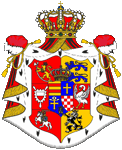
Wappen Großherzogtum Oldenburg,
Quelle, nach:
Wikipedia (DE)
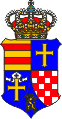
Kleines Wappen Großherzogtum Oldenburg,
Quelle, nach:
Wikipedia (DE)
Wappen Freistaat Oldenburg,
Quelle, nach:
Wikipedia (DE)
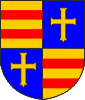
Das bis 1919 gültige kleine Wappen war halbgespalten, kombiniert mit einer Art umgekehrtem Deichselschnitt, wodurch fünf Felder entstanden. Feld 1 (gold-rot gestreift) steht für die Grafschaft Oldenburg, Feld 2 (goldenes Kreuz auf Blau) für die Herrschaft Delmenhorst, Feld 3 (goldenes Kreuz auf Blau mit Krone darüber) für das Fürstentum Lübeck, Feld 4 (rot-silber geschacht) für das Fürstentum Birkenfeld, und das Feld 5 (goldener Löwe auf Blau) in der Spitze des Wappens steht für die Herrschaft Jever.
Quelle: Heraldique Europeenne

1816,
Kokarde von Oldenburg

bis 1919,
Kokarde von Oldenburg
In der napoleonischen Zeit trugen nur Offiziere des Landes Oldenburg eine blau-rote Kokarde am Tschako, im Jahre 1919 jedoch Blau-Rot-Blau. Über die Färbung und Gestaltung der Kokarden zwischen dem Ende der Napoleonischen Ära und dem Ende der Monarchie im Jahre 1918 ist den Autoren nichts genaueres bekannt.
Quelle, nach: Jürgen Kaltschmitt, nach
P. Bunde, Brigadeuniformtafel Nr. 244, Herzogenrath 2011
Lesen Sie hier:
Hintergründe, Geschichte und Fakten zum Thema "Kokarden".

Kokarde
Quelle/Source: Stielers Hand-Atlas, Justus Perthes, 1891
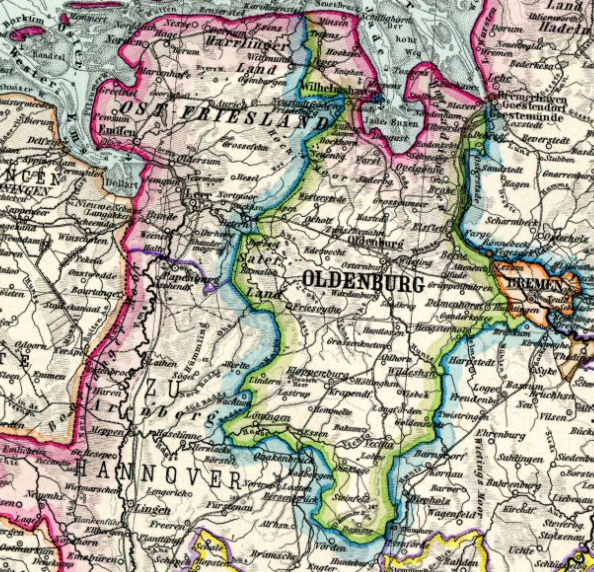
Die historische Landkarte zeigt das Land Oldenburg um 1890 in grüner Umrandung.
Fläche: 6.427 km²
Einwohner: 550.000 (1925)
Bevölkerungsdichte: 85 Ew./km² (1925)
Hauptstadt: Oldenburg
Währung bis 1858: 1 Taler = 72 Grote = 360 Schwaren
Währung 1858–1871: 1 Taler = 30 Groschen ...
Währung 1871–1924: 1 Mark = 100 Pfennig
Währung 1924–1946: 1 Reichsmark (RM) = 100 Reichspfennig (Rpf.)
Quelle: www.gonschior.de,
Der Michel
1108 · Ersterwähnung der Grafschaft Oldenburg
1667 · Erlöschen des Hauses Oldenburg, die Grafschaft fällt an Dänemark
1773 · Wiedererrichtung der Grafschaft unter dem Haus Holstein-Gottorf
1777 · Erhebung zum Herzogtum
1810–1813 · zu Frankreich
1815 · Wiener Kongress - Neuordnung Europas nach der Ära Napoléon, Gebietserweiterungen, Erhebung zum Großherzogtum
1866 · im Bruderkrieg auf Seiten Preußens, Beitritt zum Norddeutschen Bund
1871 · Beitritt zum Deutschen Reich
1918 · Sturz der Monarchie
1919 · Freistaat Oldenburg
1934 · die territoriale Länder-Struktur des Deutschen Reiches wird durch die Gaue der NSDAP abgelöst, die Länder werden bedeutungslos
1945 · von britischen und US-amerikanischen Truppen besetzt, zur britischen Besatzungszone
1946 · Eingliederung in das Land Niedersachsen
Quelle:
Wikipedia (D),
Atlas zur Geschichte,
Discovery '97,
Volker Preuß
Der Name des Landes geht auf die Ortschaft Oldenburg zurück. Dieser wurde im Jahre 1108 erstmals urkundlich als "Aldenburg" erwähnt.
Quelle: Wikipedia (D)