mobile Ansicht, to the English Version tap the flag

- Republik Finnland
- parlamentarische Republik
- Eigenbezeichnungen: Suomen Tasavalta (finnisch), Republiken Finland (schwedisch)
• Flaggen
• historische Flaggen
• Bedeutung/Ursprung der Flagge
• Wappen
• Bedeutung/Ursprung des Wappens
• Flugzeugkokarde
• regionale Flaggen
– Åland-Inseln
• Landkarte
• Zahlen und Fakten
• Geschichte
• Ursprung des Landesnamens
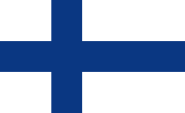
National- und Handelsflagge,
Seitenverhältnis = 11:18,
Quelle, nach: Wikipedia (D)


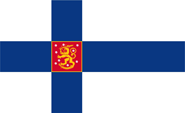
Staatsflagge,
Seitenverhältnis = 11:18,
Quelle, nach: Wikipedia (D)

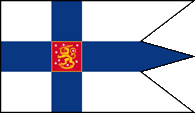
Marineflagge,
Seitenverhältnis = 11:19,
Quelle, nach:
Wikipedia (D)

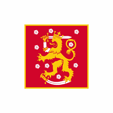
Gösch,
Seitenverhältnis = 1:1,
Quelle, nach: FOTW
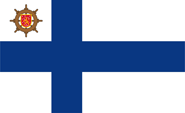
1.) Unterscheidungsflagge für Lotsenfahrzeuge,
2.) Flagge des Handelsschifffahrtsamtes,
Seitenverhältnis = 11:18,
Quelle, nach: Die Welt im bunten Flaggenbild
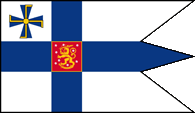
Flagge des Präsidenten,
Seitenverhältnis = 11:19,
Quelle, nach: Wikipedia (D)
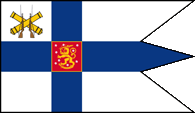
Flagge des Verteidigungsministers,
Seitenverhältnis = 11:19,
Quelle, nach: FOTW
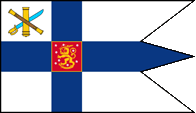
Flagge des Befehlshabers der Verteidigungskräfte,
Seitenverhältnis = 11:19,
Quelle, nach: FOTW
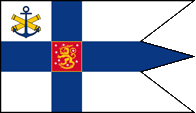
Flagge des Befehlshabers der Marine,
Seitenverhältnis = 11:19,
Quelle, nach: FOTW

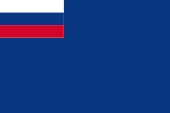
1809-1821,
Handelsflagge,
Quelle, nach:
FOTW
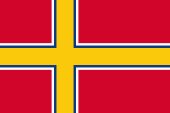
Dezember 1917 – Mai 1918,
Handelsflagge,
Quelle, nach:
FOTW
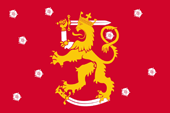
Dezember 1917 – Mai 1918,
Staatsflagge,
Quelle, nach:
FOTW
Die finnische Flagge zeigt auf weißem Grund ein blaues skandinavischen Kreuz, d.h. einem Kreuz, das zum Flaggenmast hin verschoben ist. Alle skandinavischen Länder haben zum Zeichen der Verwandtschaft und Zusammengehörigkeit ein solches Kreuz in ihren Flaggen. Sie wird von den Finnen "Siniristilippu" genannt, was "Blaukreuzflagge" heißt. Die Flagge wurde per Gesetz am 29.05.1918 eingeführt (andere Quellen sprechen vom 12.02.1920). Am 26.05.1978 wurden letztmalig per Gesetz einige Änderungen festgelegt. Als Farben für die Flagge werden angegeben: Blau = pt 294, Rot = pt 186, Gelb = pt 123. Über den Ursprung der Flagge gibt es auch unterschiedliche Aussagen. Entstanden ist sie in der zweiten Hälfe des 19. Jahrhunderts. Als Schöpfer der Flagge werden einerseits die Künstler Eero Snellman und Bruno Tuukkanen genannt, aber andererseits auch der Dichter Sakari Topelius der im Jahre 1862 einen Entwurf vorgelegt hat, und 1870 erklärt hat, dass die Farben den Schnee und die Seen Finnlands symbolisieren sollen. Die Proportionen der Flagge errechnen sich folgendermaßen (Dank an Heikki Kauppi): Länge: 18 = weiß 5 + blau 3 + weiß 10, Breite: 11 = weiß 4 + blau 3 + weiß 4.
Quelle:
Flaggen Wappen Hymnen,
Wikipedia (D),
Die Welt der Flaggen,
Alle Flaggen alle Staaten
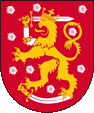
Wappen von Finnland,
Quelle, nach:
Corel Draw 4
Das finnische Staatswappen findet sich in allen Dienstflaggen und auch auf der Gösch wieder. Die vorübergehende Flagge von 1918 war sogar eine Wappenflagge. Das Löwenwappen geht auf das Grabmal des schwedischen Königs Gustav I. von Wasa (*1496–†1560) zurück. Die somit schwedische Heraldik ist darauf zurückzuführen, dass Finnland zwischen 1249 und 1809 zu Schweden gehörte. Die eingestreuten neun silbernen Rosen auf dem roten Wappenschild stehen für die neun historischen Provinzen des Landes.
Quelle:
Flaggen Wappen Hymnen
Lesen Sie hier:
Hintergründe, Geschichte und Fakten zum Thema "Der Löwe in der Heraldik". Ausführungen, Varianten, Entwicklung, sowie Panther und Leoparden.


seit 1945,
Flugzeugkokarde,
Quelle, nach: Wikipedia (EN)

1918–1945,
Flugzeugkokarde,
Quelle, nach: Wikipedia (EN)
Lage:
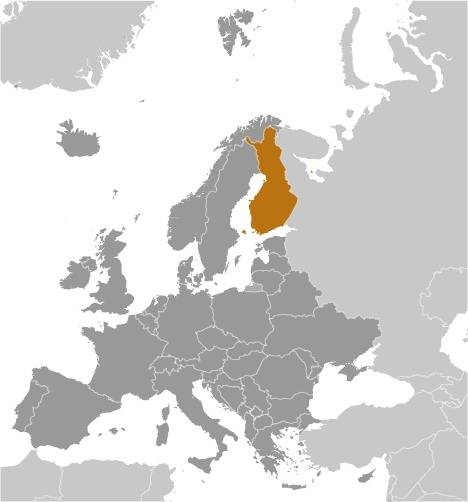
Quelle/Source: CIA World Factbook
Landkarte des Landes:
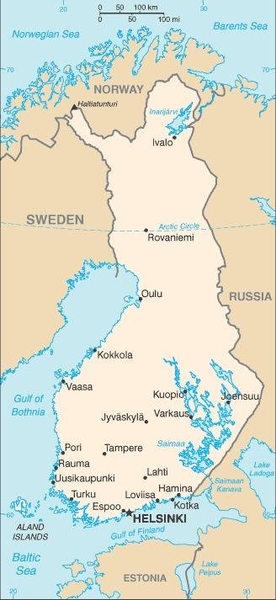
Quelle/Source: CIA World Factbook
Fläche: 338.465 km²
Einwohner: 5.536.146 (2020), davon 88% Finnen, 5% Schweden, 1% Russen, 0,13% Samen (Lappen), auch ca. 3500 Deutsche
Religionen: 68% Protestanten, 1% Orthodoxe, 0,15% Katholiken
Bevölkerungsdichte: 16 Ew./km²
Hauptstadt: Helsinki (Helsingfors), 648.042 Ew. (2018)
Amtssprachen: Finnisch, Schwedisch
sonstige Sprachen: Samisch (Lappisch), Russisch
Währung: 1 Euro (€) = 100 Cent
Zeitzone: MEZ + 1 h
Quelle:
Wikipedia (D),
Deutsche im Ausland
2. Jhd. · Einwanderung der Finnen in das ursprünglich schwedisch-russische Siedlungsgebiet
1249 · Kreuzzug der Schweden gegen die Finnen
1323 · Vertrag von Pähkinäsaari: Finnland wird offiziell ein Teil Schwedens, viele Schweden wandern ein
1714–1721 · Nordischer Krieg, Finnland von Russen besetzt
1721 · Schweden tritt Ingermanland (Südost-Finnland), Estland, Livland und Teile Kareliens (Ost-Finnland) an Russland ab
1809 · Vertrag von Fredrikhamn: Schweden tritt Finnland an Russland ab, Finnland wird Großfürstentum mit relativ großer Autonomie
1812 · Helsinki wird Hauptstadt
1863 · Finnisch wird neben Schwedisch ebenfalls Amtssprache
1865 · das Großfürstentum Finnland führt eine eigene Währung ein
1899 · verstärkte Russifizierung
1900 · Einführung von Russisch als Amtssprache
1901 · Auflösung der finnischen Armee durch Russland
1905 · erfolgreicher antirussischer Generalstreik, Zugeständnisse an die Finnen
1906 · Parlamentsreform
06.12.1917 · der Lenin-Putsch in Russland ermöglicht Finnland die Unabhängigkeitserklärung
1918 · siegreicher Bürgerkrieg der Regierung gegen bolschewistische Banden
1919 · Finnland wird Republik
1920 · Vertrag von Dorpat: die Sowjetunion erkennt Finnlands Grenzen an
1921 · Londoner Konferenz: die Åland-Inseln kommen zu Finnland
1930 · der "Bauernmarsch" (Lappobewegung) erzwingt die politische Ausschaltung der Kommunisten
1939 · Einmarsch der Sowjetarmee, starker finnischer Widerstand
1940 · Vertrag von Moskau: Finnland verliert 10% seines Territoriums an die Sowjetunion
1941 · finnische Truppen greifen die Sowjetunion zur Rückgewinnung der verlorenen Gebiete an
1944 · Einmarsch der Sowjetarmee, Waffenstillstand
1947 · Frieden von Paris: Anerkennung der Grenze von 1940 durch Finnland
1948 · "Freundschaftsvertrag" mit der Sowjetunion
1989 · die Sowjetunion erkennt die Neutralität Finnlands an
Quelle:
Atlas zur Geschichte,
Wikipedia (D),
World Statesmen,
RetroBib Retrobibliothek,
Discovery '97,
Weltgeschichte
Der Name des Landes als "Finnland" kann wörtlich mit "Sumpfland" übersetzt werden, denn diese Bezeichnung geht auf das althochdeutsche Wort für "Sumpf" zurück, was "fenni" heißt. Wie aber nennen die Finnen selber ihr Land: "Suomi", was auf die Eigenbezeichnung der Finnen "Suomalaiset" zurückgeht. Der Ursprung dieses Namens liegt im Dunklen, hat aber wahrscheinlich etwas mit den "Samen" (Lappen) im Norden Skandinaviens zu tun.
Quelle:
Atlas der wahren Namen,
Wikipedia (D)