
mobile Ansicht, to the English Version tap the flag













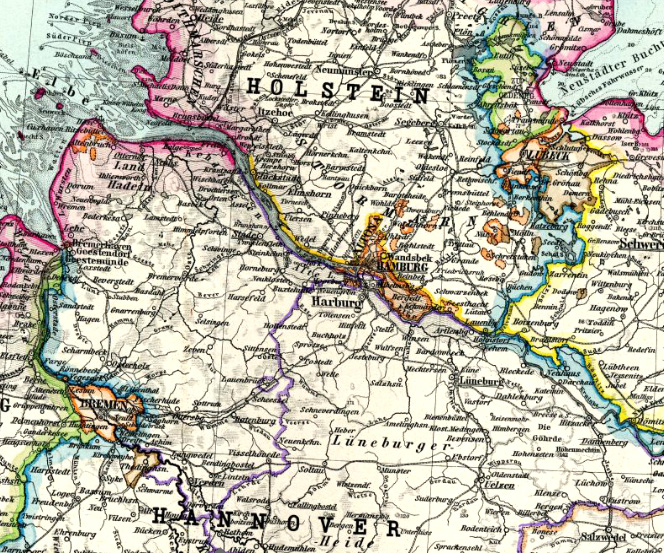
um Christi Geburt · in der Region siedeln germanische Stämme, wahrscheinlich Sachsen
375 · Hunneninvasion, Beginn der Völkerwanderung, Abwanderung der alten Germanischen Stämme in das Römische Reich, Nachrücken anderer Germanischen Stämme in Richtung zur Römischen Grenze, die Sachsen wandern nach England und in das Wesergebiet ab, in das nun menschenleere Gebiet (Germania Slavica) wandern Slawen ein, in der Gegend um das heutige Lübeck sind es ab dem 7. Jahrhundert Slawen vom Stamm der Obodriten
819 · Gründung von Liubice (Alt-Lübeck) durch den slawischen Stamm der Obodriten
ca. 900 · im Ostfrankenreich (späteres Deutsches Reich) bilden sich fünf Stammesherzogtümer heraus (Sachsen, Bayern, Schwaben, Franken und Lothringen), Beginn der Ostexpansion in der Germania Slavica zwischen den Flüssen Saale/Elbe und Oder/Neiße, die Elbe wird Richtung Nordosten überschritten, und bis ca. 960 die Ostsee und die Oder erreicht, die Obodriten werden der Mark (Markgrafschaft) des Hermann Billung angeschlossen
1093 · Liubice wird Residenz eines slawischen Fürsten
1127 · Liubice wird durch den slawischen Stamm der Ranen zerstört
1143 · Gründung von Lübeck durch Graf Adolf II. von Holstein
1160 · Lübeck wird Bischofssitz und erhält das Stadtrecht
1189 · Lübeck kommt an das Herzogtum Sachsen
1192 · Lübeck kommt an Holstein
1201–1225 · unter dänischer Herrschaft
1226 · Eingemeindung von Alt-Lübeck (ca. 1100 gegründet)
1226 · Erhebung zur Freien Reichsstadt durch Kaiser Friedrich II.
ca. 1280 · Gründung des Hansischen Städtebundes (Hanse)
1361 · die Stadt Wisby auf Gotland, bis dato der Hauptort der Hanse, wird vom dänischen König Waldemar IV. erobert, der Sitz der Hanse wird nach Lübeck verlegt
14.–16. Jhd. · starker wirtschaftlicher und kultureller Einfluss im Ostseeraum
1563–1570 · Nordischer Krieg (Hanse und Dänemark gegen Schweden), Schweden setzt sich durch
1570 · Frieden von Stettin, die politische Bedeutung Lübecks endet
1669 · letzter Hansetag in Lübeck
1792, 1796, 1800 und 1805 · Invasionen französischer Revolutionstruppen unter Napoléon in das Deutsche Reich, das Deutsche Reich unterliegt und wird von Napoléon territorial umgestaltet
1803 · Reichsdeputationshauptschluss, Umgestaltung der territorialen Gliederung des Deutschen Reiches, geistliche Besitzungen werden enteignet, alte Fürstenterritorien und freie Städte werden enteignet oder aufgehoben und alten oder neuen Fürstentümern übertragen, die Zahl der Gebietskörperschaften des Reiches wird dadurch von 300 auf 60 reduziert
1806 · Besetzung durch französisch-napoleonische Truppen
12.07.1806 · Napoléon erzwingt die Gründung des Rheinbundes, ein Zusammenschluss von sechzehn süd- und südwestdeutschen Staaten unter französischem Protektorat
01.08.1806 · die Staaten des Rheinbunds treten aus dem Heiligen Römischen Reich Deutscher Nation aus
06.08.1806 · Kaiser Franz II. legt die Krone des Heiligen Römischen Reiches Deutscher Nation nieder, das Reich endet
1810 · Lübeck wird von Frankreich annektiert
1811 · Abzug der Franzosen
Oktober 1813 · Niederlage Napoléons bei Leipzig, der Rheinbund beginnt zu zerfallen, Napoléon und seine Truppen ziehen sich hinter den Rhein zurück, Wiederherstellung der Freien und Hansestadt Lübeck
1814–1815 · Wiener Kongress, Neuordnung Europas nach der Ära Napoléon, die Besitzverhältnisse und die Raumordnung im ehemaligen Deutschen Reich werden wieder hergestellt, jedoch nicht die Souveränität der geistlichen Länder, deren Besitzungen werden alten oder neuen Fürstentümern übertragen oder angeschlossen, die 39 verbleibenden deutschen Staaten – so auch Lübeck – werden in einem lockeren Zusammenschluss, dem Deutschen Bund organisiert
1866 · Deutscher Krieg (Bruderkrieg) Preußens und seiner Verbündeten gegen Österreich und seine Verbündeten, Preußen siegt, Lübeck steht auf der Seite Preußens, Beitritt zum Norddeutschen Bund
01.01.1868 · Verkauf der Rechte an der gemeinsamen Verwaltung von Bergedorf mit Hamburg an Hamburg
1868 · Beitritt zum Deutschen Zollverein
1871 · Beitritt zum Deutschen Reich
1933–1934 · Lübeck tritt (wie alle deutschen Länder), Hoheitsrechte an die Reichsregierung ab, die territoriale Länder-Struktur des Deutschen Reiches wird durch die Gaue der NSDAP abgelöst, die Länder werden bedeutungslos, final am 30.01.1934 durch das 'Gesetz über den Neuaufbau des Reiches'
26.01.1937 · Groß-Hamburg-Gesetz, das Territorium der Stadt Hamburg wird auf Kosten preußischen Territoriums erheblich vergrößert, dafür wird die Stadt Lübeck von Preußen annektiert, die (seit 1934 marginale) Souveränität der Stadt endet, sie wird dem Gau Schleswig-Holstein angeschlossen
1949 · die Stadt gehört zum Bundesland Schleswig-Holstein
Quelle:
RetroBib Retrobibliothek,
Wikipedia (D),
Historisches Deutschland,
World Statesmen,
Jürgen Kaltschmitt