mobile Ansicht, to the English Version tap the flag

- Österreichisch-Schlesien
- ehemaliges österreichisches Kronland: Herzogtum Ober- und Niederschlesien
- heute Landschaft im Sudetengebirge im Nordosten von Tschechien
• Flagge
• Bedeutung/Ursprung der Flagge
• Wappen
• Bedeutung/Ursprung des Wappens
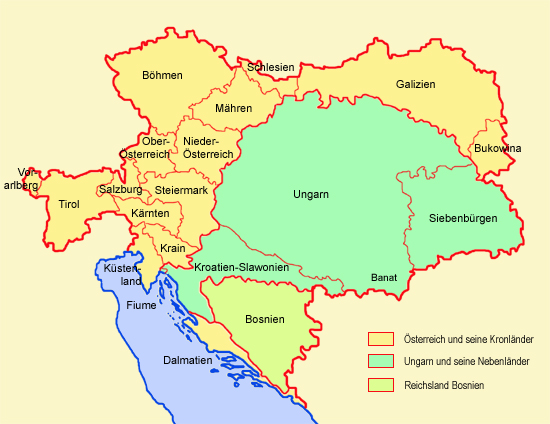
• Landkarte der früheren Kronländer Österreich-Ungarns (bis 1918)
• Landkarte zu Schlesien
• Zahlen und Fakten
• Geschichte
• Ursprung des Landesnamens
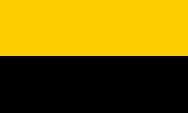
Landesflagge (Landesfarben),
Seitenverhältnis = 2:3,
Quelle, nach:
Flags of the World



Das Land hatte, wie alle Kronländer der österreichischen Krone, seine eigenen, sogenannten Landesfarben, die unter anderem auf horizontal getreiften zwei- oder dreistreifigen Flaggen gezeigt wurden. Die Landesfarben waren sehr oft dem jeweiligen Wappen des Kronlandes entnommen oder wurden duch eine weitere, nicht im Wappen enthaltene Farbe ergänzt, oder sie gingen auf ältere Modelle des Landeswappens zurück (z.B. Krain). Offiziell waren die Landesfarben aber nie geregelt oder festgelegt worden, so dass deren Reihenfolge in der Praxis of variierte oder die Farben gar an sich abwichen. Der österreichische Heraldiker Hugo Gerard Ströhl (1851–1919) hat sich wohl als erster des Themas angenommen und wahrscheinlich um das Jahr 1890 herum die Landesfarben auf den Flaggen bei den jeweiligen Landesbehörden abgefragt und zusammengestellt. Österreichisch Schlesien verwendete als Landesfarben eine Flagge die zwei horizontale Streifen in Gold und Schwarz zeigte. Die Farben stammen vom Wappen Schlesiens: Schwarzer Adler auf Gold. Die Farben erscheinen heraldisch falsch, also Gold oben, wahrscheinlich um eine Unterscheidung zur damaligen Österreichischen Nationalflagge zu ermöglichen.
Quelle: Österreichisch-Ungarische Wappenrolle,
Flags of the World,
Volker Preuß
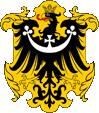
Wappenschild von Österreichisch-Schlesien,
Quelle, nach: Österreichisch-Ungarische Wappenrolle
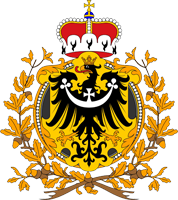
Wappen Österreichisch-Schlesien,
Quelle, nach: Ströhl, Wappenrolle Österreich-Ungarns, 1890, via Wikipedia (D)
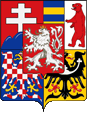
1920–1939, 1945–1960,
Mittleres Wappen der Tschechoslowakei,
Quelle,
nach: See page for author / CC BY-SA
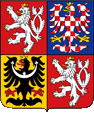
heutiges Wappen von Tschechien,
Quelle,
nach:
unknown, convert to SVG Tlusťa / Public domain
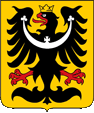
heutige Heraldik von Tschechisch-Schlesien,
Quelle, nach:
unknown, convert to SVG Tlusťa / Public domain
Das Wappen Schlesiens zeigt einen gekrönten, giold bewehrten, schwarzen Adler auf Gold. Der Adler ist mit einem silbernen in Kleestengeln endenden Halbmond belegt, der in der Mitte ein Kreuzchen trägt. Der schlesische Adler erschien noch bis 1960 im Wappen der Tschechoslowakei. Seit 1992 erscheint der Adler wieder im Wappen von Tschechien.
Quelle: Österreichisch-Ungarische Wappenrolle,
Volker Preuß
Karte ca. 1910:
Quelle: Volker Preuß
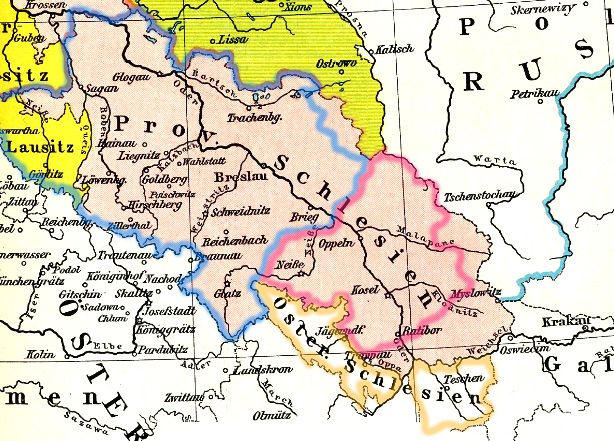
Quelle: F. W. Putzgers Historischer Schul-Atlas, modyfied by:
Volker Preuß
Die historische Landkarte zeigt das Preußische Schlesien zwischen 1806 und 1815, als hellrote Fläche. Die gelben Bereiche im Nordosten wurden 1815 von Sachsen an Preußen abgetreten und an Schlesien angeschlossen. Österreichisch-Schlesien (1742–1918) erscheint in dunkelgelber Umrandung. Im Jahre 1919 wurde das Preußische Schlesien in zwei Provinzen aufgeteilt, Oberschlesien (hellrote Umrandung) und Niederschlesien (hellblaue Umrandung).
Fläche: 5.147 km²
Einwohner: 757.000 (1910), davon 43% Deutsche, 31% Polen, 24% Tschechen, Mährer, Slowaken
Bevölkerungsdichte: 147 Ew./km² (1910)
Hauptstadt: Troppau (tschechisch: Opava), 26.750 Ew. (1900), 56.638 Ew. (2019)
Sprachen (bis 1910): Deutsch, Polnisch, Tschechisch
Währung: bis 1918 Österreichische Währung, ab 1918 Tschechoslowakische Währung, ab 1938 Deutsche Währung, ab 1945 Tschechoslowakische Währung, ab 1992 Tschechische Währung
Zeitzone: MEZ
Quelle:
Wikipedia (D)
1. Jhd. v.Chr. · Besiedlung durch germanische Stämme
2. und 3. Jhd. · Besiedlung durch die germanischen Stämme der Burgunder und Vandalen
ca. 300 · Besiedlung durch slawische Stämme
1137 · Schlesien kommt von Böhmen an die polnischen Piasten, dabei Aufteilung in Teilherzogtümer
1163 · Errichtung der schlesischen Herzogtümer Breslau und Ratibor
1241 · Mongoleninvasion, 80% der Einwohner Schlesiens kommen dabei ums Leben, der Verlust wird durch gezielte Besiedlung mit Deutschen ausgeglichen
1289 · als erstes schlesisches Herzogtum unterstellt sich Cosel-Beuthen freiwillig der böhmischen Lehenshoheit (Haus Luxemburg), dem bis 1342 alle anderen Herzogtümer folgen
1335 · der polnische König Kasimir III. verzichtet auf alle Ansprüche in Schlesien
1348 · König Karl IV. von Böhmen unterstellt die schlesischen Teilherzogtümer der Böhmischen Krone, damit werden sie Teil des Heiligen Römischen Reiches Deutscher Nation
1526 · Tod des böhmischen Königs Ludwig II. in der Schlacht bei Mohács, das Erbe der Luxemburger geht an das Haus Habsburg (Österreich), die Habsburger werden zu Königen von Böhmen und Herzögen von Schlesien
1675 · Tod des letzten Piasten-Herzogs, Georg Wilhelm von Liegnitz, Kurbrandenburg erhebt Anspruch auf Georg Wilhelms Herzogtümer, Preußen weitet unter Friedrich II. den Anspruch auf ganz Schlesien aus
1740–1742 · erster Schlesischer Krieg (Preußen gegen Habsburg)
1742 · in Folge des Sieges von Preußen über Habsburg kommen Niederschlesien, ein Großteil Oberschlesiens und die Grafschaft Glatz an Preußen, kleine schlesische Gebiete um Troppau, Jägerndorf, Teschen und Bielitz verbleiben bis 1918 als Kronland Österreichisch-Schlesien bei der Habsburger Monarchie
1848/1849 · Revolution in Wien, Franz Joseph I. von Habsburg wird neuer Kaiser, neue Verfassung: die Titular-Erblande der Habsburger im Kaiserreich Österreich werden zu Kronländern mit eigenen Landtagen umgewandelt, Österreichisch-Schlesien wird so ein Kronland des Kaiserreichs Österreich
28.10.1918 · die Tschechoslowakei spaltet sich von Österreich-Ungarn ab (am 10.09.1919 von Österreich anerkannt), Österreichisch-Schlesien wird dabei in die Tschechoslowakei eingegliedert
10.10.1938 · Münchner Abkommen, die Tschechoslowakei muss die mehrheitlich von Deutschen bewohnten Gebiete an das Deutsche Reich abtreten. Das ehemalige Österreichisch-Schlesien wird mit anderen Territorien zum Gau Sudetenland zusammengefasst
1945 · sowjetische Eroberung und Besetzung des ehemaligen Österreichisch-Schlesiens, Wiederangliederung an die Tschechoslowakei, Vertreibung der im Lande verbliebenen deutschen Bevölkerung
1992 · Zerfall der Tschechoslowakei in Tschechien (Böhmen, Mähren und ehemals Österreichisch-Schlesien) und Slowakei
Quelle: Atlas zur Geschichte,
Wikipedia (D),
RetroBib Retrobibliothek,
Discovery '97,
Volker Preuß
Der Name das Landes geht auf den vandalischen Stamm der Silingen zurück, der hier im 2. und 3. Jahrhundert siedelte. Auch der Fluss Sleza (deutsch: Lohe), ein Nebenfluss der Oder, wird als Quelle des Landesnamens für Schlesien angegeben.
Quelle:
Handbuch der geographischen Namen
weitere Seiten zu Österreich (historische Flaggen und Wappen):
• Reich der Österreichischen Habsburger (bis 1804)
• Kaiserreich Österreich (1804–1867)
• Österreich-Ungarn (1867–1918)
• Republik Österreich (seit 1918)