mobile Ansicht, to the English Version tap the flag

- Republik Indien
- parlamentarische bundesstaatliche Republik
- Eigenbezeichnungen: Bhárat Ganráshtra
• Flaggen
• Bedeutung/Ursprung der Flagge
• historische Flaggen
· Britische Ostindienkompanie
· Britisch-Indien
· Portugiesisch-Indien
· Französisch-Indien
• Wappen
• Bedeutung/Ursprung des Wappens
• Flugzeugkokarde
• Landkarte
• Zahlen und Fakten
• Geschichte
• Ursprung des Landesnamens
• Freies Indien – Azad Hind
• Regionale Flaggen
· Jammu und Kaschmir
· Sikkim
• Sezessionen
· Nagaland
· Assam
· Khalistan
· Mizoram
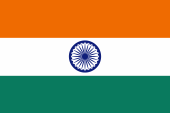
Nationalflagge und Gösch,
Seitenverhältnis = 2:3,
Quelle, nach: Corel Draw 4


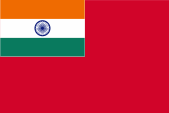
Handelsflagge,
Seitenverhältnis = 2:3,
Quelle, nach: Flaggen und Wappen

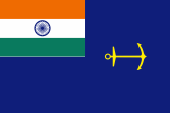
Staatsflagge zur See (Seedienstflagge),
Seitenverhältnis = 2:3,
Quelle, nach: Flags of the World
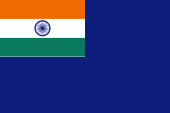
Handelsflagge für Reserveoffiziere der Marine
und Flagge der Hilfsschiffe,
Seitenverhältnis = 2:3,
Quelle, nach: Flags of the World
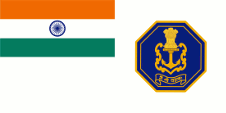
seit 2022,
Marineflagge,
Seitenverhältnis = 1:2,
Quelle, nach: Flags of the World,
Indian Navy, Public domain, via Wikimedia Commons
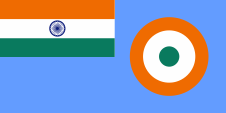
Flagge der Luftwaffe,
Seitenverhältnis = 1:2,
Quelle, nach: Flags of the World
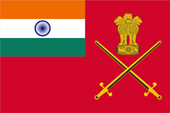
Flagge des Heeres,
Seitenverhältnis = 2:3 (1:2 ?),
Quelle, nach: Flags of the World

Die heutige Flagge Indiens wurde am 22.07.1947, im Vorfeld der Unabhängigkeit am 15.08.1947 eingeführt. Sie zeigt drei waagerechte Streifen in Safran, Weiß und Grün. In dem weißen Mittelstreifen wurde ein blaues Rad platziert. Es handelt sich um das religiöse Symbol "Rad der Lehre". Es geht auf Kaiser Ashoka zurück, der Indien zwischen 270–232 v. Chr. einte und regierte. Zum buddhistischen Symbol wurde es, weil Buddhas erste Predigt bei Benares als das "Ingangsetzen des Rades der Lehre" (Tschakra) bezeichnet wurde. Die Farbe Safran steht offiziell für Mut und Aufopferung, Weiß für Frieden und Vertrauen, Grün für Treue und Ritterlichkeit. Inoffiziell steht das Safran für die Hindus, das Grün für die Moslems und das Weiß für den versöhnlichen Geist zwischen ihnen. Die Flagge Indiens hat ihre Wurzeln in der Flagge des Indischen Nationalkongresses von 1931, und geht auf Subhas Chandra Bose (1897–1945) zurück (siehe hier). Zur Unabhängigkeit wurde das im weißen Mittelstreifen gelegene blaue Spinnrad (Tscharkha), durch das Tschakra ersetzt. Die Fürstenstaaten – die alle eigene Flagge hatten – wurden 1950 endgültig abgeschafft. An ihre Stelle traten künstlich geschaffene Bundesstaaten, die bis auf eine einzige Ausnahme (ehemals Jammu und Kaschmir) keine Flaggen verwenden. Indien orientiert sich am britschen Ensign-System. Das weißt auf die früheren Verbindungen zu Großbritannien hin (→ Britisch-Indien). Die Farben der Flagge sind wie folgt definiert: Safrangelb = Pantone 021, Grün = Pantone 341, Marineblau = Pantone 662.
Quelle:
Die Welt der Flaggen,
Flaggen Wappen Hymnen,
Flaggen und Wappen der Welt,
Wikipedia (DE)
Indien:
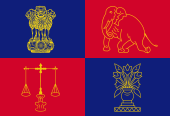
1950–1971,
Flagge des Präsidenten,
Seitenverhältnis = 2:3,
Quelle, nach: Flaggen und Wappen
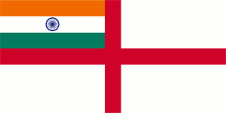
1950–2001,
Marineflagge,
Seitenverhältnis = 1:2,
Quelle, nach: Flags of the World
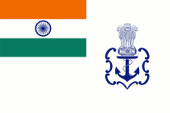
2001–2004,
Marineflagge,
Seitenverhältnis = 2:3,
Quelle, nach: Flags of the World
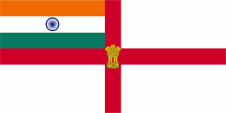
2004–2014,
Marineflagge,
Seitenverhältnis = 1:2,
Quelle, nach: Flags of the World
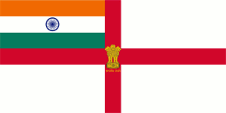
2014–2022,
Marineflagge,
Seitenverhältnis = 1:2,
Quelle, nach: Flags of the World

ca. 1615–1707,
Flagge der Englischen Ostindienkompanie,
Quelle, nach:
commons.wikimedia.org
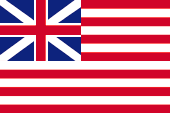
1707–1801,
Flagge der Britischen Ostindienkompanie,
Quelle, nach:
commons.wikimedia.org
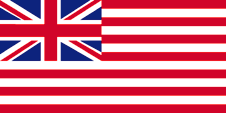
1801–1858,
Flagge der Britischen Ostindienkompanie,
Quelle, nach:
commons.wikimedia.org
Die Flaggen der Ostindienkompanie zeigten seit Anfang des 17. Jahrhunderts weiße und rote Streifen, um deren Schiffe besser von anderen britischen Schiffen zu unterscheiden.
mehr Informationen? → hier klicken
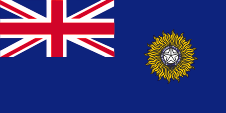
1879–1947,
Flagge der Regierung (Staatsflagge),
Seitenverhältnis – ratio = 1:2,
Quelle, nach:
Flags of the World
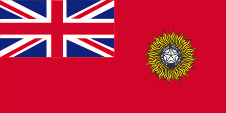
1945–1947, inoffiziell,
Handelsflagge,
Seitenverhältnis – ratio = 1:2,
Quelle, nach:
Flags of the World
1879–1928,
Marineflagge,
Seitenverhältnis – ratio = 1:2,
Quelle, nach:
Flags of the World
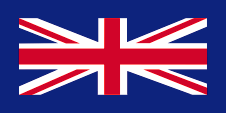
1879–1928,
Gösch,
Seitenverhältnis – ratio = 1:2,
Quelle, nach:
Flags of the World
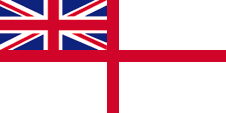
1928–1947,
Marineflagge,
Seitenverhältnis – ratio = 1:2,
Quelle, nach:
Flags of the World
1928–1947,
Gösch,
Seitenverhältnis – ratio = 1:2,
Quelle, nach:
Flags of the World
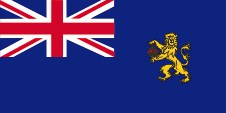
1884–1947, Local Maritime Government Ensign,
Seedienstflagge,
Seitenverhältnis – ratio = 1:2,
Quelle, nach:
Flags of the World
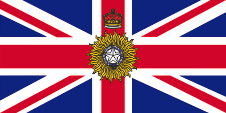
1885–1947,
Flagge des Vizekönigs und Generalgouverneurs von Britisch-Indien,
Seitenverhältnis – ratio = 1:2,
Quelle, nach:
Flags of the World
Großbritannien hatte in Jahr 1864 ein Flaggensystem eingeführt, in dem:
• Kriegsschiffe einen sogenannten "White Ensign" (Marineflagge), eine weiße Flagge oft mit durchgehendem roten Georgskreuz und mit dem Union Jack in der Oberecke,
• Handelsschiffe einen "Red Ensign" (auch "Civil Ensign" → Bürgerflagge genannt, die eigentl. Handelsflagge), eine rote Flagge mit dem Union Jack in der Oberecke, und
• Dienstschiffe einen "Blue Ensign" (Regierungsflagge → die eigentl. Staatsflagge), eine blaue Flagge mit dem Union Jack in der Oberecke führten.
Seit 1865 durften Schiffe von Kolonialregierungen einen Blue Ensign mit einem Badge (Abzeichen) im fliegenden Ende führen. Die jeweiligen Regierungen sollten entsprechene Bagdes zur Verfügung stellen. Handelsschiffe und seefahrende Privatpersonen aus Kolonien dürfen nur dann einen Red Ensign mit Badge führen, wenn von der britischen Admiralität eine entsprechende Erlaubnis für die Kolonie erteilt wurde. Das Symbol Britisch-Indiens war der Stern von Indien, ein siberner fünfzackiger Stern umgeben von einem blauen Band mit dem Motto: "Das Licht des Himmels unser Führer", eingebettet in goldene Sonnenstrahlen. Die Unterwerfung Indiens durch Großbritannien war bis zum Jahre 1856 weitgehend abgeschlossen worden, 1858 übernahmen die Briten offiziell den Thron des Mogulreiches, und im Jahr 1877 nahm die britische Königin Viktoria den Titel „Kaiserin von Indien“ an. Indien war nunmehr ein Flickenteppich aus Gebieten die durch die Britische Ostindische Kompanie, bzw. direkt durch Großbritannien verwaltet wurden, und Territorien einheimischer Fürsten die lediglich die britische Oberhoheit anerkannten (Vasallen). All diese Gebiete setzten ihre eigene einheimische Heraldik fort, teilweise ergänzt um britische Symbolik, z.B. durch Einführung eines Red Ensign, oder Einführung eines Blue Ensign. Die Fürstenstaaten wurden 1950 endgültig abgeschafft. An ihre Stelle traten künstlich geschaffene Bundesstaaten, die bis auf eine einzige Ausnahme (ehemals Jammu und Kaschmir) keine Flaggen verwenden.
Quelle: Die Welt der Flaggen,
Flaggen und Wappen der Welt,
Wikipedia (DE)
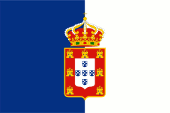
1830–1910,
Nationalflagge Portugals,
Seitenverhältnis – ratio = 2:3,
Quelle, nach:
Brasil Imperial
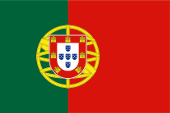
1911–1961,
Nationalflagge Portugals,
Seitenverhältnis – ratio = 2:3,
Quelle, nach:
Corel Draw 4
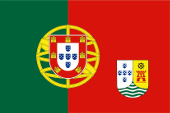
60-er Jahre 19. Jhd.,
geplante Flagge für Portugiesisch-Indien,
Quelle, nach:
Wikipedia (D)
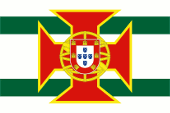
1935–1961,
Flagge des Generalgouverneurs,
Quelle, nach:
Die Welt im bunten Flaggenbild
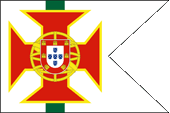
1935–1961,
Flagge eines Distriktskommandanten
in Portugiesisch-Indien,
Quelle, nach:
Flaggenbuch 1939
Zwischen dem 16. und 18. Jahrhundert unterhielt Portugal zahlreiche städtische Besitzungen und Stützpunkte an der Ost- und Westküste Indiens und in Ceylon. Im 19. Jahrhundert waren davon noch fünf an der Westküste übrig geblieben: das 1535 erworbene Diu, das 1559 erworbene Daman, das 1779 erworbene Dadra, das 1779 erworbene Nagar-Haveli und die größte Besitzung, das 1509 erworbene Goa. Dadra und Nagar-Haveli gingen 1954 durch eine Okkupation durch indische Nationalisten verloren. Sie sind heute ein Unionsterritorium Indiens. Goa, Diu und Daman wurden 1961 von der indischen Armee besetzt und entgegen des Befehls des portugiesischen Präsidenten aufgegeben. Diu und Daman sind heute ein Unionsterritorium Indiens und Goa mit 3700 km² der kleinste indische Bundesstaat. In den portugiesischen Kolonien wurde ausschließlich die portugiesische Nationalflagge verwendet, da man die Kolonien als fester Bestandteil des Mutterlandes betrachtete, und nicht als Außenbesitzungen. Das bedeutete, das portugiesische Kolonien nie eigene Flaggen hatten, auch wenn es in den sechziger Jahren des 20. Jahrhunderts Bestrebungen gab Flaggen für die Kolonien einzuführen, indem man das Wappen der Kolonie in das fliegende Ende der portugiesischen Nationalflagge platzierte. Diese Pläne wurden jedoch nie realisiert.
Quelle:
1) Wikipedia (D),
2) Wikipedia (D)
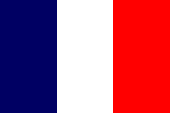
1794–1954,
Nationalflagge Frankreichs,
Quelle, nach:
Corel Draw 4

In der Mitte des 18. Jahrhunderts war der französische Einfluss, ausgehend von umfangreichen Besitzungen an der Ostküste, beträchtlich angewachsen. Nach dem für Frankreich verlorenen Siebenjährigen Krieg (1756 bis 1763) gingen diese Besitzungen nahezu vollständig an Großbritannien über. Lediglich fünf Städte blieben als Französische Besitzungen erhalten: das 1751 erworbene Yanam (Yanaon), das 1738 erworbene Karikal (Karaikal), das 1674 erworbene Pondichéry (Puducherry), das 1721 erworbene Mahé und das 1673 durch Franzosen gegründete Chandannagar (Chandernagor). Chandannagar wurde 1950 nach einer Volksabstimmung an Indien übergeben. Die verbleibenden vier Besitzungen kamen 1954 an Frankreich und sind heute ein Unionsterritorium Indiens. In den französischen Kolonien wurde ausschließlich die französische Nationalflagge verwendet, da man die Kolonien als fester Bestandteil des Mutterlandes betrachtete, und nicht als Außenbesitzungen. Das bedeutete, das diese Kolonien nie eigene Flaggen hatten.
Quelle:
FOTW,
Die Welt der Flaggen,
Wikipedia (D)

Wappen von Indien,
Quelle:
Corel Draw 4

Abzeichen (Badge) Britisch-Indien,
Quelle, nach:
Flags of the World
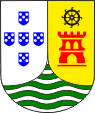
Wappen von Portugiesisch-Indien,
Quelle, nach:
Wikipedia (DE)
Das Staatswappen Indiens wurde am 26.01.1950, im Zusammenhang mit der Annahme einer neuen Verfassung angenommen. Die indischen Flaggen zeigen das Wappen jedoch nicht, lediglich die Flagge des Präsidenten verwendet es in der linken Oberecke. Es ist einer Säule in der heiligen Stadt Sarnath nachgebildet, und zeigt einem Sockel mit Kaiser Ashokas Rad in der Mitte, darauf vier Löwen, die in die vier Himmelsrichtungen blicken. Darunter ein Zitat in Sanskrit aus den Mundaka-Upanischaden: "Nur die Wahrheit siegt".
Das Symbol Britisch-Indiens war der Stern von Indien, ein siberner fünfzackiger Stern umgeben von einem blauen Band mit dem Motto: "Das Licht des Himmels unser Führer", eingebettet in goldene Sonnenstrahlen.
Im Jahre 1935 wurden für die portugiesischen Kolonien eigene Wappen eingeführt. Die Gestaltung unterlag einem gewissen Schema und so zeigte jedes Wappen neben einer lokalen Symbolik die fünf Quinas aus dem Wappen von Portugal und fünf grüne Wellen auf Silber. Als lokale Symbolik erschien im Wappen von Portugiesisch-Indien ein rotes Kastell und ein Steuerrad.
Quelle:
Die Welt der Flaggen,
Flags of the World,
Wikipedia (D)

1947–1950,
Flugzeugkokarde,
Quelle, nach: Wikipedia (EN)

seit 1950,
Flugzeugkokarde,
Quelle, nach: Wikipedia (EN)
Lage:
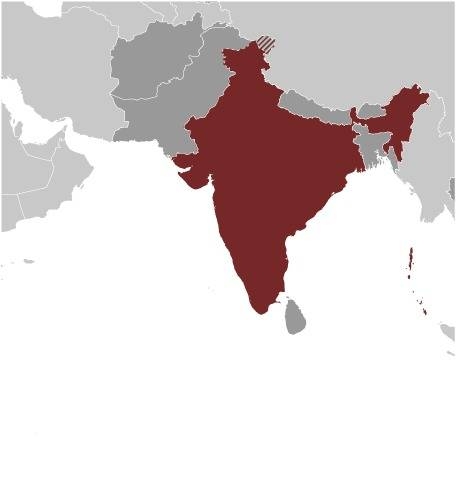
Quelle/Source: CIA World Factbook
Landkarte des Landes:
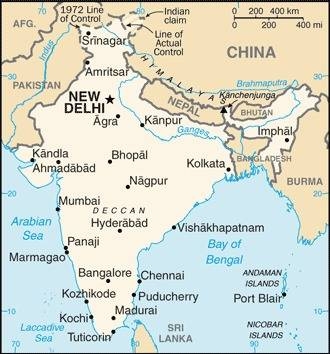
Quelle/Source: CIA World Factbook
Fläche: 3.287.263 km²
Einwohner: 1.380.004.000 (2020), davon 72% Indoarier, 25% Drawida, 2% Mongolide
Religionen: 80% Hindus, 14% Moslems, 2% Christen, 2% Sikhs, 1% Buddhisten
Bevölkerungsdichte: 420 Ew./km²
Hauptstadt: Neu-Delhi, 250 000 Ew. (2011)
Amtssprachen: Hindi, Englisch
sonstige Sprachen: Urdu, Bengali, ... 22 regionale Sprachen sind auch amtlich zugelassen.
Währung: 1 Indische Rupie (INR, iR) = 100 Paise
Zeitzone: MEZ + 4,5 h
Quelle:
Wikipedia (D),
CIA World Factbook
ca. 2500 v.Chr. · neolithische vorarische Hochkulturen von Mohenjo-Daro und Harappa
ca. 1500–500 v.Chr. · Einwanderung arischer Nomadenvölker nach Nord- und Nordwestindien (Wedisches Zeitalter)
ca. 640 v.Chr. · beginnende Ausbreitung des Buddhismus
320–185 v.Chr. · Maurja-Großreich
270–232 v.Chr. · Regentschaft des Maurja-Königs Aschoka
320–467 n.Chr. · Gupta-Reich
ab ca. 660 · Eindringen des Islam
ab 1221 · wiederholte Mongoleneinfälle
1498 · der Portugiese Vasco da Gama erreicht Indien auf dem Seeweg
1503–1559 · Inbesitznahme verschiedener indischer Küstenstädte durch die Portugiesen, darunter auch für die nächsten 400 Jahre die Städte Goa, Diu und Daman
1526 · Gründung der mongolischen Kaiserdynastie (Moguln) des Babur in Dehli
1605–1663 · Inbesitznahme weiterer indischer Küstenstädte durch die Niederländer
1600 · Gründung und Privilegierung der Englischen Ostindienkompanie
1602 · Gründung der Niederländischen Ostindienkompanie
1611 · die Niederländer treten Mastsjulipattinam an die Englische Ostindienkompanie ab, Beginn der britischen Kolonisierung, zunächst auch nur durch Unterwerfung verschiedener Küstenstädte
1620 · Inbesitznahme von Trankebar durch Dänemark, 1845 an die Englische Ostindienkompanie abgetreten
1664 · Gründung der Französischen Ostindienkompanie
1674–1739 · Inbesitznahme weiterer indischer Küstenstädte durch die Franzosen
18. Jhd. · Aufstieg des Marathenreiches in Südindien, allmählicher Niedergang des Mogulreiches
1753 · Eroberung eines ersten größeren Landstriches (Küstenregion Sarkars) durch die Britische Ostindienkompanie
1765–1898 · die Briten (einschl. der Britischen Ostindienkompanie) unterwerfen nach und nach ganz Indien, was die heutigen Staaten Pakistan, Bangladesch und Burma einschließt
1778 · vier Inseln der Nikobaren-Inseln werden ungeachtet dänischer Ansprüche zu österreichischen Kronkolonien erklärt und die "Triestiner Ostindische Handelskompanie" gegründet
1784 · die Nikobaren werden von Österreich wieder aufgegeben, die "Triestiner Ostindische Handelskompanie" stellt ihre Arbeit ein
1813 · die Handelsprivilegien der Britischen Ostindienkompanie werden aufgehoben
1814 · die Niederlande treten ihre restlichen Besitzungen an die Briten ab
1833 · die Tätigkeit der Britischen Ostindienkompanie wird auf die Ausübung der Zivilverwaltung im Namen der Krone beschränkt
1846 · die Nikobaren-Inseln werden dänischer Besitz, 1869 an Großbritannien abgetreten
1858 · Großbritannien übernimmt offiziell den Thron des Mogulreichs, Indien wird britische Kolonie, die Britische Ostindienkompanie wird bedeutungslos (1873 aufgelöst)
1877 · die britische Königin Viktoria nimmt den Titel „Kaiserin von Indien“ an
1885 · Gründung des Indischen Nationalkongresses (Kongresspartei)
1906 · Gründung der Moslem-Liga
1919 · Bildung einer ersten eigenen Regierung für Britisch-Indien
1935 · Verfassungsreform, Gewährung teilweiser innerer Selbstverwaltung, die Provinzen erhalten Autonomie
1937 · Burma wird von Britisch-Indien abgetrennt und erhält innere Selbstverwaltung
1943–1945 · Subhas Chandra Bose versucht während des Zweiten Weltkrieges mit der Indischen National-Armee als Verbündeter Japans und Deutschlands die Unahängigkeit für ganz Indien zu erreichen
15.08.1947 · auf Grund religiöser Unruhen Teilung Britisch-Indiens in Indien (Hindus) und Pakistan (Moslems), Unabhängigkeit für beide Staaten als Dominions im Rahmen des britischen Commonwealth
1947–1949 · Erster Kaschmir-Krieg gegen Pakistan
26.01.1950 · Indien wird Republik, bleibt jedoch im Commonwealth
1954 · Frankreich gibt seine Besitzungen in Indien auf (Chandannagar - schon 1950, Pondichéry, Yanam, Mahé und Karikal)
1961 · Portugal gibt seine Besitzungen in Indien auf (Goa, Diu und Daman)
1962 · Grenzkrieg gegen China
1965 · Zweiter Kaschmir-Krieg gegen Pakistan
1971 · Krieg gegen Pakistan zur Unterstützung der Abspaltung Bangladeschs von Pakistan
1984 · Krieg gegen die Sikh-Separatisten, die für einen unabhängigen Sikh-Staat Khalistan kämpfen
1987 · Einmarsch indischer Truppen in Sri Lanka
1990 · Abzug der indischen Truppen aus Sri Lanka
1992–1993 · Auseinandersetzungen zwischen Hindus und Moslems
1999 · bewaffnete Aktionen zwischen Indien und Pakistan in Kaschmir
2019 · Abschaffung des Bundesstaats "Jammu und Kashmir", Aufteilung in die Unionsterritorien "Jammu und Kashmir" und "Ladakh"
Quelle:
Atlas zur Geschichte,
Wikipedia (D),
Discovery '97,
Weltgeschichte
Der Name des Landes geht auf verschiedene Sprachen zurück. Im Sanskrit heist das Land "Sindh", was "Land am Fluss" heißt, und sich auf den Fluss Indus bezieht. Auf Urdu heißt das Land "Hind". Auf Hindi wird das Land "Bharat" genannt, was "Union" heißt. Bharat ist der offizielle Name des Landes.
Quelle:
Handbuch der geographischen Namen
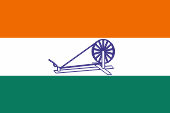
seit 1931,
Flagge des Indischen National-Kongresses,
Seitenverhältnis – ratio = 2:3,
Quelle, nach:
Constitution of the INC, 2010
1943–1945, Azad Hind,
Flagge der Provisorischen Regierung des Freien Indien,
Seitenverhältnis – ratio = 2:3,
mehr Infos: Azad Hind ← hier klicken

1943–1945, Azad Hind,
Flagge Indische National-Armee,
mehr Infos: Azad Hind ← hier klicken

1957–2019,
Staatsflagge,
Seitenverhältnis – ratio = 2:3,
Quelle, nach:
Wikipedia (EN)
Jammu und Kaschmir (genauer gesagt der indische Teil von Kaschmir) war der einzige indische Bundesstaat, der offiziell eine eigene Flagge führte. Am 05.08.2019 beschloss die Regierung Indiens die Aufhebung des Sonderstatus für den Bundesstaat aufzuheben und ihn in die zwei Unionsterritorien "Jammu und Kashmir" und "Ladakh" aufzuteilen.
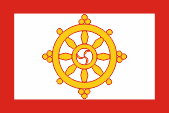
1967–1975,
Staats- und Maharadschaflagge,
Quelle, nach:
Wikipedia (EN)
Sikkim war einst britisches, nach 1947 indisches Protektorat, und wurde 1974 von Indien als Bundesstaat einverleibt.
mehr Informationen? → hier klicken

Flagge von Nagaland,
Quelle, nach:
UNPO
Nagaland versuchte sich seit 1954 dem wachsenden indischen Einfluss zu entziehen, und wurde im Jahre 1962 Indien trotzdem als Bundesstaat angegliedert. Seither bewaffneter Widerstand unter dieser Flagge.
mehr Informationen? → hier klicken
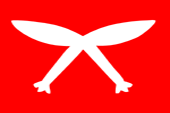
Flagge von Assam,
Quelle, nach:
Stateless Nations
Assam kam 1816 unter die Kontrolle des Königreichs Burma und wurde 1826 britisch. Von 1905 bis 1924 gehörte Assam zur Provinz Bengalen und wurde 1924 selbst zur Provinz erhoben. Im Jahre 1947 wurde Assam zwischen Indien und (Ost)Pakistan – dem heutigen Bangladesch – aufgeteilt. Den indischen Teil hat man zum indischen Bundesstaat erhoben. Wegen separatistischer Unruhen wurde im Jahre 1972 der Bezirk Mizo Hills von Assam abgetrennt und direkt von Neu Delhi aus verwaltet. Seit den 80-er Jahren des 20. Jahrhunderts gibt es auch in Assam separatistische Bestrebungen unter obiger Flagge.
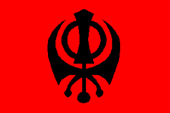
Flagge von Khalistan,
Quelle, nach:
Stateless Nations
Seit der Eroberung des Sikh-Staates durch die Briten im Jahre 1849 gab es immer wieder Bestrebungen der Sikhs sich der Zentralmacht zu widersetzen. 1947 wurde die Sikh-Provinz Pandschab sogar zwischen Indien und Pakistan aufgeteilt, was zur weiteren Destabilisierung der Region beitrug. Im Jahre 1984 kam es bereits zu offenen Kampfhandlungen zwischen den Sikhs und indischen Truppen, in deren Verlauf das Zentralheiligtum der Sikhs, der Goldene Tempel in Amritsar, von den indischen Truppen gestürmt wurde. Die Sikhs streben einen eigenen Staat unter obiger Flagge an, der Khalistan heißen soll.

Flagge von Mizoram,
Quelle, nach:
Stateless Nations
Auf Grund separatistischer Unruhen des Volkes der Tschin wurde im Jahre 1972 der Bezirk Mizo Hills vom indischen Bundesstaat Assam abgetrennt und direkt von Neu Delhi aus verwaltet. Ende der 80-er Jahre des 20. Jahrhunderts wurde Mizoram zwar zu einem Bundesstaat erhoben, jedoch gelang es nicht die separatistischen Bestrebungen einzudämmen. Im Gegenteil, die aufständischen Tschin in Mizoram vereinigten sich mit den Tschin in Burma und streben einen gemeinsamen eigenen Staat unter obiger Flagge an.
mehr Informationen? → hier klicken