mobile Ansicht, to the English Version tap the flag

- Republik Kroatien
- präsidiale Republik
- Eigenbezeichnung: Republika Hrvatska
• Flaggen
• historische und regionale Flaggen
• Bedeutung/Ursprung der Flagge
• Wappen
• Bedeutung/Ursprung des Wappens
• Flugzeugkokarde
• Landkarte
• Zahlen und Fakten
• Geschichte
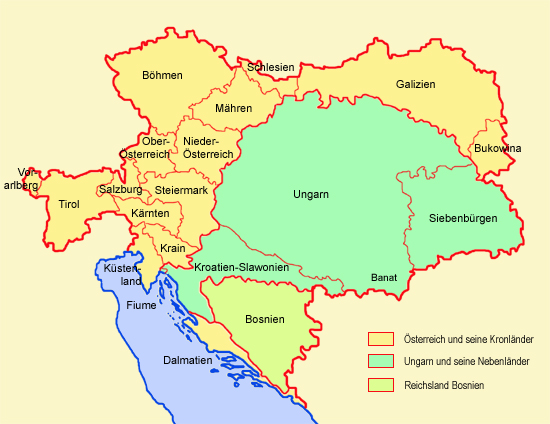
• Landkarte der früheren Kronländer Österreich-Ungarns (bis 1918)
• Ursprung des Landesnamens
• Slawonien
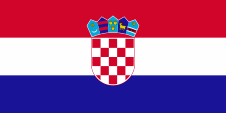
National- und Staatsflagge,
Seitenverhältnis = 1:2,
Quelle, nach: Flags of all Nations


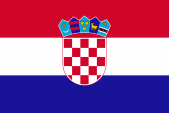
Handelsflagge und Staatsflagge zur See,
Seitenverhältnis = 2:3,
Quelle, nach: Flags of all Nations
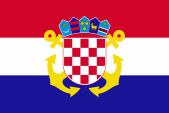
Marineflagge,
Seitenverhältnis = 2:3,
Quelle, nach: Wikipedia (D)

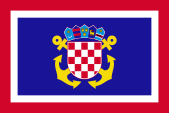
Gösch,
Seitenverhältnis = 2:3,
Quelle, nach: Wikipedia (D)

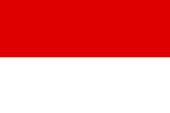
bis 1849,
Flagge des Königreichs Kroatien unter den Habsburgern,
Quelle, nach: Wikipedia (EN)

bis 1849,
Flagge des Königreichs Slawonien unter den Habsburgern,
Quelle, nach: Wikipedia (EN)
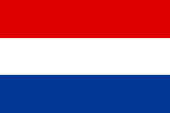
1868–1918,
Flagge des Königreichs Kroatien-Slawonien als ungarisches Kronland,
Quelle, nach: Wikipedia (EN)
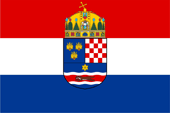
1868–1918,
Flagge des Königreichs Kroatien-Slawonien als ungarisches Kronland,
Flagge mit Wappen,
Quelle, nach: Wikipedia (EN)
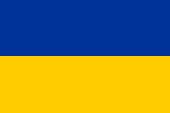
1820–1918,
Flagge des Königreichs Dalmatien unter den Habsburgern,
Quelle, nach: Wikipedia (EN)
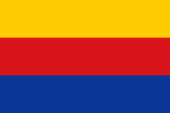
1849–1918,
Flagge der Markgrafschaft Istrien unter den Habsburgern,
das Land ist seit 1945 ein Teil Kroatiens,
für mehr Infos, hier klicken → Istrien,
Quelle, nach: Flags of the World
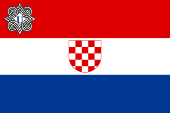
1941–1945,
Staatsflagge,
Seitenverhältnis = 2:3,
Quelle, nach: Flaggenbuch 1939
1941–1945,
Nationalflagge,
Seitenverhältnis = 2:3,
Quelle, nach: Flaggenbuch 1939
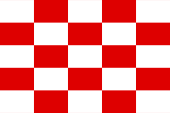
1941–1945,
Marineflagge,
Seitenverhältnis = 2:3,
Quelle, nach: Flaggenbuch 1939
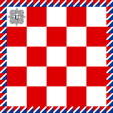
1941–1945,
Flagge des Staatschefs (Poglavnik),
Seitenverhältnis = 1:1,
Quelle, nach: Flaggenbuch 1939
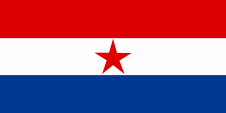
1945–1947,
Flagge der Bundesstaats Kroatien,
Seitenverhältnis = 1:2,
Quelle, nach: World Statesmen
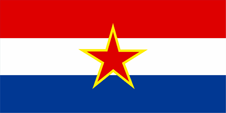
1947–1990,
Flagge Kroatiens in der SBR Jugoslawien,
Seitenverhältnis = 1:2,
Quelle, nach: World Statesmen

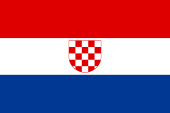
1990,
Flagge Kroatiens,
Seitenverhältnis = 2:3,
Quelle, nach: Wikipedia (EN)
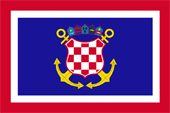
1992–1999,
Gösch,
Seitenverhältnis = 2:3,
Quelle, nach: Flags of all Nations
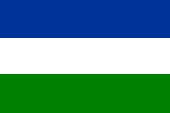
Die heutige Flagge Kroatiens wurde am 22.12.1990 offiziell eingeführt. Sie zeigt drei waagerechte Streifen in Rot, Weiß und Blau, und in der Mitte das Staatswappen. Die Buntfarben sind heute unter anderem in Pantone PMS definiert, als Rot = pt 186, Hellblau = Cyan, Blau = pt Reflex Blue, Gelb = pt 108. Für die historischen Flaggen kann das auf Grund der damals fehlenden Standards jedoch nicht gelten. Die traditionellen Farben Kroatiens sind Rot und Weiß. Sie leiteten sich vom kroatischen Wappenschild ab. Nach dem Erstarken des slawischen Nationalismus war auch Kroatien bestrebt eine dreifarbige Flagge in den Farben Rot, Weiß und Blau zu schaffen (siehe weiter unten im Text). Diese wurde bei Gelegenheit des österreichisch-ungarischen Ausgleichs offiziell angenommen, denn bei der Vereinigung Kroatiens und Slawoniens zum Königreich Kroatien-Slawonien im Jahre 1868 wurden die Farben Kroatiens (Rot und Weiß) und Slawoniens (Blau und Weiß) zur Kombination Rot-Weiß-Blau vereinigt. Viele slawische Völker schufen sich in der Zeit nach 1848 (dem Jahr der Revolutionen) – im Zusammenhang mit einem erstarkenden slawischen Nationalismus – eigene Flaggen. Dabei spielte der Panslawismus eine bedeutende Rolle, eine politische Bewegung des 18./19. Jahrhunderts, die alle Slawen in einer Nation einen wollte. Die meisten slawischen Völker lebten jedoch in dieser Zeit unter österreichischer, türkischer oder auch deutscher Herrschaft. Der Panslawismus sah in Russland ein Vorbild, denn die Russen waren, neben Serbien und Montenegro, die einzige freie slawische Nation. Und so wurden die Farben der russischen Flagge zum Idol der Panslawisten, und letztlich farbliches Vorbild bei der Gestaltung der Flaggen vieler slawischer Nationen. Diese Flaggen trugen und tragen bis auf wenige Ausnahmen die russischen Farben Weiß, Blau und Rot als gemeinsames Merkmal. Daher wird diese Farbkombination "Panslawische Farben" genannt. Nachdem Jugoslawien 1941 von deutschen Truppen überrannt und zerschlagen worden war, ergriff in Kroatien die Nationalbewegung Ustascha die Macht, und Kroatien wurde ein eigenständiger Staat. Die rot-weiß-blaue Flagge wurde durch das kroatische Wappenschild ergänzt, und auf der Staats- und Kriegsflagge wurde im oberen roten Streifen nahe dem Flaggenmast sogar noch das Zeichen der Ustascha hinzugefügt. Nach der Machtergreifung durch die Kommunisten wurde anstelle des Wappens ein fünfzackiger roter, goldumrandeter Stern (Symbol der kommunistischen Partisanen des Zweiten Weltkriegs und Symbol des Kommunismus) in der Mitte der Flagge angebracht. Nach dem Ende des Kommunismus wollte man in Kroatien am 26.06.1990 heraldisch wieder auf die Wurzeln zurückgehen und die Veränderungen an den Hoheitszeichen des Landes rückgängig machen. Dazu setzte man in der vorsozialistischen Ära wieder an und führte das vor dem Sozialismus gültige Wappen wieder ein und platzierte es an Stelle des roten Sterns in die Mitte der Flagge. Dazu gab es Kritik im In- und Ausland, denn es werde Eindruck erweckt, dass Ustascha-Symbolik wieder zum Leben erweckt werden würde. Das war natürlich Unsinn, denn das alte kroatische Wappenschild reicht weit in die Geschichte zurück, nämlich bis ins 15. Jahrhundert. Dennoch wurde das in der Zeit des Sozialismus (1947–1990) verwendete Wappenschild am 21.10.1990 wieder eingeführt. Es beginnt oben links nicht mit einem weißen Feld, sondern mit Rot. Dazu wurde noch eine Wappenkrone aus fünf einzelnen Wappen oberhalb des Schildes ergänzt. Sie zeigt die Wappen von Illyrien, ein altes, wenig bekanntes Wappen der Stadt Dubrovnik (Ragusa), das Wappen des Königreichs Dalmatien, das Wappen von Istrien und das Wappen des Königreichs Slawonien.
Quelle:
Die Welt der Flaggen,
Flaggen und Wappen der Welt,
Wikipedia (EN), Volker Preuß

bis 1945,
Wappen von Kroatien,
Quelle: Wikipedia (EN)
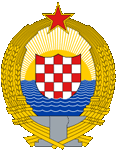
1947–1990,
Wappen von Kroatien,
Quelle: Nanin7 [GFDL or CC BY-SA 3.0], from Wikimedia Commons
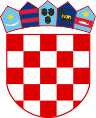
seit 1990,
Wappen von Kroatien,
Quelle: Wikipedia (EN)
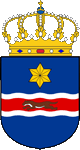
Das typische Wappen Kroatiens, der schachbrettartig in Weiß und Rot aufgeteilte Wappenschild, stammt aus dem 15. Jahrhundert. Das Bild des Wappens geht wahrscheinlich auf den Deutschen Kaiser Maximilian I. zurück, der 1491 den Titel des Königs von Ungarn und seiner Nebenländer erhielt. Wahrscheinlich hat Maximilian I. in diesem Zusammanhang ein Wappen für das Königreich Kroatien entwickeln lassen. Nach der Machtergreifung durch die Kommunisten wurde das Wappenschild neu umgestaltet. Es beginnt oben links nicht mit einem weißen Feld, sondern mit Rot. Das Wappen selbst wurde nach dem Vorbild des Wappens der Sowjetunion neu gestaltet. Nach dem Ende des Kommunismus wollte man in Kroatien am 26.06.1990 heraldisch wieder auf die Wurzeln zurückgehen und die Veränderungen an den Hoheitszeichen des Landes rückgängig machen. Dazu setzte man in der vorsozialistischen Ära wieder an und führte das vor dem Sozialismus gültige Wappen wieder ein. Dazu gab es Kritik im In- und Ausland, denn es werde Eindruck erweckt, dass Ustascha-Symbolik wieder zum Leben erweckt werden würde. Das war natürlich Unsinn, denn das alte kroatische Wappenschild reicht weit in die Geschichte zurück, nämlich bis ins 15. Jahrhundert. Dennoch wurde das in der Zeit des Sozialismus (1947–1990) verwendete Wappenschild am 21.10.1990 wieder eingeführt. Das Wappenschild trägt seit dem eine Wappenkrone. Die kleinen Schilde in der Wappenkrone symbolisieren verschiedene geographische Regionen Kroatiens: 1.) goldener sechszackiger Stern und silberner Halbmond auf hellblauem Schild → Zagreb (Agram) und Umgebung (Illyrien); 2.) blauer Schild mit zwei roten Balken → Dubrovnik (Ragusa); 3.) drei gekrönte goldene Löwenköpfe im hellblauen Schild → Dalmatien; 4.) goldener Ziegenbock mit roten Hörnern im blauen Schild → Istrien; 5.) ein Marder in einem durch schmale silberne Streifen vom hellblauen Schild getrennten roten Feld und darüber ein goldener sechszackiger Stern → Slawonien.
Quelle:
Flaggen Wappen Hymnen,
Flaggen und Wappen der Welt,
Wikipedia (EN),
Volker Preuß

seit 1994,
Flugzeugkokarde,
Quelle, nach: Wikipedia (EN)
1991–1994,
Flugzeugkokarde,
Quelle, nach: Wikipedia (EN)
1941–1945,
Flugzeugkokarde,
Quelle, nach: Wikipedia (EN)
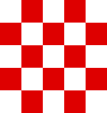
1941,
Flugzeugkokarde,
Quelle, nach: Wikipedia (EN)
Lage:
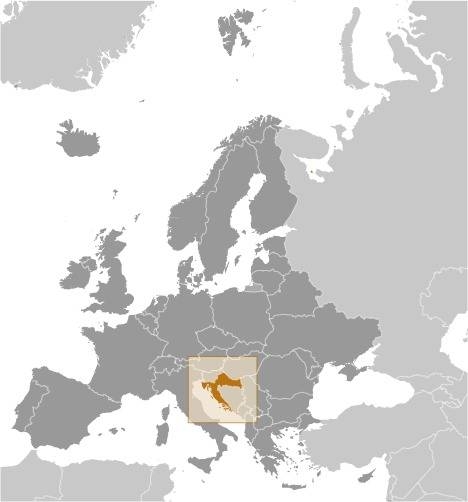
Quelle: CIA World Factbook
Landkarte des Landes:
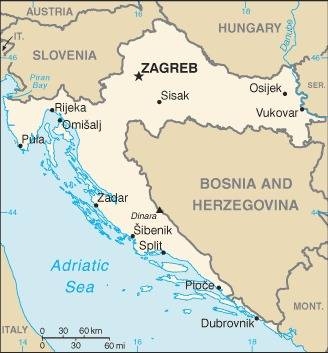
Quelle: CIA World Factbook
Die Staaten des früheren Jugoslawien:
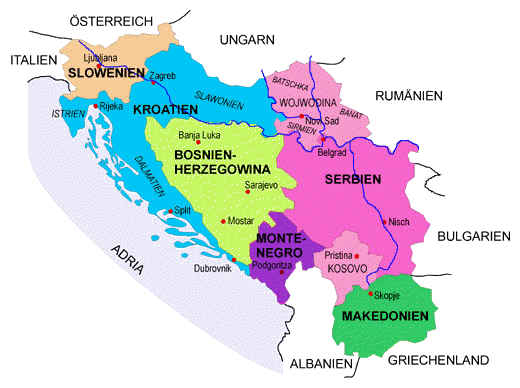
Landkarte: Volker Preuß
Fläche: 56.594 km²
Einwohner: 3.888.529 (2021), davon 90% Kroaten, 4% Serben, ferner Slowenen, Ungarn, Italiener, Bosniaken, Albaner
Religionen: 86% Katholiken, 4% Serbisch-Othodoxe, 1% Moslems, 7% Nicht-Religiöse
Bevölkerungsdichte: 69 Ew./km²
Hauptstadt: Zagreb (deutsch: Agram), 820.678 Ew. (2018)
Amtssprache: Kroatisch
sonstige Sprachen: Serbisch, Italienisch, Albanisch, Ungarisch, Deutsch
Währung: 1 Kuna (HRK, kn) = 100 Lipa
Währung, ab 01.01.2023: 1 Euro (€) = 100 Cent
Zeitzone: MEZ
Quelle:
Wikipedia (DE)
Antike · von Illyrern besiedelt
1. Jhd. v.Chr. · Unterwerfung der illyrischen Küste durch Rom
bis ca. 14 · Unterwerfung ganz Illyriens durch das Römische Reich
395 · bei der Teilung des Römischen Reiches kommt das heutige Kroatien an das Weströmische Reich
380 und 455–553 · zum Reich der Ostgoten
bis 568 · teilweise zum Reich der Langobarden
7. Jhd. · Einwanderung der Kroaten, wahrscheinlich aus dem Gebiet der Weichsel (heutiges Polen)
ca. 900 · das heutige Kroatien kommt an das Oströmische Reich (Byzanz)
924 · Gründung des Königreiches Kroatien durch Tomislaw
1091/1102 · Kroatien kommt an Ungarn
1526 · Schlacht bei Mohács, Ungarn unterliegt dem Osmanischen Reich, Österreich kann große Teile Kroatiens sichern und erwirbt die Ungarische Krone, der größte Teil Ungarns wird dem Osmanischen Reich angegliedert
1527 · das Haus Habsburg wird als Herrscherhaus (Könige) Kroatiens anerkannt
1699 · Frieden von Karlowitz, die Habsburger als Könge von Ungarn erwerben ganz Kroatien und Slawonien, Slawonien wird ebenfalls Königreich
1797–1809 · Französische Revolutionskriege: ein Teil Österreichs (Steiermark) wird 1797 von den Franzosen besetzt
12.05.1797 · Friede von Campo Formio zwischen Österreich (Haus Habsburg) und Frankreich (Napoléon I.), Dalmatien kommt von Venedig an das Haus Habsburg
1809 · Friede von Wien, Österreich verliert Salzburg, das Innviertel, Westgalizien und Teile von Ostgalizien und tritt Istrien, Triest, Görz, Krain, Kärnten, Kroatien, und Dalmatien an Frankreich ab, die 1810 zu den französischen "Illyrischen Provinzen" zusammengefasst werden
1813 · Österreich erklärt Frankreich (Napoléon) den Krieg
1814/1815 · Wiener Kongress, Neuordnung Europas nach der Ära Napoléon, das Kaiserreich Österreich (Haus Habsburg) erhält die 1809 verlorenen Gebiete zurück; Istrien, Triest, Görz, Kärnten und Krain werden zum Habsburgischen Königreich Illyrien zusammengefasst, Dalmatien und Kroatien werden wieder an Ungarn (unter den Habsburgern, Teil des Kaiserreichs Österreich) angeschlossen
1848/1849 · Revolution in Wien, Bürgerkrieg zwischen Ungarn und Kroaten, Aufstände in Prag, Mailand und Venedig, daraufhin dankt Kaiser Ferdinand I. ab und Franz Joseph I. von Habsburg wird neuer Kaiser, die Aufstände werden niedergeschlagen und er erlässt eine neue Verfassung: die Titular-Erblande der Habsburger im Kaiserreich Österreich werden zu Kronländern mit eigenen Landtagen umgewandelt, der dalmatische Landtag lehnt den Anschluss an Kroatien ab, das Königreich Dalmatien wird ein eigenes Kronland der österreichischen Krone, Kroatien und Slawonien werden unter Einschluss der Küstengebiete und der Stadt Fiume zum "Königreich Kroatien und Slawonien" vereinigt, das als Nebenland bei der ungarischen Krone verbleibt, Auflösung des Königreichs Illyrien: Aufteilung in die Kronländer Krain, Kärnten, Küstenland, Kroatien und Slawonien und Dalmatien
08.02.1867 · Österreichisch-Ungarischer Ausgleich, gleiches Recht für beide Landesteile, Entstehung der Doppelmonarchie Österreich-Ungarn, Österreich: bestehend aus den österreichischen Kronländern, Ungarn: bestehend aus Ungarn selbst und seinen Nebenländern, das Haus Habsburg stellt in einer Person den Kaiser von Österreich und den König von Ungarn, Einrichtung von gemeinsamen Ministerien in Außenpolitik, Finanzen und Verteidigung
1868 · Ungarisch-Kroatischer Ausgleich, Kroatien und Slawonien verbleiben zusammen als Königreich "Kroatien-Slawonien" unter der ungarischen Krone, Fiume wird freie Stadt (quasi Kronland) innerhalb Ungarns
1918 · Ende des Ersten Weltkriegs, Zusammenbruch der Kaiserlich-Königlichen Monarchie, Zerfall von Österreich-Ungarn in Nationalstaaten, Vereinigung von Kroatien/Slawonien mit Slowenien und Serbien zum "Königreich der Serben, Kroaten und Slowenen" (ab 1929 Jugoslawien genannt), König wird der König Serbiens
1941 · Jugoslawien wird im Verlauf des Zweiten Weltkriegs aufgelöst, Kroatien wird ein unabhängiger Staat unter Ante Pavelic, dem Führer der kroatischen Nationalbewegung (Ustascha), Kroatien erhält Bosnien-Herzegowina angegliedert und tritt am 15.06.1941 auf der Seite der Achsenmächte (Deutschland, Italien, Japan) in den Zweiten Weltkrieg ein
1941–1946 · Jugoslawien ist während des Zweiten Weltkriegs Schauplatz eines erbarmungslosen Partisanen- und Bürgerkriegs zwischen Kommunisten (unter J.B.Tito), Republikanern, Monarchisten und Nationalisten, die Kommunisten setzen sich durch
09.05.1944 · Ausrufung des Bundesstaats Kroatien
29.11.1945 · Ausrufung der "Föderativen Volksrepublik Jugoslawien" durch Tito
31.01.1946 · Ausrufung der Volksrepublik Kroatien (innerhalb des kommunistischen Jugoslawiens)
09.06.1963 · Ausrufung der Sozialistischen Republik Kroatien (innerhalb des kommunistischen Jugoslawiens)
25.07.1990 · Ausrufung der Republik Kroatien
25.06.1991 · das kroatische Parlament erklärt die Unabhängigkeit des Landes, Krieg gegen das serbisch dominierte Jugoslawien, serbisch-jugoslawische Truppen besetzen ein Drittel des Landes (Westslawonien und Krajina)
1991–1992 · ganz Jugoslawien löst sich in seine Einzelstaaten auf
1992 · Stationierung von UNO-Friedenstruppen
1995 · Kroatische Offensive, es gelingt die meisten besetzten Gebiete zu befreien
21.11.1995 · Friedensabkommen von Dayton
1998 · Wiedereingliederung von Ostslawonien
01.07.2013 · Kroatien wird Mitglied der Europäischen Union
Quelle:
Atlas zur Geschichte,
Wikipedia (D),
World Statesmen
Landkarte: Volker Preuß
Der Name "Kroatien" kommt natürlich vom Volk der "Kroaten", die sich selbst "Hrvati" nennen. Das Wort "Hrvati" ist indo-germanischen Ursprungs und ist am nächsten verwandt mit dem altiranischen Wort "Fshuhaurvata", was "Viehüter" heißt.
Quelle: Handbuch der geographischen Namen
- Königreich Slawonien, gegründet im 16. Jhd.
- ab 1699 zum Haus Habsburg
- 1868 mit Kroatien vereinigt
bis 1849,
Flagge des Königreichs Slawonien unter den Habsburgern,
Quelle, nach: Wikipedia (EN)
1868–1918,
Landesfarben von Slawonien als Teil des Königreichs Kroatien-Slawonien,
Quelle, nach: Flags of the World
1699–1849,
Wappen des Königreichs Slawonien unter den Habsburgern,
Quelle, nach: Wikipedia (DE)
Zunächst hieß das gesamte Gebiet zwischen Save und Drau mit lateinischem Namen Slawonien, was noch auf die Besiedlung durch slawische Stämme im 7. Jahrhundert zurückgeht. Seit dem 12. Jahrhundert gehörte die Region zu Ungarn und seit dem 16. Jahrhundert nannte sich der ungarische König auch König von Slawonien. Noch im 16. Jahrhundert wurde Slawonien vom Osmanischen Reich erobert, außer der Region um Agram (Zagreb), die auch Illyrien (Altkroatien, Kroatien) genannt wird. Der Name Slawonien wurde darauf hin nur noch für den Osmanischen Teil im Osten des Landes verwendet. Im Jahre 1699 wurde Slawonien von Österreich erobert und als Königreich angegliedert. Im Zuge des österreichisch-ungarischen Ausgleichs von 1867 kam das Land an die ungarische Krone und wurde 1868 mit Kroatien zum Königreich Kroatien-Slawonien vereinigt.
Lage Slawoniens im heutigen Kroatien:

Landkarte, Quelle / Map Source:
Tomobe03 [CC BY-SA 3.0], from Wikimedia Commons