mobile Ansicht, to the English Version tap the flag


- Salzburg
- Bundesland der Republik Österreich
- ehemaliges österreichisches Kronland: Herzogtum Salzburg
• Flaggen
• Bedeutung/Ursprung der Flagge
• Wappen
• Bedeutung/Ursprung des Wappens
• Landkarte der Bundesländer Österreichs
• Landkarte der früheren Kronländer Österreich-Ungarns (bis 1918)
• Zahlen und Fakten
• Geschichte
• Ursprung des Landesnamens

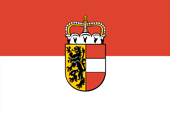
Landesflagge (Landesfarben),
Seitenverhältnis = 2:3,
Quelle, nach: Wikipedia (D),
Färbung, nach: Dr. Peter Diem www.peter-diem.at


Dienstflagge,
Seitenverhältnis = 2:3,
Quelle, nach: Wikipedia (D),
Färbung, nach: Dr. Peter Diem www.peter-diem.at



Die Flagge von Salzburg zeigt zwei Streifen in Rot und Weiß und wurde am 16.02.1921 offiziell eingeführt. Die Farben der Flagge leiten sich aus den Farben des rechten Teils des Wappens ab. Die Flagge selbst wurde bereits im 19. Jhd. verwendet.
In der Zeit der Monarchie hatte das Land, wie alle Kronländer der österreichischen Krone, seine eigenen, sogenannten Landesfarben, die unter anderem auf horizontal getreiften zwei- oder dreistreifigen Flaggen gezeigt wurden. Die Landesfarben waren sehr oft dem jeweiligen Wappen des Kronlandes entnommen oder wurden duch eine weitere, nicht im Wappen enthaltene Farbe ergänzt, oder sie gingen auf ältere Modelle des Landeswappens zurück (z.B. Krain). Offiziell waren die Landesfarben aber nie geregelt oder festgelegt worden, so dass deren Reihenfolge in der Praxis of variierte oder die Farben gar an sich abwichen. Der österreichische Heraldiker Hugo Gerard Ströhl (1851–1919) hat sich wohl als erster des Themas angenommen und wahrscheinlich um das Jahr 1890 herum die Landesfarben auf den Flaggen bei den jeweiligen Landesbehörden abgefragt und zusammengestellt. Für Salzburg wurden Rot und Weiß als Landesfarben für das Kronland ermittelt.
Österreich trat 1938 als ein Land dem Deutschen Reich bei. Die föderalen Strukturen spielten keine Rolle, sie wurden komplett durch die Gaue der NSDAP abgelöst, die Länder wurden abgeschafft. Ämter und Behörden hatten ab jetzt die Dienstflagge des Reiches zu verwenden. Die entsprechenden Landesfarben existierten möglicherweise weiter, auf jeden Fall aber nicht in Form von Flaggen. Sie wurden möglicherweise vereinzelt an Uniformen der SA oder bei bestimmten Dienstgraden der Hitlerjugend in der Brustschnur verwendet.
Die Flaggen der Österreichischen Bundesländer werden mit oder ohne Wappen gezeigt. Amtlich verwendet, tragen sie immer das Wappen, jedoch darf auch die Bevölkerung Flaggen mit Wappen verwenden.
Für die Farben der Flaggen der österreichischen Bundesländer scheint es keine gesetzlichen Regelungen zu geben, sie werden, da offenbar nicht definiert, in der Praxis in einem gewissen Standardbereich wiedergegeben. Der österreichische Publizist und Medienwissenschaftler Dr. Peter Diem gibt aber Empfehlungen für die Wiedergabe der Farben: Für Salzburg ein helles Rot, am ehesten Pantone 179 entsprechend.
Quelle: Dr. Peter Diem austria-forum.org,
Wikipedia (D),
Flaggen Enzyklopädie,
Volker Preuß,
Österreichisch-Ungarische Wappenrolle
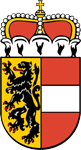
seit 1921,
Wappen von Salzburg,
Quelle, nach: nach/by: Wikipedia (D),
Färbung nach: Dr. Peter Diem www.peter-diem.at
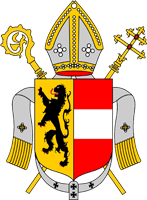
bis 1803,
Wappen des Fürsterzbistums Salzburg,
Quelle, nach: nach/by: Wikipedia (D)
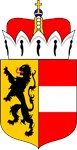
1803–1805,
theoretisches Wappen des Kurfürstentums Salzburg
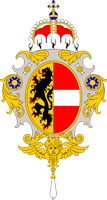
ca.1890–1918,
Wappen Herzogtum Salzburg,
Quelle, nach: Ströhl, Wappenrolle Österreich-Ungarns, 1890, via Wikipedia (D)
Das heutige Wappen des Landes Salzburg wurde am 16.02.1921 eingeführt. Das Wappen geht bis ins 13. Jahrhundert zurück. Es zeigt einen gespaltenen Schild: im linken Feld einen schwarze Löwen auf Gold, im rechten Feld einen silbernen Balken in Rot. Der schwarze Löwe auf Gold geht auf den teilweisen Übergang der Heraldik von Herzog Philipp von Kärnten aus dem Hause Sponheim, 1246–1256 Erzbischof von Salzburg, in das Wappen des Erzbistums zurück. Das Wappen von Kärnten zeigte damals drei schwarze Löwen auf Gold, die auf die Staufischen Babenberger von Mödlingen zurückgehen. Der silberne Balken in Rot ist nicht der österreichische rot-weiß-rote Bindenschild der Babenberger. Die Herkunft dieser Heraldik ist für Salzburg ungeklärt. Es kann nur vermutet werden, dass dieses Wappenbild vielleicht seinen Ursprung in irgendeiner kirchlichen Heraldik für das Erzbistums hat. Bis heute haben die Bistümer und Diözesen eigene Wappen. Außerdem hatte das Land einen Sitz im Reichstag des Heiligen Römischen Reichs Deutscher Nation auf der Geistlichen Bank des Reichsfürstenrats, und diese wurde vom Erzherzog von Österreich angeführt. Die Krone auf dem Wappen ist ein üblicher Fürstenhut, der mindestens seit 1803 das Wappen krönt. Er erinnert an das (Kur-)Fürstentum Salzburg unter Kurfürst Ferdinand III. von Toskana und auch an das Herzogtum Salzburg (1806–1808 und 1850–1918). Der österreichische Heraldiker Hugo Gerard Ströhl hat das Wappen des Herzogtums Salzburg um 1890, in seiner letzten bekannten Ausführung, in der verzierenden Umrandung um ein Engelsköpfchen ergänzt. Es sollte an das bis 1803 bestehende Fürsterzbistum Salzburg erinnern.
Quelle: www.salzburg.gv.at,
Wikipedia (D),
Flaggen Enzyklopädie,
Sponheim,
Österreichisch-Ungarische Wappenrolle
Lesen Sie hier:
Hintergründe, Geschichte und Fakten zum Thema "Der Löwe in der Heraldik". Ausführungen, Varianten, Entwicklung, sowie Panther und Leoparden.

Die Bundesländer Österreichs:
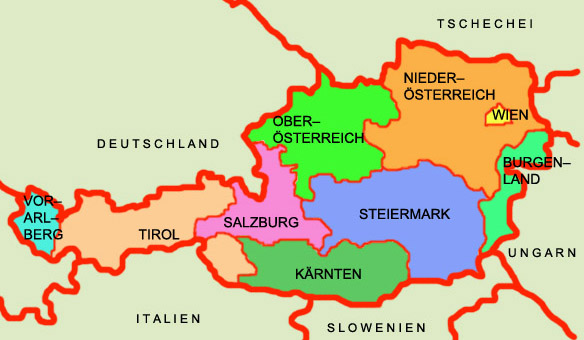
Quelle: Volker Preuß
• Burgenland
• Kärnten
• Niederösterreich
• Oberösterreich
• Salzburg
• Steiermark
• Tirol
• Vorarlberg
• Wien
Karte ca. 1910:
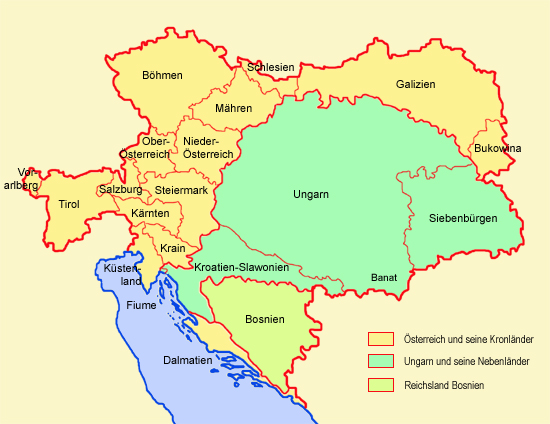
Quelle: Volker Preuß
Fläche: 7.156 km²
Einwohner: 555.200 (2019)
Bevölkerungsdichte: 78 Ew./km²
Hauptstadt: Salzburg, 154.200 Ew. (2019)
Amtssprache: Deutsch
Währung: 1 Euro = 100 Cent
Zeitzone: MEZ
Quelle: Wikipedia (D)
Antike · im heutigen Land Salzburg siedeln Räter, Illyrer und Kelten, die Illyrer gründen Juvavum (das spätere Salzburg)
ab 14 v.Chr. · römische Eroberung, Errichtung der Provinz Noricum
45 · Juvavum wird eigenständige Gemeinde
166–168 · Einfälle des germanischen Stammes der Markomannen
213 · Einfälle der Alemannen
254 · Einfälle der Markomannen
409–452 · Hunneneinfälle
476 · Absetzung des letzten römischen Kaisers Romulus Augustulus, Ende des (West)Römischen Reiches, Besiedlung durch Bajuwaren
ca. 600 · die Gegend von Juvavum kommt an das Stammesherzogtum Bayern
696 · der Bischof von Worms erwirbt Juvavum (mittlerweile Ivavo genannt) von Bayerischen Herzog
739 · Ivavo wird Bischofssitz
755 · der Name Salzburg wird erstmals urkundlich erwähnt
788 · Eroberung Bayerns durch das Frankenreich der Karolinger
798 · Salzburg wird Erzbistum (Sitz eines Erzbischofs)
843/870/880 · bei der Teilung des Frankenreiches kommt Bayern zum Ostfänkischen Königreich (später Deutsches Reich genannt)
900–955 · Ungarneinfälle
996 · das Erzbistum Salzburg erhält Markt-, Münz- und Mautrecht
1200–1246 · Konsolidierung des Territoriums des Erzbistums
1287 · Salzburg erhält das Stadtrecht
14. Jhd. · das Erzbistum Salzburg wird von Bayern unabhängig
1731 · 20.000 Salzburger Protestanten müssen ihre Heimat verlassen
1803 · Reichsdeputationshauptschluss, das souveräne Erzbistum Salzburg erlischt, das Land wird Kurfürstentum
1806 · Salzburg wird als Herzogtum an Österreich angegliedert
1808 · Salzburg wird Bayern angegliedert
1816 · Salzburg wird als "Salzachkreis" Oberösterreich (Österreich ob der Enns) angegliedert
1848/1849 · Revolution, neue Verfassung: die Titular-Erblande der Habsburger im Kaiserreich Österreich werden zu Kronländern mit eigenen Landtagen umgewandelt,
Wiedererrichtung des Herzogtums Salzburg, das Land wird ein Kronland
12.11.1918 · Proklamation von Deutsch-Österreich zur Republik Österreich, Salzburg wird österreichisches Bundesland
13.03.1938 · Anschluss ganz Österreichs an das Deutsche Reich, an die Stelle des Landes Salzburg tritt der "NS-Gau Salzburg"
27.04.1945 · Proklamation der Republik Österreich "Zweite Republik", Salzburg wird erneut österreichisches Bundesland, bleibt jedoch bis 1955 von US-amerikanischen Truppen besetzt
1955 · Abzug der Besatzungstruppen
Quelle: Atlas zur Geschichte,
Wikipedia (D),
World Statesmen,
RetroBib Retrobibliothek,
Discovery '97,
www.salzburg.gv.at,
Volker Preuß
Der Name des Landes "Salzburg" geht natürlich auf die Stadt Salzburg zurück, die schon im Jahre 739 Bischofssitz wurde. Im Jahre 798 wurde das Erzbistum Salzburg gegründet, ein Kirchliches Fürstentum, das bis 1803 bestand. Der Name der Stadt "Salzburg" – die von den Illyrern als "Juvavum" gegründet wurde – geht auf den Fluss "Salzach" zurück, zu dessen beiden Seiten die Stadt liegt. Der Name "Salzach" könnte seine Wurzel in den Salinen (Salzgruben und -bergwerke) der Umgebung haben.
Quelle: Volker Preuß
weitere Seiten zu Österreich (historische Flaggen und Wappen):
• Reich der Österreichischen Habsburger (bis 1804)
• Kaiserreich Österreich (1804–1867)
• Österreich-Ungarn (1867–1918)
• Republik Österreich (seit 1918)