mobile Ansicht, to the English Version tap the flag

- Oberösterreich
- Bundesland der Republik Österreich
- ehemaliges österreichisches Kronland: Erzherzogtum Österreich ob der Enns
• Flaggen
• Bedeutung/Ursprung der Flagge
• Wappen
• Bedeutung/Ursprung des Wappens
• Landkarte der Bundesländer Österreichs
• Landkarte der früheren Kronländer Österreich-Ungarns (bis 1918)
• Zahlen und Fakten
• Geschichte
• Ursprung des Landesnamens
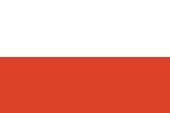
Landesflagge (Landesfarben),
Seitenverhältnis = 2:3,
Quelle, nach: Wikipedia (D),
Färbung, nach: Dr. Peter Diem www.peter-diem.at


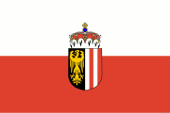
Dienstflagge,
Seitenverhältnis = 2:3,
Quelle, nach: Wikipedia (D),
Färbung, nach: Dr. Peter Diem www.peter-diem.at



Die Flagge von Oberösterreich zeigt zwei Streifen in Weiß und Rot und wurde zuletzt am 25.04.1949 offiziell bestätigt. Die Farben der Flagge leiten sich aus den Farben des rechten Teils des Wappens ab. Die Flagge selbst wurde bereits im 19. Jhd. verwendet.
In der Zeit der Monarchie hatte das Land, wie alle Kronländer der österreichischen Krone, seine eigenen, sogenannten Landesfarben, die unter anderem auf horizontal getreiften zwei- oder dreistreifigen Flaggen gezeigt wurden. Die Landesfarben waren sehr oft dem jeweiligen Wappen des Kronlandes entnommen oder wurden duch eine weitere, nicht im Wappen enthaltene Farbe ergänzt, oder sie gingen auf ältere Modelle des Landeswappens zurück (z.B. Krain). Offiziell waren die Landesfarben aber nie geregelt oder festgelegt worden, so dass deren Reihenfolge in der Praxis of variierte oder die Farben gar an sich abwichen. Der österreichische Heraldiker Hugo Gerard Ströhl (1851–1919) hat sich wohl als erster des Themas angenommen und wahrscheinlich um das Jahr 1890 herum die Landesfarben auf den Flaggen bei den jeweiligen Landesbehörden abgefragt und zusammengestellt. Für Österreich ob der Enns (Oberösterreich) wurden Weiß und Rot als Landesfarben für das Kronland ermittelt.
Österreich trat 1938 als ein Land dem Deutschen Reich bei. Die föderalen Strukturen spielten keine Rolle, sie wurden komplett durch die Gaue der NSDAP abgelöst, die Länder wurden abgeschafft. Ämter und Behörden hatten ab jetzt die Dienstflagge des Reiches zu verwenden. Die entsprechenden Landesfarben existierten möglicherweise weiter, auf jeden Fall aber nicht in Form von Flaggen. Sie wurden möglicherweise vereinzelt an Uniformen der SA oder bei bestimmten Dienstgraden der Hitlerjugend in der Brustschnur verwendet.
Die Flaggen der Österreichischen Bundesländer werden mit oder ohne Wappen gezeigt. Amtlich verwendet, tragen sie immer das Wappen, jedoch darf auch die Bevölkerung Flaggen mit Wappen verwenden.
Für die Farben der Flaggen der österreichischen Bundesländer scheint es keine gesetzlichen Regelungen zu geben, sie werden, da offenbar nicht definiert, in der Praxis in einem gewissen Standardbereich wiedergegeben. Der österreichische Publizist und Medienwissenschaftler Dr. Peter Diem gibt aber Empfehlungen für die Wiedergabe der Farben: Für Oberösterreich ein helles Rot, am ehesten Pantone 179 entsprechend.
Quelle: Dr. Peter Diem austria-forum.org,
Wikipedia (D),
Flaggen Enzyklopädie,
Volker Preuß,
Österreichisch-Ungarische Wappenrolle
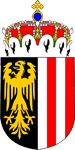
seit 1920,
Wappen Oberösterreichs
Quelle, nach: Wikipedia (D)
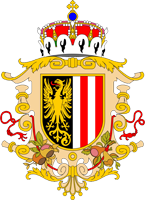
ca.1890–1918,
Wappen Erzherzogtum Österreich ob der Enns
Quelle, nach: Ströhl, Wappenrolle Österreich-Ungarns, 1890, via Wikipedia (D)
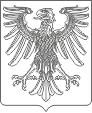
Das heutige Wappen von Oberösterreich entspricht dem Wappen des alten Kronlandes. Es zeigt einen gespaltenen Schild: links ein goldener Adler in Schwarz, das rechte Feld ist dreifach gespalten in den Farben Weiß und Rot. Schon Habsburgisches Kronland trug es die österreichische Herzogskrone. Das wurde bis heute beibehalten. Der österreichische Heraldiker Hugo Gerard Ströhl hat das Wappen um 1890, in seiner letzten bekannten Ausführung, mit landestypischer Flora umgeben. Für das Erzherzogtum Österreich ob der Enns (Oberösterreich) war das Mostobst, welches die Bedeutung des Landes als Obstbauregion hervorheben sollten.
Quelle: Wikipedia (D),
Flaggen Enzyklopädie,
Österreichisch-Ungarische Wappenrolle
Lesen Sie hier:
Hintergründe, Geschichte und Fakten zum Thema "Der Adler in der Heraldik"; Ausführungen, Varianten und Entwicklung.
Die Bundesländer Österreichs:
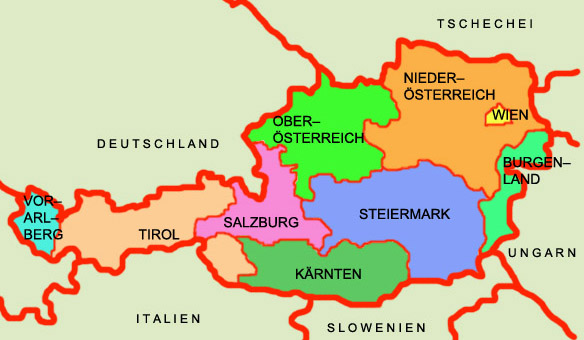
Quelle: Volker Preuß
• Burgenland
• Kärnten
• Niederösterreich
• Oberösterreich
• Salzburg
• Steiermark
• Tirol
• Vorarlberg
• Wien
Karte ca. 1910:
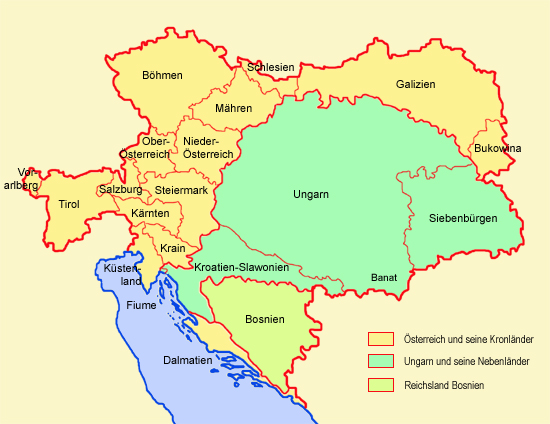
Quelle: Volker Preuß
Fläche: 11.979 km²
Einwohner: 1.482.100 (2019)
Bevölkerungsdichte: 124 Ew./km²
Hauptstadt: Linz, 205.750 Ew. (2019)
Amtssprache: Deutsch
Währung: 1 Euro = 100 Cent
Zeitzone: MEZ
Quelle: Wikipedia (D)
Antike · im heutigen Oberösterreich siedeln Räter und Kelten
ab 14 v.Chr. · römische Eroberung der Gebiete südlich der Donau, Errichtung der Provinz Noricum
166–168 · Einfälle der germanischen Stämme der Markomannen, Quaden und Langobarden
233 · Einfälle der Quaden
254 · Einfälle der Markomannen
409–452 · Hunneneinfälle
476 · Absetzung des letzten römischen Kaisers Romulus Augustulus, Ende des (West)Römischen Reiches, das heutige Oberösterreich gehört bis 553 zu den Reichen der Goten und der Langobarden, Besiedlung durch Bajuwaren
788 · Eroberung durch das Frankenreich der Karolinger
795 · Bildung der "Awarischen Mark"
843/870/880 · bei der Teilung des Frankenreiches kommt die Awarische Mark zum Ostfänkischen Königreich (später Deutsches Reich genannt)
900–955 · Ungarneinfälle
955 · Schlacht auf dem Lechfeld, Sieg über die Ungarn, Bildung der Bayerischen Ostmark, 996 erstmals "Ostarrîchi" genannt
976 · Bildung des Herzogtums Kärnten, der Markgrafschaften Ostmark (Österreich), Steiermark und Krain, der Grafschaften Tirol und Görz, des Erzbistums Salzburg, des Bistums Trient und des Patriarchats von Aquileia
976 · das Haus Babenberg wird zu den Markgrafen der Ostmark
1156 · Österreich (Ostmark) wird Herzogtum
1246 · Aussterben der Babenberger, Österreich und Steiermark kommen an die böhmischen Premysliden
1273 · Rudolf von Habsburg wird deutscher König
1278 · Rudolf von Habsburg besiegt die böhmischen Premysliden und erwirbt Österreich und Steiermark
1458 · administrative Teilung des Herzogtums Österreich in "Österreich unter der Enns" (Niederösterreich) und "Österreich ob der Enns" (Oberösterreich), der Status als einheitliches Herzogtum Österreich bleibt davon unberührt
1683 · Abwehr der Türken vor Wien
1848/1849 · Revolution, neue Verfassung: die Titular-Erblande der Habsburger im Kaiserreich Österreich werden zu Kronländern mit eigenen Landtagen umgewandelt, Niederösterreich und Oberösterreich werden so je ein Kronland des Kaiserreichs Österreich
12.11.1918 · Proklamation von Deutsch-Österreich zur Republik Österreich, Niederösterreich und Oberösterreich werden österreichische Bundesländer
13.03.1938 · Anschluss ganz Österreichs an das Deutsche Reich, an die Stelle von Oberösterreich tritt der NS-Gau "Oberdonau"
27.04.1945 · Proklamation der Republik Österreich "Zweite Republik", Niederösterreich und Oberösterreich werden erneut österreichische Bundesländer, Oberösterreich bleibt jedoch bis 1955 von US-amerikanischen Truppen und im Norden von sowjetischen Truppen besetzt
1955 · Abzug der Besatzungstruppen
Quelle: Atlas zur Geschichte,
Wikipedia (D),
World Statesmen,
RetroBib Retrobibliothek,
Discovery '97,
Volker Preuß
"Oberösterreich" hieß ursprünglich "Österreich ob der Enns", was sich auf den Fluss Enns bezieht, welcher einen Teil der Grenze zwischen Oberösterreich und Niederösterreich (Österreich unter der Enns) bildet. Die modernen Bezeichnungen für die beiden Teile des Erzherzogtums Österreich sollen zu Beginn des 20. Jhd. aufgekommen sein.
Quelle: Handbuch der geographischen Namen,
Atlas der wahren Namen
weitere Seiten zu Österreich (historische Flaggen und Wappen):
• Reich der Österreichischen Habsburger (bis 1804)
• Kaiserreich Österreich (1804–1867)
• Österreich-Ungarn (1867–1918)
• Republik Österreich (seit 1918)